🇸🇦 Saudi Arabia
Ramadan is a month of fasting from dawn to sunset, broken with dates and water at the iftar, then a meal. Eid al-Fitr ends it with prayers, new clothes, sweets and gifts to children.
Ramadan, being writtenFasting and feasting belong together.
Presented by ClearTrust Free for the curious, the homesick and the hosts.
Fasting and feasting belong together. Most of the world's great faiths set aside days or seasons for going without, and nearly all follow them with a meal of celebration. The fast may be a month of daylight abstinence, a day of water, forty days of meatless eating or a single meal given up. The feast that follows is often the best food of the year. Together they shape the calendar, teach discipline and generosity, and bring families and neighbours to one table. This page looks at how different peoples fast, break the fast and celebrate afterwards, and how the habits are changing.
Believers describe fasting as a way of turning attention from the body to prayer, of remembering the poor, of showing penitence or of preparing for a sacred day. It also brings people together, since many fast at the same time and share in the effort. The feast that ends the fast reverses the mood, and gives thanks for what has been received. The contrast is the point: going without teaches gratitude for plenty, and plenty is made sweeter after going without. Fasting is a personal discipline within a communal calendar, and people who are ill, young, old or travelling are generally excused.
A fast usually has a clear start and end, with a particular meal before and after. Rules differ: no food or drink from dawn to dusk in Ramadan, no meat or dairy in Orthodox Lent, one meal a day on a Hindu Ekadashi, or no food at all on Yom Kippur. Many fasts are followed by shared meals to which neighbours and the poor are invited. Almsgiving and charity go with them. Some fasts are tied to the moon, others to a season, a saint or a festival, and many ask the faster to avoid arguments and to be gentle.
Fasting foods are often simple: dates and water, lentil soup, bread, potatoes, fruit, buckwheat. The feasts are rich, with roast meat, sweets, pastries, spiced rice and drinks. Dress is plain for the fast, and new or white clothes are worn for the feast. Music is quiet during the fast in many traditions, with chant and prayer, and loud at the feast, with drums, songs and dance. Late evening markets, cannon shots to announce the breaking of the fast and special television programmes have become part of Ramadan in many countries.
Many people now fast for reasons beyond religion, including health and mindfulness, and intermittent fasting has become a popular practice. Religious fasts have adapted to modern working life, with office iftars, fasting-friendly menus and shared meals in public places. In some places, such as London, Istanbul and Jakarta, community iftars have become open events for neighbours of every faith. Stricter fasts, such as the full Orthodox Lent, are kept by a smaller proportion of people, while the feast days remain widely popular.
Ramadan is a month of fasting from dawn to sunset, broken with dates and water at the iftar, then a meal. Eid al-Fitr ends it with prayers, new clothes, sweets and gifts to children.
Ramadan, being writtenLanterns called fanous hang in the streets in Ramadan, and long tables for the poor, mawa'id al-rahman, are set out for the iftar. A cannon announces sunset, and sweet qatayef pancakes are a specialty.
Read: FanousDrummers walk the neighbourhoods before dawn to wake people for the sahur, and the iftar is broken with dates, olives and the flat pide bread of Ramadan. Mosque lights are strung between minarets.
Ramadan, being writtenHindus keep Ekadashi, the eleventh day of each fortnight, and Navratri, with fruit, milk and special flours. Jain fasting during Paryushana can last eight days or more, and the Digambara Jains keep strict rules throughout.
Ekadashi, being writtenBuddhists keep Poya days, the full-moon days, with observance of eight precepts, white clothes and visits to the temple, and the day is a public holiday. The Vesak festival is the most important of them.
Read: PoyaYom Kippur is a 25-hour fast with no food or water, spent largely in prayer. Fast days such as Tisha B'Av recall losses in Jewish history, and the break-fast meal includes bagels, fish and sweet kugel.
Read: Yom Kippur Eid al-FitrThe feast that ends Ramadan.
 LentForty days before Easter.
 Yom KippurThe Jewish Day of Atonement.
 ParyushanaThe Jain festival of fasting.
 MaslenitsaThe Russian pancake week.
 Mardi GrasThe feast before Lent.
Also part of it, and being written: Ramadan (The month of fasting in Islam.), Ekadashi (The Hindu day of partial fasting.).
Most traditions excuse children, the elderly, the sick, pregnant and nursing women, and travellers. Many ask them to make it up later or give to charity instead.
Not always. Some traditions fast from speech, from certain kinds of food, from entertainment or from particular acts, as well as from eating.
The first meal after a fast, often simple and light at the start, such as dates and water for Ramadan, and fuller afterwards. It is usually shared with family and guests.
It closes the observance with gratitude and joy, and it brings the community back to ordinary life together. In many faiths it is a duty to feast as much as to fast.
Usually yes, in a private setting, as people who fast do not expect others to stop eating. Hosts and colleagues often offer a quiet space and are considerate about timing.
Written by the EveryParampara desk with AI assistance. Customs differ from place to place and family to family. If this is your tradition and we have it wrong, tell us.
The traditions written up so far, best known first.
 🇧🇩 Bangladesh and 1 moreAlpanaআলপনা (Alpona)
A Bengali floor painting tradition using rice flour paste to mark festivals and rituals.Performance
🇧🇩 Bangladesh and 1 moreAlpanaআলপনা (Alpona)
A Bengali floor painting tradition using rice flour paste to mark festivals and rituals.Performance
 🇧🇷 Rio de Janeiro, BrazilRio CarnivalCarnaval do Rio de Janeiro
Five days of samba parades, costumes and street parties in Rio, ending at LentFestival
🇧🇷 Rio de Janeiro, BrazilRio CarnivalCarnaval do Rio de Janeiro
Five days of samba parades, costumes and street parties in Rio, ending at LentFestival
 🇨🇴 Barranquilla, ColombiaBarranquilla CarnivalCarnaval de Barranquilla
A four-day street festival of music, masquerade and dance in coastal ColombiaFestival
🇨🇴 Barranquilla, ColombiaBarranquilla CarnivalCarnaval de Barranquilla
A four-day street festival of music, masquerade and dance in coastal ColombiaFestival
 🇧🇴 Oruro, BoliviaCarnival of OruroEl carnaval de Oruro
A Bolivian festival of masked pilgrimage dances honoring the Virgin of the MineshaftFestival
🇮🇳 India and 2 moreSohrai
A harvest and cattle observance kept by indigenous communities in eastern IndiaSeasonal · Feasts and festival meals
🇧🇴 Oruro, BoliviaCarnival of OruroEl carnaval de Oruro
A Bolivian festival of masked pilgrimage dances honoring the Virgin of the MineshaftFestival
🇮🇳 India and 2 moreSohrai
A harvest and cattle observance kept by indigenous communities in eastern IndiaSeasonal · Feasts and festival meals
 🇮🇳 Chidambaram, India and 1 moreThiruvathira
A Hindu festival celebrating Shiva's cosmic dance, observed in Tamil Nadu and Kerala with fasting, processions, and dancFestival
🇮🇳 Chidambaram, India and 1 moreThiruvathira
A Hindu festival celebrating Shiva's cosmic dance, observed in Tamil Nadu and Kerala with fasting, processions, and dancFestival
 🇮🇱 Israel and 4 moreTorah readingקריאת התורה
The public reading of the Torah scroll in synagogue, chanted to a special tuneSpiritual
🇮🇱 Israel and 4 moreTorah readingקריאת התורה
The public reading of the Torah scroll in synagogue, chanted to a special tuneSpiritual
 🇮🇳 Ahobilam, IndiaNarasimha Jayantiनरसिंहजयंती
A one-day Hindu festival marking Vishnu's man-lion avatar and the rescue of PrahladaSpiritual
🇮🇳 Ahobilam, IndiaNarasimha Jayantiनरसिंहजयंती
A one-day Hindu festival marking Vishnu's man-lion avatar and the rescue of PrahladaSpiritual
 🇲🇽 Papantla, Mexico and 1 moreDanza de los Voladores
A Mesoamerican rite of dance and rope, flown from a tall pole to ask for rainSpiritual
🇲🇽 Papantla, Mexico and 1 moreDanza de los Voladores
A Mesoamerican rite of dance and rope, flown from a tall pole to ask for rainSpiritual
 🇹🇷 Bursa, Turkey and 5 moreKaragöz and Hacivat
A Turkish shadow play of two quarrelling friends, acted on a lit screen behind a curtainPerformance
🇹🇷 Bursa, Turkey and 5 moreKaragöz and Hacivat
A Turkish shadow play of two quarrelling friends, acted on a lit screen behind a curtainPerformance
 🇭🇹 Port-au-Prince, HaitiHaitian CarnivalKanaval
Haiti's annual street festival of music, satirical plays and costumed paradesFestival · Tea-time and snacking customs
🇭🇹 Port-au-Prince, HaitiHaitian CarnivalKanaval
Haiti's annual street festival of music, satirical plays and costumed paradesFestival · Tea-time and snacking customs
 🇹🇹 Trinidad and Tobago and 3 moreHosay
An Indo-Caribbean Muharram commemoration with ornate floats, drumming and processionsSpiritual · Fasting and breaking the fast
🇹🇹 Trinidad and Tobago and 3 moreHosay
An Indo-Caribbean Muharram commemoration with ornate floats, drumming and processionsSpiritual · Fasting and breaking the fast
 🇲🇽 Mazatlán, MexicoCarnival of MazatlánCarnaval de Mazatlán
An annual five-day festival of parades, fireworks, poetry and dance in coastal MexicoFestival
🇲🇽 Mazatlán, MexicoCarnival of MazatlánCarnaval de Mazatlán
An annual five-day festival of parades, fireworks, poetry and dance in coastal MexicoFestival
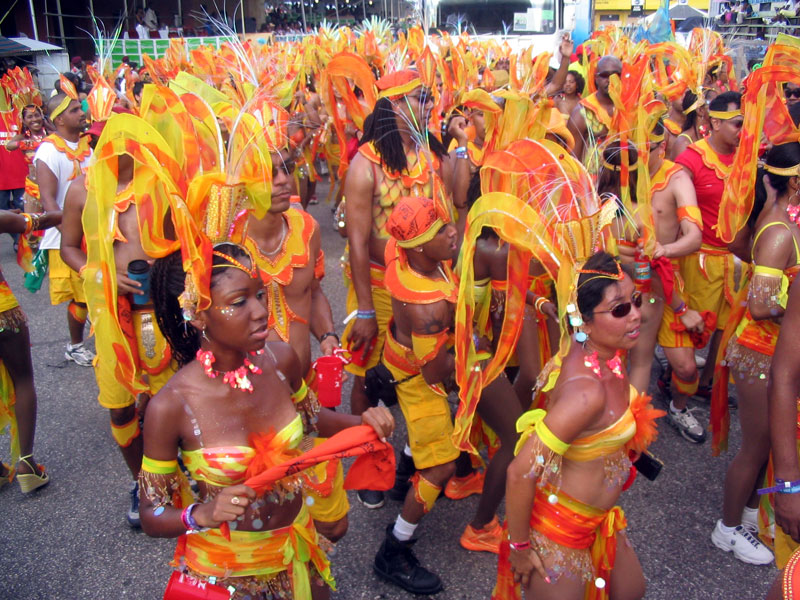 🇹🇹 Trinidad and TobagoTrinidad and Tobago Carnival
An annual festival of street parades, masquerade bands, steelpan music and danceFestival
🇹🇹 Trinidad and TobagoTrinidad and Tobago Carnival
An annual festival of street parades, masquerade bands, steelpan music and danceFestival
 🇲🇹 Valletta, MaltaMaltese Carnivalil-Karnival ta' Malta
A lively week of costumed parades, dancing, satirical floats and sweets across Malta.Festival · Sweets given and shared
🇲🇹 Valletta, MaltaMaltese Carnivalil-Karnival ta' Malta
A lively week of costumed parades, dancing, satirical floats and sweets across Malta.Festival · Sweets given and shared
The small pictures above come from Wikimedia Commons under free licences. Some are cropped to fit.
Every week: one tradition from somewhere new, what is being celebrated around the world this week, and one idea explained.