Feasts and festival meals
The meal that marks a day, a rite or a season, and how it is kept.
A feast is the meal that makes a day: the Passover seder, the Georgian supra, the Thanksgiving table, the iftar that ends a Ramadan day, a wedding banquet. These pages are about the customs of the feast, such as who is invited, what is said and done, and how it is closed, and not about the recipes. For those, see Thali.
A meal with a script
Feasts usually have an order: a blessing, a toast, a symbolic first food, a story that is retold. Those who attend know when to speak, when to stand and what is expected of a guest.
Marking time
Feasts mark the year (harvest, new year, midwinter) and a life (birth, marriage, death). The same table can hold both: a village feast that celebrates the harvest and also settles who is married to whom.
Written by the EveryParampara desk with AI assistance. Background on Feasts and festival meals (meal). Customs differ from place to place and family to family. If this is your tradition and we have it wrong, tell us.
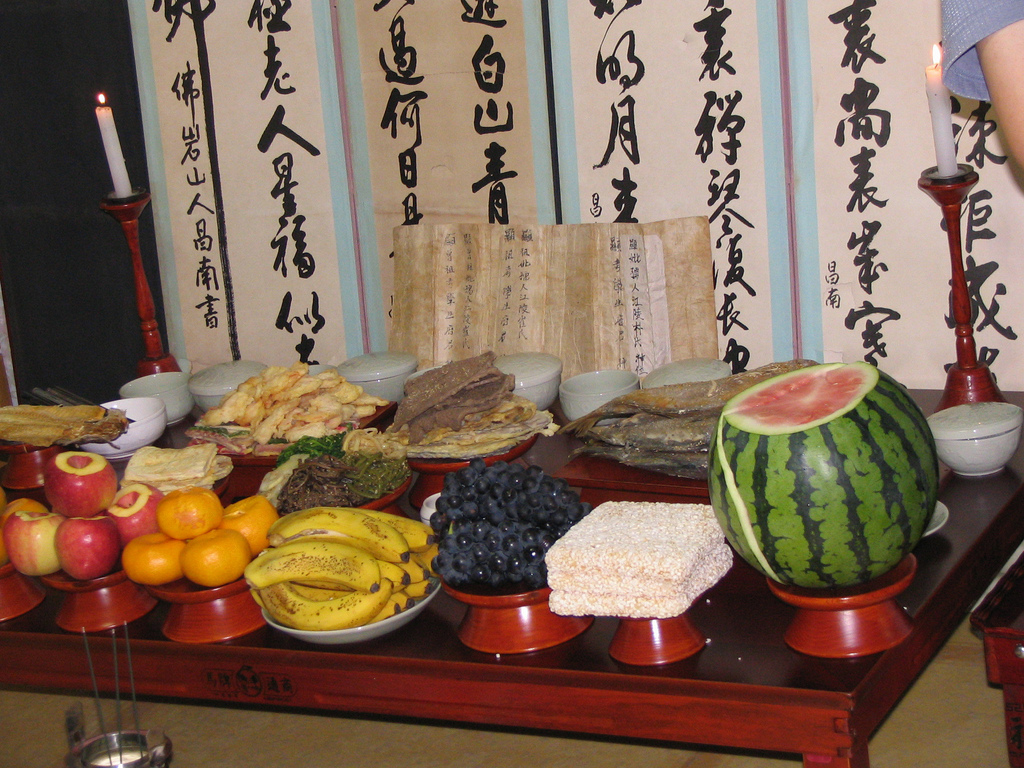 🇰🇷 South KoreaJesa제사 (Jesa)
A Korean ancestral memorial ceremony held on death anniversaries and major holidays.Spiritual · Feasts and festival meals
🇰🇷 South KoreaJesa제사 (Jesa)
A Korean ancestral memorial ceremony held on death anniversaries and major holidays.Spiritual · Feasts and festival meals
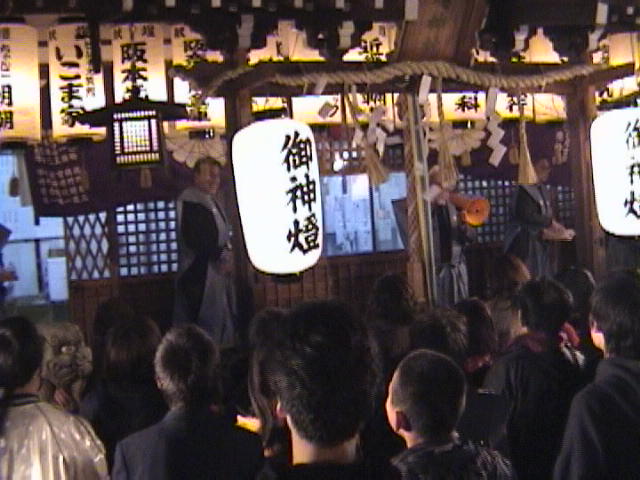 🇯🇵 Tokyo, JapanSetsubun節分
A Japanese ritual of throwing roasted soybeans to banish evil spirits and welcome spring.Festival · Feasts and festival meals
🇯🇵 Tokyo, JapanSetsubun節分
A Japanese ritual of throwing roasted soybeans to banish evil spirits and welcome spring.Festival · Feasts and festival meals
 🇨🇳 China and 5 moreChinese New Year's Evechúxī
A reunion day for ethnic Chinese families before the Lunar New Year, marked by feasts, rituals, and staying up late.Festival · Dinner
🇨🇳 Beijing, ChinaLaba Festival臘八節
A winter porridge festival marking the start of the Chinese New Year seasonFestival · Feasts and festival meals
🇨🇳 China and 5 moreChinese New Year's Evechúxī
A reunion day for ethnic Chinese families before the Lunar New Year, marked by feasts, rituals, and staying up late.Festival · Dinner
🇨🇳 Beijing, ChinaLaba Festival臘八節
A winter porridge festival marking the start of the Chinese New Year seasonFestival · Feasts and festival meals
 🇨🇳 Lhasa, China and 2 moreSho Dun Festivalཞོ་སྟོན། (Tibetan), 雪頓節 (Chinese)
A summer festival in Lhasa where a monks' retreat ends with yogurt and all-day operaFestival · Feasts and festival meals
🇨🇳 Lhasa, China and 2 moreSho Dun Festivalཞོ་སྟོན། (Tibetan), 雪頓節 (Chinese)
A summer festival in Lhasa where a monks' retreat ends with yogurt and all-day operaFestival · Feasts and festival meals
 🇨🇳 Beijing, China and 1 moreLaba congee腊八粥
A ceremonial Chinese porridge of rice, beans and dried fruit, eaten at the Laba FestivalTable custom · Feasts and festival meals
🇰🇷 South Korea and 1 moreChuseok추석
A Korean harvest festival of ancestral rites, seasonal rice cakes, and folk gamesFestival · Feasts and festival meals
🇨🇳 Beijing, China and 1 moreLaba congee腊八粥
A ceremonial Chinese porridge of rice, beans and dried fruit, eaten at the Laba FestivalTable custom · Feasts and festival meals
🇰🇷 South Korea and 1 moreChuseok추석
A Korean harvest festival of ancestral rites, seasonal rice cakes, and folk gamesFestival · Feasts and festival meals
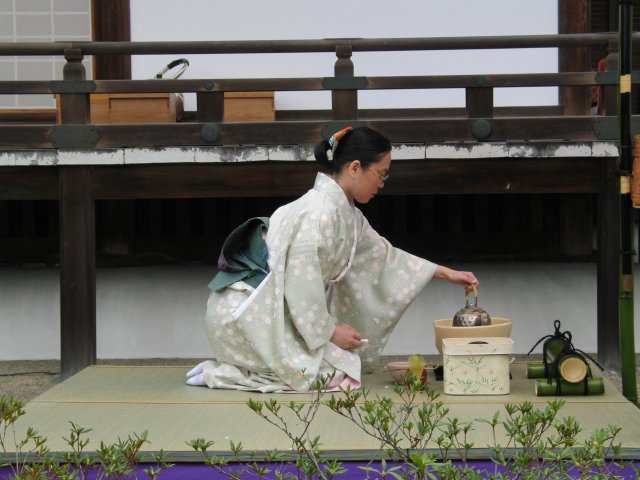 🇯🇵 Kyoto, JapanJapanese tea ceremony茶道 (Sadō / Chadō), 茶の湯 (Chanoyu)
The formal serving of powdered matcha, shaped by Zen, Shinto and wabiTable custom · Tea, coffee and drinking ceremonies
🇯🇵 Kyoto, JapanJapanese tea ceremony茶道 (Sadō / Chadō), 茶の湯 (Chanoyu)
The formal serving of powdered matcha, shaped by Zen, Shinto and wabiTable custom · Tea, coffee and drinking ceremonies
 🇨🇳 China and 1 moreDajiao打醮
An annual Taoist ritual and festival seeking peace and safety for the communitySpiritual · Feasts and festival meals
🇨🇳 China and 1 moreDajiao打醮
An annual Taoist ritual and festival seeking peace and safety for the communitySpiritual · Feasts and festival meals
 🇨🇳 China and 1 moreTaiyin Xingjun太陰星君
The Chinese moon goddess, honoured at Mid-Autumn with incense, mooncakes and prayersSpiritual · Sweets given and shared
🇨🇳 China and 1 moreTaiyin Xingjun太陰星君
The Chinese moon goddess, honoured at Mid-Autumn with incense, mooncakes and prayersSpiritual · Sweets given and shared
Photo credits on this page
The small pictures above come from Wikimedia Commons under free licences. Some are cropped to fit.
- Setsubun: Unknown author, CC BY-SA 3.0, source
- Chuseok: by Joseph Steinberg (Baltimoron in Korea) at Flickr, CC BY-SA 2.0, source
- Laba congee: N509FZ, CC BY-SA 4.0, source
- Sho Dun Festival: No machine-readable author provided. John Hill assumed (based on copyr, CC BY 2.5, source
- Chinese New Year's Eve: Mickey Đại Phát, CC BY-SA 4.0, source
- Dajiao: 29cm, CC BY-SA 2.0, source
- Taiyin Xingjun: Unknown author, Public domain, source
- Japanese tea ceremony: Photograph taken by Stephane D'Alu ( en:User:Sdalu ) in April 2004, CC BY-SA 3.0, source