Boro
In its own language: ぼろ
Japanese cloth kept going by mending: patched layers dyed with indigo

Boro is a Japanese practice of keeping cloth in use by mending and piecing it together, developed by farming families who could not afford new garments. Cotton, linen and hemp were hand-woven, stitched into many layers and usually dyed with indigo, and the same work is now carried on by craft makers and admired in old pieces.
Boro is the Japanese craft of keeping cloth alive by mending it. Worn cotton, linen and hemp garments were patched, layered and stitched again and again, often over several generations, by farming families who could not afford new clothes. The results are heavy, indigo-dyed textiles whose many repairs are now valued in their own right, and makers in Japan still work in the same way today.
What boro means
The word comes from boroboro, which describes something worn thin or repaired. Boro itself names a family of Japanese textiles built out of old cloth, made mostly from cotton, linen and hemp that farming households wove by hand. Worn pieces were stitched or woven back into the whole, layer on layer, until the result was thick enough to keep a person warm and stood up to daily work. Many surviving pieces also carry kasuri, a patterned dyework done in the weave.
Why it developed
For farming families, making cloth at home cost less than buying it. Growing, spinning, dyeing and weaving were all part of the same household work, and so was putting old, worn-out clothing back into use as material for something new. Cotton, the warmer fibre, was harder to come by, so people built warmth by layering. Under the Edo period, silk and fine cotton were kept for a small group at the top, by dress rules or simply by price, and silk did not suit heavy work. Practical clothing therefore grew from what was at hand.
Indigo dyeing
Indigo was the dye that peasant households could most easily obtain. It was cheap to grow, and families often raised and processed it themselves. A single dye bath could be used again and again, which made it thrifty, and cloth steeped in it also resisted moths. Farmers learned that a strong bath faded quickly where a garment rubbed, while repeated dips in a weak bath held colour longer and wore better. This is why so much boro is deep blue, sometimes over kasuri patterns already woven into the cloth.
Preservation and change
After the Meiji period, living standards rose across Japan and most boro was thrown out and replaced with new clothes. For many working-class people the old garments were a painful reminder of poverty, and neither government nor cultural bodies put much effort into keeping them. In time the opposite view took hold: the marks of wear and use came to stand for wabi-sabi. The folklorist Chuzaburo Tanaka gathered more than 20,000 pieces in his lifetime; 786 of them are Important Tangible Cultural Properties, and 1,500 pieces were shown at the Amuse Museum, in Tokyo's Asakusa district.
Saki-ori weaving
Saki-ori is a related Japanese weaving that turns old kimono into new cloth. The kimono are cut into narrow strips, about one centimetre wide, then woven; a single obi could take roughly three old kimono. Vests and other garments were made this way in the past. Saki-ori began as an article of thrift, yet today such obi are costly informal wear. They are woven on one side and often carry ikat patterns of stripes, checks and arrows, usually in indigo.
How Boro is kept
In farming households the work began with the household itself: someone grew the fibre, spun it, dyed it and wove it, then made the garment. When cloth wore through, spare scraps were stitched over the thin places with simple running stitches, and the mended garment went back into use. Years of this left a garment heavy with layers, sometimes carrying the mending of two or three generations. Today the same stitching and layering is practised as a craft, and older pieces are studied, collected and copied by makers.
When and where
Boro has no fixed date in the year. It belongs to the Edo period and to the generations of mending that followed, and it fell out of ordinary use after the Meiji period, as living standards rose and cheap ready-made clothing spread in early twentieth-century Japan.
Boro belongs to rural Japan, where farming households made and repaired their own clothes. Surviving pieces come from those communities, and the largest known group was gathered by the folklorist Chuzaburo Tanaka. His collection is kept in Tokyo: the Amuse Museum in Asakusa holds 1,500 pieces.
What Boro means
For the families who made them, boro garments were ordinary and necessary, and later they became a sore reminder of hard times. Seen differently today, the same cloth stands for wabi-sabi, the Japanese regard for wear, age and use as beautiful. Layers of mending record decades of care, and to many admirers the stitched surface expresses thrift, patience and the refusal to throw things away.


Questions people ask about Boro
What is boro?
It is a Japanese practice of mending and piecing cloth. Garments of cotton, linen or hemp that had worn out were patched and stitched into layered textiles, mostly by farming families, and the fabric was usually dyed with indigo. Today the word covers both old pieces and new work made in the same way.
When did boro develop?
It took shape during the Edo period, among farming households who made and repaired their own clothes. The practice continued for generations after that. It faded once the Meiji period brought higher living standards and, in the early twentieth century, cheaper ready-made clothing, after which boro became mostly unnecessary.
Where is it kept now?
Surviving pieces come from rural Japan. The folklorist Chuzaburo Tanaka collected more than 20,000 of them, 786 of which are designated Important Tangible Cultural Properties. Around 1,500 pieces from that collection were shown at the Amuse Museum, in Tokyo's Asakusa district.
Why is boro blue?
Indigo was the dye most available to peasant households, cheap to grow and easy to process at home. One bath could be used many times over. Cloth dipped repeatedly in a weak bath held its colour and wore well, and indigo also helped keep moths away, so blue became the usual colour of these textiles.
What is saki-ori?
It is a related Japanese weaving. Old kimono are cut into strips about a centimetre wide and woven into new cloth; one obi could take around three kimono. Long made as a thrift measure, saki-ori obi are now expensive informal garments, woven on one side and often patterned with stripes, checks or arrows.
See also
 IkatA resist-dyeing craft from Southeast Asia, where yarns are tied and dyed before weaving
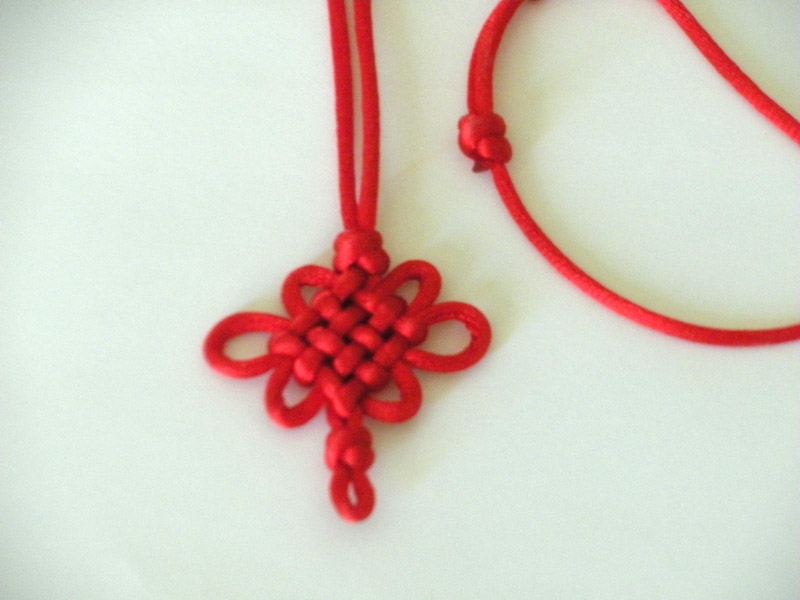 Chinese knottingA folk craft of cord tied into lucky shapes, made in China and given as charms
 BonsaiA Japanese craft of keeping small trees in shallow pots, shaped for contemplation
 CeladonGreen-glazed pottery first made in China, valued for colours that echo jade
Good reading and sources
- Boro (textile) on WikipediaEncyclopedia
- More photos on Wikimedia CommonsPhotos and video
- Wikidata recordOpen data
The facts on this page come from the Wikipedia article "Boro (textile)", written by its contributors and used under the CC BY-SA 4.0 licence, and from its Wikidata record (CC0). EveryParampara rewrote the text in its own words, with AI assistance, and compares every page with the article to make sure no passage is copied. It may be reused under the same CC BY-SA 4.0 licence with a link back.
It may contain mistakes. Traditions differ from one family, village and community to the next, and the people who keep them know them best. If something is wrong, tell us. Last refreshed 2026-10-10.
More from Japan
All the traditions of Japan 🇰🇷 South Korea and 2 moreNajeonchilgi나전칠기
A Korean craft of inlaying mother-of-pearl onto lacquered wood to create decorative objects.Craft
🇰🇷 South Korea and 2 moreNajeonchilgi나전칠기
A Korean craft of inlaying mother-of-pearl onto lacquered wood to create decorative objects.Craft
 🇯🇵 Kyoto, JapanYūzen友禅
A Japanese resist-dyeing craft that creates painterly patterns on fine kimonoCraft
🇯🇵 Kyoto, JapanYūzen友禅
A Japanese resist-dyeing craft that creates painterly patterns on fine kimonoCraft
 🇯🇵 JapanKokeshiこけし
Hand-turned Japanese wooden dolls painted with floral designs and slender facesCraft
🇯🇵 Tokyo, Japan and 1 moreBonsai盆栽
A Japanese craft of keeping small trees in shallow pots, shaped for contemplationCraft
🇯🇵 JapanKokeshiこけし
Hand-turned Japanese wooden dolls painted with floral designs and slender facesCraft
🇯🇵 Tokyo, Japan and 1 moreBonsai盆栽
A Japanese craft of keeping small trees in shallow pots, shaped for contemplationCraft
The same idea elsewhere
All of this kind 🇮🇷 Shiraz, Iran and 1 moreKhatamخاتم
A Persian inlay craft that builds geometric patterns from thousands of tiny cut piecesCraft
🇮🇷 Shiraz, Iran and 1 moreKhatamخاتم
A Persian inlay craft that builds geometric patterns from thousands of tiny cut piecesCraft
 🇮🇪 Galway, Ireland and 1 moreBrigid's crossCros Bhríde
A cross of woven rushes or straw, made for Saint Brigid's Day on the first of FebruaryCraft
🇮🇪 Galway, Ireland and 1 moreBrigid's crossCros Bhríde
A cross of woven rushes or straw, made for Saint Brigid's Day on the first of FebruaryCraft
 🇦🇺 AustraliaBark painting
Ochre pictures on flattened tree bark, an Aboriginal art form of northern AustraliaCraft
🇦🇺 AustraliaBark painting
Ochre pictures on flattened tree bark, an Aboriginal art form of northern AustraliaCraft
 🇺🇸 United States and 1 moreDreamcatcherᐊᓴᐱᑫᔒᓐᐦ (asabikeshiinh)
A hand-woven hoop from Anishinaabe tradition, hung above a cradle to protect a childCraft
🇺🇸 United States and 1 moreDreamcatcherᐊᓴᐱᑫᔒᓐᐦ (asabikeshiinh)
A hand-woven hoop from Anishinaabe tradition, hung above a cradle to protect a childCraft