Edo kiriko
In its own language: 江戸切子
Cut glass from Tokyo, patterned with bold geometric lines and made by hand
Edo kiriko is a hand-cut glass craft from Tokyo, first made in the 1830s and still worked today. A clear glass vessel, sometimes with a thin layer of colour, is ground and polished into geometric patterns, and the craft holds official recognition in Japan.
Edo kiriko is a hand-cut glass craft from Tokyo, where it began in the nineteenth century. Clear glass is ground and polished into bold geometric patterns that catch the light. Pieces were sent to international fairs, the work peaked and later came back after the Second World War, and workshops in the city keep it going now.
What it is
Edo kiriko is hand-cut glass from Tokyo. It starts as a blown vessel, either clear or with a thin layer of colour over clear glass. The maker grinds parts of the surface away on rotating wheels, so the pattern sits inside the glass instead of on top of it. Light bends where the cuts are angled, and the design reads as bright lines against the darker body. A finished piece is meant to be handled and used. The craft belongs among Japan's traditional industries, and it is still worked in the city today.
Origins and history
The craft belongs to Edo, the city now called Tokyo, and it took shape in the nineteenth century. The first pieces are dated to 1834 and are credited to Kagaya Kyūbei, a merchant who sold glass. In 1873 a glassworks built in the Western style opened at Shinagawa, inside Tokyo. Eight years later Emmanuel Hauptmann, a glassworker from Britain, arrived in Japan and taught European methods to the makers. Their work was sent to exhibitions overseas, where it drew notice. Tools for cutting and polishing kept improving, and demand for the glass was highest around the 1900s.
Patterns and designs
Nanako is the pattern most often named. The word refers to fish eggs, and the look comes from thin cut lines that cross each other, which makes the surface glitter in the light. Other designs lean on geometry: straight lines, arcs and repeated shapes chosen to suit the curve of the glass. Edo kiriko is usually worked in clear glass, or in glass with only a slight tint, so the cut pattern carries the whole effect. Colour can be layered into a piece as well, but the bold arrangement of cuts is what marks the style.
Two cut glasses
Cut glass is made in more than one part of Japan, and the styles are not the same. Edo kiriko takes clear or lightly tinted glass and cuts bold geometric patterns into it. Satsuma kiriko, another Japanese cut glass, builds on coloured glass laid over a base, and it favours finer and more delicate cutting. Material and method separate the two, so a trained eye can tell them apart. Makers and collectors compare them often, and the comparison is a common way of explaining what makes the Tokyo work distinct.
Recognition and revival
After the Second World War, the craft was taken up again. Artisans returned to the older cutting and polishing methods and began to bring in newer shapes and design ideas at the same time. Official recognition came in two stages: in 1985 the craft was named a Tokyo Traditional Craft Industry, and in 2002 it was recognised as a National Traditional Craft of Japan. Makers value these labels because they place the work among the country's cultural assets. The name is also registered as a regional collective trademark, which gives it protection in trade.
How Edo kiriko is kept
Making a piece is a single run of six steps, done by one artisan. A layer of coloured glass is blown over a clear core. The design is drawn on with red iron oxide. Rough cutting comes next on a grinding wheel, with water and sand as a lubricant. A fine abrasive wheel, or one set with diamond, refines the pattern. The glass is then polished on a whetstone and finished on a wooden wheel with polishing powders, which brings out its brightness.
When and where
Edo kiriko is a craft of Tokyo, the city once called Edo, and it is strongest there. The early workshops grew up in the city, and a Western-style glassworks opened at Shinagawa in 1873. The makers and their studios are still found in Tokyo, and that is where the trade is centred.
What Edo kiriko means
For the people who make it, Edo kiriko carries the name of their city and the work of its nineteenth-century craftsmen. Each pattern is a test of hand skill, because it has to be drawn, ground and polished rather than printed. The craft also stands for keeping an old trade alive by passing it to new makers. The designations of 1985 and 2002 are treated as public confirmation that the work is worth preserving.
Questions people ask about Edo kiriko
What is Edo kiriko?
It is a Japanese cut glass craft from Tokyo. A blown glass vessel, clear or with a coloured layer, is ground and polished by hand until bold geometric patterns are cut into the surface. The result is glass that shines where the cuts are angled.
When did it begin?
The first pieces are dated to 1834, in Edo, the city now called Tokyo. A merchant named Kagaya Kyūbei is credited with them. The craft grew through the nineteenth century, gained attention abroad, and was revived after the Second World War.
Where is it made?
In Tokyo. The old workshops belonged to Edo, and a Western-style glassworks opened at Shinagawa, inside the city, in 1873. Makers still cut glass by hand in Tokyo today, though the craft is known elsewhere in Japan as well.
How does it differ from Satsuma kiriko?
Both are forms of Japanese cut glass. Edo kiriko uses clear or lightly tinted glass and bold geometric cutting. Satsuma kiriko builds on coloured glass laid over a base and prefers finer, more delicate designs.
How is one made?
Six stages run as one continuous process. Coloured glass is blown over a clear core, the design is marked out in red iron oxide, the pattern is rough-cut on a grinding wheel, refined with a fine or diamond wheel, then polished on a whetstone and finished on a wooden wheel.
See also
 IkatA resist-dyeing craft from Southeast Asia, where yarns are tied and dyed before weaving
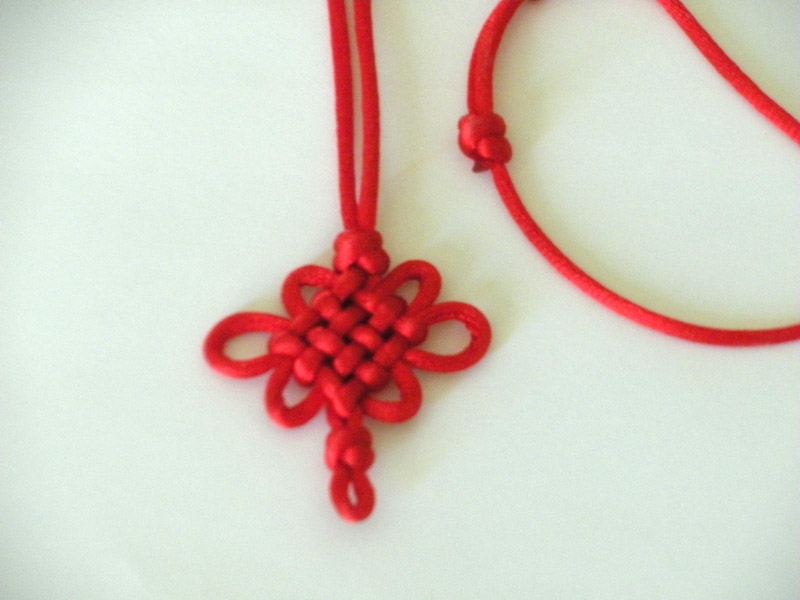 Chinese knottingA folk craft of cord tied into lucky shapes, made in China and given as charms
 BonsaiA Japanese craft of keeping small trees in shallow pots, shaped for contemplation
 CeladonGreen-glazed pottery first made in China, valued for colours that echo jade
Good reading and sources
- Edo kiriko on WikipediaEncyclopedia
- More photos on Wikimedia CommonsPhotos and video
- Wikidata recordOpen data
The facts on this page come from the Wikipedia article "Edo kiriko", written by its contributors and used under the CC BY-SA 4.0 licence, and from its Wikidata record (CC0). EveryParampara rewrote the text in its own words, with AI assistance, and compares every page with the article to make sure no passage is copied. It may be reused under the same CC BY-SA 4.0 licence with a link back.
It may contain mistakes. Traditions differ from one family, village and community to the next, and the people who keep them know them best. If something is wrong, tell us. Last refreshed 2026-10-14.
More from Japan
All the traditions of Japan 🇰🇷 South Korea and 2 moreNajeonchilgi나전칠기
A Korean craft of inlaying mother-of-pearl onto lacquered wood to create decorative objects.Craft
🇰🇷 South Korea and 2 moreNajeonchilgi나전칠기
A Korean craft of inlaying mother-of-pearl onto lacquered wood to create decorative objects.Craft
 🇯🇵 Kyoto, JapanYūzen友禅
A Japanese resist-dyeing craft that creates painterly patterns on fine kimonoCraft
🇯🇵 Kyoto, JapanYūzen友禅
A Japanese resist-dyeing craft that creates painterly patterns on fine kimonoCraft
 🇯🇵 JapanKokeshiこけし
Hand-turned Japanese wooden dolls painted with floral designs and slender facesCraft
🇯🇵 Tokyo, Japan and 1 moreBonsai盆栽
A Japanese craft of keeping small trees in shallow pots, shaped for contemplationCraft
🇯🇵 JapanKokeshiこけし
Hand-turned Japanese wooden dolls painted with floral designs and slender facesCraft
🇯🇵 Tokyo, Japan and 1 moreBonsai盆栽
A Japanese craft of keeping small trees in shallow pots, shaped for contemplationCraft
The same idea elsewhere
All of this kind 🇮🇳 IndiaWarli painting
Sacred white rice paste murals made on red clay walls in western IndiaCraft
🇮🇳 IndiaWarli painting
Sacred white rice paste murals made on red clay walls in western IndiaCraft
 🇦🇺 AustraliaBark painting
Ochre pictures on flattened tree bark, an Aboriginal art form of northern AustraliaCraft
🇦🇺 AustraliaBark painting
Ochre pictures on flattened tree bark, an Aboriginal art form of northern AustraliaCraft
 🇹🇿 Zanzibar, Tanzania and 1 moreNgalawa
A traditional double-outrigger sailing canoe of the Swahili coastCraft
🇹🇿 Zanzibar, Tanzania and 1 moreNgalawa
A traditional double-outrigger sailing canoe of the Swahili coastCraft
 🇬🇱 Greenland and 3 moreDog sledding
An Arctic tradition of navigating snow and ice behind working dog teamsCraft
🇬🇱 Greenland and 3 moreDog sledding
An Arctic tradition of navigating snow and ice behind working dog teamsCraft