Customs of food and drinkEast Asia
Gimjang
In its own language: 김장
Korea's late-autumn work of making enough kimchi to last the winter

Gimjang is the seasonal Korean practice of preparing and preserving large quantities of kimchi for the winter. It is kept in November, when families, relatives and neighbours gather to salt and pack the vegetables, and UNESCO recognised it in 2013.
When is Gimjang kept?
Gimjang is kept each year for about a month, beginning in the tenth month and running through November.
Gimjang is the Korean custom of making and preserving kimchi, the fermented vegetable dish, in large amounts for the winter. It is a shared task: families, relatives and neighbours work together, and the knowledge is handed down between generations. The work runs for about a month in late autumn, and the batch is meant to feed the household until spring.
What it is
For people in Korea, kimchi is a fermented vegetable dish that turns up beside almost any meal, and it holds an important place in the culture. In the warm months, small batches are made fresh from whatever vegetables are in season. Gimjang is the other half of the year's rhythm. Starting in the tenth month, households set aside about a month to prepare kimchi in quantities far bigger than usual, enough to carry them through the cold. The point is not one meal but many: food that keeps when nothing fresh is growing.
Origins and history
Recipes for kimchi go back at least to the thirteenth century. In those older versions the dish was made from vegetables and pickles, with salt, or with alcohol and salt together. Red pepper was added in the seventeenth century. Kimchi today is usually made from napa cabbage and white radish, though there are hundreds of variations, and turnip, leeks, carrots and garlic appear as well. The gimjang custom was listed by UNESCO as Intangible Cultural Heritage in December 2013, and it is the 133rd Korean Intangible Cultural Property.
Working together
The task is heavy and no household is expected to carry it alone. Families, relatives and neighbours share the labour, gathering to cut the vegetables, wash them, and work salt into them. The salt cures the food and starts fermentation. Working in a group makes a large batch manageable, and the work is shared rather than left to one pair of hands. Knowledge moves the same way, from those who already keep gimjang to those learning it, so quantities, timing and seasoning are passed down rather than written out. Even in cities, where refrigeration is easy to come by, the shared custom is still handed on.
Cold storage, then and now
Kimchi is not easy to hold for months at a time. Cold that goes too far freezes it; warmth that lingers lets it ferment on until it turns sour. Before modern refrigeration, the answer was earthenware. Jars were buried in the ground up to their necks, which kept the contents from freezing, and once the temperature fell below zero the fermentation stopped and the food was preserved. Spring warmed the ground and fermentation began again. Today many city households still keep jars of fermenting kimchi on balconies, and it is increasingly common to own a refrigerator used only for kimchi, since its strong smell can taint other food.
How Gimjang is kept
The season runs through November, when the fields and markets are full of crops. Families, relatives and neighbours join forces. They cut the vegetables, wash them, and salt them so the food cures and fermentation begins. Then the batch is packed into containers. Traditionally these were earthenware jars sunk into the ground up to the neck, where the cold stopped fermentation and held the food through winter. In cities today, jars often sit on balconies, and many households use a refrigerator kept only for kimchi.
When and where
Gimjang takes place in late autumn, over about one month that begins with the tenth month of the year. In practice this means November, when the weather cools and the crops are in. Kimchi made then is meant to last the winter, with fermentation stopping once temperatures fall below freezing and beginning again in spring.
Gimjang is a Korean custom, kept by households across Korea, in farm villages and in city flats alike. It is recognised nationally as a Korean intangible cultural property, and UNESCO added it to its Intangible Cultural Heritage list in December 2013.
What Gimjang means
For the people who keep it, gimjang is more than storage. Kimchi sits at the centre of Korean eating, served with almost every meal, and the annual batch is a sign that the household is ready for winter. The work is shared, so the season also renews ties between family, relatives and neighbours. UNESCO's recognition in 2013 treated the practice as living heritage, passed on by communities rather than fixed in a single recipe, and it continues to be handed down even as refrigeration changes how the food is kept.
On the table


Questions people ask about Gimjang
When is Gimjang kept?
Gimjang is kept each year for about a month, beginning in the tenth month and running through November.
What is gimjang?
It is the Korean practice of making and preserving kimchi in large quantities for the winter. It takes about a month, usually in November, and it is done by families, relatives and neighbours working together rather than by one person alone.
Where is it kept?
In Korea, in households both rural and urban. Families, relatives and neighbours do the work together, and city dwellers often keep jars of fermenting kimchi on balconies or use a refrigerator designed for kimchi.
How was kimchi stored before refrigerators?
In earthenware jars buried in the ground up to the neck of the jar, which stopped the contents from freezing. Once the temperature fell below zero, fermentation stopped and the food was preserved, and it started again as spring warmed the ground.
Why is gimjang recognised?
UNESCO listed it as Intangible Cultural Heritage in December 2013, and it is also the 133rd Korean Intangible Cultural Property. The recognition points to the shared labour and to knowledge passed between generations rather than to any single recipe.
See also
 GanggangsullaeA Korean harvest dance where women hold hands and sing in circles under the full moon
 DaeboreumA Korean festival of the first lunar full moon, marked by fires, wishes and feasts
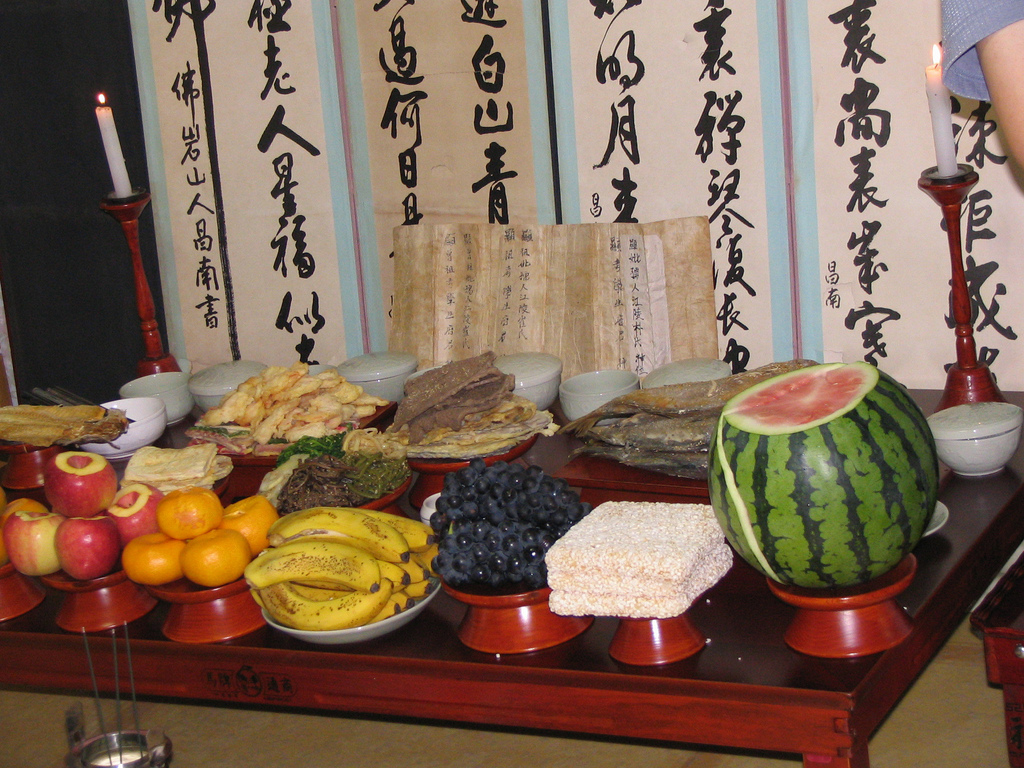 ChuseokA Korean harvest festival of ancestral rites, seasonal rice cakes, and folk games
 HarissaA spicy chili pepper paste from Tunisia, used as a condiment and ingredient across North Africa.
Good reading and sources
- Gimjang on WikipediaEncyclopedia
- More photos on Wikimedia CommonsPhotos and video
- Wikidata recordOpen data
The facts on this page come from the Wikipedia article "Gimjang", written by its contributors and used under the CC BY-SA 4.0 licence, and from its Wikidata record (CC0). EveryParampara rewrote the text in its own words, with AI assistance, and compares every page with the article to make sure no passage is copied. It may be reused under the same CC BY-SA 4.0 licence with a link back.
It may contain mistakes. Traditions differ from one family, village and community to the next, and the people who keep them know them best. If something is wrong, tell us. Last refreshed 2026-10-05.
More from South Korea
All the traditions of South Korea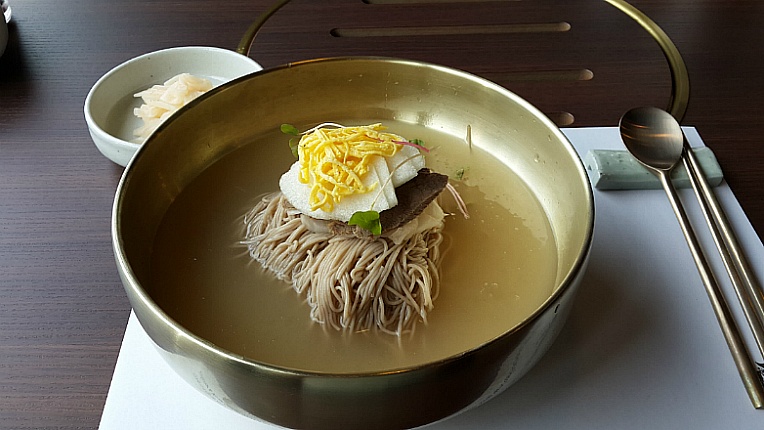 🇰🇵 Pyongyang, North Korea and 3 moreNaengmyeon냉면
Long buckwheat noodles in icy broth, born in North Korea and eaten most in summerTable custom · Dinner
🇰🇵 Pyongyang, North Korea and 3 moreNaengmyeon냉면
Long buckwheat noodles in icy broth, born in North Korea and eaten most in summerTable custom · Dinner
 🇰🇷 Jeju, South KoreaHaenyeo해녀
Female free-divers of Jeju Island who harvest seafood from the ocean.Table custom
🇰🇷 Jeju, South KoreaHaenyeo해녀
Female free-divers of Jeju Island who harvest seafood from the ocean.Table custom
 🇨🇳 China and 5 moreTea culture
How tea is prepared, shared and served, from Chinese tea houses to Tibetan butter teaTable custom · Tea, coffee and drinking ceremonies
🇨🇳 China and 5 moreTea culture
How tea is prepared, shared and served, from Chinese tea houses to Tibetan butter teaTable custom · Tea, coffee and drinking ceremonies
 🇰🇷 South KoreaKorean tea ceremony다례 (茶禮)
Tea served in Korea as a rite of courtesy, now mostly grain and herbal brewsTable custom · Tea, coffee and drinking ceremonies
🇰🇷 South KoreaKorean tea ceremony다례 (茶禮)
Tea served in Korea as a rite of courtesy, now mostly grain and herbal brewsTable custom · Tea, coffee and drinking ceremonies
The same idea elsewhere
Harvest and thanksgiving compared 🇮🇳 Ayodhya, India and 7 moreDiwaliदीपावली (Dīpāvalī)
A five-day festival of lights celebrated across India and its diaspora to mark the victory of light over darkness.Festival · Feasts and festival meals
🇮🇳 Ayodhya, India and 7 moreDiwaliदीपावली (Dīpāvalī)
A five-day festival of lights celebrated across India and its diaspora to mark the victory of light over darkness.Festival · Feasts and festival meals
 🇮🇱 Jerusalem, IsraelPassoverפסח
A Jewish spring festival celebrating freedom from slavery with ritual mealsSpiritual · Dinner
🇮🇱 Jerusalem, IsraelPassoverפסח
A Jewish spring festival celebrating freedom from slavery with ritual mealsSpiritual · Dinner
 🇮🇱 Jerusalem, IsraelSukkotסוכות
A seven-day autumn Jewish festival of temporary booths, harvest prayers and hospitalitySpiritual
🇮🇱 Jerusalem, IsraelSukkotסוכות
A seven-day autumn Jewish festival of temporary booths, harvest prayers and hospitalitySpiritual
 🇮🇪 Ireland and 2 moreJack-o'-lantern
A carved pumpkin lantern lit with a candle to brighten and protect Halloween nightsFolklore
🇮🇪 Ireland and 2 moreJack-o'-lantern
A carved pumpkin lantern lit with a candle to brighten and protect Halloween nightsFolklore