Crafts and makingEast AsiaBuddhist
Kintsugi
In its own language: 金継ぎ
Mending broken pottery with lacquer and gold, so the repair stays visible
![Kintsugi: Exhibit in the Tokyo National Museum , Tokyo, Japan. This artwork is old enough so that it is in the public domain. [1]](https://thumb.wikimedia.org/wikipedia/commons/thumb/e/e3/Glass_Bowl%2C_Kofun_period%2C_6th_century%2C_perhaps_from_the_tomb_of_Emperor_Ankan%2C_Habikino-shi%2C_Osaka_-_Tokyo_National_Museum_-_DSC06402.JPG/1280px-Glass_Bowl%2C_Kofun_period%2C_6th_century%2C_perhaps_from_the_tomb_of_Emperor_Ankan%2C_Habikino-shi%2C_Osaka_-_Tokyo_National_Museum_-_DSC06402.JPG)
A Japanese craft of mending broken ceramic vessels with urushi lacquer and a gold finish, so that the seams are shown rather than concealed. It is associated above all with tea bowls used in chanoyu, and with a philosophy that reads damage as a record of an object's life.
Kintsugi is a way of repairing broken pottery that treats the repair as part of the object's story. Cracks and missing chips are filled with lacquer, then finished with gold or another precious metal, so the mend stays visible. It grew up around Japanese tea culture and is kept alive today by craftspeople, collectors and artists who prefer to show a break rather than hide it.
What it is
Kintsugi is the Japanese practice of putting a broken pot back together and leaving the join in view. The pieces are held with urushi, a lacquer made from the sap of the lacquer tree, and the repair is then given a metallic finish. Snapped edges are joined, gaps where a chip has gone missing can be filled with lacquer alone, and a look-alike shard from another vessel may be set in to complete a shape. Because the mend is not hidden, the finished vessel carries a record of what happened to it. Kintsugi is also the name for the outlook that goes with the craft.
Origins and history
Kintsugi's beginnings are not settled. One account holds that a Chinese tea bowl sent back to China for repair in the late 1400s came home held together with metal staples, and that Japanese craftsmen then looked for a finer way to mend it. Another reading, from a record about a bowl fastened with a clamp shaped like a locust, says the stapled bowl was admired rather than disliked, its repair taken as a sign of beauty in broken things. Whatever its start, the craft became bound up with vessels used for chanoyu, and later collectors prized the gold seams so highly that some were said to break good pottery on purpose.
How it is mended
Several forms of join are recognised. A simple crack may be drawn together with lacquer and gold, keeping overlap to a minimum. Where a whole piece of the pot is gone and no shard survives, the gap itself can be built up in gold or a gold-and-lacquer mix. A missing part may also be replaced with a shard of similar shape from an unrelated vessel, which gives a patchwork result, or with a piece from a matching object. The lacquers used include a pure urushiol lacquer, an iron-red kind, a mix with wheat flour, and one blended with clays. Mended pots rest in a humid enclosure, often a wooden cupboard with bowls of hot water, so the lacquer sets hard.
What it means
The craft carries a way of looking at things. Breakage is not treated as the end of an object's usefulness; the marks it gathers are counted as part of its history. This outlook sits close to wabi-sabi, a Japanese taste for what is worn, plain or imperfect. It also connects with mushin, often rendered as 'no mind', which takes in non-attachment, acceptance of change, and the place of fate in a life. Writers on kintsugi also reach for mono no aware, a tender awareness of how things pass. A mended bowl can be read as an image of damage survived rather than damage concealed.
Today and change
Kintsugi has moved well past the tea room. Museums have shown mended ceramics and the repair tradition beside them, and the idea of the visible mend now travels through contemporary art and design. A British artist sews shattered vases back together with metallic thread over cloth. An American sculptor repaired kiln-damaged figures with gold. In New York, a jeweller built a collection on kintsugi themes, and in Los Angeles an artist filled the cracks of a public basketball court with gold-tinted resin. Japanese potters such as Kunio Nakamura continue to work in the tradition, and its seams also turn up in the design of two Pokémon characters.
How Kintsugi is kept
A craftsman, often one trained in lacquer work, takes the broken vessel. The edges are cleaned and held together with urushi, a tree-sap lacquer. Gold or another metal is then applied to the line of the join or to the filled gap. Where a piece is missing, a shard of similar shape may be set in. The pot then rests in a warm, damp box for anything from two days to a fortnight while the lacquer cures. Tea practitioners and collectors use the finished bowls, and artists outside Japan borrow the method for other materials.
When and where
There is no season or feast day for kintsugi. A repair begins when a pot is dropped or cracked, so the work follows the accident rather than a calendar. In tea practice, a mended bowl may be chosen for a particular gathering, but the craft itself is not kept to a fixed date.
Kintsugi belongs to Japan, where it grew up alongside the tea ceremony and is still practised. Vessels made in China, Vietnam and Korea have also been mended with it. A separate repair method, drilling and metal stapling, has its own history in China, parts of Europe and South America. Today mended ceramics are shown in museums well beyond Japan.
What Kintsugi means
To those who keep it, a repair is not a flaw to be covered. The seam marks something the object lived through, and showing it is the point. The broken bowl becomes an image of endurance, of change accepted rather than resisted, and of the idea that damage and its mending belong together in one story. Some describe a finished piece as both a record of the break and of its healing.


Questions people ask about Kintsugi
What is kintsugi?
It is a Japanese way of repairing broken pottery. The broken edges are joined with urushi lacquer, and the seam is finished with gold or another metal so that the mend stays visible instead of being hidden.
Where does kintsugi come from?
It comes from Japan and is closely tied to ceramic vessels used in chanoyu, the tea ceremony. Its exact beginnings are debated; one theory places it in the late 15th century, after a Chinese tea bowl was sent away for repair.
When is kintsugi done?
Whenever something breaks. There is no festival or fixed date attached to it. A pot is mended after the damage happens, and the lacquer then needs days or weeks to harden before the vessel can be used again.
What does kintsugi mean as a philosophy?
It means treating a break as part of an object's life rather than something to hide. The thinking behind it is linked to wabi-sabi, an acceptance of the imperfect, and to mushin, which involves non-attachment and accepting change.
Is kintsugi only for tea bowls?
No. It began around tea ceramics, but it has been used on pottery from China, Vietnam and Korea as well. Today artists and designers in several countries apply the technique and its ideas to sculpture, textiles, jewellery and even a basketball court.
See also
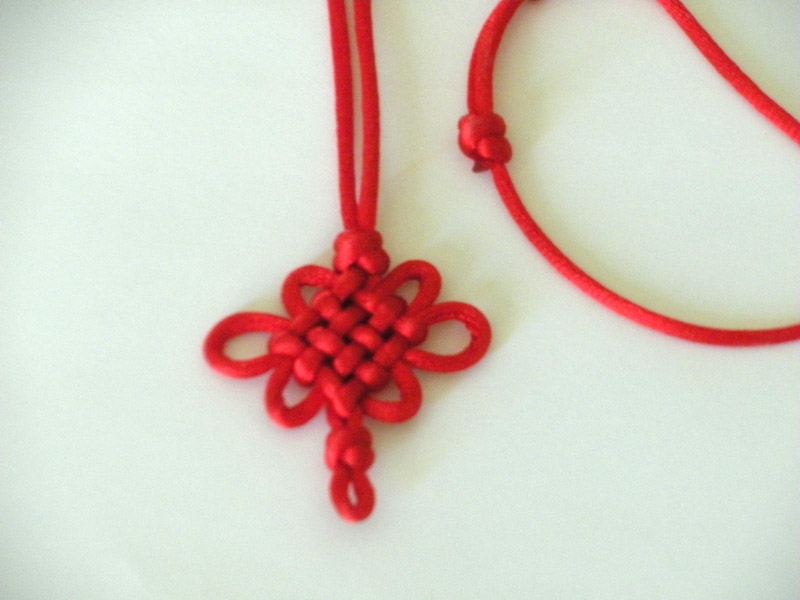 Chinese knottingA folk craft of cord tied into lucky shapes, made in China and given as charms
 IkatA resist-dyeing craft from Southeast Asia, where yarns are tied and dyed before weaving
 BonsaiA Japanese craft of keeping small trees in shallow pots, shaped for contemplation
 CeladonGreen-glazed pottery first made in China, valued for colours that echo jade
Good reading and sources
- Kintsugi on WikipediaEncyclopedia
- More photos on Wikimedia CommonsPhotos and video
- Wikidata recordOpen data
The facts on this page come from the Wikipedia article "Kintsugi", written by its contributors and used under the CC BY-SA 4.0 licence, and from its Wikidata record (CC0). EveryParampara rewrote the text in its own words, with AI assistance, and compares every page with the article to make sure no passage is copied. It may be reused under the same CC BY-SA 4.0 licence with a link back.
It may contain mistakes. Traditions differ from one family, village and community to the next, and the people who keep them know them best. If something is wrong, tell us. Last refreshed 2026-10-05.
More from Japan
All the traditions of Japan 🇯🇵 Kyoto, JapanYūzen友禅
A Japanese resist-dyeing craft that creates painterly patterns on fine kimonoCraft
🇯🇵 Kyoto, JapanYūzen友禅
A Japanese resist-dyeing craft that creates painterly patterns on fine kimonoCraft
 🇰🇷 South Korea and 2 moreNajeonchilgi나전칠기
A Korean craft of inlaying mother-of-pearl onto lacquered wood to create decorative objects.Craft
🇰🇷 South Korea and 2 moreNajeonchilgi나전칠기
A Korean craft of inlaying mother-of-pearl onto lacquered wood to create decorative objects.Craft
 🇯🇵 JapanKokeshiこけし
Hand-turned Japanese wooden dolls painted with floral designs and slender facesCraft
🇯🇵 Tokyo, Japan and 1 moreBonsai盆栽
A Japanese craft of keeping small trees in shallow pots, shaped for contemplationCraft
🇯🇵 JapanKokeshiこけし
Hand-turned Japanese wooden dolls painted with floral designs and slender facesCraft
🇯🇵 Tokyo, Japan and 1 moreBonsai盆栽
A Japanese craft of keeping small trees in shallow pots, shaped for contemplationCraft
The same idea elsewhere
All of this kind 🇮🇷 Shiraz, Iran and 1 moreKhatamخاتم
A Persian inlay craft that builds geometric patterns from thousands of tiny cut piecesCraft
🇮🇷 Shiraz, Iran and 1 moreKhatamخاتم
A Persian inlay craft that builds geometric patterns from thousands of tiny cut piecesCraft
 🇮🇪 Galway, Ireland and 1 moreBrigid's crossCros Bhríde
A cross of woven rushes or straw, made for Saint Brigid's Day on the first of FebruaryCraft
🇮🇪 Galway, Ireland and 1 moreBrigid's crossCros Bhríde
A cross of woven rushes or straw, made for Saint Brigid's Day on the first of FebruaryCraft
 🇦🇺 AustraliaBark painting
Ochre pictures on flattened tree bark, an Aboriginal art form of northern AustraliaCraft
🇦🇺 AustraliaBark painting
Ochre pictures on flattened tree bark, an Aboriginal art form of northern AustraliaCraft
 🇺🇸 United States and 1 moreDreamcatcherᐊᓴᐱᑫᔒᓐᐦ (asabikeshiinh)
A hand-woven hoop from Anishinaabe tradition, hung above a cradle to protect a childCraft
🇺🇸 United States and 1 moreDreamcatcherᐊᓴᐱᑫᔒᓐᐦ (asabikeshiinh)
A hand-woven hoop from Anishinaabe tradition, hung above a cradle to protect a childCraft