Crafts and makingEast AsiaBuddhist
Kirikane
In its own language: 截金
A Japanese craft of cut gold, silver or platinum leaf for Buddhist statues and paintings

Kirikane is a Japanese decorative craft: gold, silver or platinum leaf is cut into lines, diamonds and triangles and glued onto Buddhist statues and paintings. It came from China in the Tang dynasty, flourished in the eleventh century and almost vanished as Buddhist art declined; craftspeople such as Eri Sayoko, a Living National Treasure, keep it today.
Kirikane is a Japanese decorative technique for Buddhist statues and paintings. Craftspeople cut gold, silver or platinum leaf into fine lines, diamonds and triangles and fix them to a surface. The craft came from China in the Tang dynasty, with the oldest surviving example at Hōryū-ji. It flourished in the eleventh century, faded with the decline of Buddhist art, and is still practised today.
What it is
Kirikane is a way of decorating surfaces with metal leaf. The leaf may be gold, silver or platinum, and it is cut into lines, diamonds and triangles before it is glued to the object. The technique was developed for Buddhist statues and paintings, so it belongs with religious art rather than with everyday decoration. The record gives material and method rather than a meaning behind the shapes. Both the cutting and the fixing are done by hand, and the work is exact because every piece is small and separate.
From China to Japan
Kirikane was imported from China while the Tang dynasty ruled, between 618 and 907. The oldest surviving example is the Tamamushi Shrine at Hōryū-ji. The craft was busiest in the eleventh century and continued into the thirteenth or fourteenth century. After that it almost died out: the overall decline of Buddhist art removed the work it depended on. It is still practised today, and Eri Sayoko has been named a Living National Treasure for kirikane.
Cutting and fixing
Two pieces of leaf are heated over a fire banked with ash and bonded into one sheet. A second bonding strengthens the sheet and makes it thicker, so it can be handled and cut. The artisan then cuts it with a bamboo knife on a table covered with deer skin. The cut pieces are fixed to the object being decorated with glue. Two traditional glues appear in the record: funori, which comes from seaweed, and nikawa, which comes from hide. Each line, diamond or triangle is placed separately, so a finished surface is made of many small pieces of metal leaf.
What it decorated
Kirikane was made for Buddhist statues and paintings rather than for everyday objects. It gave those surfaces patterns of cut metal leaf, and it belonged to the world of temples and Buddhist image-making. When Buddhist art declined, the craft nearly disappeared with it. That is the reason the record gives. The sources do not explain what the patterns stood for, and they do not describe kirikane as a ritual or a teaching. It is a way of adorning a sacred image, and its fortune rose and fell with the art it served.
How Kirikane is kept
One artisan works at a time. Two pieces of metal leaf, gold, silver or platinum, are heated over a fire banked with ash until they bond. A second bonding adds strength and thickness. The bonded sheet is then cut into lines, diamonds and triangles with a bamboo knife, on a table covered with deer skin. Each cut piece is fixed to a statue or painting with glue, either funori from seaweed or nikawa from hide. The pieces are affixed to the object being decorated. The work is done by hand and takes patience, since the leaf is thin and fragile.
When and where
Kirikane is kept in Japan, where it is described as a Japanese decorative technique. The oldest surviving example is the Tamamushi Shrine at Hōryū-ji. Its use is tied to Buddhist statues and paintings, so it belongs to the world of temple and Buddhist art rather than to everyday decoration. The technique came originally from China during the Tang dynasty.
What Kirikane means
The sources describe kirikane as a decorative technique, not as a set of teachings or a ritual with a meaning to explain. Its purpose was to adorn Buddhist statues and paintings. That link is the clearest thing that can be said about what it stood for: the craft served Buddhist art, flourished while that art flourished, and nearly disappeared when that art declined. The bright leaf was there to decorate a sacred image, and the craft's fortunes were tied to that work.


Questions people ask about Kirikane
What is kirikane?
It is a Japanese decorative technique. Gold, silver or platinum leaf is cut into lines, diamonds and triangles, then glued onto Buddhist statues and paintings. The aim is ornament: small pieces of bright metal laid on a surface to catch the light.
Where does kirikane come from?
The technique was imported into Japan from China during the Tang dynasty, which ran from 618 to 907. The oldest surviving example is the Tamamushi Shrine at Hōryū-ji. It is now described as a Japanese technique.
When was kirikane at its height?
Kirikane flourished mainly in the eleventh century and continued into the thirteenth or fourteenth century. After that it almost disappeared, because Buddhist art as a whole was in decline. It is still worked today.
How is the leaf prepared?
Two pieces of leaf are heated over a fire banked with ash and bonded together. A second bonding makes the sheet thicker and stronger. The sheet is then cut with a bamboo knife on a table covered with deer skin, and fixed with glue.
Who practises kirikane today?
It is still worked by craftspeople in Japan, where it is used for Buddhist statues and paintings. Eri Sayoko has been named a Living National Treasure for kirikane, which shows the craft is recognised as a living skill, not only a historical one.
See also
 IkatA resist-dyeing craft from Southeast Asia, where yarns are tied and dyed before weaving
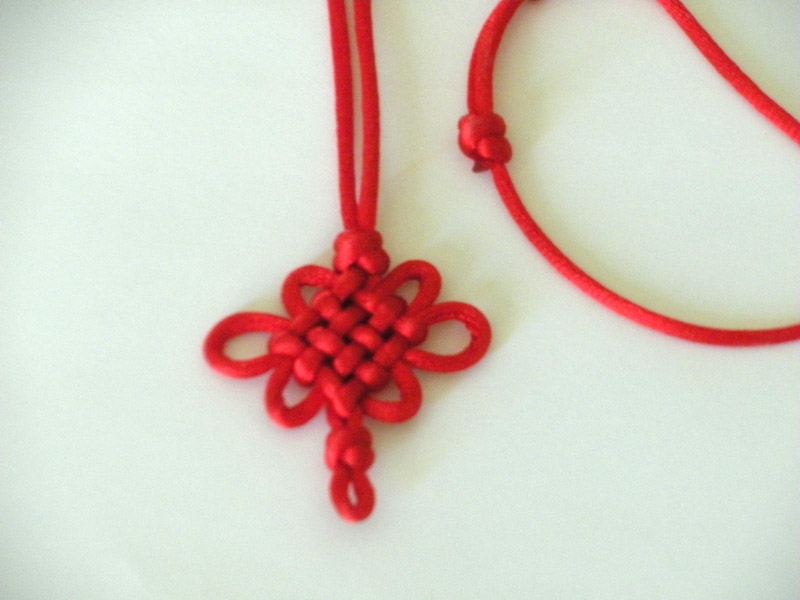 Chinese knottingA folk craft of cord tied into lucky shapes, made in China and given as charms
 BonsaiA Japanese craft of keeping small trees in shallow pots, shaped for contemplation
 CeladonGreen-glazed pottery first made in China, valued for colours that echo jade
Good reading and sources
- Kirikane on WikipediaEncyclopedia
- More photos on Wikimedia CommonsPhotos and video
- Wikidata recordOpen data
The facts on this page come from the Wikipedia article "Kirikane", written by its contributors and used under the CC BY-SA 4.0 licence, and from its Wikidata record (CC0). EveryParampara rewrote the text in its own words, with AI assistance, and compares every page with the article to make sure no passage is copied. It may be reused under the same CC BY-SA 4.0 licence with a link back.
It may contain mistakes. Traditions differ from one family, village and community to the next, and the people who keep them know them best. If something is wrong, tell us. Last refreshed 2026-10-10.
More from Japan
All the traditions of Japan 🇰🇷 South Korea and 2 moreNajeonchilgi나전칠기
A Korean craft of inlaying mother-of-pearl onto lacquered wood to create decorative objects.Craft
🇰🇷 South Korea and 2 moreNajeonchilgi나전칠기
A Korean craft of inlaying mother-of-pearl onto lacquered wood to create decorative objects.Craft
 🇯🇵 Kyoto, JapanYūzen友禅
A Japanese resist-dyeing craft that creates painterly patterns on fine kimonoCraft
🇯🇵 Kyoto, JapanYūzen友禅
A Japanese resist-dyeing craft that creates painterly patterns on fine kimonoCraft
 🇯🇵 JapanKokeshiこけし
Hand-turned Japanese wooden dolls painted with floral designs and slender facesCraft
🇯🇵 Tokyo, Japan and 1 moreBonsai盆栽
A Japanese craft of keeping small trees in shallow pots, shaped for contemplationCraft
🇯🇵 JapanKokeshiこけし
Hand-turned Japanese wooden dolls painted with floral designs and slender facesCraft
🇯🇵 Tokyo, Japan and 1 moreBonsai盆栽
A Japanese craft of keeping small trees in shallow pots, shaped for contemplationCraft
The same idea elsewhere
All of this kind 🇮🇷 Shiraz, Iran and 1 moreKhatamخاتم
A Persian inlay craft that builds geometric patterns from thousands of tiny cut piecesCraft
🇮🇷 Shiraz, Iran and 1 moreKhatamخاتم
A Persian inlay craft that builds geometric patterns from thousands of tiny cut piecesCraft
 🇮🇪 Galway, Ireland and 1 moreBrigid's crossCros Bhríde
A cross of woven rushes or straw, made for Saint Brigid's Day on the first of FebruaryCraft
🇮🇪 Galway, Ireland and 1 moreBrigid's crossCros Bhríde
A cross of woven rushes or straw, made for Saint Brigid's Day on the first of FebruaryCraft
 🇦🇺 AustraliaBark painting
Ochre pictures on flattened tree bark, an Aboriginal art form of northern AustraliaCraft
🇦🇺 AustraliaBark painting
Ochre pictures on flattened tree bark, an Aboriginal art form of northern AustraliaCraft
 🇺🇸 United States and 1 moreDreamcatcherᐊᓴᐱᑫᔒᓐᐦ (asabikeshiinh)
A hand-woven hoop from Anishinaabe tradition, hung above a cradle to protect a childCraft
🇺🇸 United States and 1 moreDreamcatcherᐊᓴᐱᑫᔒᓐᐦ (asabikeshiinh)
A hand-woven hoop from Anishinaabe tradition, hung above a cradle to protect a childCraft