Festivals and celebrationsSoutheast AsiaBuddhist
Lao New Year
In its own language: ປີໃໝ່ລາວ
A mid-April water festival and Buddhist celebration marking the Lao new year

Pi Mai Lao is the annual celebration marking the Lao new year in mid-April. Across Laos and diaspora communities worldwide, people clean homes, bathe Buddha figures, splash water, build sand stupas, and free captive animals.
When is Lao New Year in 2027?
Lao New Year 2027 runs from 14 to 16 April 2027. Other years: 2026, 14 to 16 April 2026; 2028, 14 to 16 April 2028.
Pi Mai Lao is the traditional new year celebration observed by Lao communities across the world. Falling in the heat of mid-April at the start of the monsoon, the holiday centres on cleansing, renewal, and earning spiritual merit. Families clean their homes, wash sacred statues with scented water, visit Buddhist temples, and join joyful public water fights to share blessings for peace and good health.
Cleansing and water blessings
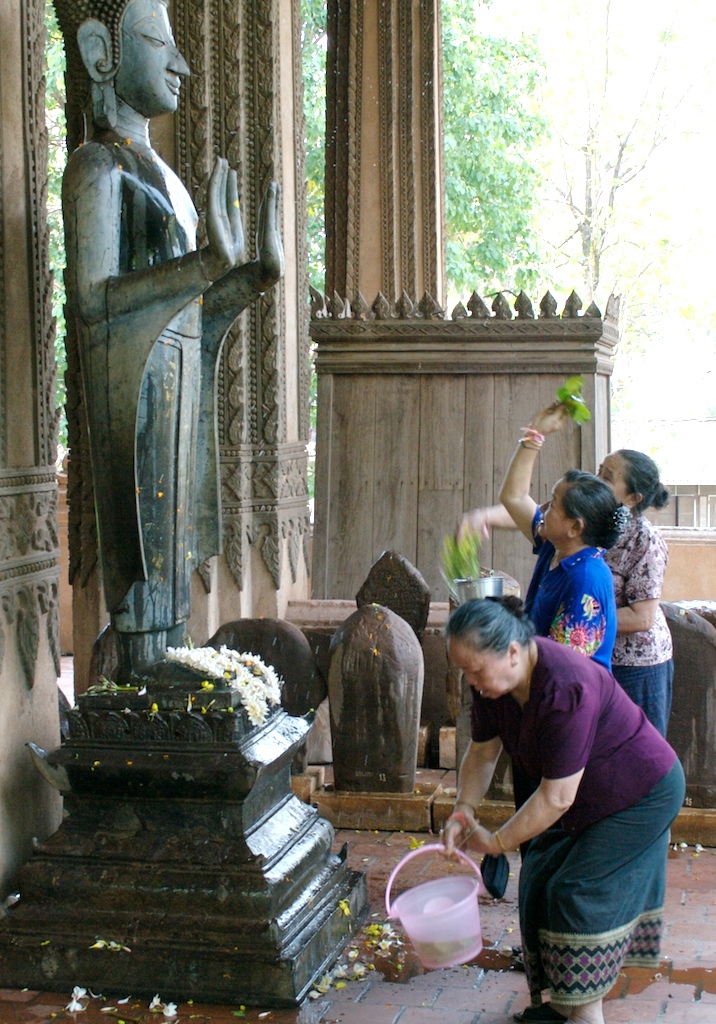
Water plays a central role during the holiday. People begin by washing their residences and cleaning village spaces. They also bathe statues of the Buddha with water scented by flowers or cologne. Younger people gently pour perfumed water over the hands of elders and monks to ask for peace and long life. Afterwards, the ritual turns playful as people douse friends and passers-by in the streets. In modern times, participants also spread white powder or spray shaving cream on each other during the outdoor festivities.
Sand stupas and animal releases
Earning merit is an essential part of the celebration. Worshipers carry sand to temple grounds or nearby riverbanks to build decorative mounds called stupas. They adorn these heaps with banners, fresh flowers, and lines of white powder before offering them to the monastic community. The mounds represent Mount Phoukhao Kailat, a mythical mountain linked to King Kabinlaphrôm. Believers also earn merit by purchasing and releasing small captive creatures, such as fish, tortoises, crabs, eels, and birds, granting them freedom in nature.
Music dance and pageants
Celebrations fill temple yards with music and entertainment late into the evening. Community members gather to watch traditional performances, listen to molam songs, and join in circle dances known as lamvông. In the town of Luang Prabang, festivities can continue for over a week. The town hosts the annual Nangsangkhan beauty contest to select Miss Lao New Year. In this pageant, seven contestants dress to represent the seven daughters of King Kabinlaphrôm.
The three festival days
The official holiday runs across three main days. The opening day serves as the final day of the departing year, devoted to cleaning houses and gathering fresh flowers. The middle day is considered a time between years, belonging to neither the old period nor the new. The third day inaugurates the incoming year. In Laos, public offices and businesses close during this period so people can worship at temples, gather with friends, and wish each other a happy year ahead.
How Lao New Year is kept
Celebrations begin with thorough house cleaning and the collection of fresh blossoms. At Buddhist temples, monks and lay people wash sacred statues with perfumed water. Respectful water pouring over the hands of elders and monks precedes exuberant public water battles in the streets. Devotees construct decorated sand mounds on temple grounds and release small wild creatures into the wild to gain merit. Evenings feature temple visits, traditional circle dancing, molam music, and community pageants.
When and where
The festival takes place annually in the middle of April, the hottest month in Laos, which coincides with the onset of the monsoon. The state holiday spans three days, typically running from the fourteenth to the sixteenth of April, though festivities in some towns extend beyond a week.
The tradition is kept throughout Laos, where it is an official public holiday. It is also celebrated by Lao diaspora communities residing in Australia, Canada, France, the United Kingdom, and the United States. In Laos, the town of Luang Prabang is particularly renowned for its extended celebrations.
What Lao New Year means
Washing sacred statues and pouring water over elders symbolizes cleansing, renewal, and wishes for longevity and peace. Sand stupas evoke Mount Phoukhao Kailat, where seven sisters kept the severed head of King Kabinlaphrôm. Releasing captive birds, fish, and turtles expresses the belief that living beings deserve freedom while generating spiritual merit for a fortunate new year.

Days Lao New Year is marked
Lao New Year dates: 2026, 2027, 2028
| Year | Lao New Year date |
|---|---|
| 2026 | 14 to 16 April 2026 |
| 2027 | 14 to 16 April 2027 |
| 2028 | 14 to 16 April 2028 |
Questions people ask about Lao New Year
When is Lao New Year in 2027?
Lao New Year 2027 runs from 14 to 16 April 2027. Other years: 2026, 14 to 16 April 2026; 2028, 14 to 16 April 2028.
What is Lao New Year?
It is the traditional celebration marking the start of the year in Laos, characterized by water-throwing rituals, temple worship, merit making, and cultural performances.
Why do people throw water during the holiday?
Scented water is used to wash homes and statues of the Buddha, while pouring it on elders and monks brings blessings of peace and long life before streets erupt into festive splashing.
Why are sand mounds built at temples?
Devotees build and decorate sand stupas as gifts for Buddhist monks to earn spiritual merit. These sand mounds represent Mount Phoukhao Kailat from Lao mythology.
See also
 ChristmasA festival of Jesus's birth, kept on 25 December with gifts, lights and shared meals
 HalloweenAn annual observance on 31 October marking the eve of All Saints' Day, rooted in Christian tradition and Celtic heritage
 Christmas treeA decorated evergreen or artificial tree placed indoors to mark the Christmas season.
 HanukkahAn eight-day Jewish festival marking the rededication of the Second Temple in Jerusalem and the miracle of a single day'
Good reading and sources
- Lao New Year on WikipediaEncyclopedia
- More photos on Wikimedia CommonsPhotos and video
- Wikidata recordOpen data
The facts on this page come from the Wikipedia article "Lao New Year", written by its contributors and used under the CC BY-SA 4.0 licence, and from its Wikidata record (CC0). EveryParampara rewrote the text in its own words, with AI assistance, and compares every page with the article to make sure no passage is copied. It may be reused under the same CC BY-SA 4.0 licence with a link back.
It may contain mistakes. Traditions differ from one family, village and community to the next, and the people who keep them know them best. If something is wrong, tell us. Last refreshed 2026-10-04.
More from Laos
All the traditions of Laos 🇱🇰 Colombo, Sri Lanka and 5 moreVesakVisakha Bucha (Thailand), Visakha Bouxa (Laos), Full Moon Day of Kason (Myanmar)
A day to honor the birth, awakening, and passing of the Buddha, kept by Buddhists across Asia.Festival
🇱🇰 Colombo, Sri Lanka and 5 moreVesakVisakha Bucha (Thailand), Visakha Bouxa (Laos), Full Moon Day of Kason (Myanmar)
A day to honor the birth, awakening, and passing of the Buddha, kept by Buddhists across Asia.Festival
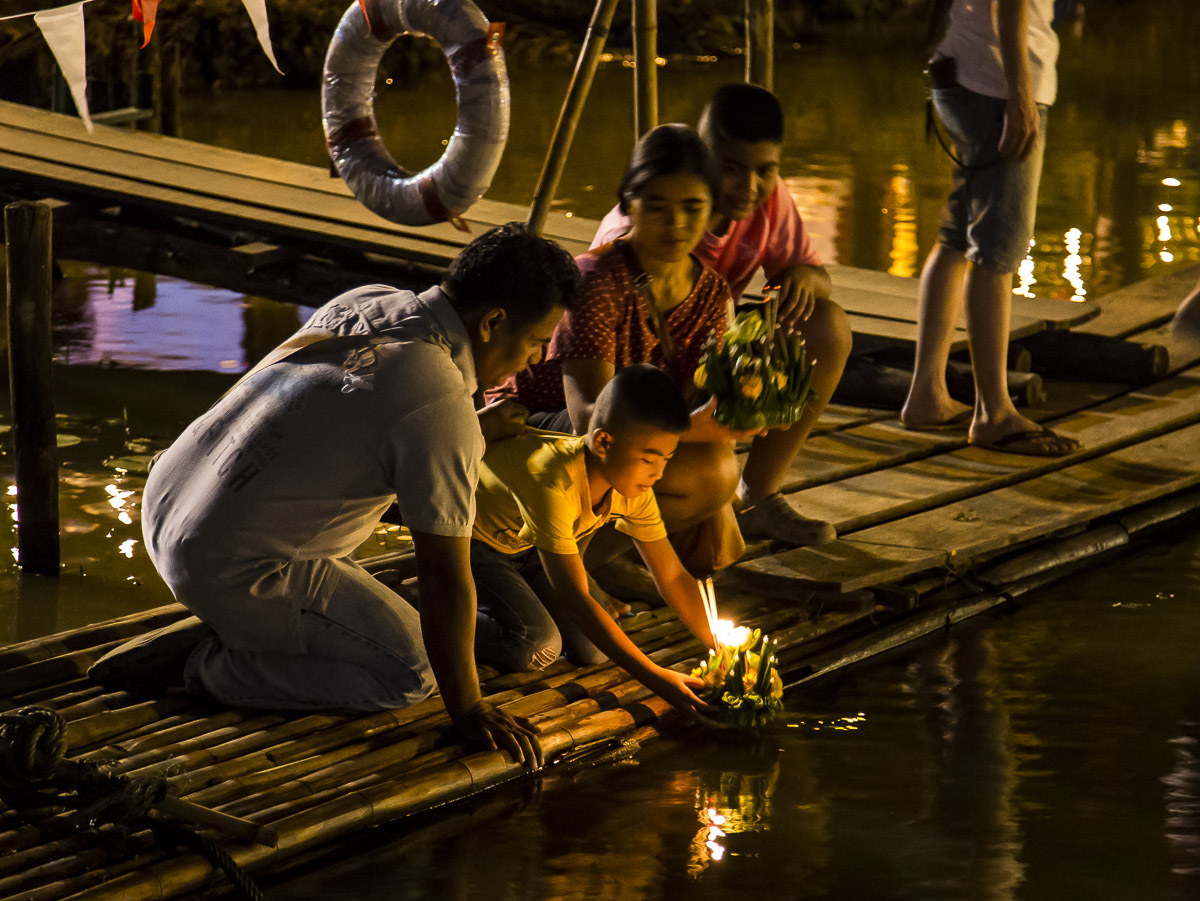 🇹🇭 Chiang Mai, Thailand and 5 moreLoy Krathongลอยกระทง
A Thai festival of floating leaf baskets on rivers to honor water and release negativity.Festival
🇹🇭 Chiang Mai, Thailand and 5 moreLoy Krathongลอยกระทง
A Thai festival of floating leaf baskets on rivers to honor water and release negativity.Festival
 🇹🇭 Phon Phisai, Thailand and 1 moreNaga fireballsบั้งไฟพญานาค (bang fai phaya nak)
A festival of glowing orbs rising from the Mekong River, attributed to a mythical serpent.Festival
🇹🇭 Phon Phisai, Thailand and 1 moreNaga fireballsบั้งไฟพญานาค (bang fai phaya nak)
A festival of glowing orbs rising from the Mekong River, attributed to a mythical serpent.Festival
 🇱🇦 Laos and 3 moreRocket Festivalບຸນບັ້ງໄຟ
A rainy-season festival of merit-making, music, parades and homemade rocketsFestival
🇱🇦 Laos and 3 moreRocket Festivalບຸນບັ້ງໄຟ
A rainy-season festival of merit-making, music, parades and homemade rocketsFestival
The same idea elsewhere
New Year compared 🇲🇳 Mongolia and 2 moreTsagaan SarЦагаан сар
The Mongolian Lunar New Year festival of peace, elders, white foods and renewalSeasonal · Feasts and festival meals
🇲🇳 Mongolia and 2 moreTsagaan SarЦагаан сар
The Mongolian Lunar New Year festival of peace, elders, white foods and renewalSeasonal · Feasts and festival meals
 🇪🇹 Ethiopia and 1 moreEnkutatashእንቁጣጣሽ
The Ethiopian New Year festival of song, yellow daisies and family feastsSeasonal · Feasts and festival meals
🇪🇹 Ethiopia and 1 moreEnkutatashእንቁጣጣሽ
The Ethiopian New Year festival of song, yellow daisies and family feastsSeasonal · Feasts and festival meals
 🇨🇮 Ivory Coast and 1 moreAbissa
A week-long New Year festival of the Nzema people in Ivory Coast and Ghana, marked by sacred drums, dance, and forgiveneFestival
🇨🇮 Ivory Coast and 1 moreAbissa
A week-long New Year festival of the Nzema people in Ivory Coast and Ghana, marked by sacred drums, dance, and forgiveneFestival
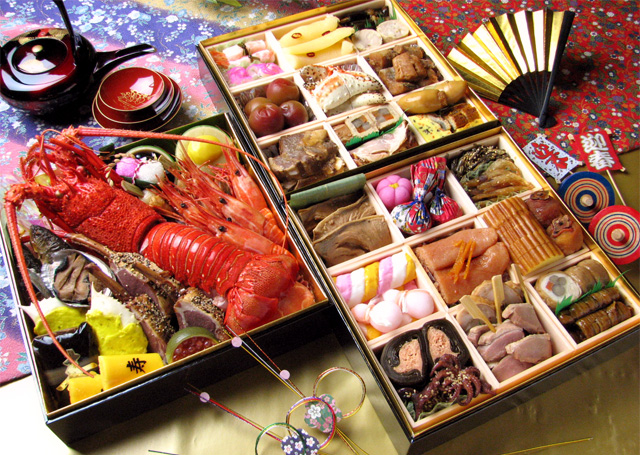 🇯🇵 Tokyo, JapanJapanese New Year正月
An annual celebration of renewal, seasonal foods, and bell ringing across JapanSeasonal · Feasts and festival meals
🇯🇵 Tokyo, JapanJapanese New Year正月
An annual celebration of renewal, seasonal foods, and bell ringing across JapanSeasonal · Feasts and festival meals