Folklore and beliefEuropePagan and ancient
Nisse
In its own language: nisse (Danish, Norwegian); tomte (Swedish); tonttu (Finnish)
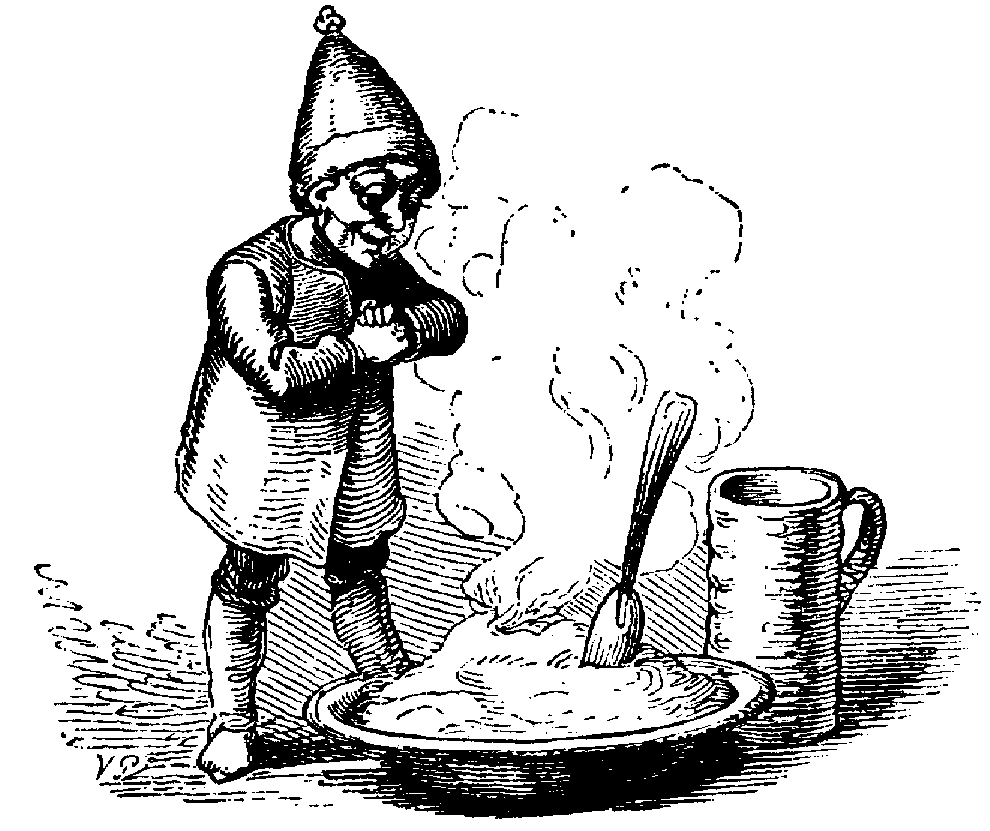
A small farm spirit of Nordic folklore, given porridge at midwinter

A nisse is a small humanlike household spirit in Nordic folklore, called tomte in Sweden and tonttu in Finland. In Denmark, Norway, Sweden and Finland, farming families have long told of him doing the night work of house and stable, and of leaving him porridge once a year, at midwinter, so that the farm would fare well.
When is Nisse marked?
Nisse is kept as part of Winter Solstice, which is on Monday, 21 December 2026.
In Nordic folklore a nisse is a small being who lives on a farm. He looks much like a person, wears grey and a red cap, and does the night work of the house and the stable. The same figure is the tomte in Sweden and the tonttu in Finland. Households are expected to repay him once a year, around midwinter, with porridge. He is one of the best known characters in Scandinavian story.
How he looks
Accounts agree that the nisse is small and shaped like a person. Peder Faye, writing in Norway, described him in grey clothes and a soft red cap without a brim. Danish tellers often gave him a long beard, but Axel Olrik and Hans Ellekilde argued that the older, plainer figure had a smooth face, like a child's. Swedish tradition put a lined, aged face under the same small red cap. The picture is homely rather than frightening. No account makes him large. He is always a small figure about the farm.
Names across the north
The word nisse runs through Scandinavia. Norwegians also say tufte, and many local names attach the being to a farm: tomtegubbe and tomtebonde in Sweden, gardvord and tunkall in Norway. In southern Sweden he can be goanisse, the good nisse. Finnish took tonttu from Swedish, though Finns now hold their spirit to be a separate one, and the literary Christmas elf is called tonttu-ukko. The name nisse itself is usually traced to Niels, a form of Nicholas, which makes him a distant cousin of the saint who brings gifts to children. Another old suggestion is niðsi, Old Norse for a dear young relative.
Origins and history
Where the nisse came from is disputed. Henning Frederik Feilberg argued that two older kinds of being merged: spirits of wild nature and the ghost of the first person to clear a farm, who then stayed to guard it. A 10th-century Icelandic tale of a man who honoured an idol kept in stone has been read as an early parallel. Two Old Swedish texts of the 14th century mention offerings to beings called tomta gudhane. Clergy urged congregations to stop making them. Reidar Thoralf Christiansen held that the word came to Norway from Denmark in the 1600s, though native Norwegian names for such a being are older.
In art and story
Pictures of the nisse go back a long way. Olaus Magnus, a Swedish churchman, included a woodcut in his 1555 history showing a spirit labouring in a stable at night. The same image appears on his earlier map of the north, and he wrote that such beings were commoner before the region became Christian. Later the nisse became a familiar figure in Scandinavian writing, and translators into English have called him a brownie, a goblin, an elf or a gnome, depending on the book. Hans Christian Andersen's tale set in a grocer's shop is one place where the Danish word was rendered as goblin.
Today and change
From the 19th century the nisse moved indoors and into Christmas. He became the Julenisse, a figure of the season who is linked with gifts, and his picture changed with the times. Some writers hold that American images of Santa Claus shaped how he is drawn, and he now looks a good deal like a garden gnome to many eyes. In Finland the tonttu-ukko belongs to Christmas as a literary character. Older beliefs have not vanished. The nisse still appears in Scandinavian books and stories, and the Christmas season is when he is most often remembered.
How Nisse is kept
Farm families kept the nisse in mind all year. He was credited with the night work of the place: watching the animals, keeping the stable, guarding the household. In return, once a year, food was set out for him. A woman in a medieval Swedish account laid the table again after her own meal for the beings she honoured, and when the food was eaten she took it as a sign that her livestock would be cared for. Clergy in the same period told congregations not to make such offerings.
When and where
The reward falls around the winter solstice, the northern turn of the year known as Yule. The sources give no single date, only an annual occasion. In the 19th century the whole custom shifted towards Christmas, and the nisse is now thought of chiefly as a figure of the Christmas season.
Denmark, Norway, Sweden and Finland are his home. Names cluster by district: tuftekall in Nordland and around Trondheim in Norway, gårdsrå in Uppland in Sweden, fjøsnisse in the Setesdal valley. One scholar placed the belief in the south and east of Norway. In Finland the tonttu is kept as a being with its own character.
What Nisse means
The nisse carries the luck of a farm. He is the unseen worker who keeps a household running and the guardian who watches over its people, animals and crops. Some scholars see in him an ancestor, the ghost of the first person to clear the land, who stayed on as its protector. Others describe a joining of two older ideas: a spirit of wild nature and a spirit of the family line. Setting out food for him is a way of keeping that bond alive.


Days Nisse is marked
Questions people ask about Nisse
When is Nisse marked?
Nisse is kept as part of Winter Solstice, which is on Monday, 21 December 2026.
What is a nisse?
A small humanlike being in Nordic folklore who is said to live on a farm. He wears grey clothes and a red cap, does chores in the house and stable at night, and is given porridge once a year. Danes and Norwegians say nisse, Swedes say tomte and Finns say tonttu.
Where is this belief found?
In Denmark, Norway, Sweden and Finland. Local names differ: tuftekall in Nordland and around Trondheim, gårdsrå in Uppland, fjøsnisse in the Setesdal valley in Norway. Finns treat their tonttu as a being with its own character, no longer the same as the Swedish tomte.
Is the nisse the same as Santa Claus?
No, though the two are neighbours. The nisse began as a farm spirit, and the Danish name may come from Niels, a form of Nicholas. In the 19th century he was drawn into Christmas and gift giving, and some writers think American pictures of Santa Claus changed how he looks.
Where does the figure come from?
Opinions differ. One scholar, Henning Frederik Feilberg, traced him to two older ideas: a spirit of wild nature and the ghost of the first settler on a farm. Others argued the word came to Norway from Denmark around the 1600s, or earlier. Old Swedish texts of the 14th century record offerings to beings called tomta gudhane.
See also
 Friday the 13thA Western folk superstition regarding the unluckiness of a Friday falling on the 13th.
 MolybdomancyPouring molten lead or tin into water, then reading the shape as an omen
 HyggeA Danish word for unhurried time at home with others, kept with candles and cooking
 Finnish saunaA weekly bathing ritual of steam and heat, central to Finnish life and wellbeing.
Good reading and sources
- Nisse (folklore) on WikipediaEncyclopedia
- More photos on Wikimedia CommonsPhotos and video
- Wikidata recordOpen data
The facts on this page come from the Wikipedia article "Nisse (folklore)", written by its contributors and used under the CC BY-SA 4.0 licence, and from its Wikidata record (CC0). EveryParampara rewrote the text in its own words, with AI assistance, and compares every page with the article to make sure no passage is copied. It may be reused under the same CC BY-SA 4.0 licence with a link back.
It may contain mistakes. Traditions differ from one family, village and community to the next, and the people who keep them know them best. If something is wrong, tell us. Last refreshed 2026-10-05.
More from Denmark
All the traditions of Denmark 🇲🇦 Marrakesh, Morocco and 5 moreGnawa musicڭْناوة or كْناوة
A spiritual musical tradition of Morocco that blends West African rhythms with Islamic ritual to heal and connect communPerformance
🇩🇰 Copenhagen, Denmark and 1 moreHygge
A Danish word for unhurried time at home with others, kept with candles and cookingHome
🇲🇦 Marrakesh, Morocco and 5 moreGnawa musicڭْناوة or كْناوة
A spiritual musical tradition of Morocco that blends West African rhythms with Islamic ritual to heal and connect communPerformance
🇩🇰 Copenhagen, Denmark and 1 moreHygge
A Danish word for unhurried time at home with others, kept with candles and cookingHome
 🇪🇸 Spain and 5 moreSt John's Eve
Bonfires, feasting and worship on the short night before John the Baptist's feastSpiritual
🇪🇸 Spain and 5 moreSt John's Eve
Bonfires, feasting and worship on the short night before John the Baptist's feastSpiritual
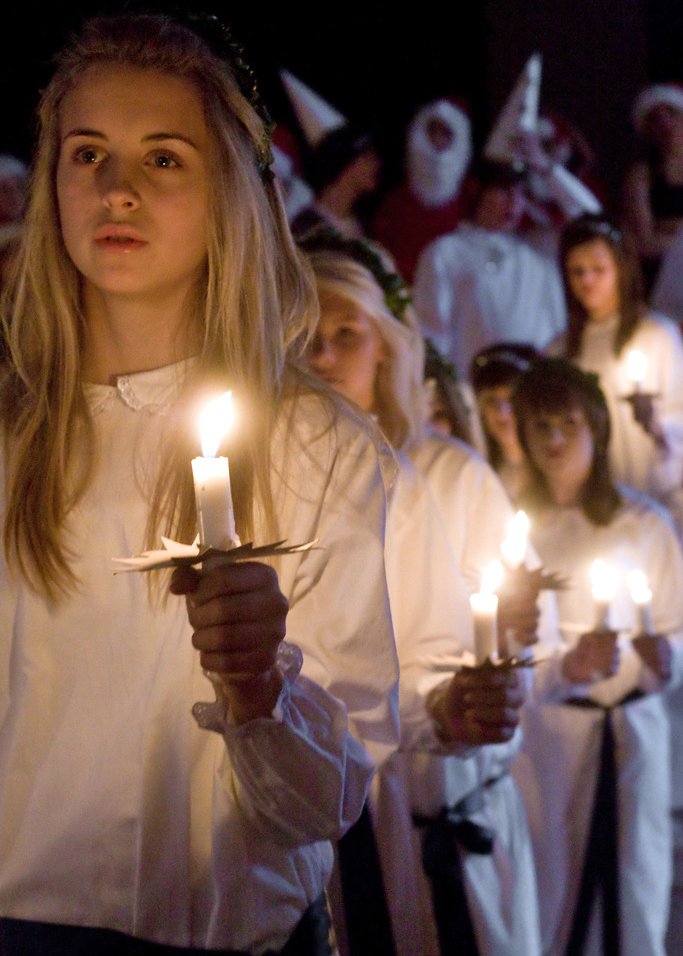 🇸🇪 Stockholm, Sweden and 4 moreSaint Lucy's Day
A December festival of light and song held across Scandinavia and Italy to honour a Christian martyr.Festival · Breakfast
🇸🇪 Stockholm, Sweden and 4 moreSaint Lucy's Day
A December festival of light and song held across Scandinavia and Italy to honour a Christian martyr.Festival · Breakfast
The same idea elsewhere
Remembering the ancestors compared 🇬🇪 Tbilisi, Georgia and 4 moreGeorgian polyphonic singing
Several voices at once, sung without instruments at Georgian feasts and weddingsPerformance
🇬🇪 Tbilisi, Georgia and 4 moreGeorgian polyphonic singing
Several voices at once, sung without instruments at Georgian feasts and weddingsPerformance
 🇵🇪 Cusco, Peru and 4 moreIntiinti (Quechua)
The Inca sun deity, honoured with temples, offerings and the June festival Inti RaymiSpiritual
🇵🇪 Cusco, Peru and 4 moreIntiinti (Quechua)
The Inca sun deity, honoured with temples, offerings and the June festival Inti RaymiSpiritual
 🇮🇳 India and 4 moreWater lantern
Small lamps floated on water to honour the dead and ask for good fortuneFestival
🇮🇳 India and 4 moreWater lantern
Small lamps floated on water to honour the dead and ask for good fortuneFestival
 🇨🇬 Republic of the CongoNkisi
Spiritual vessels and figures crafted to channel ancestral power, healing and justiceSpiritual
🇨🇬 Republic of the CongoNkisi
Spiritual vessels and figures crafted to channel ancestral power, healing and justiceSpiritual