Folklore and beliefEast AsiaShinto, Taoist and folk Chinese
Red Thread of Fate
In its own language: 姻緣紅線
An East Asian belief in an invisible cord binding two people destined for marriage
The red thread of fate is an East Asian folk belief rooted in Taoism that tells of destined lovers. Bound by an unseen crimson cord watched over by the lunar matchmaker deity Yue Lao, two people remain connected regardless of time, place, or obstacles.
The red thread of fate is a traditional belief in an unseen cord connecting two people destined to be together. Emerging from Chinese Taoist lore, the idea centres on the deity Yue Lao, the lunar matchmaker who oversees weddings. People believe the magical cord can stretch or twist through any circumstance without snapping, eventually drawing true partners into marriage.
The lunar matchmaker
In Taoist belief, marriage unions are guided by Yue Xia Laoren, commonly shortened to Yue Lao. Known as the old lunar matchmaker god, he oversees human attachments under the light of the moon. Tradition holds that he ties an unseen red cord between individuals destined to become one true love. The colour red holds deep cultural significance in China as a symbol of joy and happiness, making it a standard sight in wedding festivities. Although the deity remains central to religious Taoism, tales of his invisible string have travelled widely into secular folklore.
Threads and fingers
Different traditions depict the physical placement of the cord in distinct ways. Early Chinese folklore places the red string around the ankles of the intended couple. In Japanese tradition, the cord is instead described as binding a man's thumb to a woman's little finger. Over time, modern representations across both cultures shifted toward showing the thread fastened around the fingers, most commonly the little finger. As the legend reached regions beyond China, it frequently separated from its original religious context while keeping the core image of the connecting cord.
Legends of destiny
Several folk stories illustrate the inevitability of the thread. In one tale, a young boy meets Yue Lao at night and is shown his future bride. Disliking the idea, the boy hurls a stone at the girl and flees. Years later, he enters an arranged marriage with a village beauty, only to discover she wears an adornment over an eyebrow scar caused by a childhood rock. Another narrative tells of a man who attempts to kill his appointed poor bride, only to marry her later in life when she is adopted into wealth, leading him to ask for her pardon.
When and where
Originating in China, this belief has also become part of folklore in Japan and reached broader international cultures. In China and Japan, it appears in stories, wedding imagery, and popular depictions of soul mates.
What Red Thread of Fate means
The colour red stands for happiness in Chinese tradition and features prominently during marriage celebrations. The magical cord itself represents inevitable romantic destiny. Because the string can stretch and tangle without ever breaking, it signifies that destined partners will always find one another regardless of time, location, or circumstance.
Questions people ask about Red Thread of Fate
What is the red thread of fate?
It is a traditional Chinese folk belief that an invisible red cord connects two people destined to marry. Governed by the deity Yue Lao, the thread ensures destined lovers will meet despite distance or obstacles.
Where is the thread attached according to tradition?
In early Chinese tales, the cord binds the ankles of both individuals. In Japanese folklore, it connects a man's thumb to a woman's little finger. Modern depictions usually place the thread on the pinky finger.
Who is the deity associated with the red thread?
The figure is Yue Lao, also called Yue Xia Laoren, the lunar matchmaker deity in Taoism who oversees romantic unions and binds destined lovers together.
Can the red thread of fate break?
According to the folklore, the thread can stretch and become tangled through various life events, but it can never break.
See also
 IkatA resist-dyeing craft from Southeast Asia, where yarns are tied and dyed before weaving
 KizombaA close, slow couple dance from Angola, named after a Kimbundu word for party
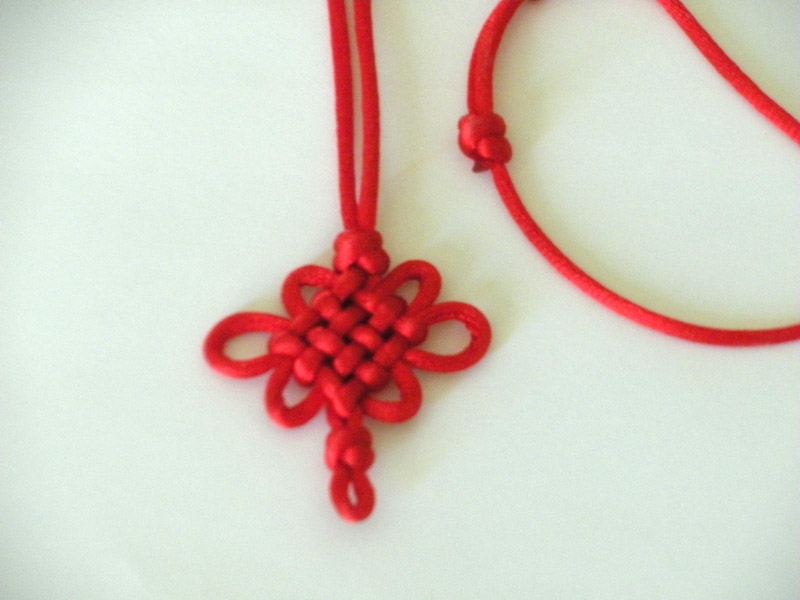 Chinese knottingA folk craft of cord tied into lucky shapes, made in China and given as charms
 Lion danceA dynamic ritual dance featuring costumed lions, drums and martial acrobatics
Good reading and sources
The facts on this page come from the Wikipedia article "Red thread of fate", written by its contributors and used under the CC BY-SA 4.0 licence, and from its Wikidata record (CC0). EveryParampara rewrote the text in its own words, with AI assistance, and compares every page with the article to make sure no passage is copied. It may be reused under the same CC BY-SA 4.0 licence with a link back.
It may contain mistakes. Traditions differ from one family, village and community to the next, and the people who keep them know them best. If something is wrong, tell us. Last refreshed 2026-10-07.
More from China
All the traditions of China 🇨🇳 Puyang, ChinaFeng shui風水
The Chinese spatial practice of aligning homes and graves with natural energyFolklore
🇨🇳 Puyang, ChinaFeng shui風水
The Chinese spatial practice of aligning homes and graves with natural energyFolklore
 🇯🇵 Tokyo, Japan and 2 moreManeki-neko招き猫
A lucky cat figurine, paw raised, kept by shop doors and in homes across JapanFolklore
🇯🇵 Tokyo, Japan and 2 moreManeki-neko招き猫
A lucky cat figurine, paw raised, kept by shop doors and in homes across JapanFolklore
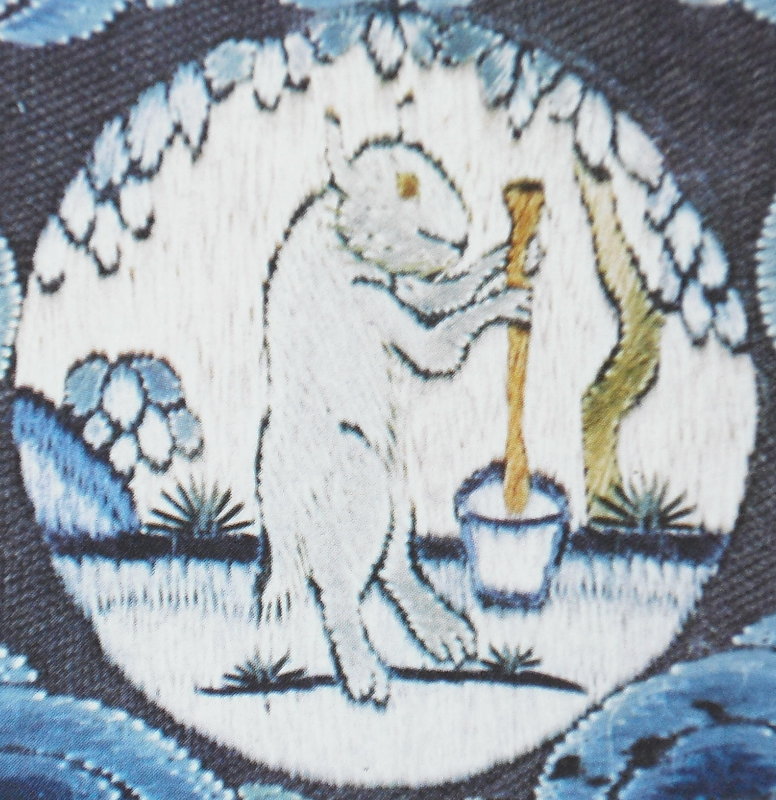 🇨🇳 China and 5 moreMoon rabbit月兔
A hare seen in the Moon's dark patches, pounding rice cakes or the elixir of lifeFolklore
🇨🇳 China and 5 moreMoon rabbit月兔
A hare seen in the Moon's dark patches, pounding rice cakes or the elixir of lifeFolklore
 🇨🇳 Luoyang, China and 1 moreYin and yang陰陽
Two opposite but complementary forces that Chinese thought sees in all thingsFolklore
🇨🇳 Luoyang, China and 1 moreYin and yang陰陽
Two opposite but complementary forces that Chinese thought sees in all thingsFolklore
The same idea elsewhere
Weddings compared 🇼🇸 Samoa and 1 moreʻIe tōga
Precious woven mats exchanged in Samoan ceremonies to honor family ties and chiefly status.Dress
🇼🇸 Samoa and 1 moreʻIe tōga
Precious woven mats exchanged in Samoan ceremonies to honor family ties and chiefly status.Dress
 🇮🇩 Indonesia and 2 moreKenduri
A communal prayer meal and gathering shared across Indonesia, Malaysia and BruneiSpiritual · Feasts and festival meals
🇮🇩 Indonesia and 2 moreKenduri
A communal prayer meal and gathering shared across Indonesia, Malaysia and BruneiSpiritual · Feasts and festival meals
 🇹🇱 Timor-LesteUma Lulik
Sacred ancestral clan houses and ritual shrines in East TimorSpiritual
🇺🇬 UgandaKwanjula
A formal marriage introduction ritual of the Baganda people in Uganda, where families meet to exchange gifts and seek blRite of passage
🇹🇱 Timor-LesteUma Lulik
Sacred ancestral clan houses and ritual shrines in East TimorSpiritual
🇺🇬 UgandaKwanjula
A formal marriage introduction ritual of the Baganda people in Uganda, where families meet to exchange gifts and seek blRite of passage