Music, dance and storytellingNorth America
Salsa
A lively Latin partner dance rooted in Afro-Caribbean rhythms and social dance traditions

Salsa is a dynamic Latin partner dance that took shape during the twentieth century from Afro-Cuban rhythms and American social dances. Dancers step to syncopated beats in clubs, ballrooms and festivals across the globe, mixing partnered turns with expressive solo footwork.
Salsa is a Latin partner dance created to accompany salsa music. Originating from Afro-Cuban and Caribbean social dances, it was named and popularized in New York during the 1960s and 1970s. Dancers move together through sequences of turns, spins and footwork patterns. Practiced globally at social gatherings and festivals, salsa brings people together to share musical rhythm, creative movement and cultural community.
Roots and development
The word salsa, meaning sauce in Spanish, became an umbrella label in New York during the 1960s and 1970s through musicians associated with Fania Records. The dance grew out of older Afro-Caribbean traditions, particularly Cuban son, mambo, cha-cha-chá, danzón and rumba. Movements draw on African traditions, such as body isolations, grounded steps, polyrhythms and call-and-response interactions linked to Yoruba and Santería rituals. European ballroom customs contributed couple holds and structured partner interactions through Cuban danzón. In the United States, dancers blended these Caribbean foundations with jazz, swing, tap and Palladium-era mambo to create modern urban forms.
Partnering and movement
Salsa music generally plays at tempos between 150 and 250 beats per minute. Dancers take three steps across every four musical beats. The dance is led by one partner who guides the other through turns, spins and directional changes, though partners may separate to perform solo footwork sequences known as shines. Styling can involve intricate arm positions, body rolls, shoulder movements, rapid spins and acrobatic lifts. Two spatial layouts define partner salsa: linear forms, where couples stay within an imaginary slot, and circular forms, where dancers rotate around each other as they step.
Regional dance styles
Different cities have developed their own distinct ways of dancing salsa. New York style moves linearly and breaks on the second beat of the measure, placing strong emphasis on intricate solo shines. Los Angeles style also follows a straight slot but breaks on the first beat, known for dramatic cross-body leads and acrobatic flair. In Cuba, the partner dance called casino follows a circular path and frequently incorporates Afro-Cuban rumba elements. In Colombia, salsa caleña from Cali emphasizes very rapid footwork, high kicks and skipping steps known as repique.
Group circles and socials
Beyond couple dancing, salsa is practiced in groups and community events. In 1950s Havana, dancers created rueda de casino, a circle where couples execute coordinated moves and trade partners following commands called out by a leader. A variant called Rueda de Miami later emerged in Florida, blending Cuban patterns with American references. Worldwide, salsa is danced socially in nightclubs, bars, restaurants, outdoor festivals and dedicated multiday events called salsa congresses. These gatherings bring dancers together from different countries to take workshops, watch performances and dance socially late into the night.
How Salsa is kept
Salsa is danced socially and in performances. A leader directs a follower using gentle hand and body cues, initiating turns, position changes and spins to the music. Partners maintain connection through their hands or a closed dance hold while matching the musical timing. At intervals, dancers may release each other to execute solo footwork sequences before coming back together. In group formats like rueda de casino, multiple couples stand in a circle and execute simultaneous turns or switch partners as a caller calls out instructions. Social dancers meet at clubs, dance halls and annual congresses.
When and where
Salsa is danced year-round at weekly social dances, night clubs and studio socials. Dancers also travel to annual multiday events known as salsa congresses and festivals, which are hosted in various cities across the world throughout the year.
Salsa is practiced globally in dance studios, nightclubs, restaurants, ballrooms and outdoor festivals. Major centers of salsa culture include New York, Los Angeles and Miami in the United States, Havana in Cuba, and Cali in Colombia, which is widely recognized as a global capital of salsa.
What Salsa means
Salsa dancing serves as an expression of cultural identity and connection, particularly for Latino communities. Academic researchers note that salsa spaces provide dancers with shared community and brief escapes from daily routine. The dance reflects centuries of cultural exchange, merging African rhythmic resilience and European partner dancing into a shared social celebration.


Questions people ask about Salsa
What is salsa dancing?
Salsa is a popular Latin partner dance performed to salsa music. It combines Afro-Caribbean rhythms with European partner dance structures. Couples execute coordinated spins and turns, occasionally separating to perform solo footwork.
Where did salsa dance originate?
Salsa dance arose from older Afro-Cuban dances like son, mambo, and rumba. The term and modern dance form were popularized in New York during the 1960s and 1970s, later evolving into distinct regional styles in places like Los Angeles, Cuba, and Colombia.
What is the basic rhythm of salsa?
Salsa music typically ranges from 150 to 250 beats per minute. Dancers follow a rhythm where they take three steps for every four beats of music, moving either on the first or second beat depending on the regional style.
What is rueda de casino?
Rueda de casino is a Cuban group style developed in Havana in the 1950s. Couples form a circle and dance in unison, executing synchronized movements and rapidly exchanging partners as one person calls out the figures.
See also
 PlenaPuerto Rican folk songs and dance sharing community news with rhythmic frame drums
 Irish traditional musicA living folk practice of dance tunes, airs, songs and communal pub sessions
 Morris danceA rhythmic English folk dance performed in costume with bells, sticks and handkerchiefs
 Dandiya RaasA stick dance from Gujarat performed in pairs during the festival of Navaratri
Good reading and sources
- Salsa (dance) on WikipediaEncyclopedia
- More photos on Wikimedia CommonsPhotos and video
- Wikidata recordOpen data
The facts on this page come from the Wikipedia article "Salsa (dance)", written by its contributors and used under the CC BY-SA 4.0 licence, and from its Wikidata record (CC0). EveryParampara rewrote the text in its own words, with AI assistance, and compares every page with the article to make sure no passage is copied. It may be reused under the same CC BY-SA 4.0 licence with a link back.
It may contain mistakes. Traditions differ from one family, village and community to the next, and the people who keep them know them best. If something is wrong, tell us. Last refreshed 2026-10-04.
More from the United States
All the traditions of the United States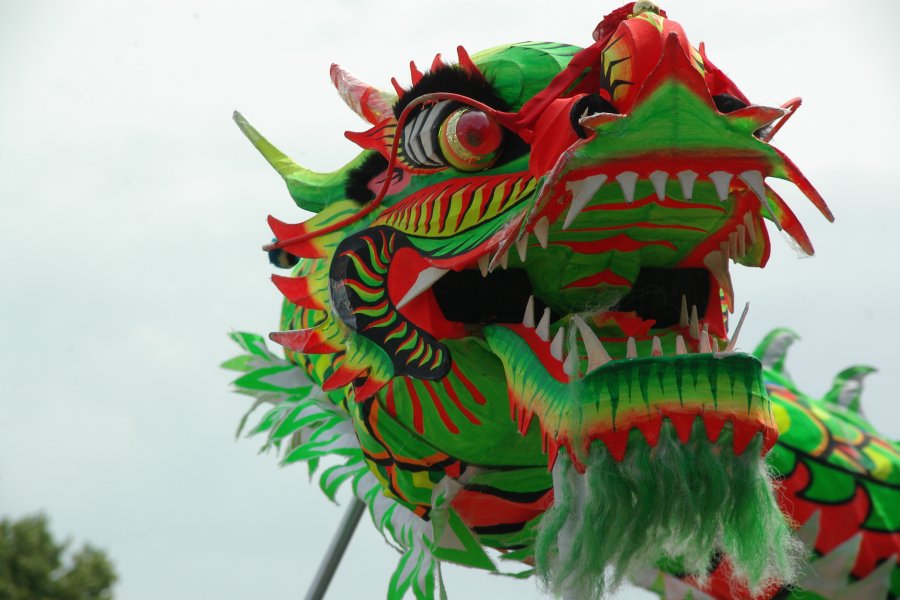 🇨🇳 China and 3 moreDragon dance舞龍 / 舞龙
A long dragon puppet on poles, danced by a team at Chinese New Year and other festivalsPerformance
🇮🇪 Ros Muc, Ireland and 2 moreSean-nós dancedamhsa ar an sean nós
An improvised solo Irish dance: low footwork, free arms and a loud battering beatPerformance
🇨🇳 China and 3 moreDragon dance舞龍 / 舞龙
A long dragon puppet on poles, danced by a team at Chinese New Year and other festivalsPerformance
🇮🇪 Ros Muc, Ireland and 2 moreSean-nós dancedamhsa ar an sean nós
An improvised solo Irish dance: low footwork, free arms and a loud battering beatPerformance
 🇵🇭 Palo, Philippines and 1 moreTinikling
A Philippine folk dance where dancers step between clapping bamboo polesPerformance
🇵🇭 Palo, Philippines and 1 moreTinikling
A Philippine folk dance where dancers step between clapping bamboo polesPerformance
 🇭🇹 Haiti and 1 moreRara
A Haitian street music of bamboo trumpets and drums, played in the Easter seasonPerformance
🇭🇹 Haiti and 1 moreRara
A Haitian street music of bamboo trumpets and drums, played in the Easter seasonPerformance
The same idea elsewhere
All of this kind 🇹🇷 Kayseri, Turkey and 4 moreHalay
A traditional line and circle folk dance kept across Turkey, Azerbaijan, Armenia, Iran, and Syria.Performance
🇧🇷 BrazilBaião
A syncopated folk rhythm and partnered dance from northeastern BrazilPerformance
🇹🇷 Kayseri, Turkey and 4 moreHalay
A traditional line and circle folk dance kept across Turkey, Azerbaijan, Armenia, Iran, and Syria.Performance
🇧🇷 BrazilBaião
A syncopated folk rhythm and partnered dance from northeastern BrazilPerformance
 🇺🇦 Kyiv, UkraineBanduraБандура
A Ukrainian plucked string instrument played to accompany epic songs and folk balladsPerformance
🇺🇦 Kyiv, UkraineBanduraБандура
A Ukrainian plucked string instrument played to accompany epic songs and folk balladsPerformance
 🇳🇿 Auckland, New ZealandPoi
A Māori performing art of swinging tethered weights in rhythmical patterns.Performance
🇳🇿 Auckland, New ZealandPoi
A Māori performing art of swinging tethered weights in rhythmical patterns.Performance