Satsuma kiriko
In its own language: 薩摩切子
Cut glass from Kagoshima: coloured glass laid over clear, then cut deep

Satsuma kiriko is a cut-glass craft from Kagoshima in Japan, first made for the Satsuma clan in the late Edo period. A layer of coloured glass is cut with deep, angled patterns so the colour shows in bands, and a factory, an artisan and a researcher brought the craft back in the 1980s.
Satsuma kiriko is cut glass made in Kagoshima, in southern Japan. Clear glass carries a thin outer layer of colour, and a craftsman grinds through that layer with spinning wheels, so colour remains in some places and is lifted in others. The result is a pattern read in light and shade rather than in paint. The Satsuma clan began the work; after a long gap it is made again today.
What it is
This is a kind of cut glass, counted among Japan's traditional handmade goods. A clear body is covered by a thinner second layer of coloured glass. The maker grinds through that coloured skin with rotating wheels, clearing some ground and leaving the rest, so the design appears as a difference in tone rather than as something painted on. The effect looks soft where the glass is shallow and intense where it is thick. A related craft, Edo kiriko of Tokyo, keeps its glass colourless, while Satsuma work is known for the overlay.
Origins and history
Shimazu Narioki, a Satsuma lord who lived from 1791 to 1859, brought glass workers to his domain from Edo, the city now called Tokyo. They learned from foreign books obtained through Nagasaki. His son, Shimazu Nariakira, folded the craft into the Shuseikan Enterprise, the earliest industrial works in Japan built on western lines, which also turned out steel and cloth. Nariakira prized the glass and gave pieces to other lords. After his death the work stopped. Money ran short, the factory was damaged when Kagoshima was bombarded, and the Satsuma Rebellion brought more upheaval. Very few pieces survive from those years.
Glass, colour and cut
Two things mark this glass out. The first is colour: a tinted layer sits over clear glass, and wherever the cutter grinds it away the clear body shows through. The second is the cutting itself, done boldly and at depth, so light passing through thick and thin areas shifts gradually from dark to pale. The old method is set down in a handbook of glass technology that Kazuyoshi Hanai wrote in 1830, the Hari Seiko Zensho. It describes a technique shaped by Chinese practice. Lead was melted with powdered white stone, zinc was sometimes stirred in on reheating, and niter went into the cooling mixture before the glass was shaped.
Foreign influence and Meiji
Satsuma glassmakers drew on Dutch and English practice, and the handbook used in the domain reached it by way of Nagasaki, the port then open to foreign trade. In the Meiji period Japan began selling goods abroad, and some workshops made cloth and other products aimed at Western buyers. Taste for Japanese art ran the other way too, under the name japonisme: European painters took up Japanese motifs and methods, and Vincent van Gogh was among those influenced by Japanese art. Satsuma kiriko belongs to that period of exchange, a Japanese craft built with borrowed technique.
Revival and today
Production began again when a glass factory, an artisan and a researcher joined forces, and by 1985 they had worked out how to make the glass once more. In 1989 the craft, then run by Shimadzu Limited, gained recognition as a traditional craft of Kagoshima. Makers now turn out two sorts of work: copies of the old pieces and fresh designs and colours in the same manner. Kagoshima Prefecture is where this happens. Satsuma Glass Studio and Satsuma Vidro Craft, two workshops, produce the overlaid glass and the reproductions, and some of the cutting is passed to Edo kiriko craftsmen.
How Satsuma kiriko is kept
A piece starts with clear glass. A second, coloured layer is laid over it, and the whole is cooled slowly so that it does not crack. The cutter then works the surface against turning wheels, grinding the colour away in chosen places and leaving it in others. Bold, deep cuts let more light through and lighten the tone, while shallow cuts hold the colour dark. At the end the surface is tidied and polished. In the Satsuma domain this was one job among many at the Shuseikan works, where steel and cloth were also made. Today a handful of craftsmen in Kagoshima carry it on.
When and where
Kagoshima Prefecture is its home, in the south of Japan on the island of Kyushu. The Satsuma clan's industrial complex at Shuseikan was where the first pieces were made. Today the work stays in Kagoshima, and some cutting is passed to Edo kiriko craftsmen. When the craft lapsed, its craftsmen and their skills scattered to Tokyo and Osaka.
What Satsuma kiriko means
For the Satsuma domain the glass carried standing. Nariakira prized it and gave pieces to other lords as presents, so it spoke for a domain that was modernising quickly. For makers today the deep colour matters most. They treat the strong shift in tone between thick and thin cuts as the mark of good work, and they measure new pieces against the old ones.
Questions people ask about Satsuma kiriko
What is Satsuma kiriko?
It is a Japanese cut glass. A coloured layer covers clear glass, and the maker cuts into that layer so the two tones alternate across the surface. Kagoshima Prefecture is its home, and it is counted among the country's traditional crafts.
Where is it made?
In Kagoshima Prefecture, on Kyushu in southern Japan. Satsuma Glass Studio and Satsuma Vidro Craft, the two workshops named in accounts of the craft, produce the overlaid glass and the copies of older work there, though some cutting goes to Edo kiriko craftsmen elsewhere.
How does it differ from Edo kiriko?
Edo kiriko, from Tokyo, uses glass that stays clear and colourless. Satsuma kiriko lays a coloured layer over clear glass and cuts into it deeply, which gives strong gradations of colour. Makers of Satsuma work treat that deep overlay colour as its main feature.
When did it begin and when did it stop?
It began in the late Edo period, when the Satsuma lord Shimazu Narioki brought glass workers from Edo. His son Nariakira supported it. After Nariakira died, money problems, the bombardment of Kagoshima and the Satsuma Rebellion ended production in the early Meiji period.
Is it made today?
Yes. From 1985 a factory, an artisan and a researcher managed to reproduce it, and in 1989 it was recognised as a traditional craft of Kagoshima. Makers now offer both copies of the old style and new designs and colours in the same manner.
See also
 IkatA resist-dyeing craft from Southeast Asia, where yarns are tied and dyed before weaving
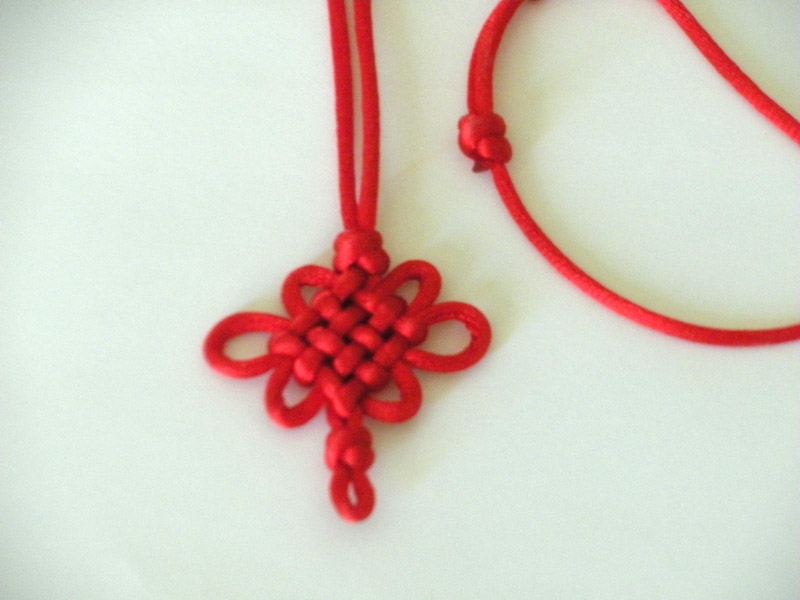 Chinese knottingA folk craft of cord tied into lucky shapes, made in China and given as charms
 BonsaiA Japanese craft of keeping small trees in shallow pots, shaped for contemplation
 CeladonGreen-glazed pottery first made in China, valued for colours that echo jade
Good reading and sources
The facts on this page come from the Wikipedia article "Satsuma kiriko", written by its contributors and used under the CC BY-SA 4.0 licence, and from its Wikidata record (CC0). EveryParampara rewrote the text in its own words, with AI assistance, and compares every page with the article to make sure no passage is copied. It may be reused under the same CC BY-SA 4.0 licence with a link back.
It may contain mistakes. Traditions differ from one family, village and community to the next, and the people who keep them know them best. If something is wrong, tell us. Last refreshed 2026-10-10.
More from Japan
All the traditions of Japan 🇯🇵 Kyoto, JapanYūzen友禅
A Japanese resist-dyeing craft that creates painterly patterns on fine kimonoCraft
🇯🇵 Kyoto, JapanYūzen友禅
A Japanese resist-dyeing craft that creates painterly patterns on fine kimonoCraft
 🇰🇷 South Korea and 2 moreNajeonchilgi나전칠기
A Korean craft of inlaying mother-of-pearl onto lacquered wood to create decorative objects.Craft
🇰🇷 South Korea and 2 moreNajeonchilgi나전칠기
A Korean craft of inlaying mother-of-pearl onto lacquered wood to create decorative objects.Craft
 🇯🇵 JapanKokeshiこけし
Hand-turned Japanese wooden dolls painted with floral designs and slender facesCraft
🇯🇵 Tokyo, Japan and 1 moreBonsai盆栽
A Japanese craft of keeping small trees in shallow pots, shaped for contemplationCraft
🇯🇵 JapanKokeshiこけし
Hand-turned Japanese wooden dolls painted with floral designs and slender facesCraft
🇯🇵 Tokyo, Japan and 1 moreBonsai盆栽
A Japanese craft of keeping small trees in shallow pots, shaped for contemplationCraft
The same idea elsewhere
All of this kind 🇮🇷 Shiraz, Iran and 1 moreKhatamخاتم
A Persian inlay craft that builds geometric patterns from thousands of tiny cut piecesCraft
🇮🇷 Shiraz, Iran and 1 moreKhatamخاتم
A Persian inlay craft that builds geometric patterns from thousands of tiny cut piecesCraft
 🇮🇪 Galway, Ireland and 1 moreBrigid's crossCros Bhríde
A cross of woven rushes or straw, made for Saint Brigid's Day on the first of FebruaryCraft
🇮🇪 Galway, Ireland and 1 moreBrigid's crossCros Bhríde
A cross of woven rushes or straw, made for Saint Brigid's Day on the first of FebruaryCraft
 🇦🇺 AustraliaBark painting
Ochre pictures on flattened tree bark, an Aboriginal art form of northern AustraliaCraft
🇦🇺 AustraliaBark painting
Ochre pictures on flattened tree bark, an Aboriginal art form of northern AustraliaCraft
 🇺🇸 United States and 1 moreDreamcatcherᐊᓴᐱᑫᔒᓐᐦ (asabikeshiinh)
A hand-woven hoop from Anishinaabe tradition, hung above a cradle to protect a childCraft
🇺🇸 United States and 1 moreDreamcatcherᐊᓴᐱᑫᔒᓐᐦ (asabikeshiinh)
A hand-woven hoop from Anishinaabe tradition, hung above a cradle to protect a childCraft