Festivals and celebrationsNorth AmericaChristian
Sawdust carpet
In its own language: tapete de aserrín
Colored sawdust designs laid on streets to greet religious processions in Latin America and beyond.

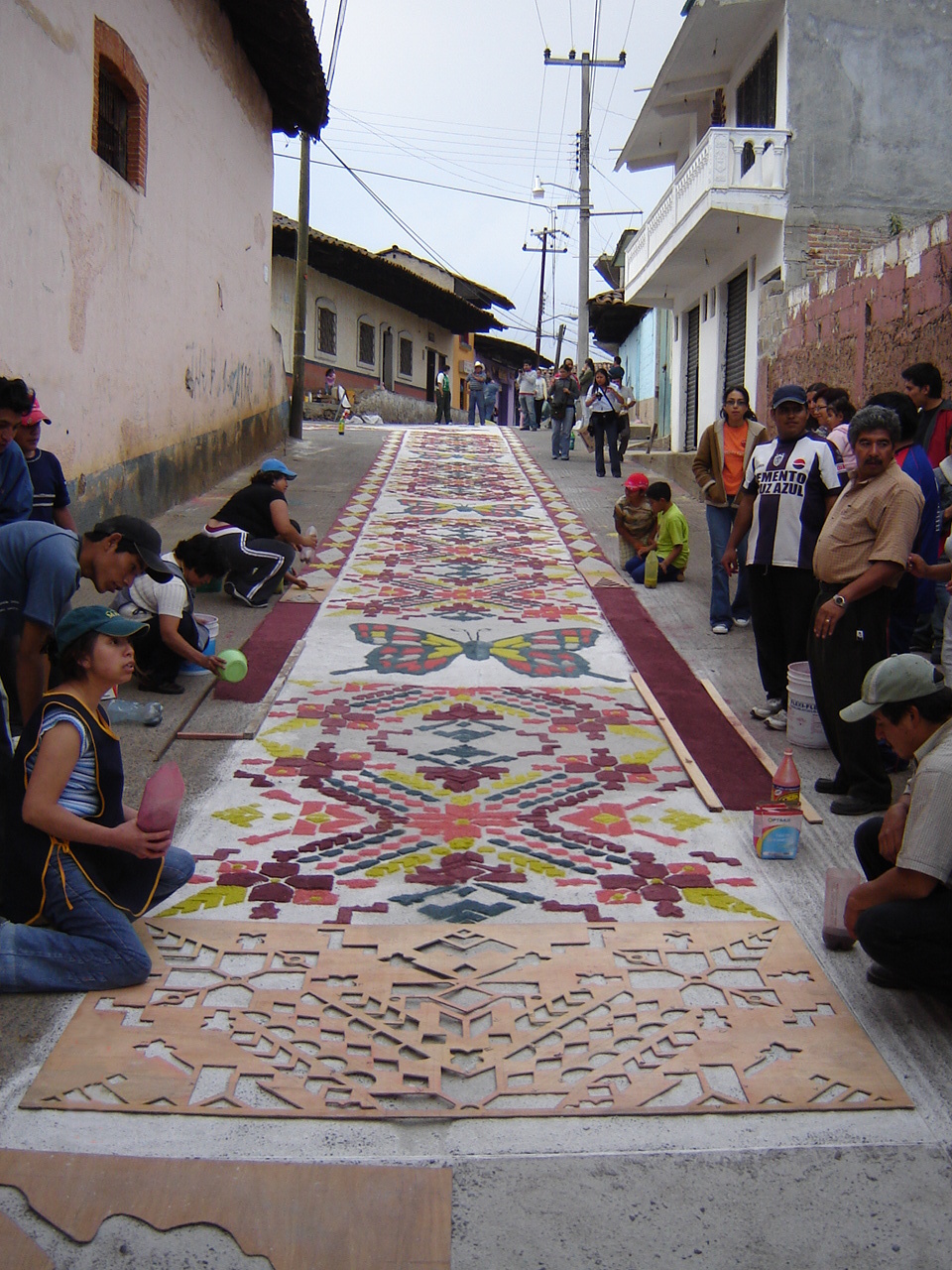
Sawdust carpets are temporary street decorations made from colored sawdust and organic materials. They originated in Europe and were brought to the Americas by Spanish colonizers. Today they are strongest in Mexico and Central America, where they welcome Holy Week and Corpus Christi processions.
When is Sawdust carpet marked?
Sawdust carpet is kept as part of Day of the Dead, which runs from 1 to 2 November 2026.
Sawdust carpets are intricate temporary artworks created on city streets. Communities lay down layers of colored sawdust to honor religious processions. This practice blends European Catholic traditions with indigenous artistic methods. It serves as a sacred welcome for icons carried through neighborhoods during major feast days.
Origins and history
The custom began in Santa Cruz de Tenerife during the Middle Ages. Streets were adorned with flowers and sand for the Feast of Corpus Christi. The Spanish brought this practice to Latin America during the colonial period. Indigenous populations adopted it because it resembled their own traditions of laying fruit or feather carpets for harvest gods. The images often taught biblical stories to local communities. Over time, the craft spread to other regions and adapted to new contexts while keeping its core purpose.
How they are made
Artisans prepare sawdust by cleaning and dyeing it with natural or commercial colors. A base layer of undyed sawdust smooths rough pavement. Designs are then applied using stencils or freehand techniques. Additional materials like pine needles, rice, or flower petals add texture. A light spray of water sets the design in place. The process requires skill and patience, especially for complex freehand patterns. Once finished, the carpets remain intact until the procession passes over them.
Major celebrations
Huamantla hosts the largest event in August, drawing hundreds of thousands of visitors. Artisans create massive carpets overnight before the Virgin Mary’s procession tramples them. León and Antigua Guatemala maintain strong Holy Week traditions. Huajuapan de León features unique Mixtec-inspired designs. Day of the Dead also sees carpet creation in central Mexico, often accompanying altars. These events blend religious devotion with community pride and artistic expression.
Modern adaptations
Environmental concerns have led to changes in material use. Some groups now use biodegradable alternatives like grass mats. Permanent sawdust designs were developed in Nicaragua to preserve the art form. Exhibitions showcase these works globally. Artists from Huamantla travel internationally to share their craft. The tradition continues to evolve while respecting its spiritual roots and historical significance.
How Sawdust carpet is kept
Communities gather to prepare sawdust and dyes. They spread a base layer on streets or courtyards. Designs are filled in using molds or freehand sprinkling. Additional organic materials add detail. A light water spray fixes the artwork. Processions walk over the carpets to honor saints or religious figures. Families and neighborhood committees often organize the work. The act is both devotional and communal.
When and where
Kept during Holy Week, Corpus Christi, and patron saint feast days. Dates vary by region and liturgical calendar. Some events occur annually in August or around Easter.
Strongest in Mexico and Central America. Also found in parts of South America and the United States. Key locations include Huamantla, León, Antigua Guatemala, and Oaxaca. Smaller communities in the US observe it too.
What Sawdust carpet means
The carpets welcome divine presence into the community. They represent devotion, humility, and artistic offering. Indigenous elements reflect cultural fusion. Trampling by processions symbolizes sacrifice and reverence. The ephemeral nature reminds viewers of impermanence and spiritual focus.


Days Sawdust carpet is marked
Questions people ask about Sawdust carpet
When is Sawdust carpet marked?
Sawdust carpet is kept as part of Day of the Dead, which runs from 1 to 2 November 2026.
What are sawdust carpets?
They are temporary street decorations made from colored sawdust and organic materials. Communities create them to greet religious processions during feast days like Holy Week and Corpus Christi.
Where are they kept?
Most prominently in Mexico and Central America, especially Huamantla, León, and Antigua Guatemala. They also appear in parts of the United States and South America.
How long do they last?
Usually only hours. Processions walk over them shortly after completion. Their beauty lies in their temporary nature, honoring the sacred moment rather than permanence.
Are they religious?
Yes, primarily. They accompany Catholic processions and honor saints or biblical scenes. Some modern versions include secular themes but retain spiritual roots.
See also
 ChristmasA festival of Jesus's birth, kept on 25 December with gifts, lights and shared meals
 HalloweenAn annual observance on 31 October marking the eve of All Saints' Day, rooted in Christian tradition and Celtic heritage
 Christmas treeA decorated evergreen or artificial tree placed indoors to mark the Christmas season.
 HanukkahAn eight-day Jewish festival marking the rededication of the Second Temple in Jerusalem and the miracle of a single day'
Good reading and sources
- Sawdust carpet on WikipediaEncyclopedia
- More photos on Wikimedia CommonsPhotos and video
- Wikidata recordOpen data
The facts on this page come from the Wikipedia article "Sawdust carpet", written by its contributors and used under the CC BY-SA 4.0 licence, and from its Wikidata record (CC0). EveryParampara rewrote the text in its own words, with AI assistance, and compares every page with the article to make sure no passage is copied. It may be reused under the same CC BY-SA 4.0 licence with a link back.
It may contain mistakes. Traditions differ from one family, village and community to the next, and the people who keep them know them best. If something is wrong, tell us. Last refreshed 2026-10-05.
More from Mexico
All the traditions of Mexico
🇮🇪 Ireland and 5 moreHalloween
An annual observance on 31 October marking the eve of All Saints' Day, rooted in Christian tradition and Celtic heritageFestival · Sweets given and shared
 🇲🇽 Mexico City, Mexico and 1 moreDay of the DeadDía de Muertos
A Mexican remembrance of deceased family and friends with altars, marigolds and feastsFestival · Sweets given and shared
🇲🇽 Mexico City, Mexico and 1 moreDay of the DeadDía de Muertos
A Mexican remembrance of deceased family and friends with altars, marigolds and feastsFestival · Sweets given and shared
 🇲🇽 San Salvador Huixcolotla, Mexico and 1 morePapel picado
A Mexican folk art of cutting intricate designs into tissue paper for festive and spiritual displays.Festival
🇲🇽 San Salvador Huixcolotla, Mexico and 1 morePapel picado
A Mexican folk art of cutting intricate designs into tissue paper for festive and spiritual displays.Festival
 🇪🇸 Córdoba, Spain and 5 moreFiesta de las Cruces
A May festival where communities decorate crosses with flowers and crafts to celebrate faith and local heritage.Festival
🇪🇸 Córdoba, Spain and 5 moreFiesta de las Cruces
A May festival where communities decorate crosses with flowers and crafts to celebrate faith and local heritage.Festival
The same idea elsewhere
Pilgrimage compared 🇮🇱 Jerusalem, IsraelSukkotסוכות
A seven-day autumn Jewish festival of temporary booths, harvest prayers and hospitalitySpiritual
🇮🇱 Jerusalem, IsraelSukkotסוכות
A seven-day autumn Jewish festival of temporary booths, harvest prayers and hospitalitySpiritual
 🇯🇵 Kyoto, JapanTorii鳥居
A traditional Japanese gate marking the entrance to a Shinto shrine and separating the sacred from the mundane.Spiritual
🇯🇵 Kyoto, JapanTorii鳥居
A traditional Japanese gate marking the entrance to a Shinto shrine and separating the sacred from the mundane.Spiritual
 🇲🇲 Bagan, MyanmarNat worshipနတ်
Veneration of guardian spirits and nature deities alongside Buddhism in MyanmarSpiritual
🇲🇲 Bagan, MyanmarNat worshipနတ်
Veneration of guardian spirits and nature deities alongside Buddhism in MyanmarSpiritual
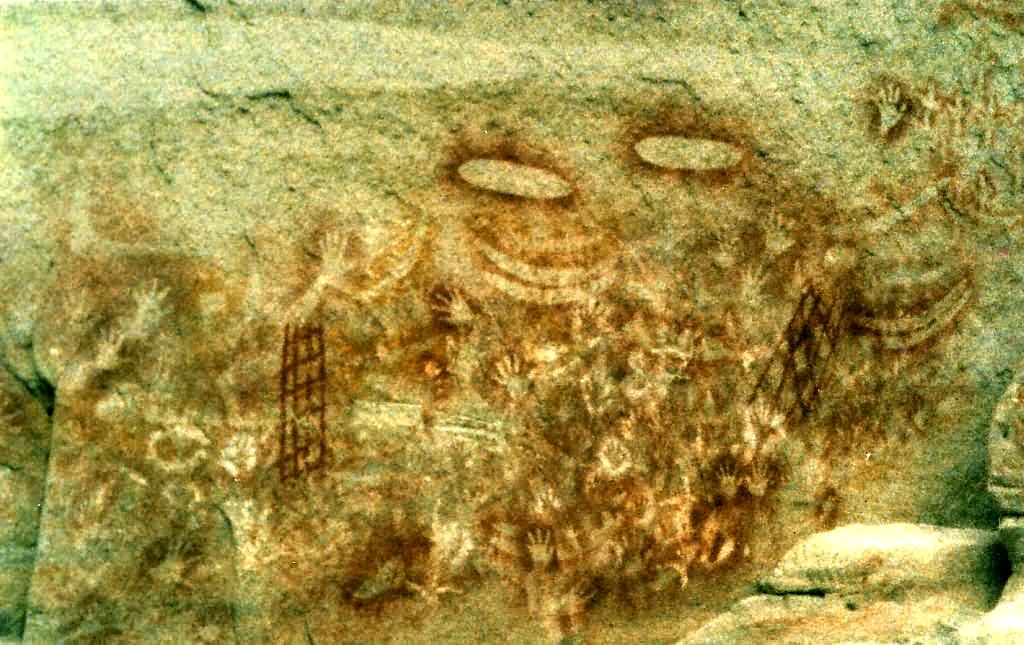 🇦🇺 AustraliaThe Dreaming
A living spiritual worldview and law connecting Aboriginal Australians to ancestors, land, and community.Spiritual
🇦🇺 AustraliaThe Dreaming
A living spiritual worldview and law connecting Aboriginal Australians to ancestors, land, and community.Spiritual