Yūki-tsumugi
In its own language: 結城紬
A hand-spun silk cloth from Yūki, Japan, woven slowly on a low loom

Yūki-tsumugi is a silk cloth woven by hand in Japan, mainly in the town of Yūki in Ibaraki Prefecture. Its makers spin cocoon floss into yarn, tie and dye it for kasuri patterns, and weave it on a jibata, a low loom held steady by a strap around the waist.
Yūki-tsumugi is a silk cloth from Japan, made mainly in the town of Yūki in Ibaraki Prefecture. Weavers pull floss from silkworm cocoons, spin it into yarn by hand, tie thousands of tiny resists into the thread before dyeing, and weave the cloth on a jibata, a low loom held by a strap around the waist. The slow work is highly valued as a Japanese craft.
What it is
Yūki-tsumugi is a handwoven silk textile. Its home is the Yūki district of Ibaraki Prefecture, Japan. It belongs to the tsumugi family of silks, which are made from yarn spun by hand instead of from a single drawn filament. Patterns come from kasuri, an ikat method: parts of the yarn are tied off before dyeing, so the colour does not reach them and a soft-edged design appears in the finished cloth. Weaving is done on a jibata, a simple loom whose tension is set by a strap around the weaver's waist.
Origins and history
Accounts of how the craft began differ. One tradition traces it to a weaving house called Nagahatabeno Ashiginu, said to date from the reign of the legendary Emperor Sujin; its founder, Ooyanomikoto, is credited with a silk-making method that spread through the Yūki district. Another account places its development in the Muromachi period, between the fourteenth and sixteenth centuries, when the lord of a farming family in Hitachi Province is said to have sent tsumugi cloth each year as a gift to the Kamakura Kanryō. The name yūki-tsumugi came into use in 1602, when weavers were brought from Ueda Castle and the cloth, then plain, was presented to the shōgun. In 1873 it was shown at the Vienna World's Fair and became known abroad.
How it is made
Making the cloth begins with silkworm cocoons. Floss is drawn out of them and spun into yarn by hand. For a patterned cloth the weaver then ties thousands of small resists into the yarn, working from the design wanted in the finished fabric; only after that does the dyeing take place. The prepared yarn goes onto a jibata, a loom the weaver sits at with a strap around the waist, which lets the tension of the lengthwise threads be adjusted. Speed is never the aim. Plain cloth for one adult garment takes as much as fifteen days of weaving; a patterned piece can take forty-five.
Recognition today
In 1956 the Japanese government named yūki-tsumugi an Important Intangible Cultural Property. A preservation group for the weaving technique was set up in 1976, and it works to keep the skill alive and pass it on. Yūki Daiichi High School, in the town, runs a yūki-tsumugi club. UNESCO recognised the craft in 2010, adding it to its international register of intangible cultural heritage. Around one hundred and thirty craftspeople still make yūki-tsumugi today, working in Yūki and in Oyama.
How Yūki-tsumugi is kept
The craft is kept by individual weavers, mostly in Yūki and Oyama, where about one hundred and thirty people still work in it. Each weaver takes cocoon floss, spins it into yarn by hand, and, when a pattern is wanted, ties thousands of resists into the thread before it is dyed. The yarn is then woven on a jibata, with a strap at the waist controlling the tension of the lengthwise threads. A preservation group formed in 1976 supports the passing on of the technique, and a club at Yūki Daiichi High School keeps it among younger people.
When and where
There is no fixed day or season for the craft. Work follows the supply of cocoons and the pace of the weaver. Plain cloth can take fifteen days at the loom, and a patterned length up to forty-five, so a single piece may occupy one person for weeks at a time.
Yūki, in Ibaraki Prefecture, Japan, is the craft's home, and the weaving is also carried on in the nearby city of Oyama. The old accounts say knowledge of silk making spread through the Yūki district, and later weavers came to the area from Ueda Castle. About one hundred and thirty craftspeople work there now.
What Yūki-tsumugi means
For the people who make it, yūki-tsumugi stands for patience and skill rather than speed. The cloth is built slowly, thread by thread, and its value lies in work that cannot be hurried. Its standing as a national cultural property, and later recognition from UNESCO, are a sign that the craft is thought of as part of the country's heritage, and the preservation group and the school club exist so that the knowledge is not lost.
Questions people ask about Yūki-tsumugi
What is yūki-tsumugi?
It is a silk cloth woven by hand in Japan, mostly in Yūki, a town in Ibaraki Prefecture. The yarn is spun by hand from cocoon floss, tied and dyed in the kasuri way, and woven on a jibata, a low loom steadied by a strap around the weaver's waist.
Where is it made?
Chiefly in Yūki, in Ibaraki Prefecture, Japan, and also in the nearby city of Oyama. Roughly one hundred and thirty craftspeople there still practise the work. The old accounts tie the craft to the Yūki district and the wider Hitachi Province area.
How long does one piece take?
Weaving plain cloth for a single adult garment can take up to fifteen days. A patterned cloth, where thousands of resists are tied into the yarn before dyeing, may take as long as forty-five days of work at the loom.
When did it receive official recognition?
Japan designated it an Important Intangible Cultural Property in 1956. A preservation body for the technique followed in 1976, and a local high school has its own club. In 2010 UNESCO added the craft to its international register of intangible cultural heritage.
See also
 IkatA resist-dyeing craft from Southeast Asia, where yarns are tied and dyed before weaving
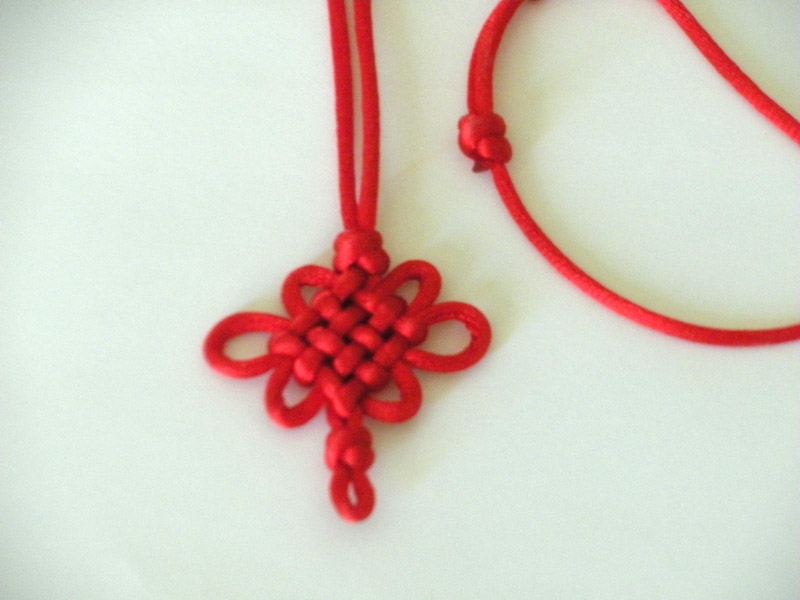 Chinese knottingA folk craft of cord tied into lucky shapes, made in China and given as charms
 BonsaiA Japanese craft of keeping small trees in shallow pots, shaped for contemplation
 CeladonGreen-glazed pottery first made in China, valued for colours that echo jade
Good reading and sources
- Yūki-tsumugi on WikipediaEncyclopedia
- More photos on Wikimedia CommonsPhotos and video
- Wikidata recordOpen data
The facts on this page come from the Wikipedia article "Yūki-tsumugi", written by its contributors and used under the CC BY-SA 4.0 licence, and from its Wikidata record (CC0). EveryParampara rewrote the text in its own words, with AI assistance, and compares every page with the article to make sure no passage is copied. It may be reused under the same CC BY-SA 4.0 licence with a link back.
It may contain mistakes. Traditions differ from one family, village and community to the next, and the people who keep them know them best. If something is wrong, tell us. Last refreshed 2026-10-10.
More from Japan
All the traditions of Japan 🇰🇷 South Korea and 2 moreNajeonchilgi나전칠기
A Korean craft of inlaying mother-of-pearl onto lacquered wood to create decorative objects.Craft
🇰🇷 South Korea and 2 moreNajeonchilgi나전칠기
A Korean craft of inlaying mother-of-pearl onto lacquered wood to create decorative objects.Craft
 🇯🇵 Kyoto, JapanYūzen友禅
A Japanese resist-dyeing craft that creates painterly patterns on fine kimonoCraft
🇯🇵 Kyoto, JapanYūzen友禅
A Japanese resist-dyeing craft that creates painterly patterns on fine kimonoCraft
 🇯🇵 JapanKokeshiこけし
Hand-turned Japanese wooden dolls painted with floral designs and slender facesCraft
🇯🇵 Tokyo, Japan and 1 moreBonsai盆栽
A Japanese craft of keeping small trees in shallow pots, shaped for contemplationCraft
🇯🇵 JapanKokeshiこけし
Hand-turned Japanese wooden dolls painted with floral designs and slender facesCraft
🇯🇵 Tokyo, Japan and 1 moreBonsai盆栽
A Japanese craft of keeping small trees in shallow pots, shaped for contemplationCraft
The same idea elsewhere
All of this kind 🇮🇷 Shiraz, Iran and 1 moreKhatamخاتم
A Persian inlay craft that builds geometric patterns from thousands of tiny cut piecesCraft
🇮🇷 Shiraz, Iran and 1 moreKhatamخاتم
A Persian inlay craft that builds geometric patterns from thousands of tiny cut piecesCraft
 🇮🇪 Galway, Ireland and 1 moreBrigid's crossCros Bhríde
A cross of woven rushes or straw, made for Saint Brigid's Day on the first of FebruaryCraft
🇮🇪 Galway, Ireland and 1 moreBrigid's crossCros Bhríde
A cross of woven rushes or straw, made for Saint Brigid's Day on the first of FebruaryCraft
 🇦🇺 AustraliaBark painting
Ochre pictures on flattened tree bark, an Aboriginal art form of northern AustraliaCraft
🇦🇺 AustraliaBark painting
Ochre pictures on flattened tree bark, an Aboriginal art form of northern AustraliaCraft
 🇺🇸 United States and 1 moreDreamcatcherᐊᓴᐱᑫᔒᓐᐦ (asabikeshiinh)
A hand-woven hoop from Anishinaabe tradition, hung above a cradle to protect a childCraft
🇺🇸 United States and 1 moreDreamcatcherᐊᓴᐱᑫᔒᓐᐦ (asabikeshiinh)
A hand-woven hoop from Anishinaabe tradition, hung above a cradle to protect a childCraft