🇮🇷 Iran
Yalda, the night of the winter solstice, is spent with family reading poems by Hafez, eating pomegranates, watermelon and nuts, and staying awake until dawn. The red fruit symbolises the sun's glow.
Read: Yaldā NightIn the far north the year turns on its darkest day.
Presented by ClearTrust Free for the curious, the homesick and the hosts.
In the far north the year turns on its darkest day. Around the winter solstice, in late December, many peoples have lit fires, brought evergreens indoors, feasted, given gifts and told stories to carry themselves through the cold. Several of the world's great festivals, Christmas, Yule, Dongzhi, Yalda and Hanukkah among them, fall close to this moment, and each has its own meaning. Their shared message is that the light will return. In the southern hemisphere the same days are midsummer, and the customs there lean to the beach and the barbecue. This page follows the midwinter customs of the world and what they have in common.
For farming societies, midwinter was a time of rest, stored food and anxiety about the coming months. Rituals marked the turning point, when the days start to lengthen, and gave people a reason to gather and share what they had. Religions later gave the season new meanings, from the birth of Christ to the rededication of the Temple, but many older customs of fire, light and green plants were kept. The festival offers warmth, company and hope at the hardest time of year, and it is often the most family-centred time on the calendar.
Light is the main symbol: bonfires, candles, lamps, Yule logs and, today, strings of electric lights. Evergreens, such as fir, holly, ivy and mistletoe, bring a sign of life indoors. A great meal is shared, with roast meat, sweet dishes and drink. Gifts are given, and in many places a figure such as Saint Nicholas, Father Frost or Befana brings them. Songs, carols and plays are performed, and people make visits to relatives and neighbours. A period of twelve days or so, from Christmas to Epiphany, is a holiday time in much of Europe.
Winter foods are rich and warm: roast goose and ham, stollen and panettone, tangyuan rice balls in China, sweet porridge in Scandinavia, pomegranates and watermelon at Yalda, latkes and doughnuts at Hanukkah. Mulled wine and hot punch warm the guests. Dress is often festive, with red and green, and woollen jumpers have become part of the tradition. Music is central: carols, hymns, folk songs, bells and brass bands. Many communities have their own dances, plays and processions, such as mumming and the Lucia procession in Sweden.
Midwinter has become a global holiday season, with shared symbols, such as the tree and the lights, found even in countries with few Christians. At the same time, many people are returning to older ways, celebrating the solstice itself, or reviving local customs, such as Yule logs, wassailing and winter markets. In multicultural cities, several festivals fall within a few weeks and neighbours join each other's celebrations. Concern about waste has led many families to make gifts, reuse decorations and buy less, and charities collect food and gifts for those who are alone.
Yalda, the night of the winter solstice, is spent with family reading poems by Hafez, eating pomegranates, watermelon and nuts, and staying awake until dawn. The red fruit symbolises the sun's glow.
Read: Yaldā NightDongzhi, around 21 December, is observed with a family meal, with tangyuan, sweet rice balls, in the south and dumplings in the north. It was once an important imperial festival.
Read: DongzhiAt Toji, the winter solstice, families bathe with yuzu citrus fruits in a hot bath and eat kabocha pumpkin, a custom believed to guard against colds and bring luck for the coming year. Some bathhouses float whole yuzu fruits in the water, and the scent fills the room.
Read: Yuzu bathDongji is marked by eating red bean porridge, patjuk, which is believed to drive away evil spirits, and in the past the day was treated as a little new year. Red is the colour of the sun and of good luck, and the porridge is often sprinkled on the doorposts of the house.
Dongji, being writtenMakar Sankranti in mid-January marks the sun's northward turn, with kites in Gujarat, sesame sweets, bonfires at Lohri in Punjab and a ritual bath at the Ganges. People also give thanks to the sun god Surya, and many take a holy dip in rivers at dawn.
Read: Makar SankrantiHanukkah lasts eight nights in late December, with a candle added each night to a menorah, and foods fried in oil, latkes and sufganiyot. It celebrates the rededication of the Temple.
Read: Hanukkah Yaldā NightThe Persian longest night.
 DongzhiThe Chinese winter solstice.
 HanukkahThe Jewish festival of lights.
 ChristmasThe Christian feast of the birth.
 YuleThe old Germanic midwinter feast.
 KwanzaaThe African-American celebration.
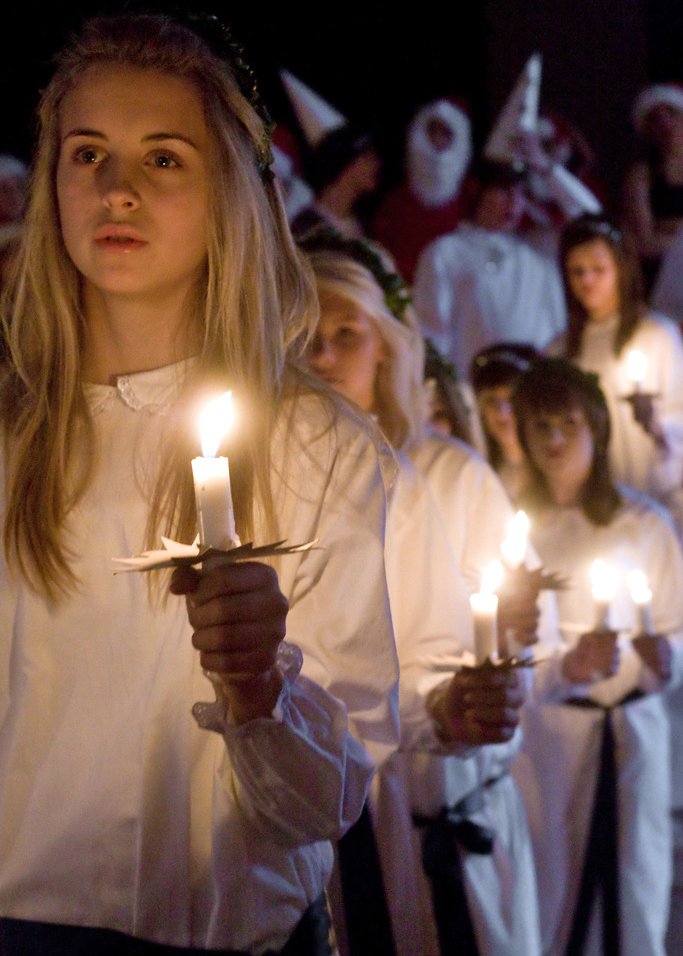 Saint Lucy's DayThe Swedish festival of light.
 MatarikiThe Maori midwinter new year.
Around 21 or 22 December in the northern hemisphere and 20 or 21 June in the southern, depending on the year. It is the shortest day and longest night.
Because the days are at their shortest and the return of the sun is welcome. Candles and fires are a sign of hope and a way to share warmth.
Christians celebrate it as the birth of Christ. Historians note that the date, the green decorations and the feasting overlap with older midwinter customs, and many people enjoy both strands.
The old Germanic midwinter festival, with feasting and a burning log. The word survives in Christmas names in Scandinavia and in the Yule log cake.
Yes, but in June or July, as with Matariki in New Zealand and Inti Raymi in Peru, though many also keep a midsummer Christmas in December.
Written by the EveryParampara desk with AI assistance. Customs differ from place to place and family to family. If this is your tradition and we have it wrong, tell us.
The traditions written up so far, best known first.
 🇸🇪 SwedenJul
A midwinter holiday of feast tables, doorstep gift givers, and candlelit morningsSeasonal · Feasts and festival meals
🇸🇪 SwedenJul
A midwinter holiday of feast tables, doorstep gift givers, and candlelit morningsSeasonal · Feasts and festival meals
 🇨🇦 Quebec City, CanadaQuebec Winter CarnivalCarnaval de Québec
A midwinter celebration of snow, outdoor sports and caribou in Quebec City.Festival · Tea, coffee and drinking ceremonies
🇨🇦 Quebec City, CanadaQuebec Winter CarnivalCarnaval de Québec
A midwinter celebration of snow, outdoor sports and caribou in Quebec City.Festival · Tea, coffee and drinking ceremonies
 🇩🇰 DenmarkJul
Winter feasts, carols around the tree, and family gatherings across DenmarkFestival · Lunch
🇩🇰 DenmarkJul
Winter feasts, carols around the tree, and family gatherings across DenmarkFestival · Lunch
 🇸🇪 Sweden and 2 moreGlögg
A spiced, warm winter wine served across Nordic countries around ChristmasTable custom · Tea, coffee and drinking ceremonies
🇸🇪 Sweden and 2 moreGlögg
A spiced, warm winter wine served across Nordic countries around ChristmasTable custom · Tea, coffee and drinking ceremonies
 🇷🇺 Moscow, RussiaChristmas in RussiaРождество Христово
An Orthodox winter feast marked by church vigils, fasting suppers and festive mealsSpiritual · Supper
🇷🇺 Moscow, RussiaChristmas in RussiaРождество Христово
An Orthodox winter feast marked by church vigils, fasting suppers and festive mealsSpiritual · Supper
 🇨🇦 Canada and 2 moreMummering
A festive midwinter custom of disguised visits, music and playful guessing gamesFestival · Tea-time and snacking customs
🇨🇦 Canada and 2 moreMummering
A festive midwinter custom of disguised visits, music and playful guessing gamesFestival · Tea-time and snacking customs
 🇬🇧 United Kingdom and 4 moreTwelve Days of Christmas
A festive Christian liturgical season linking Christmas Day to the eve of EpiphanySeasonal · Feasts and festival meals
🇬🇧 United Kingdom and 4 moreTwelve Days of Christmas
A festive Christian liturgical season linking Christmas Day to the eve of EpiphanySeasonal · Feasts and festival meals
The small pictures above come from Wikimedia Commons under free licences. Some are cropped to fit.
Every week: one tradition from somewhere new, what is being celebrated around the world this week, and one idea explained.