Dinner
The evening table: who sits where, who is served first, what is said.
The evening meal is where the strictest table customs tend to live: seating, order of serving, who speaks and who stays silent, what is said before eating. These pages gather those customs, from the Japanese phrases said before and after a meal to the Georgian supra with its toastmaster. For the food itself, see Thali.
Seating and order
Many cultures keep a place for the head of the household, serve guests and elders first, or wait until everyone is seated before anyone lifts a spoon. In some, eating is done by hand from shared dishes with rules about which hand and which side of the plate. In others the order of courses, or of toasts, is as fixed as a ceremony.
Words and silences
Saying grace, a blessing, a thanks to the cook or a call to begin is common worldwide. So are the opposite customs: no talking until the meal ends, no phones, no leaving before the elder rises. Dinner is where children learn what their own community counts as good manners.
Written by the EveryParampara desk with AI assistance. Background on Dinner (meal). Customs differ from place to place and family to family. If this is your tradition and we have it wrong, tell us.
 🇰🇷 Seoul, South KoreaTemplestay템플스테이
A program that invites visitors to live in South Korean Buddhist temples and join the daily routines of monastic life.Spiritual · Dinner
🇰🇷 Seoul, South KoreaTemplestay템플스테이
A program that invites visitors to live in South Korean Buddhist temples and join the daily routines of monastic life.Spiritual · Dinner
 🇨🇳 Shanghai, China and 1 moreJiaozi餃子
Crescent Chinese dumplings filled with meat or vegetables, eaten for fortune and feastsTable custom · Breakfast
🇨🇳 Shanghai, China and 1 moreJiaozi餃子
Crescent Chinese dumplings filled with meat or vegetables, eaten for fortune and feastsTable custom · Breakfast
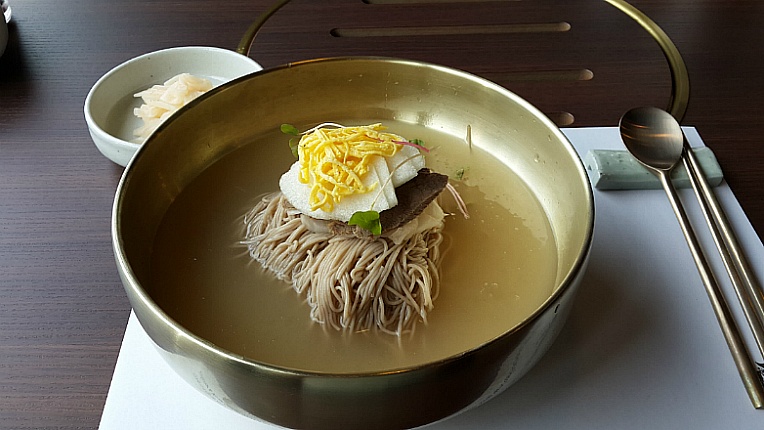 🇰🇵 Pyongyang, North Korea and 3 moreNaengmyeon냉면
Long buckwheat noodles in icy broth, born in North Korea and eaten most in summerTable custom · Dinner
🇰🇵 Pyongyang, North Korea and 3 moreNaengmyeon냉면
Long buckwheat noodles in icy broth, born in North Korea and eaten most in summerTable custom · Dinner
 🇯🇵 Kyoto, JapanKaiseki懐石
A multi-course Japanese dining tradition shaped by tea ceremonies and the seasonsTable custom · Dinner
🇯🇵 Kyoto, JapanKaiseki懐石
A multi-course Japanese dining tradition shaped by tea ceremonies and the seasonsTable custom · Dinner
 🇯🇵 Osaka, JapanTsukimi月見 (Tsukimi) / お月見 (Otsukimi)
A Japanese autumn festival honoring the harvest moon with seasonal foods and pampas grass decorations.Festival · Dinner
🇯🇵 Osaka, JapanTsukimi月見 (Tsukimi) / お月見 (Otsukimi)
A Japanese autumn festival honoring the harvest moon with seasonal foods and pampas grass decorations.Festival · Dinner
 🇰🇷 South Korea and 1 moreDaeboreum대보름
A Korean festival of the first lunar full moon, marked by fires, wishes and feastsSeasonal · Feasts and festival meals
🇰🇷 South Korea and 1 moreDaeboreum대보름
A Korean festival of the first lunar full moon, marked by fires, wishes and feastsSeasonal · Feasts and festival meals
 🇨🇳 China and 5 moreChinese New Year's Evechúxī
A reunion day for ethnic Chinese families before the Lunar New Year, marked by feasts, rituals, and staying up late.Festival · Dinner
🇨🇳 China and 5 moreChinese New Year's Evechúxī
A reunion day for ethnic Chinese families before the Lunar New Year, marked by feasts, rituals, and staying up late.Festival · Dinner
 🇨🇳 Suzhou, China and 3 moreDongzhi冬至
A midwinter festival celebrating the return of light with family feasts and dumplingsSeasonal · Dinner
🇨🇳 China and 1 moreReunion dinner團圓飯
A family gathering meal on lunar new year's eve, kept in China and VietnamTable custom · Dinner
🇨🇳 Suzhou, China and 3 moreDongzhi冬至
A midwinter festival celebrating the return of light with family feasts and dumplingsSeasonal · Dinner
🇨🇳 China and 1 moreReunion dinner團圓飯
A family gathering meal on lunar new year's eve, kept in China and VietnamTable custom · Dinner
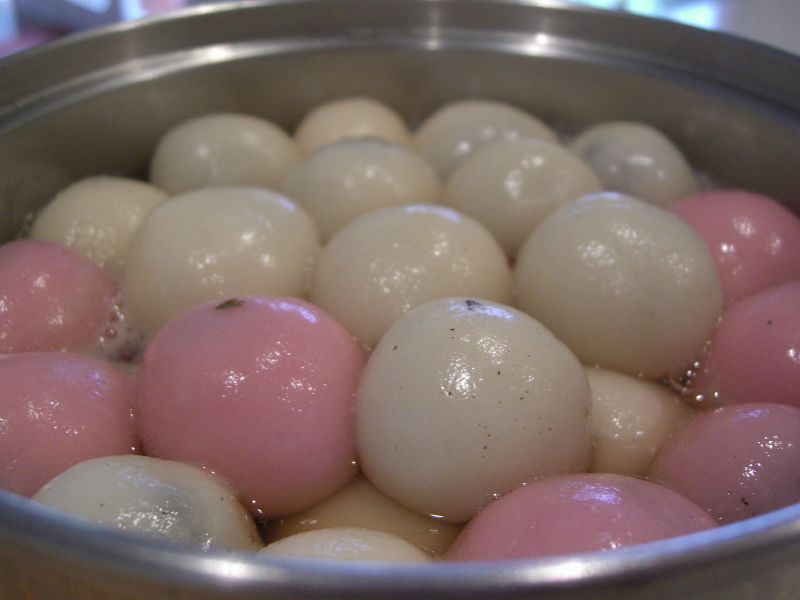 🇨🇳 Suzhou, China and 4 moreDongzhi Festival冬至
A winter solstice festival of family reunions, ancestor rites and sweet rice ballsSeasonal · Dinner
🇨🇳 Suzhou, China and 4 moreDongzhi Festival冬至
A winter solstice festival of family reunions, ancestor rites and sweet rice ballsSeasonal · Dinner
Photo credits on this page
The small pictures above come from Wikimedia Commons under free licences. Some are cropped to fit.
- Jiaozi: Bioniclepluslotr, CC BY-SA 3.0, source
- Daeboreum: hojusaram, CC BY-SA 2.0, source
- Kaiseki: Unknown author, CC BY-SA 3.0, source
- Tsukimi: katorisi, CC BY 3.0, source
- Templestay: (c)한국불교문화사업단, culturalcorpsofkoreanbuddhism, CC BY-SA 3.0, source
- Naengmyeon: wjlee4284, CC BY 2.5, source
- Dongzhi Festival: Alpha, CC BY-SA 2.0, source
- Chinese New Year's Eve: Mickey Đại Phát, CC BY-SA 4.0, source
- Dongzhi: N509FZ, CC BY-SA 4.0, source