Festivals and celebrationsMiddle EastMuslimSecular and civic
Eidiyah
In its own language: عيدية
The holiday custom of presenting cash and gifts to children and relatives

Eidiyah is a holiday tradition of giving money and presents to children and loved ones during festive celebrations. Practised widely across Muslim communities during the two Eid festivals and in Persian households at Nowruz, it brings families together in generosity and good cheer.
When is Eidiyah marked?
Eidiyah is kept as part of Eid al-Fitr, which runs from 9 to 11 March 2027.
Eidiyah, frequently known as eidi, is a holiday custom where older family members present money and tokens of affection to younger relatives and friends. Practised mainly during Eid al-Fitr and Eid al-Adha, as well as during Nowruz, it is not a religious obligation but a cherished social gesture. The custom fosters warmth and generosity across generations as families assemble to celebrate festive occasions together.
Gifts across the family
While children usually anticipate envelopes of money from aunts, uncles, and grandparents, gift giving reaches across all ages in the household. Spouses often exchange items like fragrances, watches, jewellery, and fine clothing to mark the occasion. Parents frequently select practical items or treats for their offspring, ranging from shoes and reading books to new clothing and digital gadgets. Adult sons and daughters may receive cosmetics or apparel from their parents and in-laws. Siblings and close companions often send dedicated greetings cards to convey their holiday well wishes and strengthen family bonds.
Customs of distribution
Households follow different ways of distributing money to children. In some traditions, youngsters queue before the eldest family member, arranged from the youngest child to the oldest. In this setup, the amount handed out tends to rise with age, leaving the oldest youth with the largest sum. Elsewhere, relatives hand out funds without any formal line, offering identical sums to every child regardless of age. Ahead of the Persian new year, family members often visit local banks specifically to obtain bundles of crisp, uncirculated banknotes so that every child receives fresh cash.
Fairness and good manners
Etiquette plays a central role when giving holiday gifts. Givers take care to distribute cash and presents thoughtfully to prevent feelings of disappointment, sadness, or jealousy among young recipients. The total cash handed out naturally reflects the giver's income and family circumstances, with amounts shifting over the years as children mature. While not mandated as a religious duty or prophetic practice, offering these presents reflects valued ideals of kindness, hospitality, and shared goodwill during moments of communal celebration.
How Eidiyah is kept
Families gather in the home of an elder relative during the holiday. Children approach parents, grandparents, and visiting aunts and uncles to receive cash, often presented as crisp bills. In some families, young people form an orderly queue to receive sums that increase by age, while other households hand out gifts casually or in equal amounts. Spouses, siblings, and adult relatives also exchange presents, including apparel, perfume, and cards.
When and where
The custom takes place during the major celebrations of the Islamic calendar, Eid al-Fitr at the conclusion of Ramadan and Eid al-Adha during the pilgrimage season. It is also observed at Nowruz, the traditional Persian celebration of the new year.
Observed across Muslim households globally, the practice is common in the Middle East, the Indian subcontinent, Central Asia, and among diaspora communities in Europe and the Americas. It is also widely kept in Iran and Azerbaijan for the new year.
What Eidiyah means
Although not an obligatory religious act, the gift represents familial affection, hospitality, and mutual generosity. It offers older generations a tangible way to express care for the youth, creating cheerful memories and fostering harmony within the extended family circle.

Days Eidiyah is marked
Questions people ask about Eidiyah
When is Eidiyah marked?
Eidiyah is kept as part of Eid al-Fitr, which runs from 9 to 11 March 2027.
What is eidiyah?
Eidiyah, also called eidi or salami, is a holiday gift, usually cash, given by older relatives to children and family members during festival gatherings.
On which holidays is it given?
It is distributed during the two major Islamic festivals, Eid al-Fitr and Eid al-Adha. The custom is also practised during Nowruz, the traditional Persian new year.
Do children always receive money?
Children usually receive cash from older relatives, though parents may also present items such as books, shoes, toys, electronic gadgets, or new clothing to celebrate the holiday.
Is giving eidiyah a religious obligation?
No, giving this holiday gift is neither a mandatory religious duty nor a prescribed Sunnah practice, though it reflects valued principles of charity, generosity, and family warmth.
See also
 PurimA lively Jewish festival of storytelling, shared food, masks and charity
 Yaldā NightA solstice night of poetry, fruit and family, kept from Iran through Central Asia
 Chaharshanbe SuriAn Iranian festival of fire and renewal celebrated on the eve of the final Wednesday before spring.
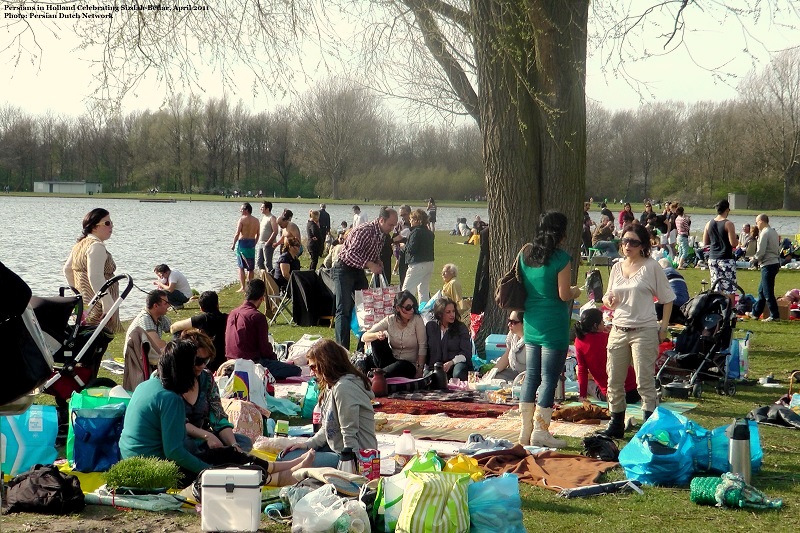 Sizdah BedarAn open-air picnic holiday concluding the Iranian New Year celebrations
Good reading and sources
- Eidiyah on WikipediaEncyclopedia
- More photos on Wikimedia CommonsPhotos and video
- Wikidata recordOpen data
The facts on this page come from the Wikipedia article "Eidiyah", written by its contributors and used under the CC BY-SA 4.0 licence, and from its Wikidata record (CC0). EveryParampara rewrote the text in its own words, with AI assistance, and compares every page with the article to make sure no passage is copied. It may be reused under the same CC BY-SA 4.0 licence with a link back.
It may contain mistakes. Traditions differ from one family, village and community to the next, and the people who keep them know them best. If something is wrong, tell us. Last refreshed 2026-10-06.
More from Iran
All the traditions of Iran
🇮🇱 Jerusalem, Israel and 1 morePurimפּוּרִים
A lively Jewish festival of storytelling, shared food, masks and charityFestival · Feasts and festival meals
🇮🇷 Isfahan, Iran and 4 moreChaharshanbe Suriچهارشنبهسوری
An Iranian festival of fire and renewal celebrated on the eve of the final Wednesday before spring.Festival · Tea-time and snacking customs
🇮🇷 Iran and 4 moreSizdah Bedarسیزدهبدر
An open-air picnic holiday concluding the Iranian New Year celebrationsFestival
 🇮🇷 Yazd, Iran and 1 moreSadehسده
An ancient midwinter festival of fire, light, and the approach of springFestival · Feasts and festival meals
🇮🇷 Yazd, Iran and 1 moreSadehسده
An ancient midwinter festival of fire, light, and the approach of springFestival · Feasts and festival meals
The same idea elsewhere
New Year compared 🇨🇳 China and 5 moreLion dance舞獅
A dynamic ritual dance featuring costumed lions, drums and martial acrobaticsPerformance
🇨🇳 China and 5 moreLion dance舞獅
A dynamic ritual dance featuring costumed lions, drums and martial acrobaticsPerformance
 🇩🇪 Nuremberg, Germany and 5 moreChristmas marketWeihnachtsmarkt
A seasonal street market held during Advent in German-speaking regions and beyond, featuring stalls, food, and crafts.Festival · Tea, coffee and drinking ceremonies
🇩🇪 Nuremberg, Germany and 5 moreChristmas marketWeihnachtsmarkt
A seasonal street market held during Advent in German-speaking regions and beyond, featuring stalls, food, and crafts.Festival · Tea, coffee and drinking ceremonies
 🇲🇳 Mongolia and 2 moreTsagaan SarЦагаан сар
The Mongolian Lunar New Year festival of peace, elders, white foods and renewalSeasonal · Feasts and festival meals
🇲🇳 Mongolia and 2 moreTsagaan SarЦагаан сар
The Mongolian Lunar New Year festival of peace, elders, white foods and renewalSeasonal · Feasts and festival meals
 🇦🇿 AzerbaijanNovruzNovruz Bayramı
The Azerbaijani spring equinox festival of bonfires, sweets and sprouted wheatSeasonal · Feasts and festival meals
🇦🇿 AzerbaijanNovruzNovruz Bayramı
The Azerbaijani spring equinox festival of bonfires, sweets and sprouted wheatSeasonal · Feasts and festival meals