Buddhist traditions
Buddhist traditions are found across Asia and increasingly worldwide, in the forms of Theravada in Sri Lanka and Southeast Asia, Mahayana in East Asia and Vajrayana in Tibet and Mongolia.
Buddhist traditions are found across Asia and increasingly worldwide, in the forms of Theravada in Sri Lanka and Southeast Asia, Mahayana in East Asia and Vajrayana in Tibet and Mongolia. They include the festival of Vesak, the Poya days, almsgiving to monks, the Kathina robe offering, the pilgrimage to Lumbini and Bodh Gaya, temple festivals and the rites of the Tibetan year. At their heart are meditation, compassion and the Buddha's teaching, and many customs are acts of generosity. These pages describe them with respect.
Monks, merit and giving
Laypeople support monks and nuns with food, robes and shelter, and in return receive teaching and blessings. Giving, dana, earns merit, and many festivals centre on it: the morning alms round in Laos and Thailand, the Kathina ceremony at the end of the rains retreat, the free meals of Vesak in Sri Lanka. Temples are also community centres, schools and places for funerals.
Festivals and the year
Vesak marks the birth, enlightenment and death of the Buddha with lanterns and lights. In Thailand, Songkran and Loi Krathong, in Japan Obon, in Tibet Losar and Saga Dawa, and in Korea the Lotus Lantern Festival are among the major events. Each blends Buddhist meaning with local custom, and many include the remembrance of ancestors and a cleansing of the old year.
Written by the EveryParampara desk with AI assistance. Background on Buddhist (faith). Customs differ from place to place and family to family. If this is your tradition and we have it wrong, tell us.
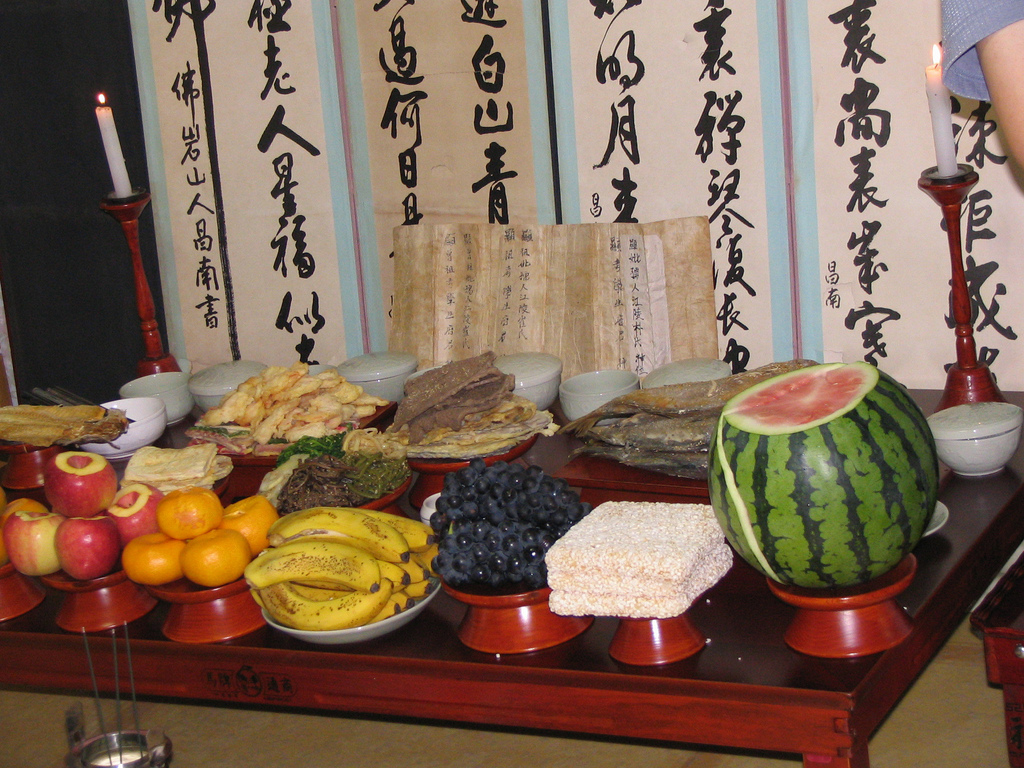 🇰🇷 South KoreaJesa제사 (Jesa)
A Korean ancestral memorial ceremony held on death anniversaries and major holidays.Spiritual · Feasts and festival meals
🇰🇷 South KoreaJesa제사 (Jesa)
A Korean ancestral memorial ceremony held on death anniversaries and major holidays.Spiritual · Feasts and festival meals
 🇰🇷 Seoul, South KoreaTemplestay템플스테이
A program that invites visitors to live in South Korean Buddhist temples and join the daily routines of monastic life.Spiritual · Dinner
🇰🇷 Seoul, South KoreaTemplestay템플스테이
A program that invites visitors to live in South Korean Buddhist temples and join the daily routines of monastic life.Spiritual · Dinner
 🇨🇳 Xi'an, ChinaChinese tea culture中国茶文化 (Zhōngguó chá wénhuà)
A centuries-old practice of cultivating, brewing, and sharing tea as a social and spiritual ritual in China.Table custom · Tea, coffee and drinking ceremonies
🇨🇳 Xi'an, ChinaChinese tea culture中国茶文化 (Zhōngguó chá wénhuà)
A centuries-old practice of cultivating, brewing, and sharing tea as a social and spiritual ritual in China.Table custom · Tea, coffee and drinking ceremonies
 🇯🇵 Kyoto, JapanKaiseki懐石
A multi-course Japanese dining tradition shaped by tea ceremonies and the seasonsTable custom · Dinner
🇯🇵 Kyoto, JapanKaiseki懐石
A multi-course Japanese dining tradition shaped by tea ceremonies and the seasonsTable custom · Dinner
 🇲🇳 Mongolia and 2 moreTsagaan SarЦагаан сар
The Mongolian Lunar New Year festival of peace, elders, white foods and renewalSeasonal · Feasts and festival meals
🇲🇳 Mongolia and 2 moreTsagaan SarЦагаан сар
The Mongolian Lunar New Year festival of peace, elders, white foods and renewalSeasonal · Feasts and festival meals
 🇯🇵 Osaka, JapanTsukimi月見 (Tsukimi) / お月見 (Otsukimi)
A Japanese autumn festival honoring the harvest moon with seasonal foods and pampas grass decorations.Festival · Dinner
🇨🇳 Beijing, ChinaLaba Festival臘八節
A winter porridge festival marking the start of the Chinese New Year seasonFestival · Feasts and festival meals
🇯🇵 Osaka, JapanTsukimi月見 (Tsukimi) / お月見 (Otsukimi)
A Japanese autumn festival honoring the harvest moon with seasonal foods and pampas grass decorations.Festival · Dinner
🇨🇳 Beijing, ChinaLaba Festival臘八節
A winter porridge festival marking the start of the Chinese New Year seasonFestival · Feasts and festival meals
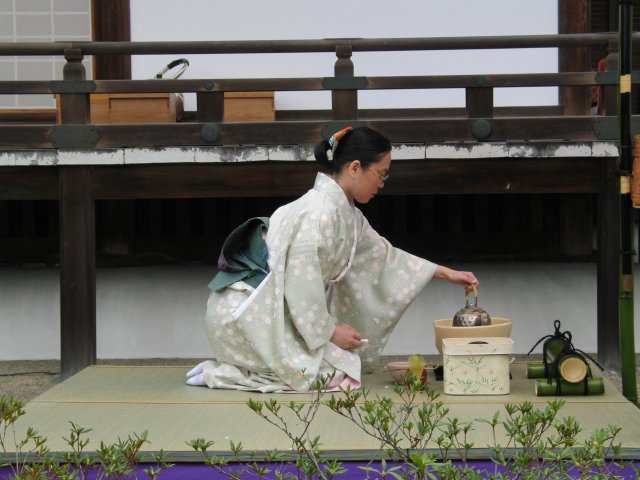 🇯🇵 Kyoto, JapanJapanese tea ceremony茶道 (Sadō / Chadō), 茶の湯 (Chanoyu)
The formal serving of powdered matcha, shaped by Zen, Shinto and wabiTable custom · Tea, coffee and drinking ceremonies
🇯🇵 Kyoto, JapanJapanese tea ceremony茶道 (Sadō / Chadō), 茶の湯 (Chanoyu)
The formal serving of powdered matcha, shaped by Zen, Shinto and wabiTable custom · Tea, coffee and drinking ceremonies
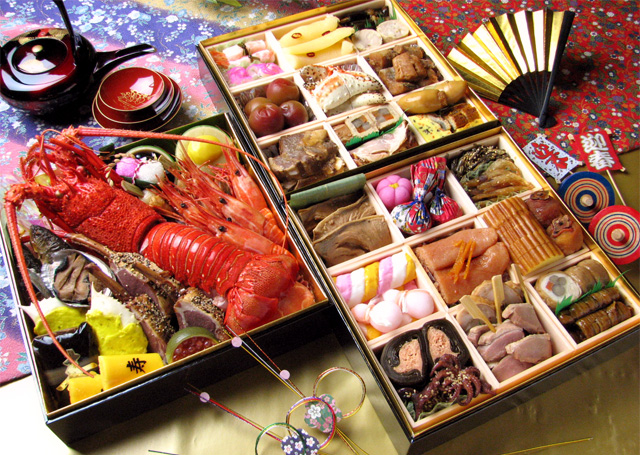 🇯🇵 Tokyo, JapanJapanese New Year正月
An annual celebration of renewal, seasonal foods, and bell ringing across JapanSeasonal · Feasts and festival meals
🇯🇵 Tokyo, JapanJapanese New Year正月
An annual celebration of renewal, seasonal foods, and bell ringing across JapanSeasonal · Feasts and festival meals
 🇨🇳 Beijing, China and 1 moreLaba congee腊八粥
A ceremonial Chinese porridge of rice, beans and dried fruit, eaten at the Laba FestivalTable custom · Feasts and festival meals
🇨🇳 Beijing, China and 1 moreLaba congee腊八粥
A ceremonial Chinese porridge of rice, beans and dried fruit, eaten at the Laba FestivalTable custom · Feasts and festival meals
 🇨🇳 Lhasa, China and 5 moreButter teaབོད་ཇ་
A salted tea churned with yak butter, served to guests across the HimalayaTable custom · Tea, coffee and drinking ceremonies
🇨🇳 Lhasa, China and 5 moreButter teaབོད་ཇ་
A salted tea churned with yak butter, served to guests across the HimalayaTable custom · Tea, coffee and drinking ceremonies
 🇰🇷 South KoreaKorean tea ceremony다례 (茶禮)
Tea served in Korea as a rite of courtesy, now mostly grain and herbal brewsTable custom · Tea, coffee and drinking ceremonies
🇰🇷 South KoreaKorean tea ceremony다례 (茶禮)
Tea served in Korea as a rite of courtesy, now mostly grain and herbal brewsTable custom · Tea, coffee and drinking ceremonies
 🇨🇳 China and 1 moreFive Grains五穀
A sacred grouping of staple crops honoured as the bedrock of East Asian civilizationFolklore
🇨🇳 China and 1 moreFive Grains五穀
A sacred grouping of staple crops honoured as the bedrock of East Asian civilizationFolklore
Photo credits on this page
The small pictures above come from Wikimedia Commons under free licences. Some are cropped to fit.
- Five Grains: Kurt Stüber [1], CC BY-SA 3.0, source
- Japanese New Year: No machine-readable author provided. Sixgimic assumed (based on copyri, CC BY-SA 3.0, source
- Tsagaan Sar: User:Chinneeb, CC BY-SA 3.0, source
- Chinese tea culture: Gary Stevens, CC BY 2.0, source
- Kaiseki: Unknown author, CC BY-SA 3.0, source
- Tsukimi: katorisi, CC BY 3.0, source
- Chuseok: by Joseph Steinberg (Baltimoron in Korea) at Flickr, CC BY-SA 2.0, source
- Templestay: (c)한국불교문화사업단, culturalcorpsofkoreanbuddhism, CC BY-SA 3.0, source
- Laba congee: N509FZ, CC BY-SA 4.0, source
- Butter tea: Yosomono, CC BY 2.0, source
- Korean tea ceremony: Mai-Linh Doan, CC BY-SA 1.0, source
- Japanese tea ceremony: Photograph taken by Stephane D'Alu ( en:User:Sdalu ) in April 2004, CC BY-SA 3.0, source