Dress and adornmentSub-Saharan Africa
Kente cloth
In its own language: Nwentoma
Hand-woven Ghanaian cloth of silk and cotton strips, worn for ceremonies and graduations

Kente is a Ghanaian hand-woven cloth of silk and cotton strips, linked by Asante oral tradition to Bonwire in the Ashanti Region. The Asante, Akan and Ewe peoples wear it at ceremonies and graduations, and Ghana holds it as a geographical indication, recognised by UNESCO in 2024.
When is Kente cloth kept?
Kente cloth is kept on special occasions, ceremonies, funerals and graduations; no fixed date.
Kente is a hand-woven cloth from Ghana, made from narrow strips of silk and cotton sewn together. The Asante, Akan and Ewe peoples wear it, historically in a toga-like wrap, and today for ceremonies, graduations and special occasions. Each pattern carries a name and a message chosen by its weaver.
What it is
Kente is a cloth woven in narrow bands on a wooden loom, then sewn strip to strip into a larger piece. The strips are silk, cotton, or both. The name comes from kɛntɛn, which in the Asante form of Akan means basket, a nod to the basket-like pattern. Akan speakers also call it nwentoma, woven cloth. Hundreds of patterns exist. Each one has a name, and weavers name them after proverbs, historical events, chiefs, queen mothers or plants. Ghanaians often choose a cloth as much for its name as for its colours.
Origins and history
Archaeologists working in southern Ghana found the oldest traces of handloom weaving at Begho and Bono Manso, where spindle whorls and dye holes date from the 14th to the 18th century. Asante oral tradition says a man from Bonwire brought the loom from Bono Gyaman in the 17th century, during the reign of Nana Oti Akenten. Another account credits weavers of Bonwire under Osei Kofi Tutu I, inspired by a spider's web. Early cloths were blue and white cotton stripes. Later Asante weavers unravelled imported silk and dyed cloth to create the colourful kente.
Weaving and patterns
Kente is woven on a wooden loom, with many dyed threads pressed together. Weavers usually learn for years under a master weaver or a company before they produce their own designs. Rolls of finished cloth are stamped with a brand to show they are authentic. Traditionally weaving is men's work. Patterns are read mainly in the lengthwise warp threads, and there is often little link between how a cloth looks and what it is called. Adweneasa, meaning 'I have exhausted my skills', is a heavily decorated type with weft patterns in every block, needing three heddles.
Colours and meanings
Colour carries meaning in kente. Gold stands for royalty, wealth and spiritual purity. Black speaks of maturity, the spirits of ancestors, mourning and funerals. White is for purification and festive occasions. Blue suggests peace and love. Green points to planting, growth and renewal. Grey belongs with healing and cleansing, and with ash. Maroon is the colour of mother earth and of healing. Purple and pink are linked with feminine aspects of life. Red carries political and spiritual moods, bloodshed and sacrificial rites. Yellow stands for preciousness, fertility and beauty. Silver is calm, pure and joyful, and tied to the moon.
Wearing it today
Kente began as a toga-like wrap worn by Asante, Akan and Ewe people. Today it marks special occasions across Ghana, and woven cloth is worn at ceremonies and commencements. Stoles of kente are common at graduations in the United States, especially at historically Black universities such as Florida A&M. In December 2024 UNESCO added kente cloth to its list of intangible cultural heritage, and in September 2025 Ghana won geographical indication status, so only cloth woven in approved communities may be sold under the name. Mass-produced prints with kente patterns circulate widely, and its use by politicians and fashion houses has raised questions of ownership.
How Kente cloth is kept
Weavers work at a wooden loom, pressing many dyed threads together, and are usually trained for years under a master weaver before making their own patterns. Finished strips are sewn into a whole cloth and stamped with a brand. The cloth is worn wrapped around the body in a toga-like style, or cut into stoles and garments. It appears at ceremonies, funerals, festivals and graduations, where the name and colours of the pattern carry the message. In Ghana, weaving centres such as Bonwire, Sakora Wonoo, Ntonso and Adawomase keep the craft.
When and where
Kente is not tied to one date. It is worn when an occasion calls for it: naming and marriage ceremonies, funerals, festivals, and graduations. In the United States, kente stoles belong to commencement season.
The cloth belongs to Ghana and is strongest in the Ashanti Region, where Bonwire, Sakora Wonoo, Ntonso, Safo and Adawomase are known for weaving. Agotime Kpetoe is also approved as a weaving town. Kente prints and stoles are used far beyond Ghana, across West Africa and among African American and diaspora communities in the United States.
What Kente cloth means
To those who wear it, kente is more than cloth. The pattern has a name, often drawn from a proverb, a chief, a queen mother or a historical event, so a person can dress in a message. Colours add their own meanings, among them royalty, mourning, healing and renewal. An academic stole is described as marking the wearer with a visible sign of Africa, turning the body into a living proverb.


Questions people ask about Kente cloth
When is Kente cloth kept?
Kente cloth is kept on special occasions, ceremonies, funerals and graduations; no fixed date.
What is kente cloth?
It is a hand-woven cloth from Ghana, made of silk and cotton strips sewn together. The Asante, Akan and Ewe peoples wear it, and each pattern carries a name and a message chosen by the weaver.
Where does kente come from?
Ghana, and Asante oral tradition points to Bonwire in the Ashanti Region. Archaeologists have found weaving tools at Begho and Bono Manso dating from the 14th to the 18th century.
What do the colours mean?
Gold stands for royalty and wealth, black for maturity, ancestors and mourning, white for purification and celebration, green for growth, blue for peace, and red for political and spiritual moods. Grey, maroon, purple, pink, yellow and silver carry meanings such as healing, femininity, fertility and the moon.
Is all kente woven in Ghana?
No. There is authentic kente woven by traditional weavers, kente print made by textile brands, and mass-produced kente pattern often made in China for West African buyers. Since September 2025, only cloth woven in approved Ghanaian communities may lawfully be sold as kente.
See also
 Traditional tattooingThe ancient custom of marking the skin for protection, healing, status and sacred rites
 HalloweenAn annual observance on 31 October marking the eve of All Saints' Day, rooted in Christian tradition and Celtic heritage
 HanukkahAn eight-day Jewish festival marking the rededication of the Second Temple in Jerusalem and the miracle of a single day'
 Day of the DeadA Mexican remembrance of deceased family and friends with altars, marigolds and feasts
Good reading and sources
- Kente cloth on WikipediaEncyclopedia
- More photos on Wikimedia CommonsPhotos and video
- Wikidata recordOpen data
The facts on this page come from the Wikipedia article "Kente cloth", written by its contributors and used under the CC BY-SA 4.0 licence, and from its Wikidata record (CC0). EveryParampara rewrote the text in its own words, with AI assistance, and compares every page with the article to make sure no passage is copied. It may be reused under the same CC BY-SA 4.0 licence with a link back.
It may contain mistakes. Traditions differ from one family, village and community to the next, and the people who keep them know them best. If something is wrong, tell us. Last refreshed 2026-10-05.
More from Ghana
All the traditions of Ghana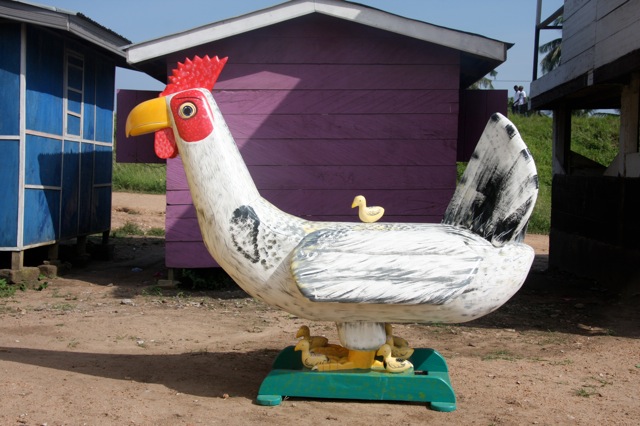 🇬🇭 Accra, GhanaFantasy coffinsAbebuu adekai
Custom hand-carved burial caskets shaped as animals, tools and symbols in southern GhanaRite of passage
🇬🇭 Accra, GhanaFantasy coffinsAbebuu adekai
Custom hand-carved burial caskets shaped as animals, tools and symbols in southern GhanaRite of passage
 🇬🇭 Ghana and 2 moreAgbadza
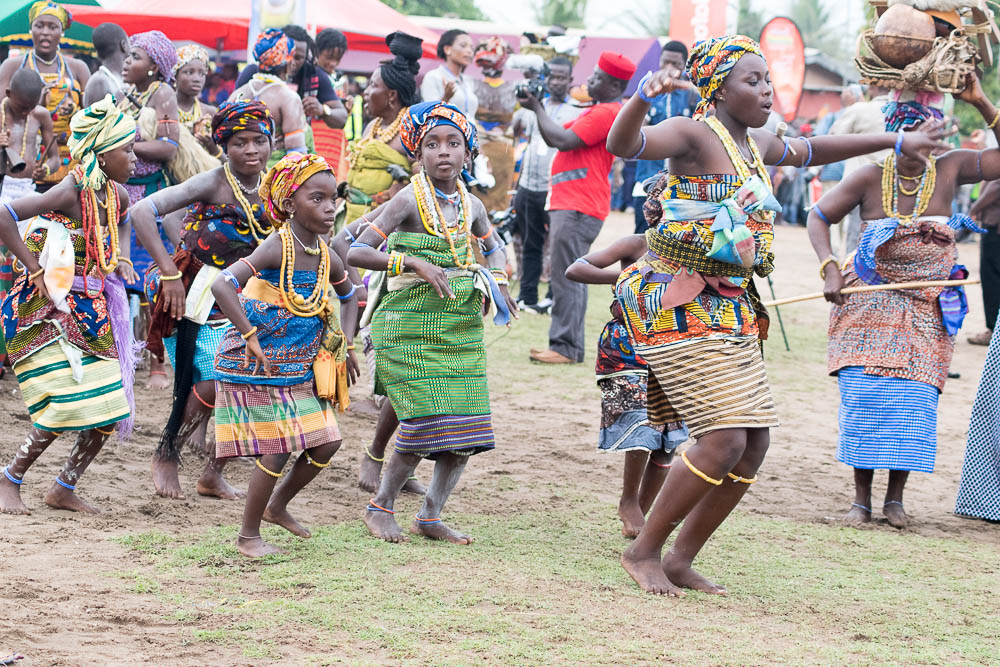
An Ewe music and dance, born of war songs and kept for funerals, weddings and festivalsPerformance
🇬🇭 Ghana and 2 moreAgbadza
An Ewe music and dance, born of war songs and kept for funerals, weddings and festivalsPerformance
 🇵🇬 Papua New Guinea and 5 moreShell money
Traditional currency made from cowries, ground clam beads, and carved sea shellsCraft
🇵🇬 Papua New Guinea and 5 moreShell money
Traditional currency made from cowries, ground clam beads, and carved sea shellsCraft
 🇬🇭 Ntɔnso, Ghana and 1 moreAdinkra symbols
Symbols of the Akan people, stamped on cloth, each one carrying a proverbCraft
🇬🇭 Ntɔnso, Ghana and 1 moreAdinkra symbols
Symbols of the Akan people, stamped on cloth, each one carrying a proverbCraft
The same idea elsewhere
Royalty and coronation compared 🇪🇬 Thebes, EgyptAncient Egyptian funerary practices
Rites for the dead in ancient Egypt: preserving the body, spells and grave goodsRite of passage
🇪🇬 Thebes, EgyptAncient Egyptian funerary practices
Rites for the dead in ancient Egypt: preserving the body, spells and grave goodsRite of passage
 🇮🇩 Yogyakarta, IndonesiaWayangꦮꦪꦁ
A night-long puppet theatre from Java, where a dalang tells epics behind a lit screenPerformance
🇮🇩 Yogyakarta, IndonesiaWayangꦮꦪꦁ
A night-long puppet theatre from Java, where a dalang tells epics behind a lit screenPerformance
 🇵🇪 Cusco, Peru and 4 moreIntiinti (Quechua)
The Inca sun deity, honoured with temples, offerings and the June festival Inti RaymiSpiritual
🇮🇪 Ireland and 2 moreJack-o'-lantern
A carved pumpkin lantern lit with a candle to brighten and protect Halloween nightsFolklore
🇵🇪 Cusco, Peru and 4 moreIntiinti (Quechua)
The Inca sun deity, honoured with temples, offerings and the June festival Inti RaymiSpiritual
🇮🇪 Ireland and 2 moreJack-o'-lantern
A carved pumpkin lantern lit with a candle to brighten and protect Halloween nightsFolklore