Almost every society keeps a way of staying in touch with those who came before. Some set a place at the table, some sweep a grave, some light a lamp, and some tell the names aloud at every gathering. The reasons differ: gratitude, duty, a belief that the dead still watch over the family, or simply the wish that no one is forgotten. These customs are usually tied to a season, a day of the year or a family anniversary, and they tend to bring the living together as much as they honour the dead. Here is how it is done in many places, and how the old ways are changing.
What it is for
Remembering ancestors places a family inside a long story. In many cultures the dead are thought to remain part of the household, able to bless or to be hurt by neglect, so the rites are a form of care. In others the aim is gentler: to say thank you, to pass on names and lessons, and to teach children where they come from. Either way the custom answers a plain human need, which is to keep a link with people we loved or whose work made our lives possible. It also gives grief a calendar, a fixed day when sadness is allowed and shared.
What is done across cultures
Offerings of food, drink and flowers are the commonest element, left at a grave, an altar or a household shrine. Lamps, candles and incense are lit. Graves are cleaned and repainted. Names are recited, photographs are set out, and stories are told. Many traditions also fix a season for it, such as autumn in Mexico and Japan, early spring in China and Korea, or the days around the new moon in India. Paper money, gifts and clothes are burned in parts of East Asia so that they reach the next world. Some peoples invite the spirits home for a few days and then send them off with a farewell meal.
Food, dress and music
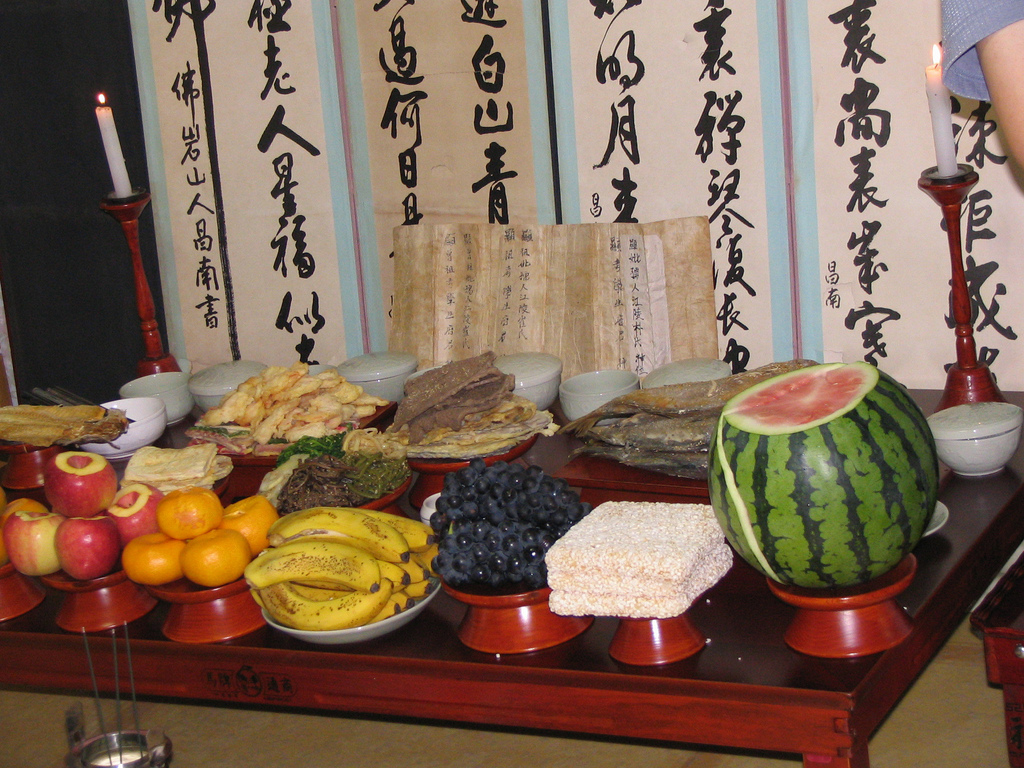
Food is the language of remembrance. The dead are offered what they liked in life, or the dishes of the season: sweet bread, rice cakes, steamed buns, dates, fruit and drink. After the offering the family eats the same food together. Dress is often plain or white, though in some places it is bright and festive, because the day is a reunion rather than a sorrow. Music ranges from a single bell to full brass bands, drumming and dancing in the cemetery. Songs may be lullabies the dead once sang, or old chants that only a few elders still know.
How it is changing
Families now live far from their ancestral graves, so remembering has moved online and into the home. People light virtual candles, hold video calls with relatives and send offerings through apps. Cities limit burning and fireworks for air quality, and many families have switched to flowers and lamps. At the same time there is a renewed pride in old rites, and younger people are asking elders to explain them. Public versions, such as parades and altar competitions, have become festivals in their own right, shared with visitors, while the quiet family rite at the grave remains at the centre.
Remembering the ancestors around the world
🇲🇽 Mexico
Families build an ofrenda, an altar of marigolds, candles, photographs, sugar skulls and the dead person's favourite food, for the Day of the Dead on 1 and 2 November. Many spend the night in the cemetery, and the mood is warm and often joyful.
Read: Day of the Dead🇨🇳 China
At Qingming in early April families sweep the graves, set out food and burn paper offerings. Ancestor tablets in the home are also given incense through the year.
Read: Qingming Festival🇯🇵 Japan
Obon, in mid-August, welcomes the spirits home with lanterns lit at the door and bon odori dances. Families clean the grave, offer food at the household altar and send the spirits off with floating lanterns.
Read: Obon🇰🇷 Korea
Charye is a table of rice, soup, fruit and rice cakes laid for the ancestors at Chuseok and Seollal, and jesa is held on the anniversary of a death. Families also visit and tidy the graves in a custom called seongmyo.
Read: Jesa🇻🇳 Vietnam
Every household keeps an ancestor altar, and the death anniversary, or gio, is marked with a family meal and offerings. Tet begins with a visit to graves and an invitation to the ancestors to join the celebration.
Vietnamese folk religion, being written🇰🇭 Cambodia
Pchum Ben lasts fifteen days in autumn, when families take rice and offerings to the pagoda for monks to pass on to the spirits of seven generations. The days are serious and communal.
Read: Pchum BenCompare all 19 places
Questions people ask
Is ancestor remembering a religious practice?
Often, but not always. It is part of many faiths and traditional belief systems, and in some places it is simply a family custom with no creed attached. People take part for love, duty, habit or all three.
Why are offerings of food common?
Food is how families show care, so it is how they show it to the dead. The living usually share the meal afterwards, which turns the offering into a reunion.
Do all cultures remember the dead on one fixed day?
Many do, in autumn or early spring, but others use the death anniversary of each person, or a rite at any time of year. Some use all three.
What is the difference between mourning and ancestor remembrance?
Mourning is the period just after a death. Ancestor remembrance carries on for years or generations, often with a lighter and more affectionate tone.
How can someone start a family custom of remembrance?
Many families begin small: a photograph and a candle, a favourite dish cooked once a year, or a story told on a chosen day. A simple, regular habit usually lasts better than a grand one.
About this pageWritten by the EveryParampara desk with AI assistance. Customs differ from place to place and family to family. If this is your tradition and we have it wrong, tell us.