Indigenous and traditional traditions
Indigenous and traditional spiritual and cultural practices belong to peoples who have lived on their lands for many generations: the First Nations and Native peoples of the Americas, the Aboriginal and Torres Strait Islander peoples of Australia, the Maori and Pacific Islanders, the Sami, the many peoples of Africa and the hill peoples of Asia.
Indigenous and traditional spiritual and cultural practices belong to peoples who have lived on their lands for many generations: the First Nations and Native peoples of the Americas, the Aboriginal and Torres Strait Islander peoples of Australia, the Maori and Pacific Islanders, the Sami, the many peoples of Africa and the hill peoples of Asia. Their traditions include ceremonies of the land, naming and initiation, healing, story and dance. Some are public and others private. EveryParampara describes only what communities share openly, and credits them as the source.
Land, ancestors and story
For many Indigenous peoples, land is kin, not property, and ceremonies thank the earth, the water and the animals. Ancestors are present, and stories of creation, such as the Dreaming, tell people how to live. Knowledge is passed by elders in language, song and dance. Many of these languages are under threat, and communities are leading efforts to teach them to the young.
Sharing with care
Some ceremonies are open to visitors, such as powwows and the Maori powhiri, and others, such as initiations, are restricted. Visitors are asked to listen, follow instructions, ask before taking photographs and avoid treating sacred things as entertainment. Many nations have protocols on the use of images and symbols. EveryParampara follows these requests and links to community voices and organisations wherever possible.
Written by the EveryParampara desk with AI assistance. Background on Indigenous and traditional (faith). Customs differ from place to place and family to family. If this is your tradition and we have it wrong, tell us.
 🇲🇳 Mongolia and 3 moreOvooовоо (Cyrillic Mongolian); ᠣᠪᠤᠭᠠ (Traditional Mongol)
A stone cairn on a peak or pass, circled by travellers and honoured in sky worshipSpiritual
🇲🇳 Mongolia and 3 moreOvooовоо (Cyrillic Mongolian); ᠣᠪᠤᠭᠠ (Traditional Mongol)
A stone cairn on a peak or pass, circled by travellers and honoured in sky worshipSpiritual
 🇰🇷 Jeju, South KoreaGut굿
Sacred rites of song, dance, and spirit communion performed by Korean shamansSpiritual
🇰🇷 Jeju, South KoreaGut굿
Sacred rites of song, dance, and spirit communion performed by Korean shamansSpiritual
 🇰🇷 Seoul, South Korea and 1 moreTalchum탈춤
A Korean mask dance drama in which masked actors sing, dance and mock the powerfulPerformance
🇰🇷 Seoul, South Korea and 1 moreTalchum탈춤
A Korean mask dance drama in which masked actors sing, dance and mock the powerfulPerformance
 🇲🇳 Ulaanbaatar, Mongolia and 1 moreNaadamнаадам
A midsummer festival of wrestling, horse racing, and archery kept by Mongols in Mongolia and neighboring regions.Festival · Feasts and festival meals
🇲🇳 Ulaanbaatar, Mongolia and 1 moreNaadamнаадам
A midsummer festival of wrestling, horse racing, and archery kept by Mongols in Mongolia and neighboring regions.Festival · Feasts and festival meals
 🇲🇳 Mongolia and 2 moreTsagaan SarЦагаан сар
The Mongolian Lunar New Year festival of peace, elders, white foods and renewalSeasonal · Feasts and festival meals
🇲🇳 Mongolia and 2 moreTsagaan SarЦагаан сар
The Mongolian Lunar New Year festival of peace, elders, white foods and renewalSeasonal · Feasts and festival meals
 🇰🇷 South Korea and 1 moreDaeboreum대보름
A Korean festival of the first lunar full moon, marked by fires, wishes and feastsSeasonal · Feasts and festival meals
🇰🇷 South Korea and 1 moreDaeboreum대보름
A Korean festival of the first lunar full moon, marked by fires, wishes and feastsSeasonal · Feasts and festival meals
 🇰🇷 South KoreaNorigae노리개
A Korean pendant of knots and tassels, worn with hanbok and kept for luckDress
🇰🇷 South KoreaNorigae노리개
A Korean pendant of knots and tassels, worn with hanbok and kept for luckDress
 🇯🇵 JapanJapanese funeral葬儀 (sōgi)
A Buddhist farewell in Japan: a wake, cremation, bone-gathering and a family graveRite of passage
🇯🇵 JapanJapanese funeral葬儀 (sōgi)
A Buddhist farewell in Japan: a wake, cremation, bone-gathering and a family graveRite of passage
 🇰🇷 Seoul, South KoreaYunnori윷놀이
A Korean board and stick-tossing game played with tokens during the Lunar New YearGame
🇰🇷 Seoul, South KoreaYunnori윷놀이
A Korean board and stick-tossing game played with tokens during the Lunar New YearGame
 🇨🇳 ChinaTorch Festival火把节
A summer fire holiday celebrated by Yi and neighbouring communities in southwest ChinaFestival · Feasts and festival meals
🇨🇳 ChinaTorch Festival火把节
A summer fire holiday celebrated by Yi and neighbouring communities in southwest ChinaFestival · Feasts and festival meals
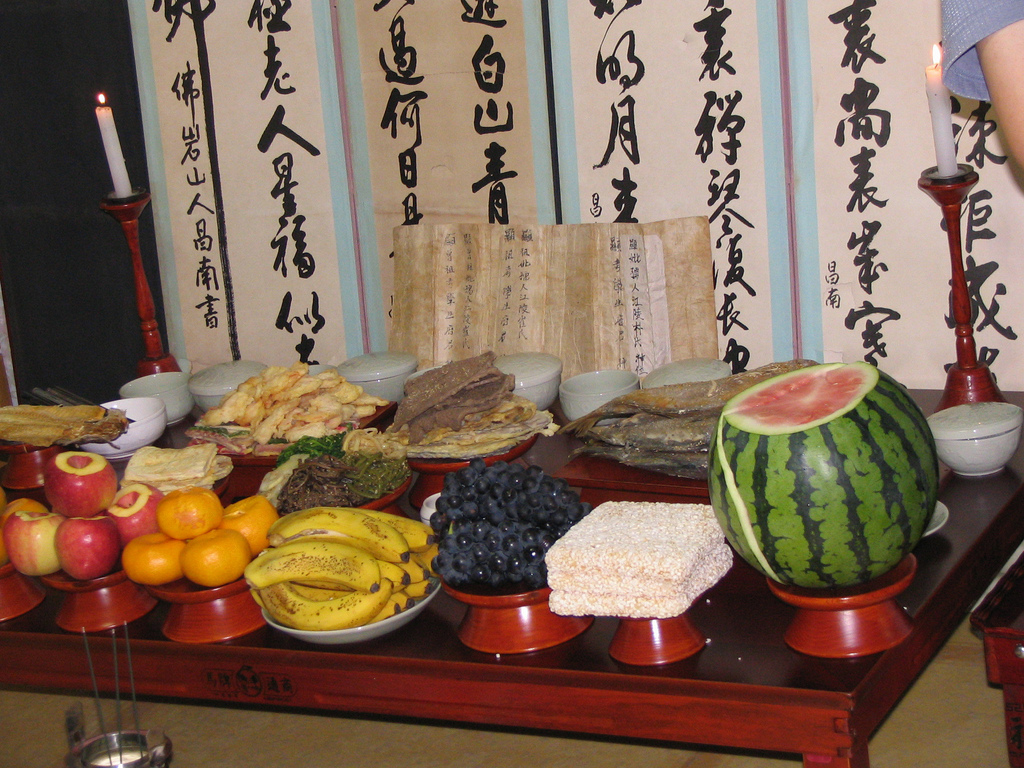 🇰🇷 South Korea and 1 moreChuseok추석
A Korean harvest festival of ancestral rites, seasonal rice cakes, and folk gamesFestival · Feasts and festival meals
🇰🇷 South Korea and 1 moreChuseok추석
A Korean harvest festival of ancestral rites, seasonal rice cakes, and folk gamesFestival · Feasts and festival meals
 🇨🇳 China and 5 moreAncestor worship
Honouring dead relatives with offerings and prayers, kept in many cultures worldwideSpiritual
🇨🇳 China and 5 moreAncestor worship
Honouring dead relatives with offerings and prayers, kept in many cultures worldwideSpiritual
 🇲🇳 Mongolia and 5 moreThroat singing
Several deep, guttural singing styles, each named and kept by its own peoplePerformance
🇲🇳 Mongolia and 5 moreThroat singing
Several deep, guttural singing styles, each named and kept by its own peoplePerformance
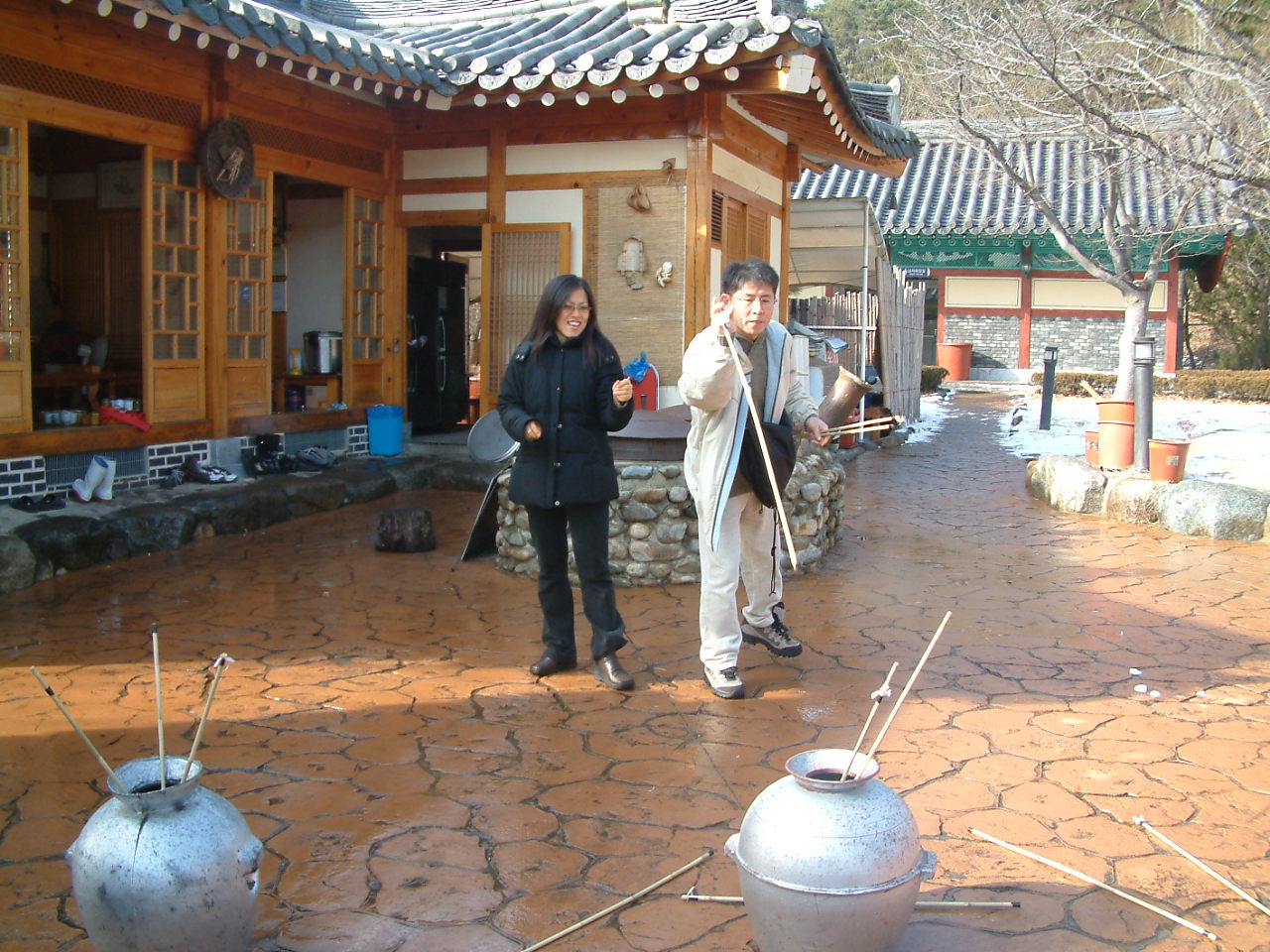 🇰🇷 South Korea and 1 moreKorean New Year설날
A three-day Korean festival celebrating the lunisolar new year with family and feastsSeasonal
🇹🇼 TaiwanFlying Fish Festival飛魚祭
A months-long seasonal fishing observance kept by the Tao people of Orchid IslandSeasonal
🇰🇷 South Korea and 1 moreKorean New Year설날
A three-day Korean festival celebrating the lunisolar new year with family and feastsSeasonal
🇹🇼 TaiwanFlying Fish Festival飛魚祭
A months-long seasonal fishing observance kept by the Tao people of Orchid IslandSeasonal
 🇯🇵 Japan and 1 moreIomanteイオマンテ
An Ainu rite that sends a hand-raised bear cub's spirit home to the god-worldSpiritual
🇯🇵 Japan and 1 moreIomanteイオマンテ
An Ainu rite that sends a hand-raised bear cub's spirit home to the god-worldSpiritual
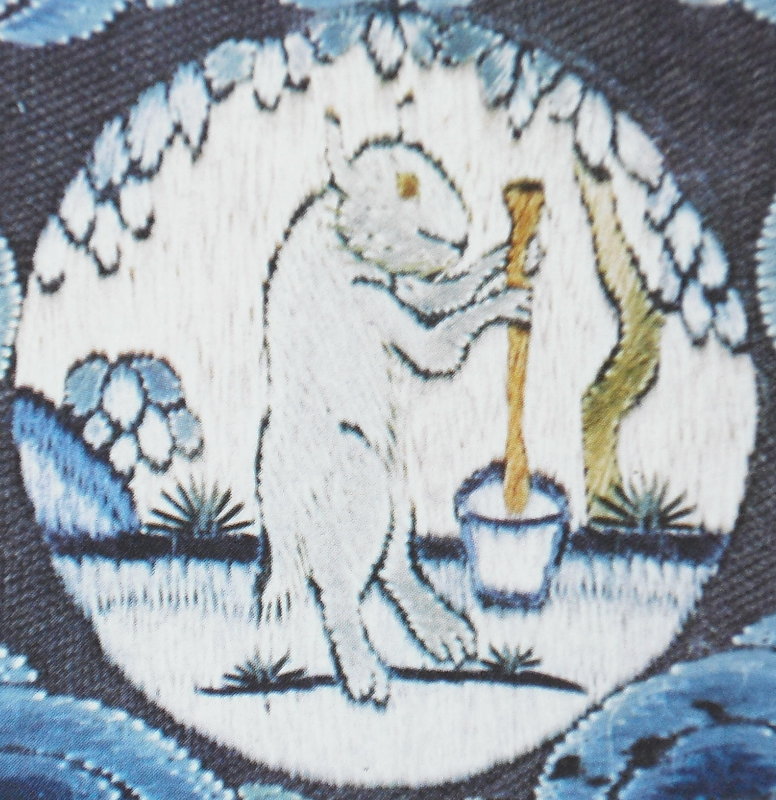 🇨🇳 China and 5 moreMoon rabbit月兔
A hare seen in the Moon's dark patches, pounding rice cakes or the elixir of lifeFolklore
🇨🇳 China and 5 moreMoon rabbit月兔
A hare seen in the Moon's dark patches, pounding rice cakes or the elixir of lifeFolklore
 🇰🇷 South Korea and 1 moreDoljanchi돌 (dol); 돌잔치 (doljanchi)
A Korean first-birthday rite where a baby picks an object that hints at the years aheadRite of passage
🇰🇷 South Korea and 1 moreDoljanchi돌 (dol); 돌잔치 (doljanchi)
A Korean first-birthday rite where a baby picks an object that hints at the years aheadRite of passage
 🇨🇳 China and 5 moreAncestor veneration
Honouring dead relatives with offerings, meals and prayers, kept in cultures worldwideSpiritual
🇨🇳 China and 5 moreAncestor veneration
Honouring dead relatives with offerings, meals and prayers, kept in cultures worldwideSpiritual
 🇨🇳 ChinaChinese academic dress
Formal attire for scholars and officials in China, ranging from imperial robes to modern degree gowns.Dress
🇰🇷 South KoreaMusok eumak무속 음악 (巫俗音樂)
Ritual music of Korean shamanism, sung and drummed to carry a shaman into trancePerformance
🇨🇳 ChinaChinese academic dress
Formal attire for scholars and officials in China, ranging from imperial robes to modern degree gowns.Dress
🇰🇷 South KoreaMusok eumak무속 음악 (巫俗音樂)
Ritual music of Korean shamanism, sung and drummed to carry a shaman into trancePerformance
 🇰🇷 South KoreaSinawi시나위
An improvisational Korean musical style played for shamanic rituals.Performance
🇰🇷 South KoreaSinawi시나위
An improvisational Korean musical style played for shamanic rituals.Performance
Photo credits on this page
The small pictures above come from Wikimedia Commons under free licences. Some are cropped to fit.
- Naadam: Chongkian, CC BY-SA 4.0, source
- Chinese academic dress: Ren Renfa, Public domain, source
- Tsagaan Sar: User:Chinneeb, CC BY-SA 3.0, source
- Daeboreum: hojusaram, CC BY-SA 2.0, source
- Ovoo: Bouette ., CC BY-SA 3.0, source
- Sinawi: Lee Jeong Woo (이정우) / Ministry of Culture, Sports and Tourism via Repu, CC BY-SA 2.0, source
- Korean New Year: Kang Byeong Kee, CC BY 3.0, source
- Yunnori: 국립국어원, CC BY-SA 2.0 kr, source
- Torch Festival: Zhangmoon618, CC BY-SA 3.0, source
- Chuseok: by Joseph Steinberg (Baltimoron in Korea) at Flickr, CC BY-SA 2.0, source
- Talchum: originally by photoren, CC BY 2.0, source
- Gut: ReSearcher at English Wikipedia, CC BY-SA 3.0, source
- Norigae: Unknown author, Public domain, source
- Iomante: Murase Yoshinori, Public domain, source
- Moon rabbit: An artist, Public domain, source
- Doljanchi: en:User:Jamsong, CC BY-SA 3.0, source
- Ancestor veneration: Thang Nguyen, CC BY-SA 2.0, source
- Ancestor worship: Lyn Gateley, CC BY 2.0, source
- Throat singing: Bill Loewy, CC BY-SA 3.0, source
- Japanese funeral: 夢の散歩, CC BY-SA 3.0, source