Life-cycle rites
Birth, naming, coming of age, marriage and death.
Life-cycle rites mark the great changes in a human life: birth, naming, coming of age, marriage and death. Every society has them, and they teach a good deal about what a community values. They bring families together and give everyone a script for what to do and say. Here they are gathered from every region, from the Yoruba naming ceremony to the Korean first birthday, the Jewish bar mitzvah and the Maori tangi, each described as those who keep them do.
Beginnings
Birth rites welcome a child and protect mother and baby, with rest, special food, blessings and a name. Many cultures wait a few days or weeks before naming, until the child is stronger. Some give a first haircut, a first food or a first outing as small rites of their own. Godparents, aunts, grandmothers and neighbours all have parts. The common thread is the community making room for a newcomer and promising to help them grow.
Marriage and death
At the other turning points, rites give structure to joy and to grief. Weddings join two families with vows, gifts and feasts, and funerals gather the community to honour the person and support the bereaved. Both are long, with preparation before and customs after, from henna nights to the seven days of shiva. They also tie individual lives to a tradition older than any one family, which many people find a comfort at those moments.
Written by the EveryParampara desk with AI assistance. Background on Life-cycle rites (kind of tradition). Customs differ from place to place and family to family. If this is your tradition and we have it wrong, tell us.
 🇮🇩 Indonesia and 2 moreKenduri
A communal prayer meal and gathering shared across Indonesia, Malaysia and BruneiSpiritual · Feasts and festival meals
🇮🇩 Indonesia and 2 moreKenduri
A communal prayer meal and gathering shared across Indonesia, Malaysia and BruneiSpiritual · Feasts and festival meals
 🇹🇱 Timor-LesteUma Lulik
Sacred ancestral clan houses and ritual shrines in East TimorSpiritual
🇹🇱 Timor-LesteUma Lulik
Sacred ancestral clan houses and ritual shrines in East TimorSpiritual
 🇱🇦 Laos and 1 moreBaciບາສີ (Lao)
A Lao rite that calls the soul home and ties a thread on the wrist for good luckSpiritual
🇱🇦 Laos and 1 moreBaciບາສີ (Lao)
A Lao rite that calls the soul home and ties a thread on the wrist for good luckSpiritual
 🇵🇭 Cebu, PhilippinesBatok
Indigenous Filipino tattooing, once worn as dress, rank and a rite of passageCraft
🇵🇭 Cebu, PhilippinesBatok
Indigenous Filipino tattooing, once worn as dress, rank and a rite of passageCraft
 🇮🇩 IndonesiaSlametan
A short communal meal on Java where neighbours share food, prayer and a wish for peaceSpiritual · Feasts and festival meals
🇮🇩 IndonesiaSlametan
A short communal meal on Java where neighbours share food, prayer and a wish for peaceSpiritual · Feasts and festival meals
 🇻🇳 Huế, VietnamTraditional Vietnamese wedding
A Vietnamese wedding: two families joined through proposal, engagement and ceremonyRite of passage
🇻🇳 Huế, VietnamTraditional Vietnamese wedding
A Vietnamese wedding: two families joined through proposal, engagement and ceremonyRite of passage
 🇮🇩 Bali, IndonesiaNgaben
A Balinese Hindu cremation rite held to free the soul of the deadRite of passage
🇮🇩 Bali, IndonesiaNgaben
A Balinese Hindu cremation rite held to free the soul of the deadRite of passage
 🇵🇭 PhilippinesFilipino wedding customsKasalan
A blend of indigenous rituals and Christian traditions marking the union of two families in the Philippines.Rite of passage
🇵🇭 PhilippinesFilipino wedding customsKasalan
A blend of indigenous rituals and Christian traditions marking the union of two families in the Philippines.Rite of passage
 🇲🇲 Yangon, Myanmar and 1 moreShinbyuရှင်ပြု
A Burmese Buddhist rite in which a boy goes forth as a novice monk, often at New YearRite of passage
🇲🇲 Yangon, Myanmar and 1 moreShinbyuရှင်ပြု
A Burmese Buddhist rite in which a boy goes forth as a novice monk, often at New YearRite of passage
 🇮🇩 Bali, IndonesiaTumpengꦠꦸꦩ꧀ꦥꦼꦁ (Javanese); ᬢᬸᬫ᭄ᬧᭂᬂ (Balinese)
A tall cone of rice ringed with side dishes, central to Javanese ceremonies and partiesTable custom · Feasts and festival meals
🇮🇩 Bali, IndonesiaTumpengꦠꦸꦩ꧀ꦥꦼꦁ (Javanese); ᬢᬸᬫ᭄ᬧᭂᬂ (Balinese)
A tall cone of rice ringed with side dishes, central to Javanese ceremonies and partiesTable custom · Feasts and festival meals
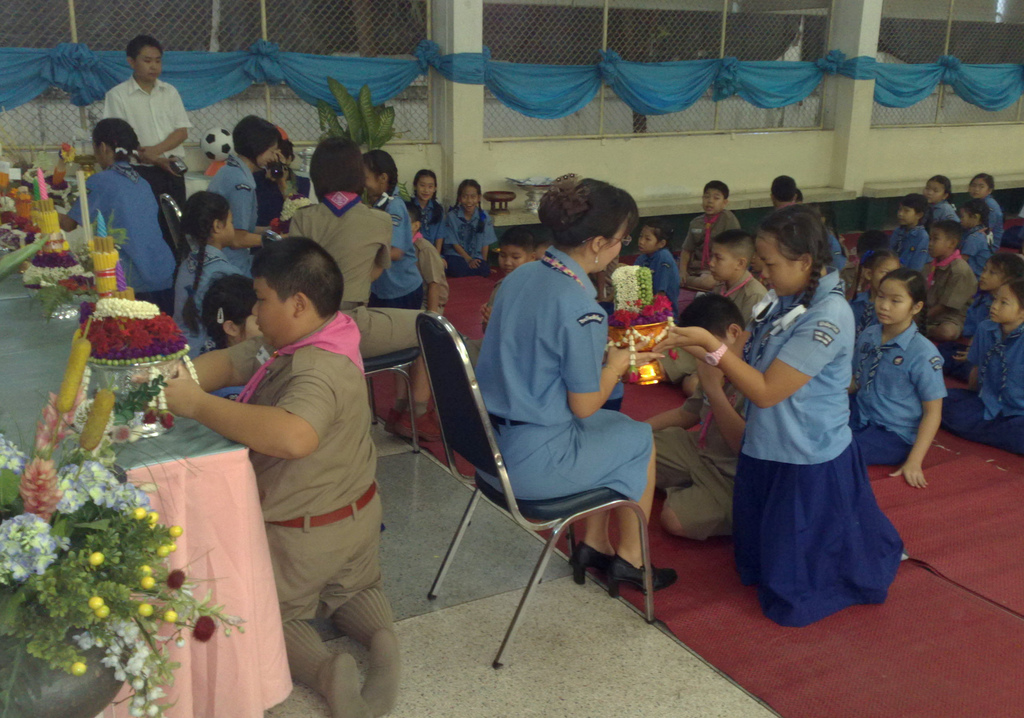 🇹🇭 ThailandWai khruพิธีไหว้ครู
A Thai ceremony of thanks to teachers, held in schools and in the artsSpiritual
🇹🇭 ThailandWai khruพิธีไหว้ครู
A Thai ceremony of thanks to teachers, held in schools and in the artsSpiritual
 🇹🇭 Bangkok, ThailandThai funeral
Buddhist rites in Thailand featuring water blessings, temple chanting and cremation.Rite of passage · Breakfast
🇹🇭 Bangkok, ThailandThai funeral
Buddhist rites in Thailand featuring water blessings, temple chanting and cremation.Rite of passage · Breakfast
 🇸🇬 Singapore and 3 moreMatchmaking
The custom of using a trusted intermediary to introduce partners for marriageRite of passage
🇸🇬 Singapore and 3 moreMatchmaking
The custom of using a trusted intermediary to introduce partners for marriageRite of passage
 🇵🇭 Philippines and 5 moreFirst Communion
A Christian rite of passage marking a person's initial reception of the Eucharist.Rite of passage
🇧🇳 BruneiBrunei Malay wedding
A multi-stage marriage ritual of the Brunei Malay community, blending Islamic vows with traditional blessings and publicRite of passage · Feasts and festival meals
🇮🇩 IndonesiaNgerorod
A Balinese Hindu way of marrying, where a couple wed by their own choiceRite of passage
🇵🇭 Philippines and 5 moreFirst Communion
A Christian rite of passage marking a person's initial reception of the Eucharist.Rite of passage
🇧🇳 BruneiBrunei Malay wedding
A multi-stage marriage ritual of the Brunei Malay community, blending Islamic vows with traditional blessings and publicRite of passage · Feasts and festival meals
🇮🇩 IndonesiaNgerorod
A Balinese Hindu way of marrying, where a couple wed by their own choiceRite of passage
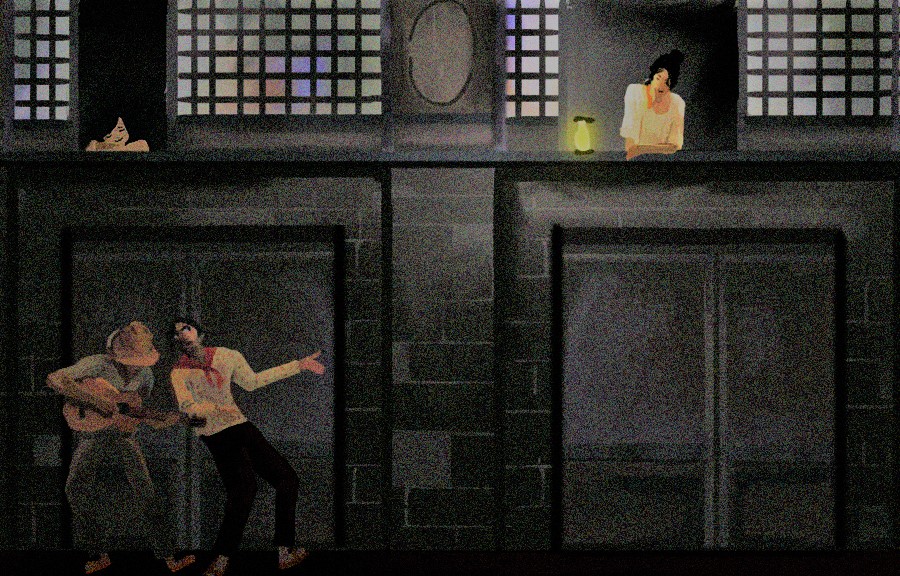 🇵🇭 PhilippinesHarana
A Filipino serenade where a suitor sings beneath his beloved's window at nightPerformance
🇵🇭 PhilippinesHarana
A Filipino serenade where a suitor sings beneath his beloved's window at nightPerformance
Photo credits on this page
The small pictures above come from Wikimedia Commons under free licences. Some are cropped to fit.
- Kenduri: Andreasprasetya, CC BY-SA 4.0, source
- Uma Lulik: Isabel Nolasco, CC BY-SA 4.0, source
- Thai funeral: Government of Thailand, CC BY 2.0, source
- Baci: Dalbera, CC BY 2.0, source
- Shinbyu: Lionslayer, CC BY-SA 3.0, source
- Slametan: Unknown author, CC BY-SA 3.0, source
- Traditional Vietnamese wedding: Gabrielle M. Vassal, Public domain, source
- Ngaben: by kibitan, CC BY 2.0, source
- Filipino wedding customs: John Ryan Cordova, CC BY-SA 2.0, source
- Tumpeng: brother-harahap, CC BY 2.0, source
- Wai khru: seetefl on Flickr, CC BY-SA 2.0, source
- Matchmaking: Pavel Fedotov, Public domain, source
- First Communion: Fortepan adományozó URBÁN TAMÁS, CC BY-SA 3.0, source
- Harana: Markytour777, CC BY-SA 4.0, source
- Batok: Lee, CC BY 2.0, source