Life-cycle rites
Birth, naming, coming of age, marriage and death.
Life-cycle rites mark the great changes in a human life: birth, naming, coming of age, marriage and death. Every society has them, and they teach a good deal about what a community values. They bring families together and give everyone a script for what to do and say. Here they are gathered from every region, from the Yoruba naming ceremony to the Korean first birthday, the Jewish bar mitzvah and the Maori tangi, each described as those who keep them do.
Beginnings
Birth rites welcome a child and protect mother and baby, with rest, special food, blessings and a name. Many cultures wait a few days or weeks before naming, until the child is stronger. Some give a first haircut, a first food or a first outing as small rites of their own. Godparents, aunts, grandmothers and neighbours all have parts. The common thread is the community making room for a newcomer and promising to help them grow.
Marriage and death
At the other turning points, rites give structure to joy and to grief. Weddings join two families with vows, gifts and feasts, and funerals gather the community to honour the person and support the bereaved. Both are long, with preparation before and customs after, from henna nights to the seven days of shiva. They also tie individual lives to a tradition older than any one family, which many people find a comfort at those moments.
Written by the EveryParampara desk with AI assistance. Background on Life-cycle rites (kind of tradition). Customs differ from place to place and family to family. If this is your tradition and we have it wrong, tell us.
 🇨🇳 China and 5 morePostpartum confinement
A period of rest, nourishment, and seclusion for mothers after giving birth.Rite of passage
🇨🇳 China and 5 morePostpartum confinement
A period of rest, nourishment, and seclusion for mothers after giving birth.Rite of passage
 🇰🇷 Jeju, South KoreaGut굿
Sacred rites of song, dance, and spirit communion performed by Korean shamansSpiritual
🇰🇷 Jeju, South KoreaGut굿
Sacred rites of song, dance, and spirit communion performed by Korean shamansSpiritual
 🇰🇷 Jeju, South KoreaHaenyeo해녀
Female free-divers of Jeju Island who harvest seafood from the ocean.Table custom
🇰🇷 Jeju, South KoreaHaenyeo해녀
Female free-divers of Jeju Island who harvest seafood from the ocean.Table custom
 🇯🇵 Tokyo, JapanShichi-Go-San七五三
A Japanese festival celebrating the growth of three-year-old girls, five-year-old boys, and seven-year-old girls.Rite of passage
🇯🇵 Tokyo, JapanShichi-Go-San七五三
A Japanese festival celebrating the growth of three-year-old girls, five-year-old boys, and seven-year-old girls.Rite of passage
 🇯🇵 JapanComing of Age Day成人の日
A Japanese public holiday welcoming new adults with municipal rites and celebrationsRite of passage
🇯🇵 JapanComing of Age Day成人の日
A Japanese public holiday welcoming new adults with municipal rites and celebrationsRite of passage
 🇨🇳 China and 6 moreRed envelope紅包 / 红包 (hóngbāo)
Money in a red packet, given at Lunar New Year, weddings and other big daysEtiquette
🇨🇳 China and 6 moreRed envelope紅包 / 红包 (hóngbāo)
Money in a red packet, given at Lunar New Year, weddings and other big daysEtiquette
 🇨🇳 China and 5 moreAncestor veneration
Honouring dead relatives with offerings, meals and prayers, kept in cultures worldwideSpiritual
🇨🇳 China and 5 moreAncestor veneration
Honouring dead relatives with offerings, meals and prayers, kept in cultures worldwideSpiritual
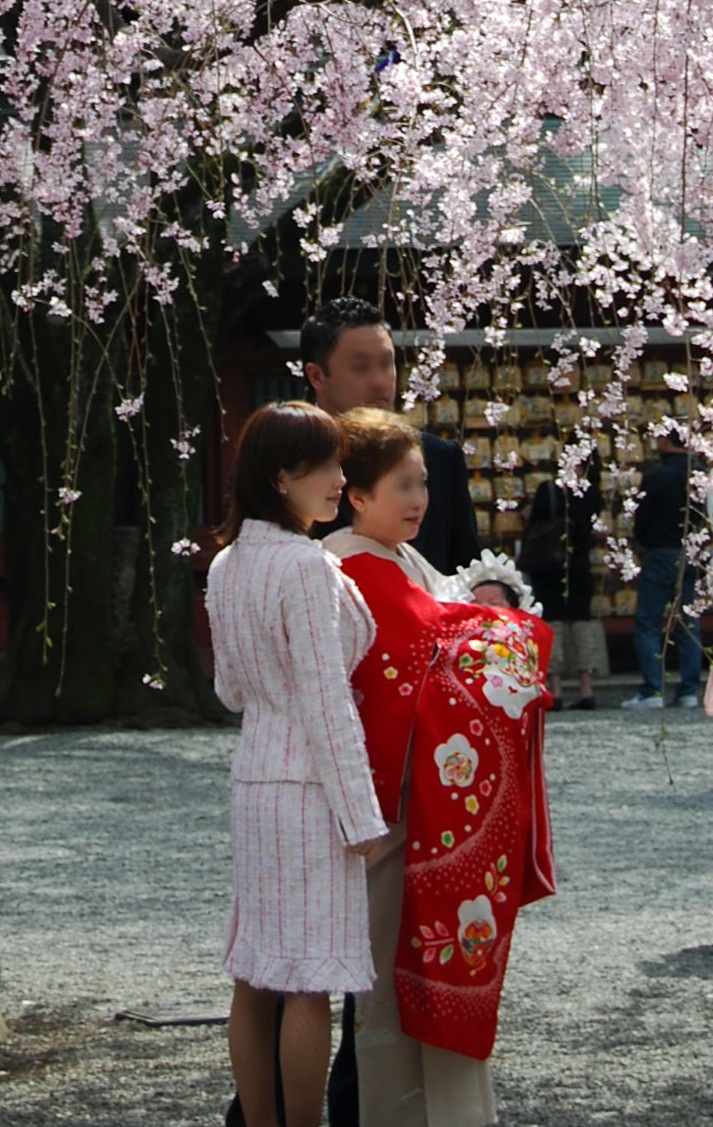 🇯🇵 JapanMiyamairi宮参り
A first visit to a Shinto shrine, about a month after a baby is bornRite of passage
🇯🇵 JapanMiyamairi宮参り
A first visit to a Shinto shrine, about a month after a baby is bornRite of passage
 🇯🇵 JapanJapanese funeral葬儀 (sōgi)
A Buddhist farewell in Japan: a wake, cremation, bone-gathering and a family graveRite of passage
🇯🇵 JapanJapanese funeral葬儀 (sōgi)
A Buddhist farewell in Japan: a wake, cremation, bone-gathering and a family graveRite of passage
 🇰🇷 South Korea and 1 morePyebaek폐백
A Korean wedding rite where newlyweds bow to elders and share dates, chestnuts and wineRite of passage
🇰🇷 South Korea and 1 morePyebaek폐백
A Korean wedding rite where newlyweds bow to elders and share dates, chestnuts and wineRite of passage
 🇯🇵 Tokyo, JapanShinto wedding神前結婚
A short purification ceremony before the kami, sealed by three cups of sakeRite of passage
🇯🇵 Tokyo, JapanShinto wedding神前結婚
A short purification ceremony before the kami, sealed by three cups of sakeRite of passage
 🇨🇳 Beijing, ChinaHanfu漢服
The dress of the Han Chinese, named for the Han dynasty and worn again todayDress
🇨🇳 Beijing, ChinaHanfu漢服
The dress of the Han Chinese, named for the Han dynasty and worn again todayDress
 🇨🇳 ChinaChinese funeral rituals
Traditional rites of mourning, vigils, offerings, and ancestor veneration across ChinaRite of passage
🇰🇷 South KoreaKorean traditional funeral
A multi-day ritual blending Confucian rites and shamanic practices to guide the deceased to the afterlife.Rite of passage
🇨🇳 ChinaChinese funeral rituals
Traditional rites of mourning, vigils, offerings, and ancestor veneration across ChinaRite of passage
🇰🇷 South KoreaKorean traditional funeral
A multi-day ritual blending Confucian rites and shamanic practices to guide the deceased to the afterlife.Rite of passage
 🇨🇳 China and 5 moreJoss paper金紙 (jīnzhǐ)
Paper money burned for ancestors and gods, folded and offered in Chinese worshipSpiritual
🇨🇳 China and 5 moreJoss paper金紙 (jīnzhǐ)
Paper money burned for ancestors and gods, folded and offered in Chinese worshipSpiritual
 🇰🇷 South Korea and 1 moreDoljanchi돌 (dol); 돌잔치 (doljanchi)
A Korean first-birthday rite where a baby picks an object that hints at the years aheadRite of passage
🇰🇷 South Korea and 1 moreDoljanchi돌 (dol); 돌잔치 (doljanchi)
A Korean first-birthday rite where a baby picks an object that hints at the years aheadRite of passage
 🇨🇳 China and 4 moreSky burialབྱ་གཏོར་ (bya gtor)
A Tibetan funeral in which the dead are laid out on a rock for vulturesRite of passage
🇨🇳 China and 4 moreSky burialབྱ་གཏོར་ (bya gtor)
A Tibetan funeral in which the dead are laid out on a rock for vulturesRite of passage
 🇨🇳 ChinaTraditional Chinese marriage婚姻 (hūnyīn)
A wedding rite that joins two families, arranged by a go-between and sealed with giftsRite of passage
🇨🇳 ChinaTraditional Chinese marriage婚姻 (hūnyīn)
A wedding rite that joins two families, arranged by a go-between and sealed with giftsRite of passage
 🇰🇷 Seoul, South Korea and 1 moreMarriage in Korea
Weddings in Korea, from Goryeo matchmaking to Confucian rites and modern chapel vowsRite of passage
🇰🇷 Seoul, South Korea and 1 moreMarriage in Korea
Weddings in Korea, from Goryeo matchmaking to Confucian rites and modern chapel vowsRite of passage
 🇨🇳 ChinaTraditional Chinese wedding dress
The ceremonial bridal garments worn in Han Chinese marriage ceremoniesDress
🇨🇳 ChinaTraditional Chinese wedding dress
The ceremonial bridal garments worn in Han Chinese marriage ceremoniesDress
 🇯🇵 Kyoto, Japan and 5 moreTeeth blackening
A custom of dyeing teeth black to mark adulthood and beauty in parts of Asia and Oceania.Rite of passage
🇨🇳 China and 2 moreJi Li笄禮
The traditional Chinese coming-of-age hairpin ceremony for young womenRite of passage
🇨🇳 Taiyuan, ChinaGuan Li冠禮
The traditional Chinese coming-of-age capping ceremony for young menRite of passage
🇯🇵 Kyoto, JapanGenpuku元服
The Japanese rite of passage that marked a child's entry into adult lifeRite of passage
🇯🇵 Kyoto, Japan and 5 moreTeeth blackening
A custom of dyeing teeth black to mark adulthood and beauty in parts of Asia and Oceania.Rite of passage
🇨🇳 China and 2 moreJi Li笄禮
The traditional Chinese coming-of-age hairpin ceremony for young womenRite of passage
🇨🇳 Taiyuan, ChinaGuan Li冠禮
The traditional Chinese coming-of-age capping ceremony for young menRite of passage
🇯🇵 Kyoto, JapanGenpuku元服
The Japanese rite of passage that marked a child's entry into adult lifeRite of passage
Photo credits on this page
The small pictures above come from Wikimedia Commons under free licences. Some are cropped to fit.
- Genpuku: moguphotos, CC BY-SA 2.0, source
- Shichi-Go-San: Bergmann at Japanese Wikipedia, CC BY 3.0, source
- Postpartum confinement: Unknown, Public domain, source
- Gut: ReSearcher at English Wikipedia, CC BY-SA 3.0, source
- Doljanchi: en:User:Jamsong, CC BY-SA 3.0, source
- Sky burial: FishOil at English Wikipedia, Public domain, source
- Red envelope: Oldie~commonswiki, Public domain, source
- Ancestor veneration: Thang Nguyen, CC BY-SA 2.0, source
- Miyamairi: I (Sakura-saku-kuni) took this photograph., Public domain, source
- Japanese funeral: 夢の散歩, CC BY-SA 3.0, source
- Pyebaek: halfGoku, CC BY-SA 2.0, source
- Shinto wedding: Jakub Hałun, CC BY-SA 4.0, source
- Marriage in Korea: Jérôme Banal ( Eden2004 ), CC BY-SA 3.0, source
- Haenyeo: Own work, CC BY-SA 3.0, source
- Teeth blackening: momo, CC BY 2.0, source
- Traditional Chinese wedding dress: Tunere, CC BY-SA 4.0, source
- Hanfu: Anonymous Song Chinese artist after the original by Gu Hongzhong, Public domain, source
- Chinese funeral rituals: Salzmann, E.v., CC BY-SA 3.0 de, source
- Joss paper: Vmenkov, CC BY-SA 3.0, source
- Traditional Chinese marriage: Unknown author, Public domain, source