Shinto, Taoist and folk Chinese traditions
Shinto, Taoist and folk Chinese traditions cover the native customs of Japan and China and their neighbours: shrine visits and festivals, ancestor veneration, temple fairs, the Lunar New Year, Qingming, the Hungry Ghost month, the rites of birth and marriage, feng shui and traditional medicine.
Shinto, Taoist and folk Chinese traditions cover the native customs of Japan and China and their neighbours: shrine visits and festivals, ancestor veneration, temple fairs, the Lunar New Year, Qingming, the Hungry Ghost month, the rites of birth and marriage, feng shui and traditional medicine. These are practised alongside Buddhism and Confucian ethics and often without a clear line between them. Many people take part in the customs without thinking of them as a religion. These pages describe them as those who keep them do.
Shrines, gods and spirits
In Shinto, kami, spirits of nature, places and ancestors, are honoured at shrines, with a bow, a clap, a coin and a prayer. Festivals, matsuri, carry the kami in portable shrines through the streets, accompanied by drums and food stalls. In Chinese folk religion, temples to local gods, such as Mazu and Guandi, are the centre of festivals, with incense, offerings and operas performed for the deities.
Ancestors and the year
Households keep an ancestral altar, and the year is marked by Lunar New Year, Qingming tomb sweeping, the Dragon Boat Festival, the Hungry Ghost Festival and the Mid-Autumn Festival. In Japan, hatsumode, setsubun, the Girls' Day and Obon give the year its rhythm. Many of these blend Buddhist, Taoist and Confucian elements, and families keep them as part of being at home.
Written by the EveryParampara desk with AI assistance. Background on Shinto, Taoist and folk Chinese (faith). Customs differ from place to place and family to family. If this is your tradition and we have it wrong, tell us.
 🇨🇳 Beijing, ChinaHanfu漢服
The dress of the Han Chinese, named for the Han dynasty and worn again todayDress
🇨🇳 Beijing, ChinaHanfu漢服
The dress of the Han Chinese, named for the Han dynasty and worn again todayDress
 🇨🇳 ChinaChinese funeral rituals
Traditional rites of mourning, vigils, offerings, and ancestor veneration across ChinaRite of passage
🇨🇳 ChinaChinese funeral rituals
Traditional rites of mourning, vigils, offerings, and ancestor veneration across ChinaRite of passage
 🇨🇳 China and 5 moreJoss paper金紙 (jīnzhǐ)
Paper money burned for ancestors and gods, folded and offered in Chinese worshipSpiritual
🇨🇳 China and 5 moreJoss paper金紙 (jīnzhǐ)
Paper money burned for ancestors and gods, folded and offered in Chinese worshipSpiritual
 🇭🇰 Cheung Chau, Hong KongCheung Chau Bun Festival包山節
A week of vegetarian days, bun towers and a midnight scramble on a Hong Kong islandFestival
🇭🇰 Cheung Chau, Hong KongCheung Chau Bun Festival包山節
A week of vegetarian days, bun towers and a midnight scramble on a Hong Kong islandFestival
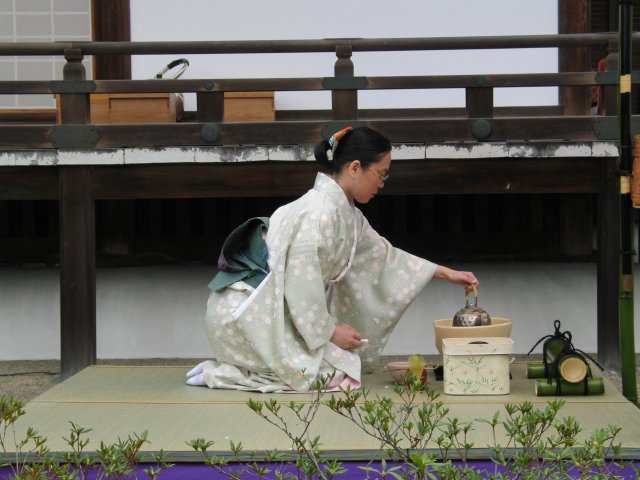 🇯🇵 Kyoto, JapanJapanese tea ceremony茶道 (Sadō / Chadō), 茶の湯 (Chanoyu)
The formal serving of powdered matcha, shaped by Zen, Shinto and wabiTable custom · Tea, coffee and drinking ceremonies
🇯🇵 Kyoto, JapanJapanese tea ceremony茶道 (Sadō / Chadō), 茶の湯 (Chanoyu)
The formal serving of powdered matcha, shaped by Zen, Shinto and wabiTable custom · Tea, coffee and drinking ceremonies
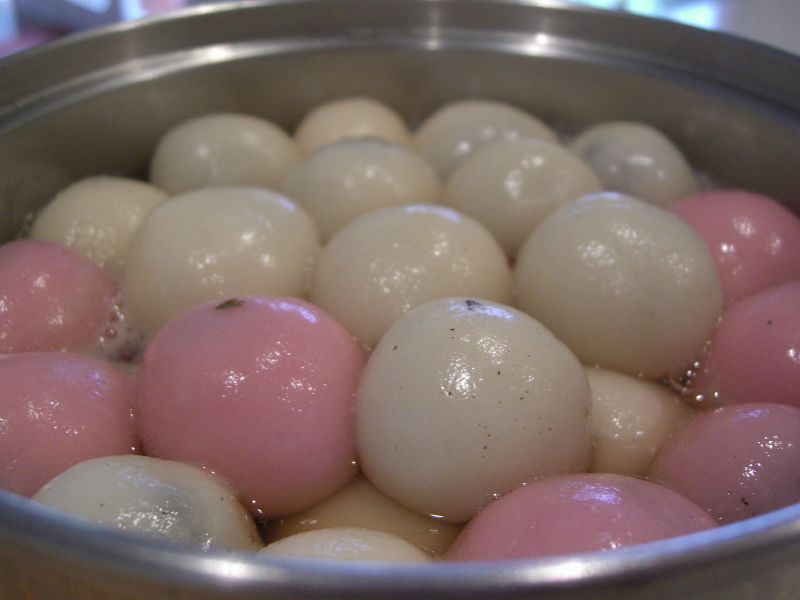 🇨🇳 Suzhou, China and 4 moreDongzhi Festival冬至
A winter solstice festival of family reunions, ancestor rites and sweet rice ballsSeasonal · Dinner
🇨🇳 Suzhou, China and 4 moreDongzhi Festival冬至
A winter solstice festival of family reunions, ancestor rites and sweet rice ballsSeasonal · Dinner
 🇨🇳 China and 1 moreDajiao打醮
An annual Taoist ritual and festival seeking peace and safety for the communitySpiritual · Feasts and festival meals
🇨🇳 China and 1 moreDajiao打醮
An annual Taoist ritual and festival seeking peace and safety for the communitySpiritual · Feasts and festival meals
 🇨🇳 Huizhou, ChinaHui-style architecture
A traditional Chinese building style of white walls, dark tiles and horse-head gablesCraft
🇨🇳 Huizhou, ChinaHui-style architecture
A traditional Chinese building style of white walls, dark tiles and horse-head gablesCraft
 🇯🇵 JapanTairyō-bata大漁旗
Traditional Japanese flags flown by fishing boats to celebrate a bountiful catchFestival
🇨🇳 China and 3 moreQimen Dunjia奇門遁甲
A classical Chinese divination system that maps time, space, and strategySpiritual
🇨🇳 Taiyuan, ChinaGuan Li冠禮
The traditional Chinese coming-of-age capping ceremony for young menRite of passage
🇯🇵 JapanTairyō-bata大漁旗
Traditional Japanese flags flown by fishing boats to celebrate a bountiful catchFestival
🇨🇳 China and 3 moreQimen Dunjia奇門遁甲
A classical Chinese divination system that maps time, space, and strategySpiritual
🇨🇳 Taiyuan, ChinaGuan Li冠禮
The traditional Chinese coming-of-age capping ceremony for young menRite of passage
 🇨🇳 China and 1 moreFive Grains五穀
A sacred grouping of staple crops honoured as the bedrock of East Asian civilizationFolklore
🇨🇳 China and 1 moreFive Grains五穀
A sacred grouping of staple crops honoured as the bedrock of East Asian civilizationFolklore
 🇨🇳 China and 1 moreChinese patchwork
A needlework craft joining fabric scraps into protective clothing, quilts and folk artCraft
🇨🇳 China and 1 moreChinese patchwork
A needlework craft joining fabric scraps into protective clothing, quilts and folk artCraft
 🇨🇳 China and 1 moreTaiyin Xingjun太陰星君
The Chinese moon goddess, honoured at Mid-Autumn with incense, mooncakes and prayersSpiritual · Sweets given and shared
🇨🇳 China and 1 moreTaiyin Xingjun太陰星君
The Chinese moon goddess, honoured at Mid-Autumn with incense, mooncakes and prayersSpiritual · Sweets given and shared
 🇨🇳 China and 1 moreChiwen蚩吻
A dragon figure on Chinese roof ridges, set there to swallow evil and guard against fireCraft
🇨🇳 China and 1 moreChiwen蚩吻
A dragon figure on Chinese roof ridges, set there to swallow evil and guard against fireCraft
 🇨🇳 Beijing, ChinaZangfu臟腑 (simplified 脏腑; zàngfǔ)
A Chinese medicine view of organs as networks of qi, blood and five phasesFolklore
🇨🇳 Beijing, ChinaZangfu臟腑 (simplified 脏腑; zàngfǔ)
A Chinese medicine view of organs as networks of qi, blood and five phasesFolklore
 🇨🇳 Ziyang, China and 1 moreThree Corpses三尸
A Daoist belief in three inner parasites that cause illness and cut life shortFolklore
🇨🇳 Ziyang, China and 1 moreThree Corpses三尸
A Daoist belief in three inner parasites that cause illness and cut life shortFolklore
 🇨🇳 Luoyang, China and 1 moreYin and yang陰陽
Two opposite but complementary forces that Chinese thought sees in all thingsFolklore
🇨🇳 ChinaTui na推拿
A traditional Chinese hands-on therapy using pushing, grasping, and acupressure pointsFolklore
🇨🇳 Beijing, ChinaZangfu脏腑
A traditional Chinese model of internal organs as paired networks of energy and functionFolklore
🇨🇳 Luoyang, China and 1 moreYin and yang陰陽
Two opposite but complementary forces that Chinese thought sees in all thingsFolklore
🇨🇳 ChinaTui na推拿
A traditional Chinese hands-on therapy using pushing, grasping, and acupressure pointsFolklore
🇨🇳 Beijing, ChinaZangfu脏腑
A traditional Chinese model of internal organs as paired networks of energy and functionFolklore
 🇯🇵 JapanNōgaku能楽
A traditional Japanese theater form combining the lyric drama noh and the comic interludes kyōgen.Performance
🇨🇳 Beijing, ChinaZangfu脏腑
The traditional Chinese medical model of interconnected organ networks and vital energyFolklore
🇯🇵 JapanNōgaku能楽
A traditional Japanese theater form combining the lyric drama noh and the comic interludes kyōgen.Performance
🇨🇳 Beijing, ChinaZangfu脏腑
The traditional Chinese medical model of interconnected organ networks and vital energyFolklore
 🇨🇳 Xi'an, ChinaXi'an guyue西安鼓乐
Ritual wind and percussion music from Xi'an, played sitting or walkingPerformance
🇨🇳 Tianjin, China and 1 moreBa-zha八蜡
An old Chinese harvest rite of eight offerings, later a guardian against locustsSpiritual
🇨🇳 China and 1 moreRed Thread of Fate姻緣紅線
An East Asian belief in an invisible cord binding two people destined for marriageFolklore
🇨🇳 Xi'an, ChinaXi'an guyue西安鼓乐
Ritual wind and percussion music from Xi'an, played sitting or walkingPerformance
🇨🇳 Tianjin, China and 1 moreBa-zha八蜡
An old Chinese harvest rite of eight offerings, later a guardian against locustsSpiritual
🇨🇳 China and 1 moreRed Thread of Fate姻緣紅線
An East Asian belief in an invisible cord binding two people destined for marriageFolklore
Photo credits on this page
The small pictures above come from Wikimedia Commons under free licences. Some are cropped to fit.
- Five Grains: Kurt Stüber [1], CC BY-SA 3.0, source
- Hui-style architecture: Huangchenhai, CC BY-SA 4.0, source
- Tairyō-bata: Wiki4423, CC BY-SA 3.0, source
- Xi'an guyue: Liuxingy, CC BY-SA 4.0, source
- Chiwen: 秋水平湖, CC BY-SA 3.0, source
- Yin and yang: Klem, Public domain, source
- Zangfu: Foristslow, CC BY 4.0, source
- Nōgaku: Daderot, CC0, source
- Dongzhi Festival: Alpha, CC BY-SA 2.0, source
- Dajiao: 29cm, CC BY-SA 2.0, source
- Taiyin Xingjun: Unknown author, Public domain, source
- Three Corpses: Michał Boym, Public domain, source
- Hanfu: Anonymous Song Chinese artist after the original by Gu Hongzhong, Public domain, source
- Chinese patchwork: Unknown author, CC0, source
- Chinese funeral rituals: Salzmann, E.v., CC BY-SA 3.0 de, source
- Joss paper: Vmenkov, CC BY-SA 3.0, source
- Cheung Chau Bun Festival: .怪貓., CC BY 2.0, source
- Japanese tea ceremony: Photograph taken by Stephane D'Alu ( en:User:Sdalu ) in April 2004, CC BY-SA 3.0, source