Dress and adornment
Clothes, jewellery, henna, tattoo and hair.
Dress and adornment traditions cover the clothes, jewellery, hairstyles, tattoos and henna that people wear to mark who they are and what the day is. A sari, a kilt, a kente cloth, a hanbok or a poncho is a statement of belonging, and the way it is worn tells of age, marriage, rank or region. Some garments are worn every day, others only on festivals, and many are made by hand by craftspeople whose skills are handed down. EveryParampara describes them with respect and notes how they are changing.
Cloth and meaning
Colour, pattern and fibre carry meaning: red for luck in China and India, white for mourning in some places and for brides in others, kente patterns that name proverbs, tartans that name clans. The making of cloth, whether by weaving, dyeing, printing or embroidery, is itself a tradition, and master weavers are honoured. A garment given at a wedding or handed down in a family holds the memory of the people who wore it.
Skin, hair and ornament
Body decoration is as old as cloth. Henna on the hands of a bride, a bindi on the forehead, the tattoos of Samoa and the Maori, the plaited hair of West Africa, the lip plates and neck rings of some peoples, each is a language. Many are rites of passage, done at a coming of age or a wedding. They are best described by those who wear them, and EveryParampara aims to give their meaning, not to treat them as curiosities.
Written by the EveryParampara desk with AI assistance. Background on Dress and adornment (kind of tradition). Customs differ from place to place and family to family. If this is your tradition and we have it wrong, tell us.
 🇻🇳 Huế, VietnamNón lá𥶄蘿
A pointed leaf and bamboo hat worn across Vietnam for shelter, work and celebrationDress
🇻🇳 Huế, VietnamNón lá𥶄蘿
A pointed leaf and bamboo hat worn across Vietnam for shelter, work and celebrationDress
 🇹🇱 Dili, Timor-Leste and 1 moreTais
Traditional hand-woven cloth of East Timor, worn as dress or used in ceremonies and exchange.Dress
🇹🇱 Dili, Timor-Leste and 1 moreTais
Traditional hand-woven cloth of East Timor, worn as dress or used in ceremonies and exchange.Dress
 🇮🇩 North Sumatra, IndonesiaUlosᯥᯞᯘᯬ᯲
A hand-woven textile of the Batak people in Indonesia, worn for warmth and ceremony.Dress
🇮🇩 North Sumatra, IndonesiaUlosᯥᯞᯘᯬ᯲
A hand-woven textile of the Batak people in Indonesia, worn for warmth and ceremony.Dress
 🇵🇭 Cebu, PhilippinesBatok
Indigenous Filipino tattooing, once worn as dress, rank and a rite of passageCraft
🇵🇭 Cebu, PhilippinesBatok
Indigenous Filipino tattooing, once worn as dress, rank and a rite of passageCraft
 🇮🇩 Bali, Indonesia and 5 moreIkat
A resist-dyeing craft from Southeast Asia, where yarns are tied and dyed before weavingCraft
🇮🇩 Bali, Indonesia and 5 moreIkat
A resist-dyeing craft from Southeast Asia, where yarns are tied and dyed before weavingCraft
 🇰🇭 CambodiaApsara Danceរបាំទេពអប្សរា
A classical Cambodian court dance inspired by the stone carvings of AngkorPerformance
🇰🇭 CambodiaApsara Danceរបាំទេពអប្សរា
A classical Cambodian court dance inspired by the stone carvings of AngkorPerformance
 🇵🇭 PhilippinesBarong tagalog
The Philippine national shirt for men: embroidered, worn loose and never tucked inDress
🇵🇭 PhilippinesBarong tagalog
The Philippine national shirt for men: embroidered, worn loose and never tucked inDress
 🇲🇲 Myanmar and 1 moreLongyiလုံချည်
A tube of cloth worn from waist to feet in Myanmar, folded shut with no knotDress
🇲🇲 Myanmar and 1 moreLongyiလုံချည်
A tube of cloth worn from waist to feet in Myanmar, folded shut with no knotDress
 🇮🇩 Indonesia and 5 moreBatikꦧꦛꦶꦏ꧀ (bathik)
A Javanese wax-resist way of patterning cloth, and the textiles made that wayCraft
🇮🇩 Indonesia and 5 moreBatikꦧꦛꦶꦏ꧀ (bathik)
A Javanese wax-resist way of patterning cloth, and the textiles made that wayCraft
 🇮🇩 Yogyakarta, Indonesia and 4 moreKebayaꦏꦼꦧꦪ
A front-opening blouse and wrapped cloth, worn by women across Southeast AsiaDress
🇮🇩 Yogyakarta, Indonesia and 4 moreKebayaꦏꦼꦧꦪ
A front-opening blouse and wrapped cloth, worn by women across Southeast AsiaDress
 🇮🇩 Palembang, Indonesia and 3 moreSongketᬲᭀᬂᬓᬾᬢ᭄
A hand-woven cloth threaded with gold or silver, worn at weddings and royal courtsDress
🇮🇩 Palembang, Indonesia and 3 moreSongketᬲᭀᬂᬓᬾᬢ᭄
A hand-woven cloth threaded with gold or silver, worn at weddings and royal courtsDress
 🇰🇭 Cambodia and 2 moreSampotសំពត់
A length of cloth wrapped at the waist, the everyday and ceremonial dress of CambodiaDress
🇰🇭 Cambodia and 2 moreSampotសំពត់
A length of cloth wrapped at the waist, the everyday and ceremonial dress of CambodiaDress
 🇲🇾 Malacca, Malaysia and 5 moreBaju Melayuباجو ملايو
The long-sleeved Malay man's shirt and trousers, formal national dress in Malaysia and BruneiDress
🇲🇾 Malacca, Malaysia and 5 moreBaju Melayuباجو ملايو
The long-sleeved Malay man's shirt and trousers, formal national dress in Malaysia and BruneiDress
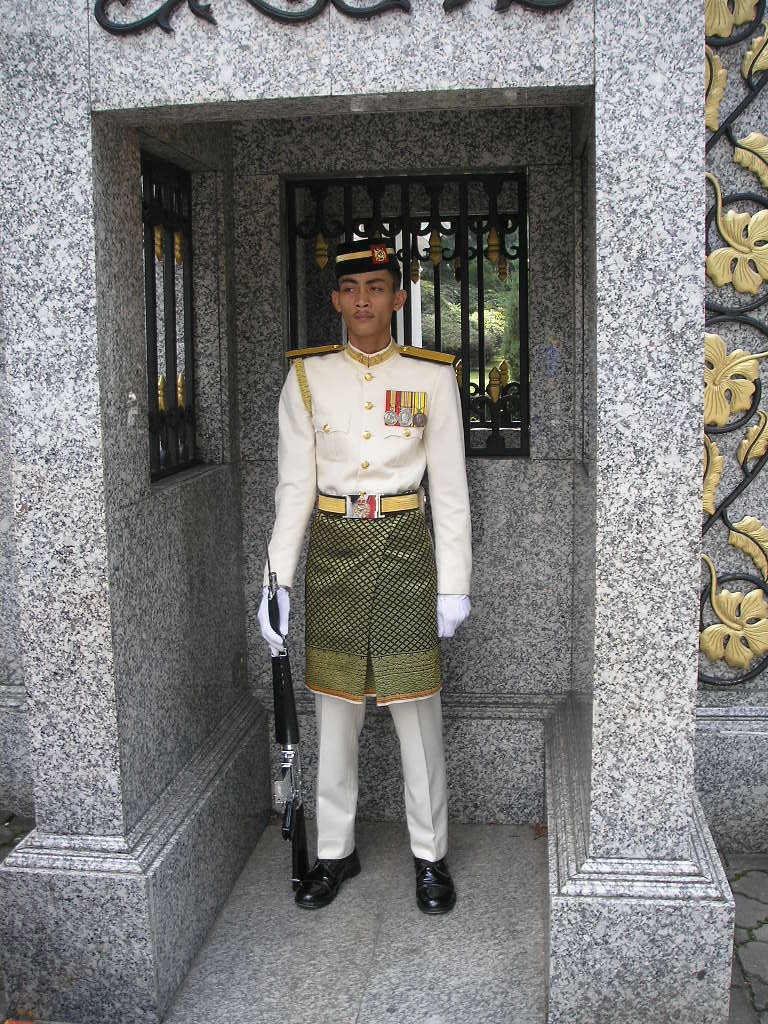 🇲🇾 Malacca, Malaysia and 4 moreSampingسمڤيڠ
A traditional Malay waist cloth worn over festive attire in Southeast AsiaDress
🇲🇾 Malacca, Malaysia and 4 moreSampingسمڤيڠ
A traditional Malay waist cloth worn over festive attire in Southeast AsiaDress
 🇵🇭 PhilippinesTapis
A hand-woven wrap skirt from the Philippines, fastened at the waist with a sashDress
🇵🇭 PhilippinesTapis
A hand-woven wrap skirt from the Philippines, fastened at the waist with a sashDress
 🇮🇩 Bali, IndonesiaNational costume of IndonesiaPakaian Nasional Indonesia
The formal attire worn by Indonesians to represent the nation's diverse cultural heritage.Dress
🇮🇩 Bali, IndonesiaNational costume of IndonesiaPakaian Nasional Indonesia
The formal attire worn by Indonesians to represent the nation's diverse cultural heritage.Dress
 🇻🇳 VietnamÁo gấm
A brocade tunic worn by Vietnamese men at ceremonies and festivalsDress
🇻🇳 VietnamÁo gấm
A brocade tunic worn by Vietnamese men at ceremonies and festivalsDress
 🇮🇩 IndonesiaBatik kawung
An old Indonesian batik pattern of four neat ovals, read as fruit or lotusCraft
🇮🇩 IndonesiaBatik kawung
An old Indonesian batik pattern of four neat ovals, read as fruit or lotusCraft
 🇵🇭 PhilippinesBali-og
Layered necklaces and fringed collars from the Visayas and MindanaoDress
🇵🇭 PhilippinesBali-og
Layered necklaces and fringed collars from the Visayas and MindanaoDress
 🇵🇭 PhilippinesPatadyong
A traditional Philippine wrap skirt and versatile woven cloth from the VisayasDress
🇵🇭 PhilippinesPatadyong
A traditional Philippine wrap skirt and versatile woven cloth from the VisayasDress
 🇹🇭 ThailandKhruiครุย
A sheer ceremonial robe worn by Thai royalty and now as academic dress at universities.Dress
🇹🇭 ThailandKhruiครุย
A sheer ceremonial robe worn by Thai royalty and now as academic dress at universities.Dress
 🇲🇲 Amarapura, MyanmarAcheikအချိတ်
A Burmese silk weave of waves and stripes, made with up to 200 shuttlesDress
🇲🇲 Amarapura, MyanmarAcheikအချိတ်
A Burmese silk weave of waves and stripes, made with up to 200 shuttlesDress
 🇰🇭 Longvek, Cambodia and 2 moreKhmer traditional clothing
How Khmer people dress: the wrapped sampot, the embroidered sbai, the checkered kramaDress
🇰🇭 Longvek, Cambodia and 2 moreKhmer traditional clothing
How Khmer people dress: the wrapped sampot, the embroidered sbai, the checkered kramaDress
 🇰🇭 CambodiaAv pakអាវប៉ាក់
A Cambodian women's shirt in silk or cotton, embroidered or laced, for festivalsDress
🇰🇭 CambodiaAv pakអាវប៉ាក់
A Cambodian women's shirt in silk or cotton, embroidered or laced, for festivalsDress
 🇹🇭 Phrae, ThailandMo homหม้อห้อม
A northern Thai shirt and cloth, dyed deep blue-black with the hom plantDress
🇹🇭 Phrae, ThailandMo homหม้อห้อม
A northern Thai shirt and cloth, dyed deep blue-black with the hom plantDress
Photo credits on this page
The small pictures above come from Wikimedia Commons under free licences. Some are cropped to fit.
- Mo hom: Hanumann, CC BY 2.0, source
- Ikat: Midori, CC BY 3.0, source
- National costume of Indonesia: President of Indonesia, Public domain, source
- Apsara Dance: Remi Jouan, CC BY-SA 3.0, source
- Nón lá: Ratmanhme282020, CC BY-SA 4.0, source
- Tais: Daderot, CC0, source
- Ulos: Boy Lawson, CC BY-SA 3.0, source
- Longyi: Unknown author, Public domain, source
- Sampot: George Groslier (1887–1945), Public domain, source
- Baju Melayu: CuLeX-, CC BY 2.0, source
- Barong tagalog: Hiart, CC0, source
- Áo gấm: White House photo by Eric Draper, Public domain, source
- Batik kawung: Alteaven, CC BY-SA 3.0, source
- Samping: Gryffindor, Public domain, source
- Bali-og: Patrick Poculan, CC BY 2.0, source
- Patadyong: Anonymous Unknown author, Public domain, source
- Khrui: Unknown author, Public domain, source
- Batok: Lee, CC BY 2.0, source
- Batik: Fpangestuphotographer, CC BY-SA 4.0, source
- Kebaya: Simon_sees, CC BY 2.0, source
- Songket: Rijksmuseum, CC0, source
- Acheik: Chenzeyan29, CC0, source
- Khmer traditional clothing: Engsamnang, CC BY-SA 3.0, source
- Av pak: Puppetcreator, CC BY-SA 3.0, source
- Tapis: Hiart, CC0, source