🇹🇷 Turkey
The nazar boncugu, a blue glass bead with an eye, hangs in houses, on cars and on babies' clothes to turn aside envy. It is also given as a gift to new neighbours.
Read: NazarPeople everywhere have made charms, rites and habits to keep harm away and bring good fortune.
Presented by ClearTrust Free for the curious, the homesick and the hosts.
People everywhere have made charms, rites and habits to keep harm away and bring good fortune. A red thread round the wrist, an evil-eye bead, a horseshoe over the door, a lucky coin, a herb bundle burned for blessing, a prayer said when a child sneezes: these are small, everyday customs, handed down in families. Many are tied to the care of the sick in traditional healing, and are described here as traditions that people keep, not as medical advice. They show how communities have always sought comfort, protection and hope, and how a symbol can steady the mind in uncertain times.
Luck and protection customs speak to the fears and hopes that everyone has: health, safe journeys, good harvests, a baby born well and a house free of trouble. A charm gives a sense of control over what cannot be controlled. Traditional healing, which includes herbs, prayers, massage and ritual, is part of the wider heritage of a community and is often practised alongside modern medicine. This page describes such customs as tradition and does not offer medical advice. For any health concern, please see a qualified doctor.
Common protective objects include beads and amulets, knots and threads, horseshoes, mirrors, bells and iron. Colours matter: red and blue ward off harm in many places, and white is for purity. Plants such as garlic, rue, neem, sage and mistletoe are hung, burned or worn. Words also protect, in prayers, verses, spells, blessings and the habit of saying "touch wood" or "bless you". Many rites are done at the turn of the year, at births, at weddings and at times of illness, and special people, such as healers, shamans or priests, may be called on.
Foods linked to luck are widespread: noodles for long life, lentils and grapes at the new year, round fruits, fish, sweet rice and red eggs. Some are medicinal in tradition, such as ginger tea, turmeric milk, chicken soup and herbal broths. Protective dress includes amulet bracelets, tattoos, talismans sewn into clothes and white or red cloth. Music and rhythm are used in healing ceremonies from Africa to the Americas, where drums, songs and dance are believed to help a person recover and make a community whole.
Some protective customs have become fashion, with evil-eye jewellery and crystals popular worldwide. Traditional medicine is studied by researchers, and ministries in many countries support the training of practitioners. Health authorities warn that some remedies are not safe and that serious illness should be treated by trained doctors. Many families hold both views at once, keeping a charm on the baby's wrist and taking the baby to the clinic. Respect for the tradition and for modern medicine is the sensible meeting point.
The nazar boncugu, a blue glass bead with an eye, hangs in houses, on cars and on babies' clothes to turn aside envy. It is also given as a gift to new neighbours.
Read: NazarThe mati, or evil eye, is guarded against by a blue bead, a clove of garlic and the habit of spitting lightly three times, ftou ftou ftou, after a compliment. Many Greeks also make the sign of the cross three times and say a prayer when someone is thought to have been touched by the eye.
Read: Evil eyeA black dot, kajal, is put on a baby's cheek to turn away the evil eye, and lemons and chillies are hung on a string above shop doors. Ayurveda, an old system of care, is widely used as a tradition.
Read: Nazar battuRed is the colour of luck and protection, and red envelopes, red knots and red underwear in a zodiac year are common customs. Feng shui arranges the home, and traditional Chinese medicine remains a living practice.
Read: Feng shuiOmamori are small amulets from shrines, sold for safe travel, success in exams and health. Maneki-neko, the beckoning cat, brings luck to shops, and a daruma doll is painted with one eye when a goal is set.
Read: OmamoriMonks give sacred white threads, sai sin, tied round the wrist for blessing, and people wear Buddhist amulets, phra khruang, believed to protect them. Spirit houses stand in gardens.
Read: Spirit house Evil eyeA widespread protective belief.
 OmamoriJapanese amulets from shrines.
 Feng shuiThe art of placing things for harmony.
Also part of it, and being written: Hamsa (The hand of Fatima.), Smudging (Native American cleansing with herbs.), Curandero (Latin American traditional healers.), Rongoā (Maori traditional healing.), Superstition (Everyday customs of luck.).
No. These are customs and traditions, described as the people who keep them describe them. For any health problem, please consult a qualified doctor.
Envy and its fear seem to appear in all societies, and a simple charm gives a way to answer them. The belief is documented from ancient Greece and Mesopotamia and now appears across Europe, Asia and Africa.
Red is the colour of blood and life in many cultures, and blue is linked to the sky and water. The meanings differ, and a colour that is lucky in one place may be mournful in another.
Very often. Many families keep a traditional protection and also use doctors, and see the two as serving different needs.
A sacred practice among many First Nations and Native American peoples of burning herbs such as sage, cedar and sweetgrass for cleansing and prayer. It is a living ceremony, and visitors are asked to respect it.
Written by the EveryParampara desk with AI assistance. Customs differ from place to place and family to family. If this is your tradition and we have it wrong, tell us.
The traditions written up so far, best known first.
 🇨🇳 Shanghai, China and 1 moreJiaozi餃子
Crescent Chinese dumplings filled with meat or vegetables, eaten for fortune and feastsTable custom · Breakfast
🇨🇳 Shanghai, China and 1 moreJiaozi餃子
Crescent Chinese dumplings filled with meat or vegetables, eaten for fortune and feastsTable custom · Breakfast
 🇯🇵 JapanChildren's Dayこどもの日
A Japanese holiday on May fifth celebrating the happiness and growth of childrenFestival
🇯🇵 JapanChildren's Dayこどもの日
A Japanese holiday on May fifth celebrating the happiness and growth of childrenFestival
 🇨🇳 China and 5 moreDouble Ninth Festival重陽節
An autumn festival of mountain walks, chrysanthemum wine and ancestor remembranceSeasonal · Tea-time and snacking customs
🇨🇳 China and 5 moreDouble Ninth Festival重陽節
An autumn festival of mountain walks, chrysanthemum wine and ancestor remembranceSeasonal · Tea-time and snacking customs
 🇯🇵 Tokyo, JapanHatsumōde初詣
The first shrine or temple visit of the Japanese New Year to pray for good fortuneSpiritual
🇯🇵 Tokyo, JapanHatsumōde初詣
The first shrine or temple visit of the Japanese New Year to pray for good fortuneSpiritual
 🇯🇵 JapanHadaka Matsuri裸祭り
Japanese festivals where participants clad in loincloths seek luck and purificationSpiritual
🇯🇵 JapanHadaka Matsuri裸祭り
Japanese festivals where participants clad in loincloths seek luck and purificationSpiritual
 🇰🇷 South Korea and 1 moreDaeboreum대보름
A Korean festival of the first lunar full moon, marked by fires, wishes and feastsSeasonal · Feasts and festival meals
🇰🇷 South Korea and 1 moreDaeboreum대보름
A Korean festival of the first lunar full moon, marked by fires, wishes and feastsSeasonal · Feasts and festival meals
 🇰🇷 Boryeong, South KoreaBoryeong Mud Festival보령머드축제
A summer festival of mud baths, slides and music on the coast of South KoreaFestival
🇰🇷 Boryeong, South KoreaBoryeong Mud Festival보령머드축제
A summer festival of mud baths, slides and music on the coast of South KoreaFestival
 🇨🇳 Beijing, China and 1 moreLaba congee腊八粥
A ceremonial Chinese porridge of rice, beans and dried fruit, eaten at the Laba FestivalTable custom · Feasts and festival meals
🇨🇳 Beijing, China and 1 moreLaba congee腊八粥
A ceremonial Chinese porridge of rice, beans and dried fruit, eaten at the Laba FestivalTable custom · Feasts and festival meals
 🇯🇵 Tokyo, JapanKoinobori鯉のぼり
Carp-shaped windsocks flown across Japan for Children's Day in springFestival
🇯🇵 Tokyo, JapanKoinobori鯉のぼり
Carp-shaped windsocks flown across Japan for Children's Day in springFestival
 🇯🇵 JapanYuzu bath柚子湯
A winter solstice soak in hot water with whole yuzu citrus, kept across JapanSeasonal
🇯🇵 JapanYuzu bath柚子湯
A winter solstice soak in hot water with whole yuzu citrus, kept across JapanSeasonal
 🇨🇳 ChinaTorch Festival火把节
A summer fire holiday celebrated by Yi and neighbouring communities in southwest ChinaFestival · Feasts and festival meals
🇨🇳 ChinaTorch Festival火把节
A summer fire holiday celebrated by Yi and neighbouring communities in southwest ChinaFestival · Feasts and festival meals
 🇯🇵 Kyoto, JapanGion Matsuri祇園祭
A month-long Kyoto festival of grand floats, evening markets and purifying ritualsFestival
🇯🇵 Kyoto, JapanGion Matsuri祇園祭
A month-long Kyoto festival of grand floats, evening markets and purifying ritualsFestival
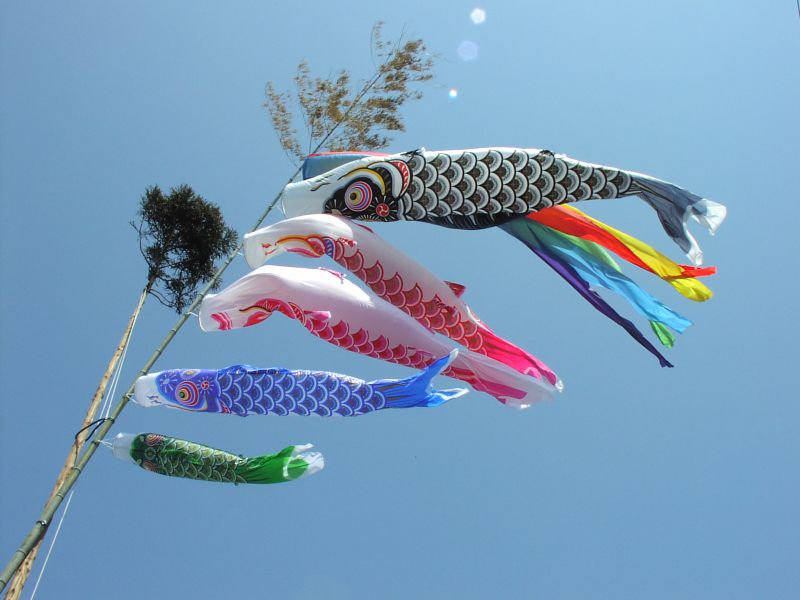 🇯🇵 JapanTango no sekku端午の節句
A Japanese seasonal festival for children marked with carp streamers and iris leaves.Festival · Sweets given and shared
🇯🇵 JapanTango no sekku端午の節句
A Japanese seasonal festival for children marked with carp streamers and iris leaves.Festival · Sweets given and shared
 🇰🇷 South KoreaJwibullori쥐불놀이
A Korean New Year game of whirling fire-cans to clear fields and wish good luckGame
🇰🇷 South KoreaJwibullori쥐불놀이
A Korean New Year game of whirling fire-cans to clear fields and wish good luckGame
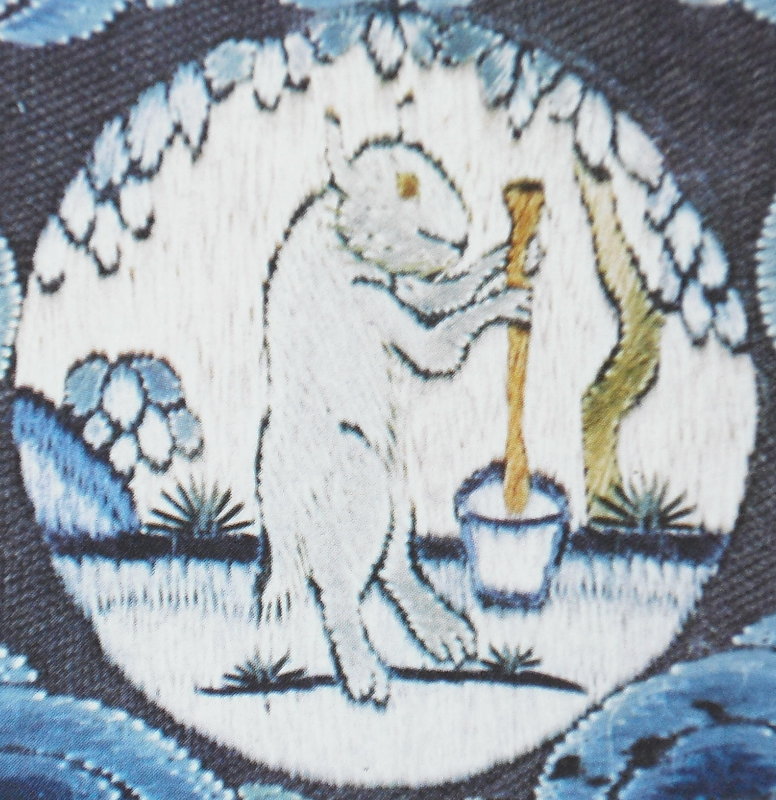 🇨🇳 China and 5 moreMoon rabbit月兔
A hare seen in the Moon's dark patches, pounding rice cakes or the elixir of lifeFolklore
🇨🇳 China and 5 moreMoon rabbit月兔
A hare seen in the Moon's dark patches, pounding rice cakes or the elixir of lifeFolklore
 🇭🇰 Cheung Chau, Hong KongCheung Chau Bun Festival包山節
A week of vegetarian days, bun towers and a midnight scramble on a Hong Kong islandFestival
🇭🇰 Cheung Chau, Hong KongCheung Chau Bun Festival包山節
A week of vegetarian days, bun towers and a midnight scramble on a Hong Kong islandFestival
 🇨🇳 China and 1 moreDajiao打醮
An annual Taoist ritual and festival seeking peace and safety for the communitySpiritual · Feasts and festival meals
🇨🇳 ChinaSanfutie三伏贴
A seasonal Chinese medicine practice applying herbal patches during peak summer heatSeasonal
🇨🇳 China and 1 moreDajiao打醮
An annual Taoist ritual and festival seeking peace and safety for the communitySpiritual · Feasts and festival meals
🇨🇳 ChinaSanfutie三伏贴
A seasonal Chinese medicine practice applying herbal patches during peak summer heatSeasonal
 🇨🇳 Xiamen, China and 2 moreBo Bing博餅 (Bóbǐng)
A dice game played at Mid-Autumn, where mooncakes of many sizes are the prizesGame
🇨🇳 Tianjin, China and 1 moreBa-zha八蜡
An old Chinese harvest rite of eight offerings, later a guardian against locustsSpiritual
🇨🇳 ChinaSymbolic stars神煞
Helpful and harmful influences read from the Chinese calendar's stems and branchesFolklore
🇨🇳 Xiamen, China and 2 moreBo Bing博餅 (Bóbǐng)
A dice game played at Mid-Autumn, where mooncakes of many sizes are the prizesGame
🇨🇳 Tianjin, China and 1 moreBa-zha八蜡
An old Chinese harvest rite of eight offerings, later a guardian against locustsSpiritual
🇨🇳 ChinaSymbolic stars神煞
Helpful and harmful influences read from the Chinese calendar's stems and branchesFolklore
The small pictures above come from Wikimedia Commons under free licences. Some are cropped to fit.
Every week: one tradition from somewhere new, what is being celebrated around the world this week, and one idea explained.