Heritage news
ArtsFamily Folk DanceHeritageWhy is Kolkata’s Durga Puja recognised as a UNESCO intangible cultural heritage?WeddingsCalifornia city hall goes jurassic with dino wedding ceremonyHoly daysWhen is Diwali 2026? Key dates, significance, how to celebrateWeddingsArt of Betashar: Issatay Issabayev’s Lifelong Dialogue with Kazakh TraditionSeasonsOak Mountain State Park to host annual Harvest Festival Oct. 17ArtsTwo weekends of Oktoberfest fun begin tonight at American German ClubArtsTwo weekends of Oktoberfest fun begin tonight at American German ClubArtsTwo weekends of Oktoberfest fun begin tonight at American German ClubArtsOur Delaware Cultural Festival 2026ArtsFamily Folk DanceHeritageWhy is Kolkata’s Durga Puja recognised as a UNESCO intangible cultural heritage?WeddingsCalifornia city hall goes jurassic with dino wedding ceremonyHoly daysWhen is Diwali 2026? Key dates, significance, how to celebrateWeddingsArt of Betashar: Issatay Issabayev’s Lifelong Dialogue with Kazakh TraditionSeasonsOak Mountain State Park to host annual Harvest Festival Oct. 17ArtsTwo weekends of Oktoberfest fun begin tonight at American German ClubArtsTwo weekends of Oktoberfest fun begin tonight at American German ClubArtsTwo weekends of Oktoberfest fun begin tonight at American German ClubArtsOur Delaware Cultural Festival 2026
EveryParampara

Remembering the ancestors

Almost every society keeps a way of staying in touch with those who came before.

Almost every society keeps a way of staying in touch with those who came before. Some set a place at the table, some sweep a grave, some light a lamp, and some tell the names aloud at every gathering. The reasons differ: gratitude, duty, a belief that the dead still watch over the family, or simply the wish that no one is forgotten. These customs are usually tied to a season, a day of the year or a family anniversary, and they tend to bring the living together as much as they honour the dead. Here is how it is done in many places, and how the old ways are changing.

What it is for

Remembering ancestors places a family inside a long story. In many cultures the dead are thought to remain part of the household, able to bless or to be hurt by neglect, so the rites are a form of care. In others the aim is gentler: to say thank you, to pass on names and lessons, and to teach children where they come from. Either way the custom answers a plain human need, which is to keep a link with people we loved or whose work made our lives possible. It also gives grief a calendar, a fixed day when sadness is allowed and shared.

What is done across cultures

Offerings of food, drink and flowers are the commonest element, left at a grave, an altar or a household shrine. Lamps, candles and incense are lit. Graves are cleaned and repainted. Names are recited, photographs are set out, and stories are told. Many traditions also fix a season for it, such as autumn in Mexico and Japan, early spring in China and Korea, or the days around the new moon in India. Paper money, gifts and clothes are burned in parts of East Asia so that they reach the next world. Some peoples invite the spirits home for a few days and then send them off with a farewell meal.

Food, dress and music

Food is the language of remembrance. The dead are offered what they liked in life, or the dishes of the season: sweet bread, rice cakes, steamed buns, dates, fruit and drink. After the offering the family eats the same food together. Dress is often plain or white, though in some places it is bright and festive, because the day is a reunion rather than a sorrow. Music ranges from a single bell to full brass bands, drumming and dancing in the cemetery. Songs may be lullabies the dead once sang, or old chants that only a few elders still know.

How it is changing

Families now live far from their ancestral graves, so remembering has moved online and into the home. People light virtual candles, hold video calls with relatives and send offerings through apps. Cities limit burning and fireworks for air quality, and many families have switched to flowers and lamps. At the same time there is a renewed pride in old rites, and younger people are asking elders to explain them. Public versions, such as parades and altar competitions, have become festivals in their own right, shared with visitors, while the quiet family rite at the grave remains at the centre.

Remembering the ancestors around the world

🇲🇽 Mexico

Families build an ofrenda, an altar of marigolds, candles, photographs, sugar skulls and the dead person's favourite food, for the Day of the Dead on 1 and 2 November. Many spend the night in the cemetery, and the mood is warm and often joyful.

Read: Day of the Dead

🇨🇳 China

At Qingming in early April families sweep the graves, set out food and burn paper offerings. Ancestor tablets in the home are also given incense through the year.

Read: Qingming Festival

🇯🇵 Japan

Obon, in mid-August, welcomes the spirits home with lanterns lit at the door and bon odori dances. Families clean the grave, offer food at the household altar and send the spirits off with floating lanterns.

Read: Obon

🇰🇷 Korea

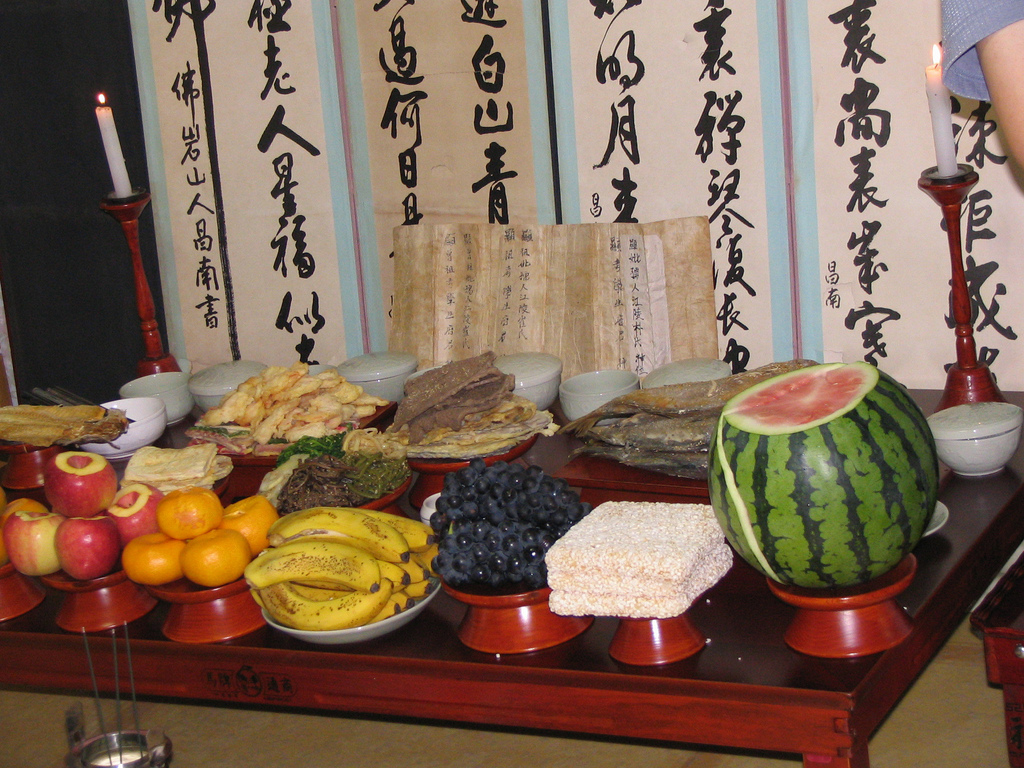
Charye is a table of rice, soup, fruit and rice cakes laid for the ancestors at Chuseok and Seollal, and jesa is held on the anniversary of a death. Families also visit and tidy the graves in a custom called seongmyo.

Read: Jesa

🇻🇳 Vietnam

Every household keeps an ancestor altar, and the death anniversary, or gio, is marked with a family meal and offerings. Tet begins with a visit to graves and an invitation to the ancestors to join the celebration.

Vietnamese folk religion, being written

🇰🇭 Cambodia

Pchum Ben lasts fifteen days in autumn, when families take rice and offerings to the pagoda for monks to pass on to the spirits of seven generations. The days are serious and communal.

Read: Pchum Ben

Compare all 19 places

Traditions to start with

Questions people ask

Is ancestor remembering a religious practice?

Often, but not always. It is part of many faiths and traditional belief systems, and in some places it is simply a family custom with no creed attached. People take part for love, duty, habit or all three.

Why are offerings of food common?

Food is how families show care, so it is how they show it to the dead. The living usually share the meal afterwards, which turns the offering into a reunion.

Do all cultures remember the dead on one fixed day?

Many do, in autumn or early spring, but others use the death anniversary of each person, or a rite at any time of year. Some use all three.

What is the difference between mourning and ancestor remembrance?

Mourning is the period just after a death. Ancestor remembrance carries on for years or generations, often with a lighter and more affectionate tone.

How can someone start a family custom of remembrance?

Many families begin small: a photograph and a candle, a favourite dish cooked once a year, or a story told on a chosen day. A simple, regular habit usually lasts better than a grand one.

About this page

Written by the EveryParampara desk with AI assistance. Customs differ from place to place and family to family. If this is your tradition and we have it wrong, tell us.

Remembering the ancestors on EveryParampara

The traditions written up so far, best known first.

🇮🇷 Iran and 7 moreNowruzنوروز The Iranian new year at the March equinox, kept with fire, greenery and picnicsSeasonal 🇮🇳 Mathura, India and 5 moreHoliहोली (Hindi) A spring festival of colours and bonfires that marks the end of winter and the triumph of good over evil.Festival 🇮🇱 Jerusalem, IsraelSukkotסוכות A seven-day autumn Jewish festival of temporary booths, harvest prayers and hospitalitySpiritual 🇲🇽 Mexico City, Mexico and 1 moreDay of the DeadDía de Muertos A Mexican remembrance of deceased family and friends with altars, marigolds and feastsFestival · Sweets given and shared 🇯🇵 JapanKadomatsu門松 A Japanese New Year gateway decoration of pine and bamboo where a visiting deity can restSeasonal 🇵🇪 Cusco, Peru and 4 moreIntiinti (Quechua) The Inca sun deity, honoured with temples, offerings and the June festival Inti RaymiSpiritual 🇱🇹 LithuaniaVėlinės A Lithuanian remembrance day honouring deceased souls with cemetery prayers and candlesSpiritual 🇿🇼 ZimbabweMhondoro Territorial guardian spirits and mediums honoured in Zimbabwe for guidance and rainSpiritual 🇮🇩 IndonesiaPasola A ritual horseback spear contest in western Sumba marking the rice-planting seasonGame 🇮🇱 Jerusalem, Israel and 5 moreTisha B'Avתשעה באב A solemn fast day in July or August to mourn the destruction of the Jerusalem Temples and other Jewish tragedies.Spiritual · Fasting and breaking the fast 🇰🇷 South KoreaJesa제사 (Jesa) A Korean ancestral memorial ceremony held on death anniversaries and major holidays.Spiritual · Feasts and festival meals 🇨🇱 ChileNgillatun A communal Mapuche rite of prayer, sacrifice and dance to maintain cosmic balanceSpiritual 🇮🇩 Jakarta, Indonesia and 2 moreMudik Indonesians head home to family before Lebaran, in the year's biggest journeyHome 🇨🇳 China and 5 moreQingming Festival清明节 A spring custom of sweeping family graves and honouring ancestors across East Asia.Spiritual 🇺🇸 Chicago, United States and 4 moreKwanzaa A seven-day African American celebration of heritage, family and community valuesFestival · Feasts and festival meals 🇨🇳 China and 5 moreGhost Festival中元節 / 中元节 (Zhōngyuán jié) A full-moon night in the seventh lunar month for feeding ghosts and guiding souls homeSpiritual 🇮🇷 Isfahan, Iran and 4 moreChaharshanbe Suriچهارشنبه‌سوری An Iranian festival of fire and renewal celebrated on the eve of the final Wednesday before spring.Festival · Tea-time and snacking customs 🇮🇷 Iran and 5 moreMid-Sha'banنصف شعبان An Islamic night of prayer, remembrance, and seeking divine forgiveness.Spiritual 🇮🇳 Gaya, India and 1 moreShraddhaश्राद्ध Rituals of faith for the ancestors, kept yearly and through Pitru PakshaSpiritual 🇰🇵 Pyongyang, North KoreaDay of the Sun태양절 North Korea's principal holiday, marking the birth anniversary of Kim Il SungCeremony 🇮🇱 IsraelYom HaZikaronיוֹם הַזִּכָּרוֹן Israel's national day of mourning for fallen soldiers and victims of terrorism.Ceremony 🇨🇳 China and 5 moreDouble Ninth Festival重陽節 An autumn festival of mountain walks, chrysanthemum wine and ancestor remembranceSeasonal · Tea-time and snacking customs 🇳🇿 New ZealandMatariki The Māori New Year marked by the midwinter rising of the Pleiades clusterSeasonal 🇲🇲 Yangon, MyanmarThingyanသင်္ကြန် A four-day water festival marking the Myanmar New Year, celebrated in April with merit-making and playful splashing.Festival 🇬🇷 GreeceAnthesteriaἈνθεστήρια An ancient Greek three-day spring festival of Dionysus, new wine, and the deadFestival 🇺🇦 Ukraine and 1 moreDidukhдідух A wheat sheaf kept at Christmas to honour ancestors and pray for a bountiful harvestHome 🇦🇿 AzerbaijanNovruzNovruz Bayramı The Azerbaijani spring equinox festival of bonfires, sweets and sprouted wheatSeasonal · Feasts and festival meals 🇰🇭 Siem Reap, CambodiaCambodian New Yearបុណ្យចូលឆ្នាំថ្មី ប្រពៃណីជាតិ A three-day harvest festival marking the traditional solar new year across CambodiaSeasonal 🇮🇳 India and 1 moreNaraka Chaturdashi The dawn festival of oil baths, ancestor lamps, and harvest foods during DiwaliFestival · Breakfast 🇬🇭 Accra, GhanaHomowo A harvest festival of the Ga people in Ghana to remember surviving famineFestival · Feasts and festival meals 🇮🇳 IndiaBathukammaబతుకమ్మ A nine-day floral festival celebrated by women across Telangana and Andhra PradeshFestival 🇸🇪 SwedenJul A midwinter holiday of feast tables, doorstep gift givers, and candlelit morningsSeasonal · Feasts and festival meals 🇮🇳 Guwahati, IndiaBohag Bihu A multi-day Assamese New Year festival of cattle rites, music, gifts and feastsSeasonal · Feasts and festival meals 🇮🇩 IndonesiaGalungan A Balinese Hindu festival welcoming ancestral spirits and honouring good over evilSpiritual 🇮🇳 Cuttack, IndiaBali Jatraବାଲିଯାତ୍ରା An Odia festival and vast open fair commemorating ancient voyages across the seaFestival 🇬🇭 Cape Coast, GhanaFetu Afahye A harvest festival of cleansing, boat races and royal durbars in Cape Coast, GhanaFestival · Feasts and festival meals 🇳🇬 NigeriaIgbo New Yam FestivalIri ji A harvest thanksgiving and feast marking the first yam crop among the Igbo of NigeriaSeasonal · Feasts and festival meals 🇬🇭 Akropong, GhanaOdwira Festival An annual harvest and purification festival celebrated by the Akuapem in GhanaFestival · Feasts and festival meals 🇮🇳 IndiaMagh Bihu A harvest festival of bonfires, feasts and winter games in AssamSeasonal · Feasts and festival meals 🇬🇭 Kumasi, GhanaAkwasidae Festival A Sunday gathering of the Ashanti people to honour ancestors and the kingSpiritual 🇲🇾 Malaysia and 1 moreGawai DayakAri Gawai An annual harvest and thanksgiving festival of the Dayak peoples in BorneoSeasonal 🇨🇳 Suzhou, China and 3 moreDongzhi冬至 A midwinter festival celebrating the return of light with family feasts and dumplingsSeasonal · Dinner 🇯🇵 JapanHigan彼岸 A Japanese Buddhist week of reflection and ancestor remembrance at the equinoxesSpiritual 🇯🇵 Kyoto, JapanGozan no Okuribi五山送り火 Five giant bonfires lit across Kyoto's hills to bid farewell to ancestor spirits.Spiritual 🇮🇳 IndiaPushkaram A river worship festival rotating across twelve sacred Indian rivers over twelve yearsSpiritual 🇮🇳 IndiaSarhul A spring new year festival honoring nature and Sal blossoms across JharkhandSeasonal · Feasts and festival meals 🇵🇱 Poland and 5 moreZaduszkiZaduszki, Dzień Zaduszny A Polish day of prayer for the dead on 2 November, kept with candles at the gravesSpiritual 🇨🇳 China and 5 moreAncestor worship Honouring dead relatives with offerings and prayers, kept in many cultures worldwideSpiritual

Photo credits on this page

The small pictures above come from Wikimedia Commons under free licences. Some are cropped to fit.

The weekly EveryParampara

Every week: one tradition from somewhere new, what is being celebrated around the world this week, and one idea explained.