Buddhist traditions
Buddhist traditions are found across Asia and increasingly worldwide, in the forms of Theravada in Sri Lanka and Southeast Asia, Mahayana in East Asia and Vajrayana in Tibet and Mongolia.
Buddhist traditions are found across Asia and increasingly worldwide, in the forms of Theravada in Sri Lanka and Southeast Asia, Mahayana in East Asia and Vajrayana in Tibet and Mongolia. They include the festival of Vesak, the Poya days, almsgiving to monks, the Kathina robe offering, the pilgrimage to Lumbini and Bodh Gaya, temple festivals and the rites of the Tibetan year. At their heart are meditation, compassion and the Buddha's teaching, and many customs are acts of generosity. These pages describe them with respect.
Monks, merit and giving
Laypeople support monks and nuns with food, robes and shelter, and in return receive teaching and blessings. Giving, dana, earns merit, and many festivals centre on it: the morning alms round in Laos and Thailand, the Kathina ceremony at the end of the rains retreat, the free meals of Vesak in Sri Lanka. Temples are also community centres, schools and places for funerals.
Festivals and the year
Vesak marks the birth, enlightenment and death of the Buddha with lanterns and lights. In Thailand, Songkran and Loi Krathong, in Japan Obon, in Tibet Losar and Saga Dawa, and in Korea the Lotus Lantern Festival are among the major events. Each blends Buddhist meaning with local custom, and many include the remembrance of ancestors and a cleansing of the old year.
Written by the EveryParampara desk with AI assistance. Background on Buddhist (faith). Customs differ from place to place and family to family. If this is your tradition and we have it wrong, tell us.
 🇯🇵 Kyoto, JapanTorii鳥居
A traditional Japanese gate marking the entrance to a Shinto shrine and separating the sacred from the mundane.Spiritual
🇯🇵 Kyoto, JapanTorii鳥居
A traditional Japanese gate marking the entrance to a Shinto shrine and separating the sacred from the mundane.Spiritual
 🇯🇵 JapanPindapata𑀧𑀺𑀡𑁆𑀟𑀘𑀸𑀭
A Buddhist almsround where monks walk through towns to receive food and necessities from laypeople.Spiritual
🇯🇵 JapanPindapata𑀧𑀺𑀡𑁆𑀟𑀘𑀸𑀭
A Buddhist almsround where monks walk through towns to receive food and necessities from laypeople.Spiritual
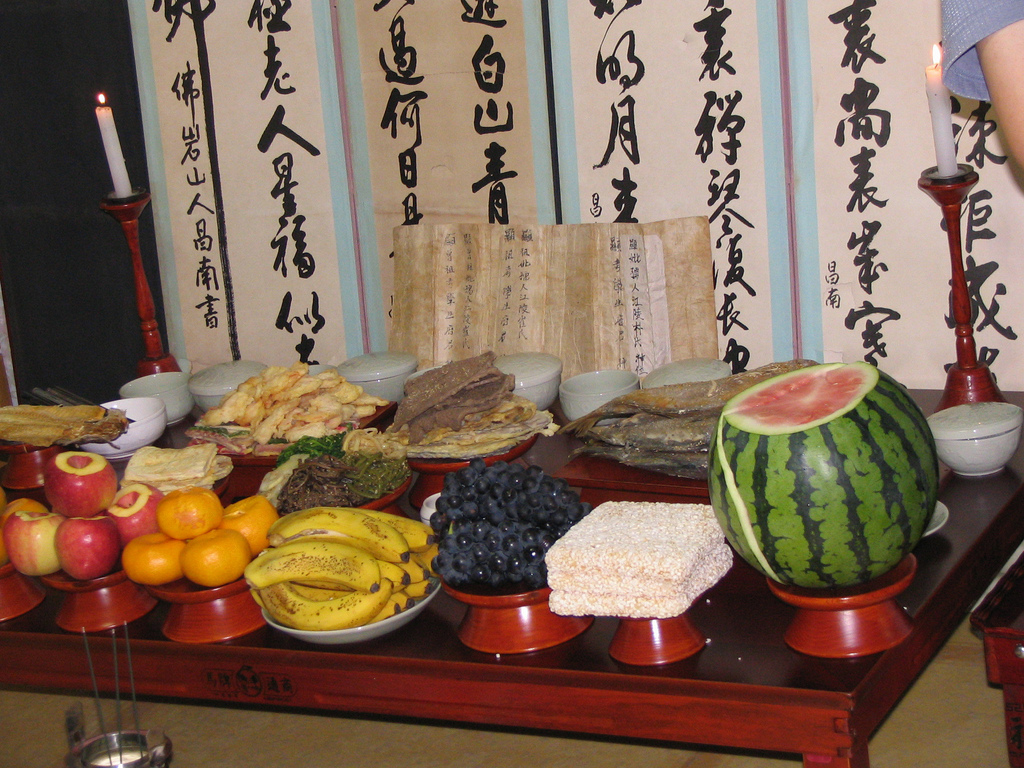 🇰🇷 South KoreaJesa제사 (Jesa)
A Korean ancestral memorial ceremony held on death anniversaries and major holidays.Spiritual · Feasts and festival meals
🇰🇷 South KoreaJesa제사 (Jesa)
A Korean ancestral memorial ceremony held on death anniversaries and major holidays.Spiritual · Feasts and festival meals
 🇯🇵 JapanEma絵馬
Small wooden plaques left at Japanese shrines and temples for prayers and wishes.Spiritual
🇯🇵 JapanEma絵馬
Small wooden plaques left at Japanese shrines and temples for prayers and wishes.Spiritual
 🇨🇳 China and 1 morePrayer wheelའཁོར་ལོ།
A cylindrical wheel spun in Tibetan Buddhist practice to accumulate merit and wisdomSpiritual
🇨🇳 China and 1 morePrayer wheelའཁོར་ལོ།
A cylindrical wheel spun in Tibetan Buddhist practice to accumulate merit and wisdomSpiritual
 🇯🇵 Japan and 2 moreKyūdō弓道
The Japanese martial art of archery, practiced with an asymmetrical longbowGame
🇯🇵 Japan and 2 moreKyūdō弓道
The Japanese martial art of archery, practiced with an asymmetrical longbowGame
 🇨🇳 China and 3 moreButter lampདཀར་མེ (Tibetan)
A lit candle made from clarified yak butter, kept in Tibetan Buddhist temples to aid meditation and symbolize enlightenmSpiritual
🇨🇳 China and 3 moreButter lampདཀར་མེ (Tibetan)
A lit candle made from clarified yak butter, kept in Tibetan Buddhist temples to aid meditation and symbolize enlightenmSpiritual
 🇯🇵 JapanOmamori御守 (omamori)
Japanese protective amulets sold at shrines and temples for luck and safety.Spiritual
🇯🇵 JapanOmamori御守 (omamori)
Japanese protective amulets sold at shrines and temples for luck and safety.Spiritual
 🇯🇵 JapanOmikujiおみくじ
Paper fortunes drawn at Japanese shrines and temples to consult divine guidanceSpiritual
🇯🇵 JapanOmikujiおみくじ
Paper fortunes drawn at Japanese shrines and temples to consult divine guidanceSpiritual
 🇰🇷 Seoul, South KoreaTemplestay템플스테이
A program that invites visitors to live in South Korean Buddhist temples and join the daily routines of monastic life.Spiritual · Dinner
🇰🇷 Seoul, South KoreaTemplestay템플스테이
A program that invites visitors to live in South Korean Buddhist temples and join the daily routines of monastic life.Spiritual · Dinner
 🇲🇳 Mongolia and 3 moreOvooовоо (Cyrillic Mongolian); ᠣᠪᠤᠭᠠ (Traditional Mongol)
A stone cairn on a peak or pass, circled by travellers and honoured in sky worshipSpiritual
🇲🇳 Mongolia and 3 moreOvooовоо (Cyrillic Mongolian); ᠣᠪᠤᠭᠠ (Traditional Mongol)
A stone cairn on a peak or pass, circled by travellers and honoured in sky worshipSpiritual
 🇨🇳 China and 5 moreQingming Festival清明节
A spring custom of sweeping family graves and honouring ancestors across East Asia.Spiritual
🇨🇳 China and 5 moreQingming Festival清明节
A spring custom of sweeping family graves and honouring ancestors across East Asia.Spiritual
 🇨🇳 China and 7 moreGhost Festival中元節 / 中元节 (Zhōngyuán jié)
A full-moon night in the seventh lunar month for feeding ghosts and guiding souls homeSpiritual
🇨🇳 China and 7 moreGhost Festival中元節 / 中元节 (Zhōngyuán jié)
A full-moon night in the seventh lunar month for feeding ghosts and guiding souls homeSpiritual
 🇨🇳 Xi'an, ChinaChinese tea culture中国茶文化 (Zhōngguó chá wénhuà)
A centuries-old practice of cultivating, brewing, and sharing tea as a social and spiritual ritual in China.Table custom · Tea, coffee and drinking ceremonies
🇨🇳 Xi'an, ChinaChinese tea culture中国茶文化 (Zhōngguó chá wénhuà)
A centuries-old practice of cultivating, brewing, and sharing tea as a social and spiritual ritual in China.Table custom · Tea, coffee and drinking ceremonies
 🇯🇵 Tokyo, JapanHatsumōde初詣
The first shrine or temple visit of the Japanese New Year to pray for good fortuneSpiritual
🇯🇵 Tokyo, JapanHatsumōde初詣
The first shrine or temple visit of the Japanese New Year to pray for good fortuneSpiritual
 🇯🇵 JapanHadaka Matsuri裸祭り
Japanese festivals where participants clad in loincloths seek luck and purificationSpiritual
🇯🇵 JapanHadaka Matsuri裸祭り
Japanese festivals where participants clad in loincloths seek luck and purificationSpiritual
 🇰🇷 Seoul, South KoreaYeondeunghoe연등회
A Korean lantern festival celebrating the Buddha's birthday with glowing lotus lightsSpiritual
🇰🇷 Seoul, South KoreaYeondeunghoe연등회
A Korean lantern festival celebrating the Buddha's birthday with glowing lotus lightsSpiritual
 🇯🇵 Osaka, JapanTsukimi月見 (Tsukimi) / お月見 (Otsukimi)
A Japanese autumn festival honoring the harvest moon with seasonal foods and pampas grass decorations.Festival · Dinner
🇨🇳 Beijing, ChinaLaba Festival臘八節
A winter porridge festival marking the start of the Chinese New Year seasonFestival · Feasts and festival meals
🇯🇵 Osaka, JapanTsukimi月見 (Tsukimi) / お月見 (Otsukimi)
A Japanese autumn festival honoring the harvest moon with seasonal foods and pampas grass decorations.Festival · Dinner
🇨🇳 Beijing, ChinaLaba Festival臘八節
A winter porridge festival marking the start of the Chinese New Year seasonFestival · Feasts and festival meals
 🇨🇳 Lhasa, China and 2 moreSho Dun Festivalཞོ་སྟོན། (Tibetan), 雪頓節 (Chinese)
A summer festival in Lhasa where a monks' retreat ends with yogurt and all-day operaFestival · Feasts and festival meals
🇨🇳 Lhasa, China and 2 moreSho Dun Festivalཞོ་སྟོན། (Tibetan), 雪頓節 (Chinese)
A summer festival in Lhasa where a monks' retreat ends with yogurt and all-day operaFestival · Feasts and festival meals
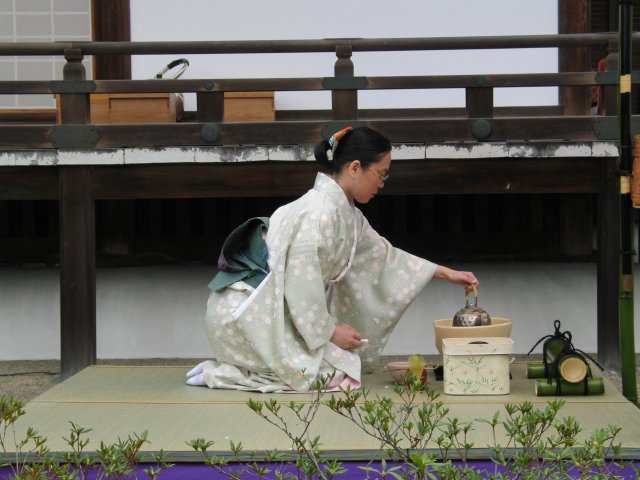 🇯🇵 Kyoto, JapanJapanese tea ceremony茶道 (Sadō / Chadō), 茶の湯 (Chanoyu)
The formal serving of powdered matcha, shaped by Zen, Shinto and wabiTable custom · Tea, coffee and drinking ceremonies
🇯🇵 Kyoto, JapanJapanese tea ceremony茶道 (Sadō / Chadō), 茶の湯 (Chanoyu)
The formal serving of powdered matcha, shaped by Zen, Shinto and wabiTable custom · Tea, coffee and drinking ceremonies
 🇯🇵 JapanShikoku Pilgrimage四国遍路
A long circuit of 88 temples on Japan's Shikoku island, kept by pilgrims called henroSpiritual
🇯🇵 JapanShikoku Pilgrimage四国遍路
A long circuit of 88 temples on Japan's Shikoku island, kept by pilgrims called henroSpiritual
 🇯🇵 Japan and 4 moreBodhi Day成道会
A Buddhist observance marking the enlightenment of Gautama Buddha under the Bodhi TreeSpiritual
🇯🇵 Japan and 4 moreBodhi Day成道会
A Buddhist observance marking the enlightenment of Gautama Buddha under the Bodhi TreeSpiritual
 🇨🇳 Dali, ChinaThird Month Fair三月街
A mountain-foot bazaar, festival, and sports gathering among the Bai in YunnanFestival
🇨🇳 Dali, ChinaThird Month Fair三月街
A mountain-foot bazaar, festival, and sports gathering among the Bai in YunnanFestival
 🇯🇵 Kyoto, JapanGion Matsuri祇園祭
A month-long Kyoto festival of grand floats, evening markets and purifying ritualsFestival
🇰🇷 South Korea and 1 moreChuseok추석
A Korean harvest festival of ancestral rites, seasonal rice cakes, and folk gamesFestival · Feasts and festival meals
🇯🇵 Kyoto, JapanGion Matsuri祇園祭
A month-long Kyoto festival of grand floats, evening markets and purifying ritualsFestival
🇰🇷 South Korea and 1 moreChuseok추석
A Korean harvest festival of ancestral rites, seasonal rice cakes, and folk gamesFestival · Feasts and festival meals
 🇯🇵 JapanHigan彼岸
A Japanese Buddhist week of reflection and ancestor remembrance at the equinoxesSpiritual
🇯🇵 JapanHigan彼岸
A Japanese Buddhist week of reflection and ancestor remembrance at the equinoxesSpiritual
 🇯🇵 Tokyo, JapanSanja Matsuri三社祭
A loud three-day Shinto festival in Tokyo honoring the founders of Sensō-ji temple.Festival
🇯🇵 Tokyo, JapanSanja Matsuri三社祭
A loud three-day Shinto festival in Tokyo honoring the founders of Sensō-ji temple.Festival
 🇯🇵 Kyoto, JapanGozan no Okuribi五山送り火
Five giant bonfires lit across Kyoto's hills to bid farewell to ancestor spirits.Spiritual
🇯🇵 Kyoto, JapanGozan no Okuribi五山送り火
Five giant bonfires lit across Kyoto's hills to bid farewell to ancestor spirits.Spiritual
 🇯🇵 Japan and 2 moreJoya no Kane除夜の鐘
A Japanese Buddhist New Year's Eve ritual where temple bells are struck to cleanse the year of worldly desires.Spiritual
🇯🇵 Japan and 2 moreJoya no Kane除夜の鐘
A Japanese Buddhist New Year's Eve ritual where temple bells are struck to cleanse the year of worldly desires.Spiritual
 🇯🇵 Tokyo, Japan and 3 moreObonお盆 (Obon)
A Japanese Buddhist festival honoring the spirits of ancestors through dance, light, and family reunion.Festival
🇯🇵 Tokyo, Japan and 3 moreObonお盆 (Obon)
A Japanese Buddhist festival honoring the spirits of ancestors through dance, light, and family reunion.Festival
 🇯🇵 Tokyo, Japan and 5 moreTaiko太鼓 (taiko)
Japanese drums, and the ensemble style of playing themPerformance
🇯🇵 Tokyo, Japan and 5 moreTaiko太鼓 (taiko)
Japanese drums, and the ensemble style of playing themPerformance
 🇨🇳 Beijing, China and 1 moreLaba congee腊八粥
A ceremonial Chinese porridge of rice, beans and dried fruit, eaten at the Laba FestivalTable custom · Feasts and festival meals
🇨🇳 Beijing, China and 1 moreLaba congee腊八粥
A ceremonial Chinese porridge of rice, beans and dried fruit, eaten at the Laba FestivalTable custom · Feasts and festival meals
 🇨🇳 Lhasa, China and 5 moreButter teaབོད་ཇ་
A salted tea churned with yak butter, served to guests across the HimalayaTable custom · Tea, coffee and drinking ceremonies
🇨🇳 Lhasa, China and 5 moreButter teaབོད་ཇ་
A salted tea churned with yak butter, served to guests across the HimalayaTable custom · Tea, coffee and drinking ceremonies
 🇨🇳 China and 4 moreSky burialབྱ་གཏོར་ (bya gtor)
A Tibetan funeral in which the dead are laid out on a rock for vulturesRite of passage
🇨🇳 China and 4 moreSky burialབྱ་གཏོར་ (bya gtor)
A Tibetan funeral in which the dead are laid out on a rock for vulturesRite of passage
 🇨🇳 China and 5 moreAncestor veneration
Honouring dead relatives with offerings, meals and prayers, kept in cultures worldwideSpiritual
🇨🇳 China and 5 moreAncestor veneration
Honouring dead relatives with offerings, meals and prayers, kept in cultures worldwideSpiritual
 🇨🇳 China and 5 moreAncestor worship
Honouring dead relatives with offerings and prayers, kept in many cultures worldwideSpiritual
🇨🇳 China and 5 moreAncestor worship
Honouring dead relatives with offerings and prayers, kept in many cultures worldwideSpiritual
 🇯🇵 JapanJapanese funeral葬儀 (sōgi)
A Buddhist farewell in Japan: a wake, cremation, bone-gathering and a family graveRite of passage
🇯🇵 JapanJapanese funeral葬儀 (sōgi)
A Buddhist farewell in Japan: a wake, cremation, bone-gathering and a family graveRite of passage
 🇯🇵 JapanBowing in Japanお辞儀
The Japanese bow, used to greet, thank, apologise and show respectEtiquette
🇯🇵 JapanBowing in Japanお辞儀
The Japanese bow, used to greet, thank, apologise and show respectEtiquette
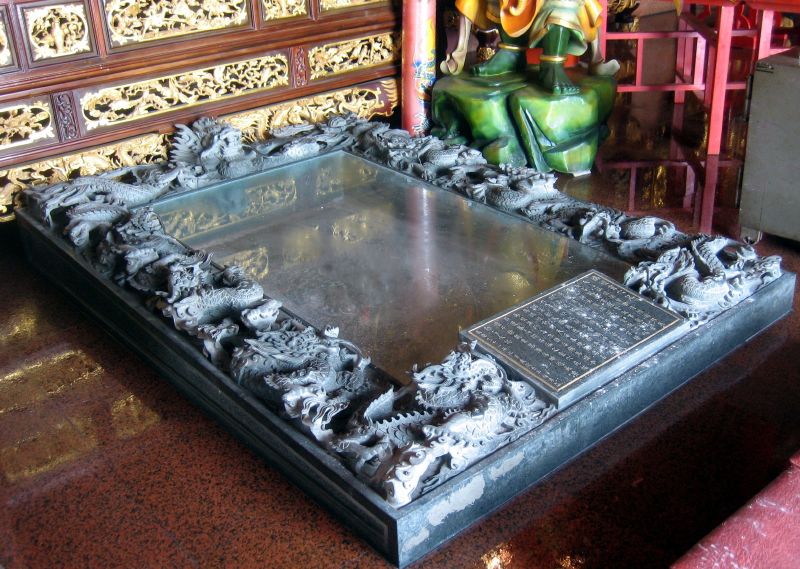 🇨🇳 Meizhou Island, China and 5 moreMazu媽祖
A sea goddess of the Chinese coast, asked for calm water and a safe returnSpiritual
🇨🇳 Meizhou Island, China and 5 moreMazu媽祖
A sea goddess of the Chinese coast, asked for calm water and a safe returnSpiritual
 🇯🇵 Tokushima, JapanAwa Dance Festival阿波踊り
A summer street dance festival held in Tokushima during the Buddhist season of ObonFestival
🇯🇵 Tokushima, JapanAwa Dance Festival阿波踊り
A summer street dance festival held in Tokushima during the Buddhist season of ObonFestival
 🇨🇳 ChinaChinese funeral rituals
Traditional rites of mourning, vigils, offerings, and ancestor veneration across ChinaRite of passage
🇨🇳 ChinaChinese funeral rituals
Traditional rites of mourning, vigils, offerings, and ancestor veneration across ChinaRite of passage
 🇨🇳 China and 5 moreJoss paper金紙 (jīnzhǐ)
Paper money burned for ancestors and gods, folded and offered in Chinese worshipSpiritual
🇨🇳 China and 5 moreJoss paper金紙 (jīnzhǐ)
Paper money burned for ancestors and gods, folded and offered in Chinese worshipSpiritual
 🇲🇳 Mongolia and 5 moreThroat singing
Several deep, guttural singing styles, each named and kept by its own peoplePerformance
🇲🇳 Mongolia and 5 moreThroat singing
Several deep, guttural singing styles, each named and kept by its own peoplePerformance
 🇨🇳 China and 3 moreCham danceའཆམ་
A masked monastery dance of Tibetan Buddhism, staged at festivals to teach and blessSpiritual
🇨🇳 China and 3 moreCham danceའཆམ་
A masked monastery dance of Tibetan Buddhism, staged at festivals to teach and blessSpiritual
 🇨🇳 ChinaKowtow叩頭
A traditional Chinese prostration of deep respect by kneeling and bowing to the groundEtiquette
🇨🇳 ChinaKowtow叩頭
A traditional Chinese prostration of deep respect by kneeling and bowing to the groundEtiquette
 🇨🇳 China and 1 moreFive Grains五穀
A sacred grouping of staple crops honoured as the bedrock of East Asian civilizationFolklore
🇨🇳 China and 1 moreFive Grains五穀
A sacred grouping of staple crops honoured as the bedrock of East Asian civilizationFolklore
 🇨🇳 Dunhuang, China and 2 moreYingluo璎珞
A ring-shaped Buddhist neck ornament that became a Chinese necklace, worn again todayDress
🇨🇳 Dunhuang, China and 2 moreYingluo璎珞
A ring-shaped Buddhist neck ornament that became a Chinese necklace, worn again todayDress
Photo credits on this page
The small pictures above come from Wikimedia Commons under free licences. Some are cropped to fit.
- Five Grains: Kurt Stüber [1], CC BY-SA 3.0, source
- Hatsumōde: KKPCW, CC BY-SA 4.0, source
- Shikoku Pilgrimage: Dokudami, CC BY-SA 3.0, source
- Yeondeunghoe: Korea.net / Korean Culture and Information Service (Jeon Han), CC BY-SA 2.0, source
- Chinese tea culture: Gary Stevens, CC BY 2.0, source
- Ovoo: Bouette ., CC BY-SA 3.0, source
- Bodhi Day: Shirazibustan, CC BY-SA 4.0, source
- Tsukimi: katorisi, CC BY 3.0, source
- Third Month Fair: ZhaoScorpio, CC BY-SA 2.0, source
- Gion Matsuri: 江戸村のとくぞう, CC BY-SA 4.0, source
- Chuseok: by Joseph Steinberg (Baltimoron in Korea) at Flickr, CC BY-SA 2.0, source
- Higan: Kakidai, CC BY-SA 4.0, source
- Sanja Matsuri: View_of_mikoshi_from_sensoji_Sanja_Matsuri_2006-2.jpg : * View_of_miko, CC BY-SA 3.0, source
- Gozan no Okuribi: J_o, CC BY-SA 3.0, source
- Joya no Kane: Leung Ming Ho (Michael) (MHLeung), CC BY-SA 4.0, source
- Obon: Batholith, Public domain, source
- Torii: JordyMeow, CC BY-SA 3.0, source
- Omikuji: C121749n, Public domain, source
- Kyūdō: Unknown author, Public domain, source
- Prayer wheel: David Abián, CC BY-SA 4.0, source
- Templestay: (c)한국불교문화사업단, culturalcorpsofkoreanbuddhism, CC BY-SA 3.0, source
- Pindapata: Suhendro winarso, CC BY-SA 4.0, source
- Ema: No machine-readable author provided. Fg2 assumed (based on copyright c, Public domain, source
- Taiko: Ohno.A, CC BY-SA 4.0, source
- Laba congee: N509FZ, CC BY-SA 4.0, source
- Butter lamp: Chris Fynn, CC BY-SA 3.0, source
- Omamori: Leongboy1, Public domain, source
- Butter tea: Yosomono, CC BY 2.0, source
- Sky burial: FishOil at English Wikipedia, Public domain, source
- Ancestor veneration: Thang Nguyen, CC BY-SA 2.0, source
- Ancestor worship: Lyn Gateley, CC BY 2.0, source
- Japanese funeral: 夢の散歩, CC BY-SA 3.0, source
- Bowing in Japan: Maya-Anaïs Yataghène, CC BY 2.0, source
- Mazu: Prince Roy, CC BY-SA 3.0, source
- Yingluo: Unknown author, CC0, source
- Sho Dun Festival: No machine-readable author provided. John Hill assumed (based on copyr, CC BY 2.5, source
- Hadaka Matsuri: CES, CC BY-SA 3.0, source
- Qingming Festival: Jacklee ., CC BY-SA 3.0, source
- Ghost Festival: Chong Fat, CC BY-SA 3.0, source
- Kowtow: Gary Todd, CC0, source
- Awa Dance Festival: Rosino, CC BY-SA 2.0, source
- Chinese funeral rituals: Salzmann, E.v., CC BY-SA 3.0 de, source
- Joss paper: Vmenkov, CC BY-SA 3.0, source
- Throat singing: Bill Loewy, CC BY-SA 3.0, source
- Cham dance: Arian Zwegers, CC BY 2.0, source
- Japanese tea ceremony: Photograph taken by Stephane D'Alu ( en:User:Sdalu ) in April 2004, CC BY-SA 3.0, source