Traditions of Bucharest
The Romanian capital where Mărțișor red-and-white strings welcome March and Easter is a long midnight feast.
Bucharest, once called Little Paris, is a city of belle époque buildings and a large Soviet-era palace. Romanians keep a calendar of customs in which spring, harvest and Easter are the most important. The mărțișor, a red-and-white string with a small charm, is given on 1 March to wish health and luck.

Mărțișor and Easter
On 1 March, friends and relatives exchange mărțișoare, strings of two twisted threads, which are worn through the month and then tied on a tree. At Easter, Orthodox Romanians attend midnight service, carrying lit candles home, then eat lamb, drob, and painted eggs, which they crack in a game of tapping.
At the table
Mici, small grilled sausages, are eaten with mustard and beer. Sarmale, cabbage rolls, and ciorbă, a sour soup, are staples. Papanași, fried doughnuts with cream and jam, are a famous dessert. Cozonac and pasca are baked at holidays. Țuică is a brandy.
Signature traditions of Bucharest
Also part of it, and being written: Sarmale (The cabbage rolls.), Mici (The sausages.), Papanași (The doughnuts.).
A trail idea for Bucharest
- Village Museum See rural houses.
- Old Town Walk Lipscani.
- Obor Market Buy cheese and honey.
Written by the EveryParampara desk with AI assistance. Opening hours, markets and festival dates change; check locally before travelling. Customs differ from place to place and family to family. If this is your tradition and we have it wrong, tell us.
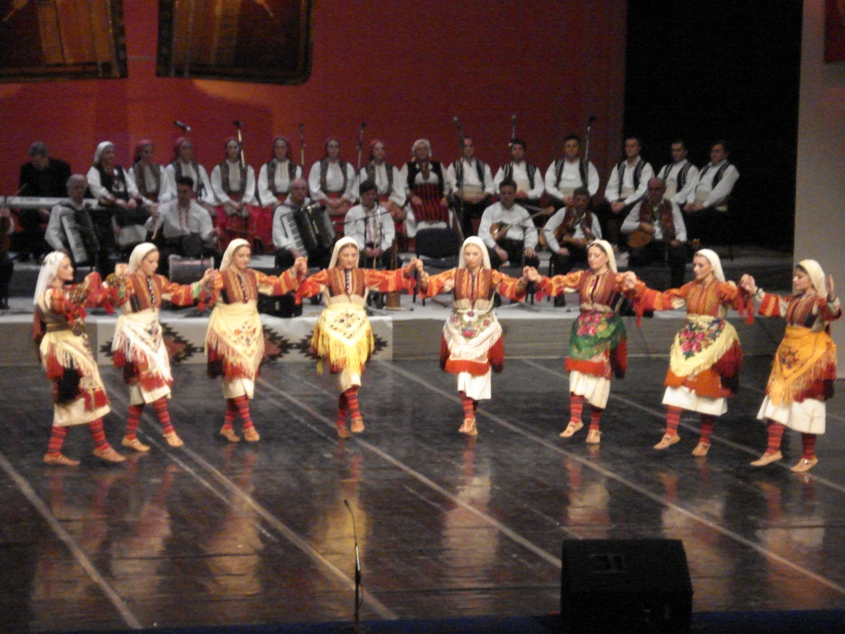
Photo credits on this page
The small pictures above come from Wikimedia Commons under free licences. Some are cropped to fit.
- Hora: Chajeshukarie ( talk ), Public domain, source