Traditions of Ubud
The art town of Bali, where daily offerings, temple dance and village ceremonies carry on among the rice terraces.
Ubud lies in the hills of central Bali and is known for painting, woodcarving and dance. Hindu Balinese religion shapes the day: small palm leaf offerings, canang sari, are laid out each morning at doors and shrines. Villages around Ubud hold temple anniversaries and dance performances on a fixed calendar.

Offerings and dance
A temple festival, odalan, is held every 210 days, with processions, gamelan music and women carrying towers of fruit on their heads. Kecak, a chant of many men, and the legong dance tell stories from epics. Nyepi, the day of silence, is observed across the island in March, with no lights, noise or travel.
At the table
Babi guling, spit-roasted pork with spices, is the feast dish of Bali, while bebek betutu is duck wrapped in leaves and slow-cooked. Daily meals are rice with vegetables and sambal. Offerings of rice and flowers are placed before eating, and the Balinese make coconut palm sugar and strong black coffee.
Signature traditions of Ubud
 NyepiThe Balinese day of silence.
 GalunganThe Balinese festival of the victory of virtue over evil.
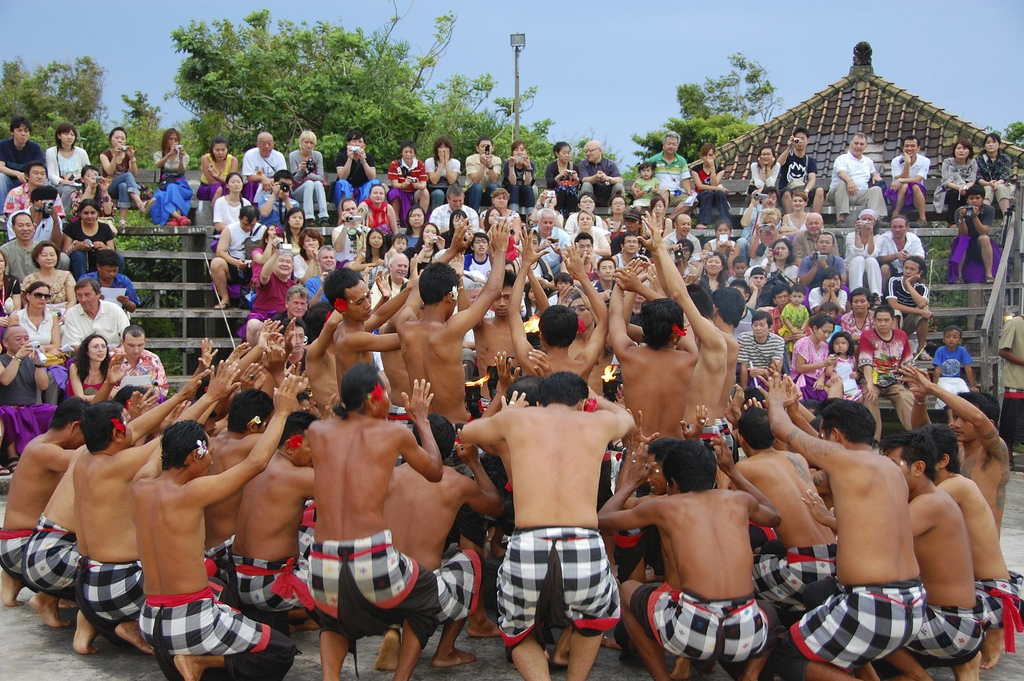 KecakThe Balinese chant and dance.
 LegongThe classical dance of Bali.
Also part of it, and being written: Babi guling (The suckling pig feast dish.).
A trail idea for Ubud
- Ubud Monkey Forest Walk the sacred grove and its temples.
- Tegallalang rice terraces See the subak irrigation system at work.
- Ubud Palace dance Attend an evening performance of legong.
Written by the EveryParampara desk with AI assistance. Opening hours, markets and festival dates change; check locally before travelling. Customs differ from place to place and family to family. If this is your tradition and we have it wrong, tell us.

Photo credits on this page
The small pictures above come from Wikimedia Commons under free licences. Some are cropped to fit.
- Nyepi: Matt Croxson, Public domain, source
- Galungan: Davidelit, CC BY-SA 3.0, source
- Barong: Michael Gunther, CC BY-SA 4.0, source
- Legong: P. (Paul) Spies (Fotograaf/photographer)., CC BY-SA 3.0, source
- Kecak: Rollan Budi, CC BY-SA 2.0, source