Traditions of Jerusalem
A city holy to Jews, Christians and Muslims, where Shabbat, the Via Dolorosa and the call to prayer meet within a few streets.
Jerusalem is sacred to three faiths. Jews pray at the Western Wall, Christians walk the Via Dolorosa to the Church of the Holy Sepulchre, and Muslims pray at the Al-Aqsa Mosque and the Dome of the Rock. The city is also a place of daily life for many communities, with their own food, dress and calendars.

Three faiths, one city
On Friday evening Shabbat begins with candles and a procession of families to the Western Wall. On Good Friday and at Easter, Christians from many churches walk the old streets, and at Orthodox Easter the Holy Fire ceremony fills the Sepulchre. In Ramadan, Muslims gather for night prayers, tarawih, and the call to prayer sounds from many minarets.
At the table
The Old City souks sell falafel, hummus, knafeh and fresh bread with za'atar. Shabbat tables have challah, cholent and fish. The Armenian Quarter has its own food and ceramics, and the Christian Quarter serves ma'amoul at Easter. Coffee with cardamom is poured in every quarter.
Signature traditions of Jerusalem

Also part of it, and being written: Shabbat (The Jewish day of rest.), Hummus (The chickpea dish.), Tarawih (Ramadan night prayers.).
A trail idea for Jerusalem
- Western Wall Visit on Friday evening to see Shabbat begin.
- Church of the Holy Sepulchre Visit at dawn.
- Mahane Yehuda Market Buy challah before Shabbat.
Written by the EveryParampara desk with AI assistance. Opening hours, markets and festival dates change; check locally before travelling. Customs differ from place to place and family to family. If this is your tradition and we have it wrong, tell us.
 🇮🇱 Jerusalem, IsraelYom Kippurיוֹם כִּפּוּר
The holiest day in Judaism, dedicated to fasting, prayer and atonementSpiritual · Fasting and breaking the fast
🇮🇱 Jerusalem, IsraelYom Kippurיוֹם כִּפּוּר
The holiest day in Judaism, dedicated to fasting, prayer and atonementSpiritual · Fasting and breaking the fast
 🇮🇱 Jerusalem, Israel and 1 morePurimפּוּרִים
A lively Jewish festival of storytelling, shared food, masks and charityFestival · Feasts and festival meals
🇮🇱 Jerusalem, Israel and 1 morePurimפּוּרִים
A lively Jewish festival of storytelling, shared food, masks and charityFestival · Feasts and festival meals
 🇮🇱 Jerusalem, Israel and 5 moreTisha B'Avתשעה באב
A solemn fast day in July or August to mourn the destruction of the Jerusalem Temples and other Jewish tragedies.Spiritual · Fasting and breaking the fast
🇮🇱 Jerusalem, Israel and 5 moreTisha B'Avתשעה באב
A solemn fast day in July or August to mourn the destruction of the Jerusalem Temples and other Jewish tragedies.Spiritual · Fasting and breaking the fast
 🇮🇶 Karbala, Iraq and 4 moreMuharramٱلْمُحَرَّم
The sacred opening month of the Islamic year, observed through remembrance and fastingSpiritual · Fasting and breaking the fast
🇮🇶 Karbala, Iraq and 4 moreMuharramٱلْمُحَرَّم
The sacred opening month of the Islamic year, observed through remembrance and fastingSpiritual · Fasting and breaking the fast
Photo credits on this page
The small pictures above come from Wikimedia Commons under free licences. Some are cropped to fit.
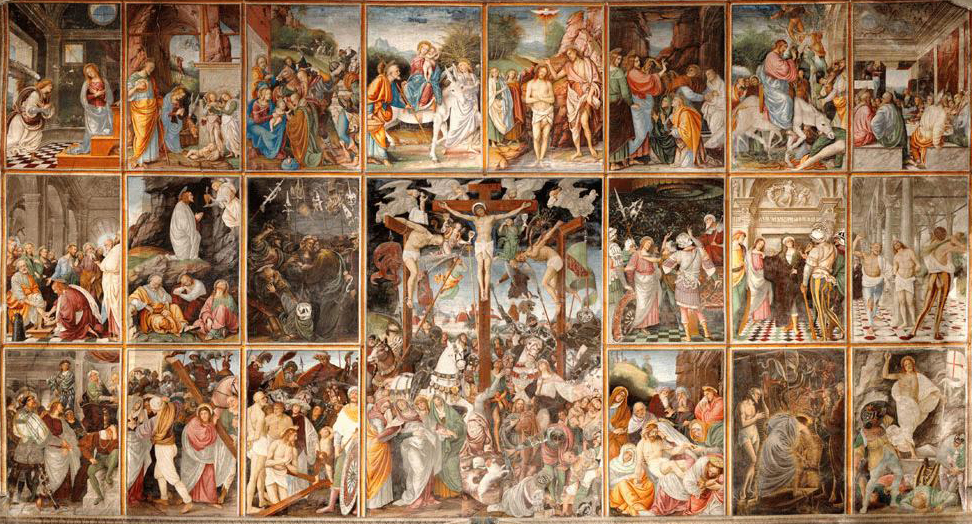
- Presentation of Jesus at the Temple: Gaudenzio Ferrari, Public domain, source
- Yom Kippur: Maurycy Gottlieb, Public domain, source
- Purim: Unknown author, CC BY 2.5, source
- Muharram: Victor Armand Poirson, Public domain, source
- Holy Fire: William Holman Hunt, Public domain, source
- Tisha B'Av: shlomi kakon, CC BY 2.5, source