🇧🇬 Traditions of Bulgaria
47 traditions from Bulgaria, best known first, across 10 cities and towns.
Bulgarian traditions reflect ancient Thracian and Slavic customs shaped by Eastern Orthodox Christianity and centuries of Ottoman exchange. Daily life centres on communal table customs, shared seasonal foods, and distinctive music built on irregular rhythms and village bagpipes. Ancient seasonal rites like Martenitsa and masked Kukeri processions remain widely observed today.
In Bulgaria, old rituals and village customs remain woven into daily life. Communities welcome spring with red and white Martenitsa tokens and keep pre-Christian masked rites like Kukeri to bless the earth. Feasts gather families around filo pastries, cultured milk, and slow-cooked stews, while calendar holidays call for specific dishes, from carp on Saint Nicholas Day to roast lamb in spring. Distinctive polyphonic singing and irregular dance rhythms continue to ring out in churches and town squares.
The festival calendar
Bulgarians mark the passing seasons through ancient rituals and specific holiday foods. In early spring, people celebrate Martenitsa and gather for Kukeri, a masked ritual dating to pre-Christian antiquity intended to ensure fertility and ward off ill fortune. Sacred holidays follow their own strict culinary rules. On Christmas Eve, families share an entirely vegetarian table featuring stuffed peppers and cabbage rolls known as sarmi. New Year's Eve meals highlight cabbage preparations. On Saint Nicholas Day in December, known as Nikulden, households prepare fish, usually baked carp. Springtime culminates on Saint George's Day, or Gergyovden, when communities gather to share freshly roasted lamb.
Dairy, dough, and stews
Bulgarian cooking relies heavily on fermented dairy, baked pastries, and slow simmering. Sour yogurt, known as kiselo mlyako, holds a central place at the table and is consumed in large quantities alongside sirene, a crumbly white brine cheese. Breakfast often features banitsa, a flaky pastry made of layered filo dough filled with sirene, eggs, and yogurt, or fried dough treats such as mekitsi. Main meals frequently begin with fresh salads or soups, including cold cucumber and yogurt tarator, warm bean soup called bob chorba, or tripe soup. Stews cooked with pork, veal, or poultry form hearty main courses, while grilled meats and herb-cured sausages like lukanka are shared with wine or rakia.
Rhythms, drones, and pipes
Bulgarian folk music is renowned for its uneven meters and vocal techniques. Musicians play in asymmetric time signatures, dividing beats into irregular patterns such as five, seven, or eleven counts. Singers use a focused throat tone, producing broad vocal ranges, quarter-tone inflections, and tight two-part harmonies supported by low drone notes in regions like Shopluk and Pirin. The primary traditional instrument is the gaida, a goat-hide bagpipe crafted in distinct regional forms, including the deep-voiced kaba gaida of the Rhodope Mountains and the Thracian gaida. Flutes like the kaval, the bowed gadulka, and the plucked tambura lute accompany circle dances and community gatherings across the country.
Sacred song and faith
Eastern Orthodox Christianity has nurtured a thousand-year tradition of sacred singing in Bulgaria. Medieval composer Yoan Kukuzel reformed Byzantine musical notation in the fourteenth century, earning renown as the Angel-voiced for his vocal mastery. Today, two parallel styles thrive in church practice. The older monodic chant adheres to Greek and Byzantine single-voice liturgical canons. Alongside it stands a choral polyphonic style developed during the nineteenth century under Russian influence, championed by Bulgarian composers such as Dobri Hristov and Petar Dinev. Modern ensembles, including the Sofia Boys' Choir and the Yoan Kukuzel Choir, continue to perform this sacred repertoire during liturgical services and concert hall performances.
Letters and ancient roots
Bulgarian culture rests on deep historical foundations that predate the Middle Ages. Archaeological discoveries at the Varna Necropolis revealed the world's earliest crafted gold, dating to the fifth millennium BCE. The indigenous Thracian civilization left behind ritual sanctuaries, burial mounds, and gold treasures that still influence the country's identity. During the First Bulgarian Empire, the realm became a major literary centre for the Slavic world. Scholars at the Ohrid and Preslav literary schools developed the Cyrillic script during the tenth century. This writing system spread widely across Eastern Europe and remains one of the world's most enduring writing systems.
The facts in this overview come from the Wikipedia article "Culture of Bulgaria", written by its contributors and used under the CC BY-SA 4.0 licence. EveryParampara rewrote the text in its own words, with AI assistance, and compares every page with the article to make sure no passage is copied. It may be reused under the same CC BY-SA 4.0 licence with a link back.
The table in Bulgaria
Foods and drinks by the moment they belong to.
Cities, towns and villages of Bulgaria
 🇵🇱 Poland and 5 moreChristmas Eve
The evening before Christmas, marked by church services, family meals, and gift preparations across Christian cultures.Festival · Dinner
🇵🇱 Poland and 5 moreChristmas Eve
The evening before Christmas, marked by church services, family meals, and gift preparations across Christian cultures.Festival · Dinner
 🇹🇷 Turkey and 6 moreHıdırellez
A spring festival marking the meeting of two prophets, celebrated across Turkey and the Balkans.Festival · Feasts and festival meals
🇹🇷 Turkey and 6 moreHıdırellez
A spring festival marking the meeting of two prophets, celebrated across Turkey and the Balkans.Festival · Feasts and festival meals
 🇧🇬 Bulgaria and 4 moreBabindenБабинден
A Bulgarian feast honoring midwives and new mothers with rituals of bathing, feasting, and blessing.Festival · Feasts and festival meals
🇧🇬 Bulgaria and 4 moreBabindenБабинден
A Bulgarian feast honoring midwives and new mothers with rituals of bathing, feasting, and blessing.Festival · Feasts and festival meals
 🇧🇬 Bulgaria and 3 moreBanitsaБаница
A layered Bulgarian cheese pastry baked for morning meals and holiday fortunesTable custom · Breakfast
🇧🇬 Bulgaria and 3 moreBanitsaБаница
A layered Bulgarian cheese pastry baked for morning meals and holiday fortunesTable custom · Breakfast
 🇬🇷 Greece and 4 moreVasilopitaΒασιλόπιτα
A New Year bread or cake with a coin baked inside, shared out slice by sliceTable custom · Sweets given and shared
🇬🇷 Greece and 4 moreVasilopitaΒασιλόπιτα
A New Year bread or cake with a coin baked inside, shared out slice by sliceTable custom · Sweets given and shared
 🇺🇦 Ukraine and 4 moreKorovaiкоровай (Ukrainian), каравай (Russian)
A round wedding bread of Eastern Europe, baked with songs and shared by all the guestsTable custom · Feasts and festival meals
🇺🇦 Ukraine and 4 moreKorovaiкоровай (Ukrainian), каравай (Russian)
A round wedding bread of Eastern Europe, baked with songs and shared by all the guestsTable custom · Feasts and festival meals
 🇷🇺 Russia and 5 moreRadonitsaРа́доница (Russian), Ра́даўніца (Belarusian)
A spring day when Orthodox families visit graves, share Easter food and greet the deadSpiritual · Feasts and festival meals
🇷🇺 Russia and 5 moreRadonitsaРа́доница (Russian), Ра́даўніца (Belarusian)
A spring day when Orthodox families visit graves, share Easter food and greet the deadSpiritual · Feasts and festival meals
 🇮🇹 Italy and 4 moreRosalia
An ancient Roman festival of decorating graves, statues, and standards with fresh flowersSpiritual · Feasts and festival meals
🇮🇹 Italy and 4 moreRosalia
An ancient Roman festival of decorating graves, statues, and standards with fresh flowersSpiritual · Feasts and festival meals
 🇷🇸 Serbia and 2 moreZapisзапис
A consecrated village tree marked with a cross, venerated in Serbian folk traditionSpiritual · Feasts and festival meals
🇷🇸 Serbia and 2 moreZapisзапис
A consecrated village tree marked with a cross, venerated in Serbian folk traditionSpiritual · Feasts and festival meals
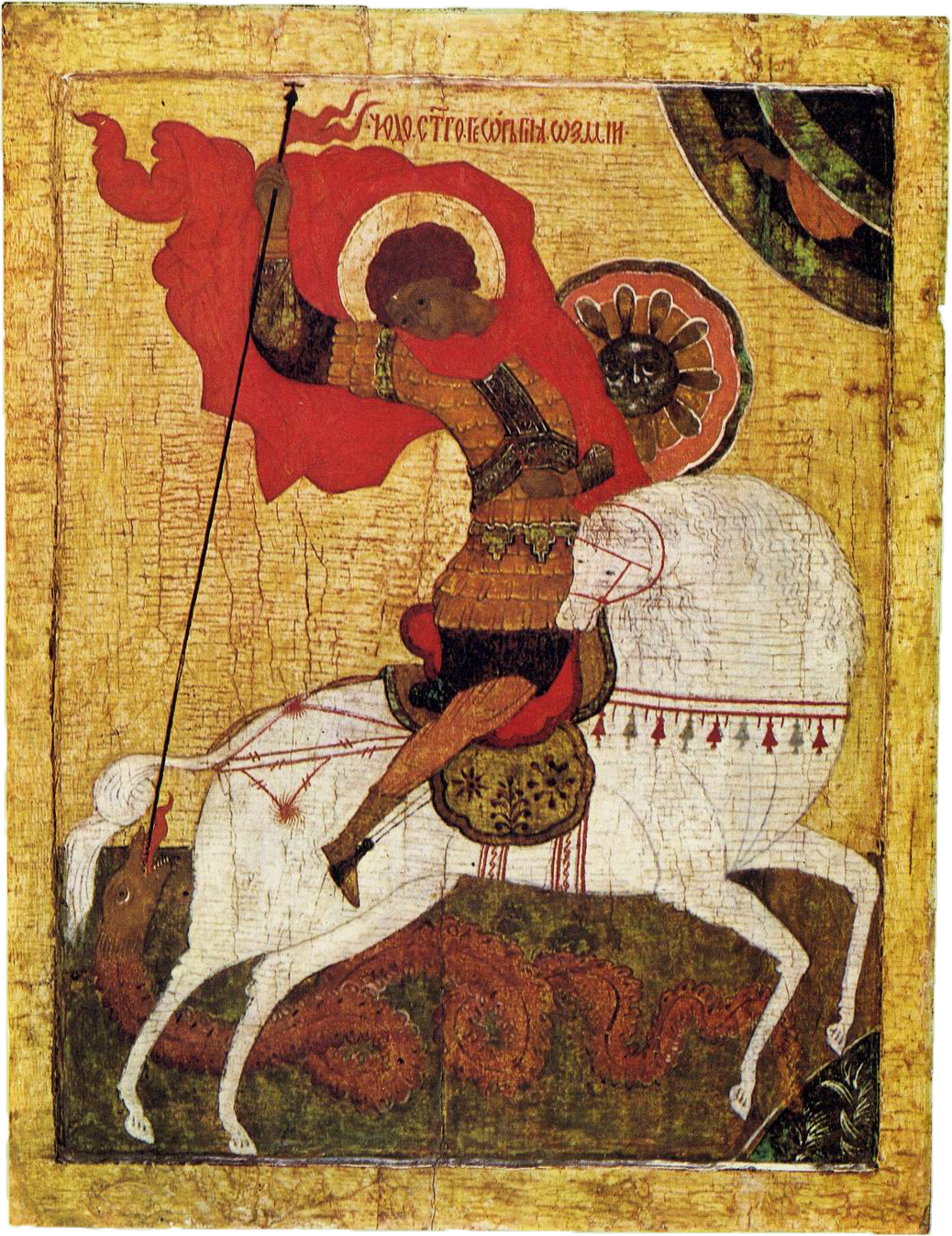 🇷🇸 Serbia and 5 moreĐurđevdanЂурђевдан
A spring festival and feast of Saint George kept across the Balkans and Eastern EuropeFestival · Feasts and festival meals
🇷🇸 Serbia and 5 moreĐurđevdanЂурђевдан
A spring festival and feast of Saint George kept across the Balkans and Eastern EuropeFestival · Feasts and festival meals
Photo credits on this page
The small pictures above come from Wikimedia Commons under free licences. Some are cropped to fit.
- Đurđevdan: Anonymous Russian icon painter (before 1917) Public domain image (acco, Public domain, source
- Hıdırellez: Правительство Республики Крым, CC BY 4.0, source
- Banitsa: Sheku80, CC BY-SA 3.0, source
- Korovai: Olli Niemitalo, CC0, source
- Babinden: Unknown author, Public domain, source
- Vasilopita: Μυρμηγκάκι, Public domain, source
- Radonitsa: Perohanych, CC BY-SA 3.0, source
- Rosalia: Lawrence Alma-Tadema, Public domain, source
- Zapis: Zblagojevic, CC BY-SA 4.0, source
- Christmas Eve: Carl Larsson, Public domain, source