Traditions of Kraków
Poland's old royal capital, where nativity szopka are judged each December and a trumpeter plays an unfinished tune every hour.
Kraków was the capital of Poland until 1596, and its old town, the Wawel Castle and the Jewish quarter of Kazimierz make up a World Heritage city. Polish traditions of church, family and craft endure, and the hejnał, a bugle call from St Mary's Church tower, is played every hour, stopping mid-note in memory of a medieval watchman.

Szopka and Lajkonik
Each December, craftsmen build szopki, ornate nativity scenes in the form of Kraków churches, with glitter, foil and little figures, and a competition is held at the Rynek on the first Thursday of the month. In early summer, the Lajkonik, a bearded man in Tatar dress on a wooden horse, rides through the streets collecting small coins.
At the table
Zapiekanka, a long toasted baguette with mushrooms and cheese, is a street food, and obwarzanek, a ring of bread, is sold on the corners. Pierogi, żurek, a sour rye soup, and bigos, a hunter's stew, are Polish dishes. On Christmas Eve, twelve meatless dishes are served and an extra place is set.
Signature traditions of Kraków


Also part of it, and being written: Hejnał mariacki (The bugle call.), Pierogi (The dumplings.).
A trail idea for Kraków
- Main Market Square See the Cloth Hall.
- Kazimierz Walk the Jewish quarter.
- Wawel Hill See the castle.
Written by the EveryParampara desk with AI assistance. Opening hours, markets and festival dates change; check locally before travelling. Customs differ from place to place and family to family. If this is your tradition and we have it wrong, tell us.
 🇮🇹 Rome, Italy and 4 moreChristmas
A festival of Jesus's birth, kept on 25 December with gifts, lights and shared mealsFestival
🇮🇹 Rome, Italy and 4 moreChristmas
A festival of Jesus's birth, kept on 25 December with gifts, lights and shared mealsFestival
 🇵🇱 Kraków, PolandKraków szopkaszopka krakowska
Elaborate Christmas cribs modelled on historic Polish architecture in KrakówCraft
🇵🇱 Kraków, PolandKraków szopkaszopka krakowska
Elaborate Christmas cribs modelled on historic Polish architecture in KrakówCraft
 🇧🇾 Belarus and 4 moreDziadyДзяды (Belarusian); Діди (Ukrainian); Dziady (Polish)
A Slavic tradition of feeding and welcoming the spirits of ancestors to ensure family fertility and peace.Spiritual
🇧🇾 Belarus and 4 moreDziadyДзяды (Belarusian); Діди (Ukrainian); Dziady (Polish)
A Slavic tradition of feeding and welcoming the spirits of ancestors to ensure family fertility and peace.Spiritual
 🇩🇪 Germany and 3 moreTashlikhתשליך
A Jewish new year rite of casting sins into flowing water, kept by the watersideSpiritual
🇩🇪 Germany and 3 moreTashlikhתשליך
A Jewish new year rite of casting sins into flowing water, kept by the watersideSpiritual
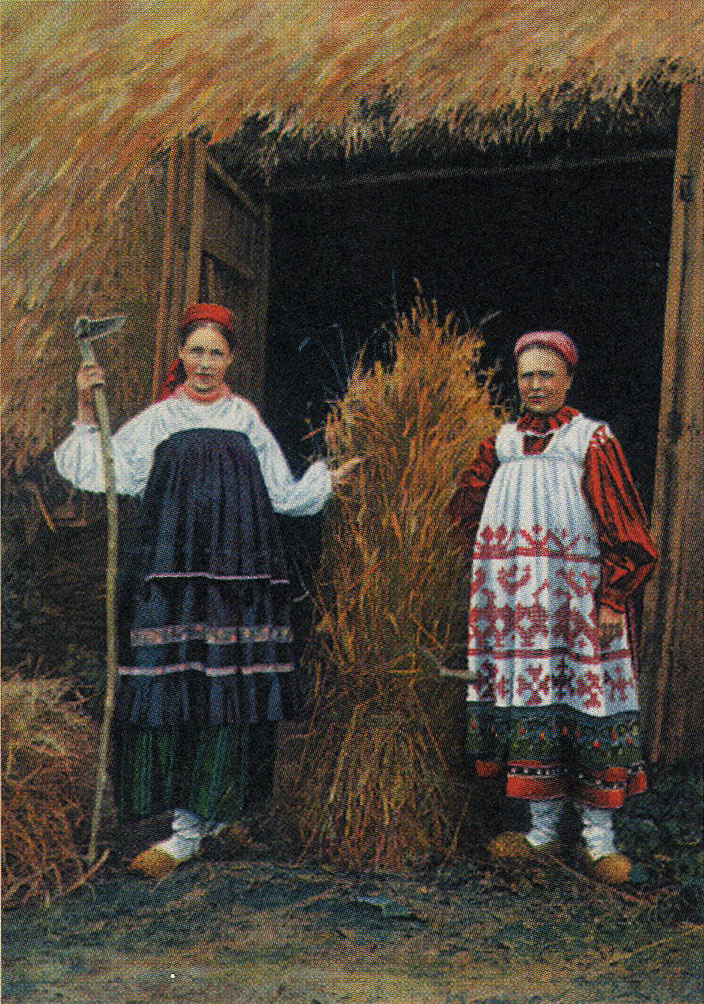 🇵🇱 Kraków, Poland and 5 moreDozhinkiDożynki
A Slavic harvest festival of the last sheaf, a woven wreath and a shared mealSeasonal
🇵🇱 Kraków, Poland and 5 moreDozhinkiDożynki
A Slavic harvest festival of the last sheaf, a woven wreath and a shared mealSeasonal
Photo credits on this page
The small pictures above come from Wikimedia Commons under free licences. Some are cropped to fit.
- Christmas: Bartolomé Esteban Murillo, Public domain, source
- Kraków szopka: user:cancre, CC BY-SA 2.5, source
- Dziady: Stanisław Bagieński, Public domain, source
- Lajkonik: Igor123121, CC BY-SA 4.0, source
- Tashlikh: Yaakov Saar, CC BY-SA 3.0, source
- Wigilia: Przykuta, CC BY-SA 3.0, source
- Dozhinki: Unknown author, Public domain, source