Traditions of Seoul
A palace-and-skyscraper capital where Chuseok, kimchi-making and the hanbok are alive in the modern city.
Seoul has been the capital of Korea for over six hundred years. Its royal palaces, hanok neighbourhoods and market streets share the skyline with towers. Korean festivals, such as Seollal and Chuseok, bring millions out of the city to their family homes, and the traditional clothing, hanbok, is worn on holidays.

Seollal and Chuseok
At Seollal, the lunar new year, families bow to their elders in a deep sebae and receive money and blessings, then eat tteokguk, rice cake soup. At Chuseok, the harvest festival in autumn, they honour ancestors with food at a table, visit graves and share songpyeon, half-moon rice cakes filled with sesame or chestnut.
At the table
A Korean meal is rice, soup and many small dishes, banchan, with kimchi at the centre. Kimjang, the winter making of kimchi, is a community tradition recognised by UNESCO. Bibimbap, bulgogi and tteokbokki are favourites. Tea houses serve jujube and ginseng drinks.
Signature traditions of Seoul
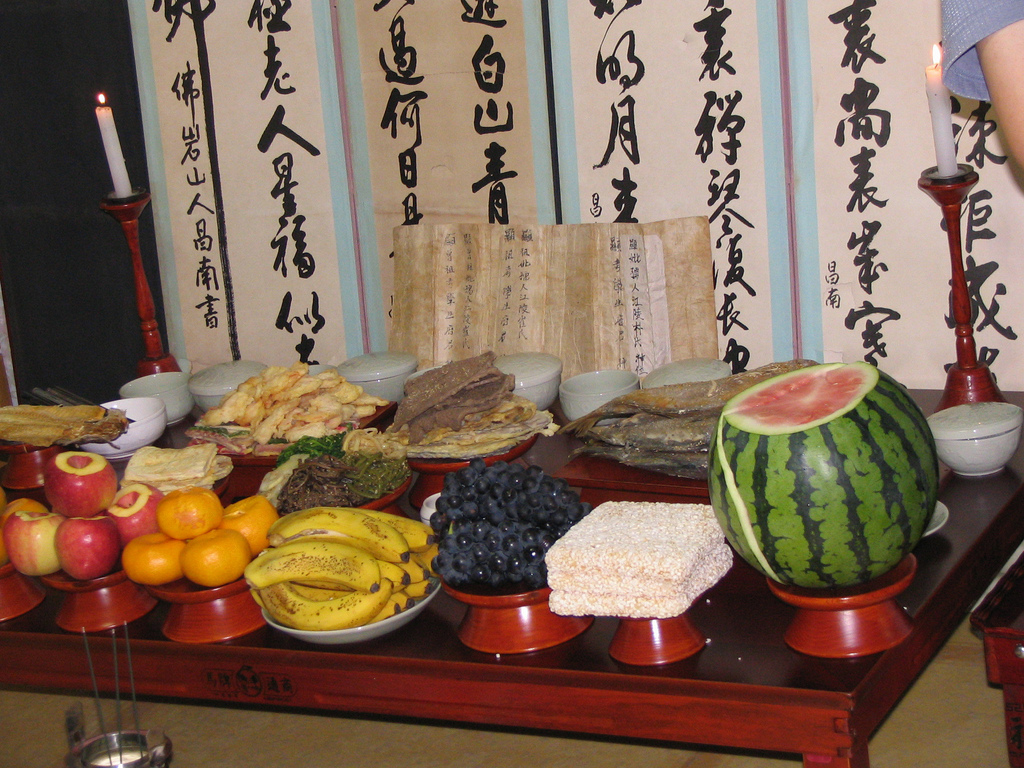 ChuseokThe harvest festival.
 HanbokThe traditional Korean dress.
 Jongmyo jeryeThe royal ancestral rite.
Also part of it, and being written: Seollal (The Korean lunar new year.), Kimjang (The making of kimchi.).
A trail idea for Seoul
- Gyeongbokgung Palace Watch the royal guard changing ceremony.
- Bukchon Hanok Village Walk among the traditional houses.
- Gwangjang Market Eat mung bean pancakes and kimbap.
Written by the EveryParampara desk with AI assistance. Opening hours, markets and festival dates change; check locally before travelling. Customs differ from place to place and family to family. If this is your tradition and we have it wrong, tell us.

Photo credits on this page
The small pictures above come from Wikimedia Commons under free licences. Some are cropped to fit.
- Hanbok: DongyiKoguryo, CC BY-SA 4.0, source
- Chuseok: by Joseph Steinberg (Baltimoron in Korea) at Flickr, CC BY-SA 2.0, source
- Jongmyo jerye: David McNally, USAG-Yongsan, Public domain, source
- Korean tea ceremony: Mai-Linh Doan, CC BY-SA 1.0, source