🇼🇸 Traditions of Samoa
11 traditions from Samoa, best known first, across 1 city and town.
Samoan traditions centre on Fa'a Samoa, a shared way of life grounded in extended family loyalty, respect for chiefs and elders, and community cooperation. Cultural life is expressed through intricate bark cloth and woven mats, sacred 'ava ceremonies, and distinctive music and dance forms.
Life in Samoa is guided by Fa'a Samoa, a customary code that places the extended family and community at the centre of daily affairs. From shared dwellings with open sides to formal chief gatherings, activities are organised collectively. Reverence for elders, elaborate ceremonies around the 'ava beverage, and unique dances mark both everyday interactions and major village milestones across the islands.
The communal household
Fa'a Samoa shapes everyday routines around collective life and kinship. Extended families, known as the aiga, live and labour alongside one another. Traditional homes, called fale, have open sides with no internal walls, creating spaces where up to twenty relatives sleep and converse across the day. Status within the family belongs chiefly to the elders, who receive deep respect from younger relatives. This deference is visible during the customary Sunday meal prepared in the umu, an outdoor earth oven. In both independent Samoa and neighbouring American Samoa, cooperation remains the guiding principle of social ties.
The 'ava ritual
Before significant public events and the granting of matai titles, communities gather for the 'ava ritual. A group called the aumaga prepares the drink from a local plant, straining it inside a large, multi-legged wooden bowl called a tanoa. The distributor directs the proceedings, while a designated server carries the liquid in a polished half of a coconut shell. Protocol requires strict adherence to social hierarchy. The guest of honour, usually the highest-ranking visiting chief, drinks first. The host chief receives the cup next, followed by other participants according to their formal rank.
Traditional music and dance
Samoan dance traditions preserve distinctive forms for different occasions. Women perform the siva with soft, fluid movements of their hands and feet, while groups perform the sitting sasa to rhythmic drumming. Men perform the fa'ataupati, an energetic slap dance executed without musical accompaniment. For major milestones such as weddings, a chief's son or daughter leads the taualuga dance. Before and after dancing, the performer bows with outstretched hands to acknowledge the gathered community. The dancer often wears an elaborate headdress of shells, hair, and feathers called a tuiga, alongside a whale-tooth necklace known as an ula nifo.
Weaving and bodily adornment
Material crafts carry high social worth during community exchanges. Women produce 'ie toga, finely woven mats presented during ceremonies, as well as siapo, a fabric created by beating mulberry bark. Artisans paint the siapo with brown plant dyes, drawing sea life, hibiscus blossoms, and geometric designs. During formal exchanges, women offer these textiles while men present carved woodwork and red plumage. Bodily adornment also includes traditional tattooing, or tatau, applied to both men and women without pain relief. Men receive the soga'i miki on their thighs and torso, while women receive the malu.
Garments and personal names
Daily clothing in Samoa balances comfort with respectability. People frequently wear a wraparound sarong called a lava-lava with a simple shirt and sandals, though shorts are also common. For church or formal office work, women put on a puletasi, which pairs a patterned tunic with a matching skirt. Men may wear plain versions of the lava-lava as part of an official uniform. Personal names given to children also carry clear meaning. Families choose names that reflect physical traits, Christian concepts, animals, everyday objects, or significant historical events, connecting a child's identity to community memories and island heritage.
The facts in this overview come from the Wikipedia article "Culture of Samoa", written by its contributors and used under the CC BY-SA 4.0 licence. EveryParampara rewrote the text in its own words, with AI assistance, and compares every page with the article to make sure no passage is copied. It may be reused under the same CC BY-SA 4.0 licence with a link back.
The table in Samoa
Foods and drinks by the moment they belong to.
| Dinner | White Sunday |
|---|---|
| Feasts and festival meals | Hoʻoponopono |
Cities, towns and villages of Samoa
 🇳🇿 New Zealand and 2 moreMarae
A cleared, sacred gathering place at the heart of Māori and Polynesian community lifeSpiritual
🇼🇸 Samoa and 1 moreTalofa
The Samoan hello and goodbye, also heard in Tuvalu and on LifouEtiquette
🇳🇿 New Zealand and 2 moreMarae
A cleared, sacred gathering place at the heart of Māori and Polynesian community lifeSpiritual
🇼🇸 Samoa and 1 moreTalofa
The Samoan hello and goodbye, also heard in Tuvalu and on LifouEtiquette
 🇪🇬 Egypt and 5 moreTraditional tattooing
The ancient custom of marking the skin for protection, healing, status and sacred ritesDress
🇪🇬 Egypt and 5 moreTraditional tattooing
The ancient custom of marking the skin for protection, healing, status and sacred ritesDress
 🇼🇸 Samoa and 3 moreSiva Samoa
A graceful Samoan dance marked by subtle, expressive arm and hand movementsPerformance
🇼🇸 Samoa and 3 moreWhite SundayLotu Tamaiti
A Samoan holiday honoring children with church services, white clothing, and family gatherings on the second Sunday of OFestival · Dinner
🇼🇸 Samoa and 1 moreFa'ataupati
A traditional Samoan dance performed by men who clap and slap their bodies to create rhythm.Performance
🇼🇸 Samoa and 3 moreSiva Samoa
A graceful Samoan dance marked by subtle, expressive arm and hand movementsPerformance
🇼🇸 Samoa and 3 moreWhite SundayLotu Tamaiti
A Samoan holiday honoring children with church services, white clothing, and family gatherings on the second Sunday of OFestival · Dinner
🇼🇸 Samoa and 1 moreFa'ataupati
A traditional Samoan dance performed by men who clap and slap their bodies to create rhythm.Performance
 🇼🇸 Samoa and 1 moreʻIe tōga
Precious woven mats exchanged in Samoan ceremonies to honor family ties and chiefly status.Dress
🇼🇸 Samoa and 1 moreʻIe tōga
Precious woven mats exchanged in Samoan ceremonies to honor family ties and chiefly status.Dress
 🇼🇸 Samoa and 1 morePeʻa
The traditional Samoan rite of full-body tattooing for men, tapped by master artistsRite of passage
🇼🇸 Samoa and 1 morePeʻa
The traditional Samoan rite of full-body tattooing for men, tapped by master artistsRite of passage
 🇺🇸 United States and 4 moreHoʻoponopono
A Hawaiian family ritual of prayer, confession and forgiveness that sets wrongs rightSpiritual · Feasts and festival meals
🇺🇸 United States and 4 moreHoʻoponopono
A Hawaiian family ritual of prayer, confession and forgiveness that sets wrongs rightSpiritual · Feasts and festival meals
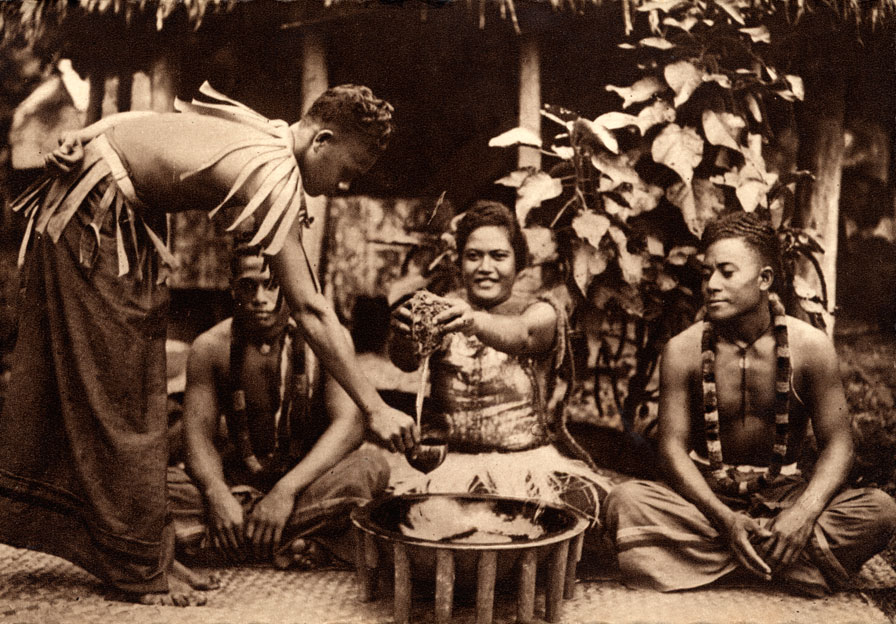 🇼🇸 Samoa and 1 moreʻAva ceremony
A solemn ritual of shared drink and oratory in Samoa and Tonga to mark chiefly titles and important gatherings.Festival
🇼🇸 Samoa and 1 moreʻAva ceremony
A solemn ritual of shared drink and oratory in Samoa and Tonga to mark chiefly titles and important gatherings.Festival
 🇺🇸 Spokane, United States and 5 moreFather's Day
A day to honour fathers and fatherhood, kept on many different dates worldwideFestival
🇺🇸 Spokane, United States and 5 moreFather's Day
A day to honour fathers and fatherhood, kept on many different dates worldwideFestival
Photo credits on this page
The small pictures above come from Wikimedia Commons under free licences. Some are cropped to fit.
- ʻIe tōga: Sarah Kelemen, CC BY 2.0, source
- Peʻa: Thomas Andrew (1855-1939), Public domain, source
- Marae: W. Bulach, CC BY-SA 4.0, source
- Traditional tattooing: Haa900, CC0, source
- Hoʻoponopono: Makana Chai, Public domain, source
- Siva Samoa: Smita Biswas, CC BY 4.0, source
- ʻAva ceremony: Unknown author, Public domain, source
- Father's Day: Jjsarto, CC BY-SA 4.0, source