🇧🇷 Traditions of Brazil
36 traditions from Brazil, best known first, across 18 cities and towns.
Brazil's traditions were built from three streams: Indigenous peoples, Portuguese colonists and enslaved Africans, joined later by Italian, German, Japanese and other settlers. The blend shows most clearly at Carnival, on a table where feijoada shares space with acarajé and churrasco, and in faith, where Catholic rites sit beside Candomblé. Regional difference, not sameness, is the rule.
Brazil speaks Portuguese and cooks like nowhere else. Its ways took shape when Indigenous peoples, settlers from Portugal and enslaved Africans met, then shifted again as Italians, Germans, Japanese and many others arrived. Today the blend shows in street parties before Lent, in Wednesday bowls of feijoada, in the orixás honoured in Salvador. This page gathers the traditions Brazilians keep, region by region.
Three streams meet
Three currents shaped the country: the Indigenous peoples who were there first, the Portuguese who ruled it as a colony for over 300 years, and the Africans brought in slavery. Portugal left the language, the Catholic faith, rice and beans, and colonial buildings. Indigenous words entered daily speech by the hundreds, chiefly from Old Tupi, naming plants, animals and places. African practice remade music, dance, food and religion, most visibly in Bahia. From the late 1800s, settlers arrived from Italy, Germany, Spain and Japan among many others, founding southern towns such as Blumenau and Caxias do Sul. Each wave bent local life into a new shape, which is why Brazil reads best as a set of regions rather than one uniform culture.
A shared tongue
Portuguese is spoken by nearly everyone, about 99 percent of the population, and it anchors national identity more strongly than almost anything else. Curiously, the Brazilian branch keeps older sounds: several features that European Portuguese shed in the 1800s survive here. Around 180 Indigenous languages live on in remote areas. In the south, communities speak German and Italian dialects, Hunsrückisch and Talian among them, alongside Ukrainian and Polish groups, all rubbed smooth by contact with Portuguese. Brazilian Sign Language, known as LIBRAS, is its own language rather than a signed Portuguese, thought to descend from French Sign Language, and it carries legal recognition across the country.
The festival year
Carnival is the country's best-known celebration, timed 46 days before Easter, so the church calendar fixes its date each year. For close to a week, parties run day and night, above all in coastal cities, and the event has grown to enormous size. Bumba Meu Boi ranks beside it, a festival whose name has travelled abroad. Together such gatherings help bring more than a million visitors to Brazil every year.
Faith and ritual
About two thirds of Brazilians are Roman Catholic. Jesuit priests, landing in 1549, carried the faith through the colonial years and steered religious life until the 1700s, when the Marquis of Pombal expelled their order. Since 1940 the Catholic share has slid from 95 percent to under 65, while Protestant churches climbed to more than a fifth of the population. Alongside Christianity runs Candomblé, an African-Brazilian religion whose deities, the orixás, come from Yoruba tradition. It is strongest in Salvador and across Bahia. Enslaved people were once forced to convert and to speak Portuguese, yet their traditions endured and were absorbed by Brazilians of every origin.
The national table
Feijoada, a stew of black beans with meats, is treated as the national dish, and in Rio and São Paulo it is the set Wednesday or Saturday lunch. Coffee is the national drink, and cachaça, a spirit distilled from sugar cane, mixes into the caipirinha. Street and finger foods run from cod fritters to fried snacks such as coxinhas and pastéis. Indigenous ingredients still anchor the kitchen: cassava, açaí, cashew, pineapple and guaraná all began as native crops. When wheat ran short, settlers learned to cook with manioc instead, and Japanese growers built the large poultry farms that put chicken on the table.
Regions at the stove
Bahia cooks with palm oil and chilli, and its street snacks, acarajé and abará served with vatapá, carry African roots. Its moqueca means fish simmered slowly in coconut milk. Minas Gerais is dairy country, known for its cheese, for pão de queijo and for feijão tropeiro. In the forested north, fish, fruit and cassava flour carry the meals. The far south, a ranching land, favours churrasco, a barbecue it shares with Argentina and Uruguay. Goiás fills its rice with pequi fruit and simmers a chicken-and-rice pot called galinhada. There is no single national cuisine: the map of peoples is the menu.
Art and song
Modernism arrived with the Modern Art Week in São Paulo in 1922, a burst of experiments that turned artists toward Brazilian subjects and away from European and North American models. Tarsila do Amaral and Oswald de Andrade led the antropofagia current, which proposed swallowing foreign ideas and digesting them into something new. Under the military dictatorship that began in 1964, censors cut books, songs, plays and films they judged subversive, especially after 1968. Musicians Gilberto Gil and Caetano Veloso answered with Tropicália, a counterculture current in song that pushed back against both the state and the church.
The facts in this overview come from the Wikipedia article "Culture of Brazil", written by its contributors and used under the CC BY-SA 4.0 licence. EveryParampara rewrote the text in its own words, with AI assistance, and compares every page with the article to make sure no passage is copied. It may be reused under the same CC BY-SA 4.0 licence with a link back.
The table in Brazil
Foods and drinks by the moment they belong to.
 🇺🇸 Chicago, United States and 4 moreKwanzaa
A seven-day African American celebration of heritage, family and community valuesFestival · Feasts and festival meals
🇺🇸 Chicago, United States and 4 moreKwanzaa
A seven-day African American celebration of heritage, family and community valuesFestival · Feasts and festival meals
 🇯🇵 Tokyo, Japan and 2 moreTanabataたなばた
A Japanese summer star festival of written wishes hung on leafy bamboo.Festival
🇫🇷 France and 5 moreRéveillon
A luxurious late-night feast that stretches until dawn across the winter holidaysTable custom · Dinner
🇯🇵 Tokyo, Japan and 2 moreTanabataたなばた
A Japanese summer star festival of written wishes hung on leafy bamboo.Festival
🇫🇷 France and 5 moreRéveillon
A luxurious late-night feast that stretches until dawn across the winter holidaysTable custom · Dinner
 🇧🇷 BrazilFesta JuninaFestas Juninas
A Brazilian midwinter celebration marked by bonfires, folk dances and countryside gamesFestival
🇧🇷 BrazilFesta JuninaFestas Juninas
A Brazilian midwinter celebration marked by bonfires, folk dances and countryside gamesFestival
 🇮🇹 Venice, Italy and 5 moreCarnival
A season of parades, masks and feasting in the days before LentFestival · Feasts and festival meals
🇮🇹 Venice, Italy and 5 moreCarnival
A season of parades, masks and feasting in the days before LentFestival · Feasts and festival meals
 🇨🇦 Canada and 5 moreWorkers' Memorial Day
An annual day remembering people killed, injured, or made ill by their workCeremony
🇨🇦 Canada and 5 moreWorkers' Memorial Day
An annual day remembering people killed, injured, or made ill by their workCeremony
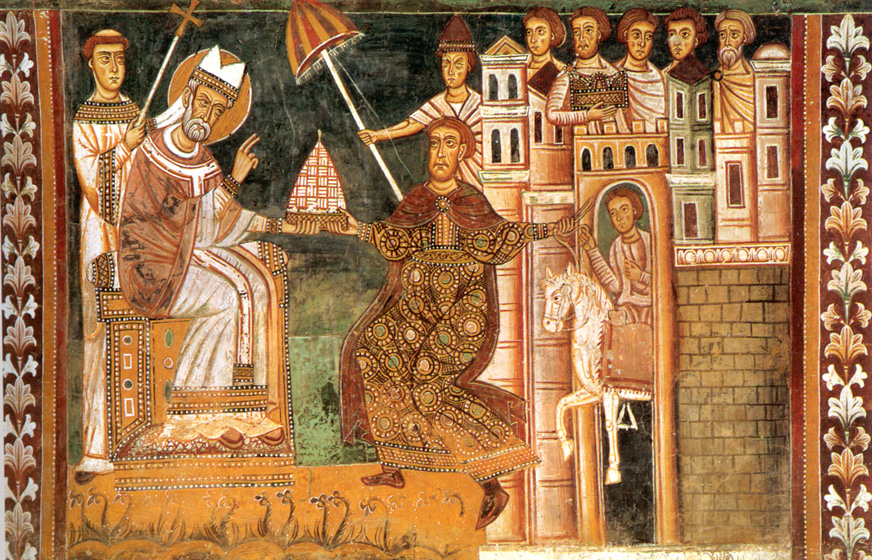 🇩🇪 Germany and 5 moreSaint Sylvester's Day
A Christian feast day and year-end celebration marked across Europe and beyondSeasonal · Dinner
🇩🇪 Germany and 5 moreSaint Sylvester's Day
A Christian feast day and year-end celebration marked across Europe and beyondSeasonal · Dinner
 🇨🇺 Cuba and 5 moreLetra del Año
Annual prophecies and guidance proclaimed by babalawo priests for the coming yearSpiritual
🇨🇺 Cuba and 5 moreLetra del Año
Annual prophecies and guidance proclaimed by babalawo priests for the coming yearSpiritual
Photo credits on this page
The small pictures above come from Wikimedia Commons under free licences. Some are cropped to fit.
- Letra del Año: Ìṣẹ̀ṣeAssembly, CC BY-SA 4.0, source
- Kwanzaa: Apavlo at English Wikipedia, Public domain, source
- Tanabata: Laika ac, CC BY-SA 2.0, source
- Festa Junina: Leandro Neumann Ciuffo, CC BY 2.0, source
- Carnival: Etienne Le Cocq, CC BY-SA 3.0, source
- Workers' Memorial Day: Jungpionier, CC BY-SA 3.0, source
- Saint Sylvester's Day: Unknown medieval artist in Rome, Public domain, source