🇱🇹 Traditions of Lithuania
22 traditions from Lithuania, best known first, across 3 cities and towns.
Lithuanian culture rests on an ancient Baltic language, deep Roman Catholic faith, and a farming heritage shaped by northern seasons. Communal life is celebrated through multipart folk singing, gatherings around hearty rye and potato dishes, and a shared connection to local landscapes and craftsmanship.
Across the forests, farms, and historic towns of Lithuania, living customs reflect a blend of Baltic roots and Christian practice. Five distinct regions preserve local dialects, craft styles, and musical expressions. From ancient polyphonic melodies and communal song festivals to tables filled with dark rye bread, seasonal soups, and forest harvests, daily life keeps a steady rhythm. Faith, memory, and heritage continue to anchor communities through shared rituals at home and in public shrines.
Faith and devotion
Catholicism has been central since the late fourteenth and early fifteenth centuries. Today, most Lithuanians belong to the Roman Catholic Church, with an Eastern Orthodox minority among the Russian community. Religion historically served as a quiet pillar of resistance during Soviet times, when priests led dissident movements. A vivid symbol of this perseverance is the Hill of Crosses near Šiauliai. Even after Soviet authorities flattened the site with bulldozers, believers continuously replanted thousands of Latin crosses on the mound. Sacred sites and church ceremonies remain fundamental parts of community life across the country.
Singing and polyphonic song
Vocal music holds an essential place in Lithuanian tradition. Ancient folk songs known as dainos encompass lyrics for weddings, daily farm work, love, and historical battles. Musicians play zithers known as kanklės alongside traditional flutes. A distinctive northern style from the Aukštaitija region is sutartinės, a multipart harmony built on interlocking voices and duophonic patterns. Lithuania also gathers large communities for massive song celebrations that join thousands of voices in unison. These vocal rituals, honored internationally on UNESCO heritage lists, serve as living expressions of identity passed down through generations of singers.
Food from the land
Shaped by a cool, moist climate, Lithuanian meals rely on hardy staples like rye, barley, beets, potatoes, dairy, and wild mushrooms. Soups are considered vital for everyday wellness, with cold beet soup, known as šaltibarščiai, standing as a beloved classic. Tables often feature dense dark rye bread, boiled potato dumplings called cepelinai or didžkukuliai, and stuffed cabbage leaves known as balandėliai. German culinary contact popularized grated potato puddings called kugelis, stuffed potato sausages called vėdarai, and the tall, spiky spit cake known as šakotis. Crimean Karaite settlers also contributed savoury meat pastries called kibinai.
Language and regional character
The Lithuanian tongue is one of the most archaic living Indo-European languages, maintaining grammatical structures that closely mirror ancient Sanskrit. During forty years of imperial Russian suppression when Latin script was banned, communities protected their printed heritage at great personal risk. The country is divided into five ethnographic regions: Aukštaitija, Žemaitija, Dzūkija, Suvalkija, and Mažoji Lietuva. Each area maintains distinct dialect accents, including High and Low Lithuanian varieties. While modern city residents generally identify broadly as Lithuanians, regional groups such as the Samogitians and Sudovians maintain proud local ties.
Amber and forest crafts
Natural resources have long inspired Lithuanian decorative and rural arts. Baltic amber, often called sea gold, is deeply tied to coastal identity, celebrated in jewelry and preserved in vast collections like the Palanga Amber Museum. Forest traditions also thrive in rural beekeeping, where centuries of apiculture are remembered through traditional carved wooden hives. In visual art and composition, creators like Mikalojus Konstantinas Čiurlionis drew directly from native woods and Baltic seas to define national symphonic music. These ties to local flora, timber, and shorelines continue to inspire folk crafts and seasonal outdoor practices today.
The facts in this overview come from the Wikipedia article "Culture of Lithuania", written by its contributors and used under the CC BY-SA 4.0 licence. EveryParampara rewrote the text in its own words, with AI assistance, and compares every page with the article to make sure no passage is copied. It may be reused under the same CC BY-SA 4.0 licence with a link back.
The table in Lithuania
Foods and drinks by the moment they belong to.
| Dinner | Christmas Eve |
|---|---|
| Tea-time and snacking customs | Simchat Beit HaShoeivah |
| Feasts and festival meals | Christmas Eve, Meteņi |
 🇬🇧 United Kingdom and 5 moreEgg rolling
A spring game of rolling decorated hard-boiled eggs down hills or along lawnsGame
🇬🇧 United Kingdom and 5 moreEgg rolling
A spring game of rolling decorated hard-boiled eggs down hills or along lawnsGame
 🇱🇹 Vilnius, Lithuania and 3 moreSaint Casimir's FairKaziuko mugė
A spring craft market and folk celebration across the historic streets of VilniusCraft
🇱🇹 Vilnius, Lithuania and 3 moreSaint Casimir's FairKaziuko mugė
A spring craft market and folk celebration across the historic streets of VilniusCraft
 🇱🇹 LithuaniaSaint Jonas's FestivalJoninės
A Lithuanian midsummer night of bonfires, wreaths, song and morning dewSeasonal
🇱🇹 LithuaniaSaint Jonas's FestivalJoninės
A Lithuanian midsummer night of bonfires, wreaths, song and morning dewSeasonal
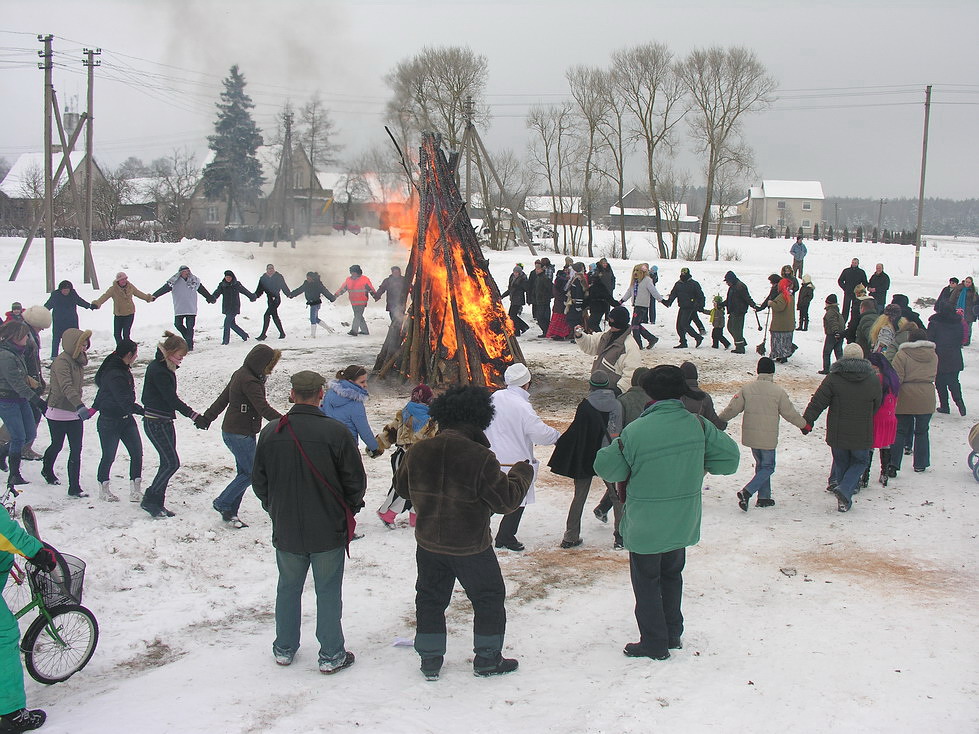 🇱🇹 LithuaniaUžgavėnės
A Lithuanian winter-ending festival of masks, mock battles and pancakesFestival
🇱🇹 LithuaniaUžgavėnės
A Lithuanian winter-ending festival of masks, mock battles and pancakesFestival
 🇺🇸 Spokane, United States and 5 moreFather's Day
A day to honour fathers and fatherhood, kept on many different dates worldwideFestival
🇺🇸 Spokane, United States and 5 moreFather's Day
A day to honour fathers and fatherhood, kept on many different dates worldwideFestival
 🇱🇻 Riga, Latvia and 4 moreMeteņi
A Latvian pre-Lenten festival marking the turn of time and welcoming spring.Festival · Feasts and festival meals
🇱🇻 Riga, Latvia and 4 moreMeteņi
A Latvian pre-Lenten festival marking the turn of time and welcoming spring.Festival · Feasts and festival meals
 🇮🇱 Israel and 3 moreLeil Selichotליל הסליחות
A night of penitential prayers and poems recited before the Jewish New Year to seek forgiveness.Spiritual
🇮🇱 Israel and 3 moreLeil Selichotליל הסליחות
A night of penitential prayers and poems recited before the Jewish New Year to seek forgiveness.Spiritual
 🇱🇹 Vilnius, LithuaniaLithuania Independence Restoration Day
A Lithuanian national holiday on 11 March celebrating the 1990 return of sovereign ruleCeremony
🇱🇹 Vilnius, LithuaniaLithuania Independence Restoration Day
A Lithuanian national holiday on 11 March celebrating the 1990 return of sovereign ruleCeremony
 🇮🇹 Venice, Italy and 2 moreFeast of Saint MarkFesta di san Marco
Saint Mark's day on 25 April, kept with rosebuds in Venice and harvest care in LithuaniaSpiritual
🇮🇹 Venice, Italy and 2 moreFeast of Saint MarkFesta di san Marco
Saint Mark's day on 25 April, kept with rosebuds in Venice and harvest care in LithuaniaSpiritual
Photo credits on this page
The small pictures above come from Wikimedia Commons under free licences. Some are cropped to fit.
- Egg rolling: White House/Lawrence Jackson, Public domain, source
- Užgavėnės: Algirdas at Lithuanian Wikipedia, GFDL, source
- Saint Jonas's Festival: Unknown author, CC0, source
- Saint Casimir's Fair: Sirex at Lithuanian Wikipedia, Public domain, source
- Father's Day: Jjsarto, CC BY-SA 4.0, source
- Meteņi: Spekozols, CC BY-SA 4.0, source
- Lithuania Independence Restoration Day: Lithuania Post Office / Scanned and processed by Vizu, Public domain, source
- Feast of Saint Mark: No machine-readable author provided. Cremedia assumed (based on copyri, Public domain, source
- Leil Selichot: Yael Shilo יעל שילה, CC BY 3.0, source