🇳🇱 Traditions of the Netherlands
27 traditions from the Netherlands, best known first, across 15 cities and towns.
Shaped by flat waterways and fertile grasslands, Dutch life balances centuries of maritime trade with grounded domestic routines. Contemporary society is largely secular, yet regional customs, from Catholic traditions in the south to spring herring festivals in the west, remain deeply rooted in community life.
Life in the low-lying river delta of the Netherlands moves between quiet domestic habits and a shared public calm. While most citizens today hold no church ties, the rhythm of the year still follows historic Christian holidays alongside secular seasonal markers. Across the provinces, distinct foodways and regional tongues preserve local identities, joining coastal fishing communities, northern farming hamlets, and southern towns in a practical, open society built on tolerance and trade.
Flavours of the delta
Dutch everyday food reflects flat grazing pastures and maritime trade. Breakfast and lunch are often simple meals centered on bread, commonly topped with sweet items like hagelslag chocolate sprinkles, chocolate flakes, or spiced aniseed muisjes. The country also eats more liquorice than anywhere else in the world. For evening dinners, traditional staples include hearty dishes like stamppot, a mash of potatoes and greens, and snert, a dense split pea soup served with dark rye bread. Waterways and fertile soil provide abundant milk for butter and artisan cheeses like boerenkaas. In modern kitchens, influences from former colonies such as Indonesia have added depth and spice to traditional flavours.
Celebrating the spring catch
Each spring, coastal ports come alive for Vlaggetjesdag, or Flag Day, marking the departure of fishing vessels for the annual herring harvest. This event celebrates Hollandse Nieuwe, the young soused herring cured using a method known as gibbing. Developed in the fourteenth century by Willem Beukelszoon, this preservation technique removed perishable organs before salting, allowing sailors to stay at sea longer and trade across great distances. Today, eating fresh herring raw with raw onions remains an enduring public ritual. Beyond herring, coastal towns in the west celebrate traditional catches of smoked eel, kibbeling deep-fried fish bites, and fresh mussels.
Regional food traditions
The country divides into three distinct culinary areas. In the northeast, kitchens rely on cured meats, smoked sausages like rookworst, dried metworst, and dense rye loaves. Western provinces focus on maritime goods, spirits such as jenever, and dairy sweets like the caramel-filled stroopwafel. In the south, food culture reflects a luxurious Burgundian tradition linked to historical courts. Southern menus feature slow-cooked beef stews known as hachée, spiced apple syrups, and decadent pastries, including creamy bossche bollen and fruit-filled Limburgse vlaai tarts. This regional variety highlights how local geography and historical trade routes formed different domestic habits across small distances.
Languages across provinces
Standard Dutch is spoken across the entire nation, but several provinces maintain their own linguistic heritage. In the northern province of Friesland, Frisian is an officially recognized language used in regional government and everyday communication. Across the northern and eastern countryside, communities speak dialects of Low Saxon, or Nedersaksisch. In the southeast, Limburgish forms another recognized regional tongue that shares roots with dialects across the German border. Alongside these native speeches, the Dutch maintain a strong tradition of learning foreign languages. A large majority of citizens speak English with ease, and many also converse comfortably in German, French, or Spanish.
Faith and secular life
Historically split between a Protestant north and a Catholic south, the Netherlands has become one of the most secular countries in Europe. Today, most residents report no formal religious ties, viewing faith as a strictly personal matter rather than a public duty. Many identify as agnostic, atheist, or spiritual without adhering to a specific church. Even so, the historical calendar still guides public life. National holidays include Christian observances such as Christmas, Easter, Pentecost, and Ascension Day. In southern provinces like North Brabant and Limburg, Roman Catholic roots continue to serve as a cultural touchstone and regional identifier.
The facts in this overview come from the Wikipedia article "Culture of the Netherlands", written by its contributors and used under the CC BY-SA 4.0 licence. EveryParampara rewrote the text in its own words, with AI assistance, and compares every page with the article to make sure no passage is copied. It may be reused under the same CC BY-SA 4.0 licence with a link back.
The table in the Netherlands
Foods and drinks by the moment they belong to.
| Lunch | Rijsttafel |
|---|---|
| Tea, coffee and drinking ceremonies | Twelfth Night |
| Sweets given and shared | Twelfth Night, Sinterklaas, Zwarte Piet |
| Feasts and festival meals | Twelfth Night, Sinterklaas, Rijsttafel |
Cities, towns and villages of the Netherlands
 🇬🇧 United Kingdom and 5 moreMorris dance
A rhythmic English folk dance performed in costume with bells, sticks and handkerchiefsPerformance
🇬🇧 United Kingdom and 5 moreMorris dance
A rhythmic English folk dance performed in costume with bells, sticks and handkerchiefsPerformance
 🇺🇸 United States and 4 moreFriday the 13th
A Western folk superstition regarding the unluckiness of a Friday falling on the 13th.Folklore
🇺🇸 United States and 4 moreFriday the 13th
A Western folk superstition regarding the unluckiness of a Friday falling on the 13th.Folklore
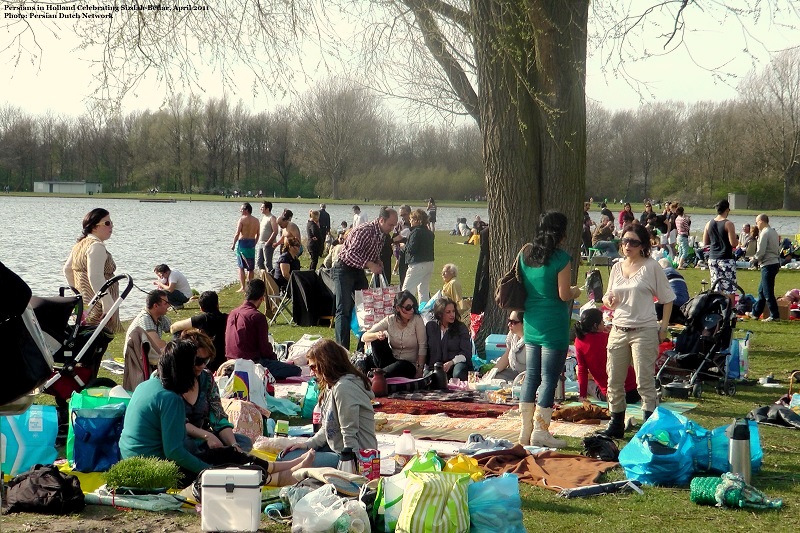 🇮🇷 Iran and 4 moreSizdah Bedarسیزدهبدر
An open-air picnic holiday concluding the Iranian New Year celebrationsFestival
🇮🇷 Iran and 4 moreSizdah Bedarسیزدهبدر
An open-air picnic holiday concluding the Iranian New Year celebrationsFestival
 🇳🇱 Amsterdam, Netherlands and 3 moreZwarte Piet
Saint Nicholas's companion in the Low Countries, who hands out sweets to childrenFolklore · Sweets given and shared
🇳🇱 Amsterdam, Netherlands and 3 moreZwarte Piet
Saint Nicholas's companion in the Low Countries, who hands out sweets to childrenFolklore · Sweets given and shared
 🇬🇧 United Kingdom and 5 moreTopping out
A builders' rite for the day the last beam goes up, marked with a tree, a flag and a toastCraft
🇺🇸 New York, United States and 5 moreBundling
A traditional courtship practice where a couple shares a bed under supervision to ensure compatibility and accountabilitRite of passage
🇬🇧 United Kingdom and 5 moreTopping out
A builders' rite for the day the last beam goes up, marked with a tree, a flag and a toastCraft
🇺🇸 New York, United States and 5 moreBundling
A traditional courtship practice where a couple shares a bed under supervision to ensure compatibility and accountabilitRite of passage
Photo credits on this page
The small pictures above come from Wikimedia Commons under free licences. Some are cropped to fit.
- Friday the 13th: Leonardo da Vinci, Public domain, source
- Sizdah Bedar: PersianDutchNetwork, CC BY-SA 3.0, source
- Morris dance: Des Blenkinsopp, CC BY-SA 2.0, source
- Zwarte Piet: The illustrator is Daan Hoeksma, who died in 1935. The author is liste, Public domain, source
- Topping out: PKS at Danish Wikipedia, CC BY-SA 2.5, source