🇦🇿 Traditions of Azerbaijan
30 traditions from Azerbaijan, best known first, across 7 cities and towns.
Azerbaijani traditions rest on centuries of interaction between Turkic, Iranian, and Caucasian cultures along the Caspian shore. Daily life revolves around gatherings shaped by hospitable tea service, copper-cooked feasts of spiced meats and fresh herbs, and distinct regional architecture.
Azerbaijan sits at the crossroads of Eastern Europe and Western Asia, bordered by the Caucasus mountains and the Caspian Sea. Its cultural customs reflect a long heritage rooted in ancient Caucasian tribes, Persian dynasties, and Turkic arrivals. Today, hospitality sets the rhythm of daily life. Welcoming rituals with black tea, seasonal spreads of plov and kebabs, and traditional buildings reflect a history shaped by diverse rulers, pastoral farming, and maritime trade.
Hospitality at the table
Offering refreshments to visitors is an essential gesture of respect across the country. Hosts welcome guests by serving freshly brewed black tea, typically accompanied by sweet fruit preserves. Tea also concludes everyday meals, providing a pause for conversation. Dining customs emphasize generosity, beginning with starter plates of fresh greens known as goy, sour yogurt called qatik, and white cheeses served with flat chorek bread and pickled vegetables. Food is frequently served in traditional copper plates and bowls, continuing a practice that dates back generations.
The three courses
A standard meal in Azerbaijan unfolds in three distinct courses. Following the opening array of bread, herbs, and pickles, diners move to hearty main courses. Central to these is plov, a seasoned rice dish garnished with aromatic greens and herbs like mint, tarragon, and coriander. Main dishes also feature a wide selection of kebabs made from lamb, beef, or poultry, seasoned with local saffron from the Absheron Peninsula or tart sumac. The meal often includes or concludes with soups such as piti, kufta bozbash, or dovga, as well as chilled yogurt soups like ovdukh.
Meats and Caspian fish
Pastoral farming across the grasslands has shaped a diet rich in meats and dairy. Lamb is especially common during celebrations such as Nowruz, while beef, meatballs, and stuffed parcels called dolma appear in everyday meals. Historically, communities preserved meats by drying them or roasting cuts to seal in jars and animal linings. Beside pasture meats, the Caspian Sea supplies abundant fish. Cooks skewer and grill sturgeon as baliq kebabs, serving the fish alongside a tangy pomegranate sauce known as narsharab. Caspian caviar, salmon, and kutum also hold an honoured place on regional menus.
The morning table
Morning meals emphasize fresh dairy and hot bread straight from clay tandoor ovens. Breakfast plates feature butter, several kinds of white cheese, thick cream, and jars of honey. Cooks prepare eggs either scrambled or baked into kuku, a herb-filled dish. Modern tables also reflect past ties with Eastern Europe and the Soviet period. Families frequently add warm porridge, kasha, thin crepes, and curd cheeses like quark to their morning fare. This blend of local pastoral products and shared northern staples creates a hearty start to the day.
Faith and historic roots
Azerbaijan's spiritual and civic history reflects centuries of changing rulers. In ancient times, Zoroastrian worship spread across the Aras region, followed in the fourth century by the adoption of Christianity under Caucasian Albania. By the late fifteenth century, the Safavid movement established Twelver Shia Islam, supported by groups such as the Qizilbash. Architecture across the land mirrors these varied eras, seen in fire temples, the Maiden Tower in Baku, and the medieval Palace of the Shirvanshahs. In 1918, the country created a democratic republic that granted equal voting rights to women, the first among Muslim nations.
The facts in this overview come from the Wikipedia article "Culture of Azerbaijan", written by its contributors and used under the CC BY-SA 4.0 licence. EveryParampara rewrote the text in its own words, with AI assistance, and compares every page with the article to make sure no passage is copied. It may be reused under the same CC BY-SA 4.0 licence with a link back.
The table in Azerbaijan
Foods and drinks by the moment they belong to.
 🇹🇷 Turkey and 5 moreNazarnazar boncuğu
A blue glass eye amulet worn and displayed to deflect the evil eye.Folklore
🇹🇷 Turkey and 5 moreNazarnazar boncuğu
A blue glass eye amulet worn and displayed to deflect the evil eye.Folklore
 🇹🇷 Kayseri, Turkey and 4 moreHalay
A traditional line and circle folk dance kept across Turkey, Azerbaijan, Armenia, Iran, and Syria.Performance
🇹🇷 Kayseri, Turkey and 4 moreHalay
A traditional line and circle folk dance kept across Turkey, Azerbaijan, Armenia, Iran, and Syria.Performance
 🇮🇷 Iran and 5 moreYaldā Nightشب یلدا
A solstice night of poetry, fruit and family, kept from Iran through Central AsiaFestival · Dinner
🇮🇷 Iran and 5 moreYaldā Nightشب یلدا
A solstice night of poetry, fruit and family, kept from Iran through Central AsiaFestival · Dinner
 🇮🇷 Isfahan, Iran and 4 moreChaharshanbe Suriچهارشنبهسوری
An Iranian festival of fire and renewal celebrated on the eve of the final Wednesday before spring.Festival · Tea-time and snacking customs
🇮🇷 Isfahan, Iran and 4 moreChaharshanbe Suriچهارشنبهسوری
An Iranian festival of fire and renewal celebrated on the eve of the final Wednesday before spring.Festival · Tea-time and snacking customs
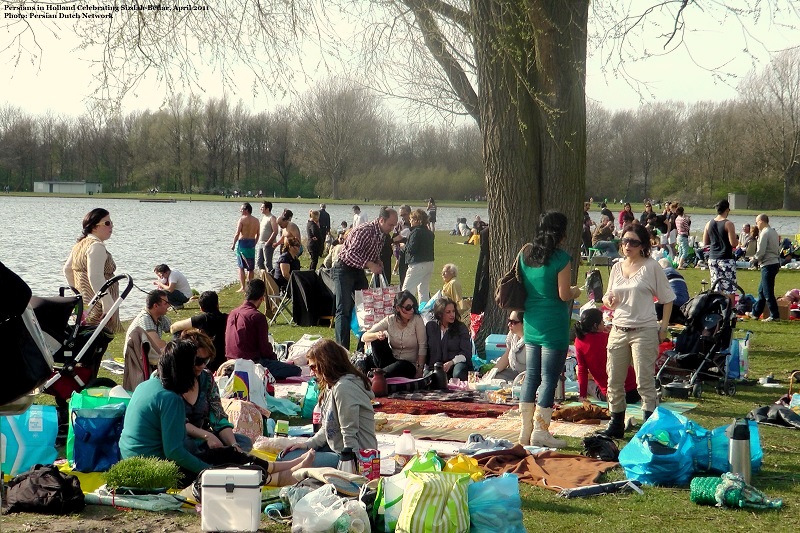 🇮🇷 Iran and 4 moreSizdah Bedarسیزدهبدر
An open-air picnic holiday concluding the Iranian New Year celebrationsFestival
🇮🇷 Iran and 4 moreSizdah Bedarسیزدهبدر
An open-air picnic holiday concluding the Iranian New Year celebrationsFestival
Photo credits on this page
The small pictures above come from Wikimedia Commons under free licences. Some are cropped to fit.
- Halay: Post of Moldova, Public domain, source
- Chaharshanbe Suri: Philippe Giabbanelli, CC BY 3.0, source
- Sizdah Bedar: PersianDutchNetwork, CC BY-SA 3.0, source
- Nazar: Alev Akın, CC BY-SA 4.0, source
- Yaldā Night: M.Sadegh Nikgostar/Tasnim News Agency, CC BY 4.0, source