🇲🇾 Traditions of Malaysia
52 traditions from Malaysia, best known first, across 12 cities and towns.
Malaysia's living traditions rest on a long history of maritime trade and coexistence among Malay, indigenous, Chinese, and Indian communities. While each group preserves distinct religious beliefs and ancestral customs, daily life and shared meals reflect centuries of mutual adaptation across the peninsula and Borneo.
Malaysia brings together diverse cultural roots shaped by centuries of sea trade and migration. Indigenous peoples, Malays, Chinese, and Indians live alongside one another, keeping their community rites while sharing in common public life. From shadow puppet plays and woven textiles to communal feasts where different flavours meet in a single bowl, everyday customs reflect both deep communal pride and a long habit of borrowing from neighbours across the Malay Peninsula and northern Borneo.
The shared table
Malaysian cooking brings together ingredients and techniques across cultural boundaries. Chinese cooks soften South Indian curries with milder gravies, while street vendors toss wheat noodles with Malay spices. Dishes like satay and rendang connect the country to broader Southeast Asian roots, and coastal noodles or chicken rice are shared with neighbouring Singapore. European and Middle Eastern traders introduced staple crops like peanuts, squash, and tomatoes during the Malacca Sultanate era. Today, a single meal often combines local sour tamarind pastes, fiery dried chillies, and coconut broths, showing how regional flavours have settled into everyday home kitchens.
Festivals and public holidays
The annual calendar reflects the country's many religious traditions. Major holy days for Muslims, Buddhists, Hindus, and Christians receive official recognition as public holidays, though specific observances often vary by state. Even when a celebration originates within a particular ethnic or faith community, neighbours frequently join in the festivities. Independence from colonial rule is honoured nationwide on Merdeka Day, marking the birth of modern Malaya. Whether marking the end of a fasting month, a harvest, or a temple celebration, public holidays encourage community gatherings and shared meals across cultural lines.
Craft and performance
Visual and performing arts draw on centuries of royal court heritage and spiritual narratives. Traditional artisans work in woodcarving, silversmithing, and fabric weaving, skills refined during the era of early sultanates. For generations, traditional shadow puppet theatre staged dramatic stories rooted in classical Indian epics, which remained popular even after local societies embraced Islam. Figurative art depicting human forms was long limited by religious custom, shifting only in the twentieth century. Malaysian music relies heavily on rhythmic percussion ensembles, providing tempo and mood for folk dances, community rituals, and theatrical storytelling across the peninsula.
Communities and ancestral heritage
Each community preserves distinct ancestral customs alongside national life. Malays, who are constitutionally Muslim, maintain deep linguistic and ceremonial ties to the land. The Orang Asli of the peninsula and the diverse Dayak groups of Sarawak and Sabah keep indigenous traditions and forest lore, with many Dayak families practicing Christianity today. Chinese families, whose forebears arrived over centuries of trade and labour, maintain Buddhist and Taoist practices, while southern Indian arrivals established prominent Hindu temple networks. The Peranakan community in places like Malacca represents a historic blend, combining Malay customs and dress with Chinese spiritual life.
Lifestyles in Borneo
Life in the eastern states of Sabah and Sarawak follows rhythms shaped by vast rainforests and river systems. Outside major urban centres, rivers often serve as primary transport routes connecting interior settlements. Indigenous communities rely on wild edible plants, forest mushrooms, and local fruits gathered from the jungle canopy, alongside freshwater fish and coastal seafood. Traditional staples like ambuyat reflect dietary customs shared with neighbouring Borneo territories. These foodways and community practices highlight the distinct regional heritage of East Malaysia, which developed along different geographic lines than the towns of the western peninsula.
The facts in this overview come from the Wikipedia article "Culture of Malaysia", written by its contributors and used under the CC BY-SA 4.0 licence. EveryParampara rewrote the text in its own words, with AI assistance, and compares every page with the article to make sure no passage is copied. It may be reused under the same CC BY-SA 4.0 licence with a link back.
The table in Malaysia
Foods and drinks by the moment they belong to.
Cities, towns and villages of Malaysia
 🇹🇭 Thailand and 1 moreMenoraมโนราห์
A traditional Thai dance drama from the south, featuring acrobatics and sacred rituals.Performance
🇹🇭 Thailand and 1 moreMenoraมโนราห์
A traditional Thai dance drama from the south, featuring acrobatics and sacred rituals.Performance
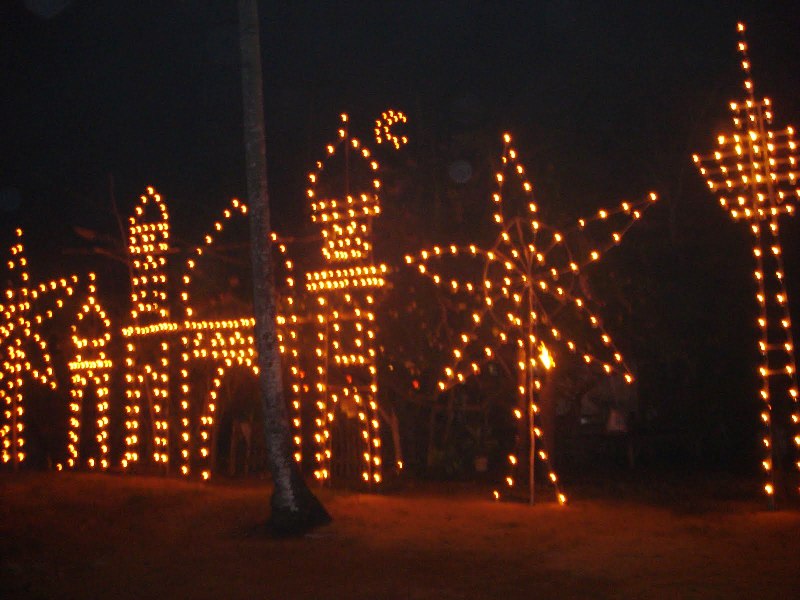 🇲🇾 Malaysia and 1 moreMalam Tujuh Likurمالم توجوه ليكور
The Malay custom of lighting oil lamps during the closing nights of Ramadan.Spiritual · Fasting and breaking the fast
🇲🇾 Malaysia and 1 moreMalam Tujuh Likurمالم توجوه ليكور
The Malay custom of lighting oil lamps during the closing nights of Ramadan.Spiritual · Fasting and breaking the fast
 🇨🇳 Quanzhou, China and 5 moreNanguan南管
An introspective chamber music tradition from southern Fujian and Taiwan.Performance
🇨🇳 China and 3 moreQimen Dunjia奇門遁甲
A classical Chinese divination system that maps time, space, and strategySpiritual
🇨🇳 Quanzhou, China and 5 moreNanguan南管
An introspective chamber music tradition from southern Fujian and Taiwan.Performance
🇨🇳 China and 3 moreQimen Dunjia奇門遁甲
A classical Chinese divination system that maps time, space, and strategySpiritual
Photo credits on this page
The small pictures above come from Wikimedia Commons under free licences. Some are cropped to fit.
- Menora: AjarnRichard, CC BY-SA 4.0, source
- Malam Tujuh Likur: Qatrunan, CC BY-SA 4.0, source
- Nanguan: Jnzl's Public Domain Photos, Public domain, source