🇳🇵 Traditions of Nepal
68 traditions from Nepal, best known first, across 11 cities and towns.
Nepal's cultural life brings together more than one hundred ethnic communities across the plains, hills, and high Himalayas. Everyday custom is shaped by shared Hindu and Buddhist devotions, sacred seasonal celebrations like Dashain, and hearty meals centred on grain, spiced lentils, and preserved greens.
Across Nepal, mountainous geography and over a hundred distinct ethnic groups shape everyday rituals, arts, and feasts. Buddhist monasteries and revered Hindu temples anchor spiritual life, while communities mark the year through seasonal gatherings, communal dances, and time-honoured foods. From the high peaks of the north to the fertile valleys, life follows the rhythm of harvest cycles, sacred pilgrimages, and shared table customs that sustain every household.
Faith and sacred ritual
Nepal's spiritual life is primarily rooted in Hinduism and Buddhism, traditions that have coexisted for more than two millennia alongside Islam and the indigenous Kirant faith. Sacred destinations include Lumbini, the birthplace of the Buddha, and Kathmandu's historic Pashupatinath temple, dedicated to Shiva. Local religious thought incorporates elements of Shaivism, Tibetan Buddhist schools, and tantric traditions. In specific tantric rituals, practitioners make offerings of male animals such as goats, sheep, ducks, chickens, or water buffalo. Cows, by contrast, are regarded as deeply sacred and are never harmed or offered in sacrifice.
The festival calendar
Religious gatherings mark the seasons throughout the year. The most significant celebration is Dashain, also known as Mohani among the Newar people, which occurs in autumn following the monsoon and honours the victory over demonic forces. Another major observance is Tihar, celebrated with sweet ring-shaped rice breads called sel roti. Sherpa communities in the high mountains hold the Mani Rimdu festival for universal wellbeing. Street processions, known as jatras, take place across various regions. Other notable events include Maha Shivaratri, Holi, Teej, and Buddha Purnima, each bringing communities together with special foods and ritual prayers.
Music and movement
Traditional performance arts in Nepal are closely linked to legend, with stories tracing dance back to Shiva's cosmic tandava in the Himalayas. Styles, rhythms, and outfits shift across altitudes and ethnic communities. At weddings, participants perform the Dishka dance, known for intricate steps and graceful hand gestures. In the southern plains, Tharu communities perform stick dances as well as the peacock dance. Musical accompaniment adapts to tell stories of village life, from the labour of harvesting crops to romantic tales, historic battles, and marriage customs. These dances remain central to community gatherings, reinforcing shared folklore.
The daily table
The foundation of daily eating is dal-bhat-tarkari, a platter of cooked rice or grain, spiced lentil soup, and vegetable curry eaten twice a day. Side dishes include pungent fermented mustard greens known as gundruk, radish pickles, fresh chilies, and citrus slices. Dhindo, a thick porridge dough made from millet or buckwheat flour, serves as a traditional staple across hilly and mountainous areas. In high Himalayan villages where grain farming is limited, residents rely on barley, potatoes, and butter tea made by churning tea with ghee and salt. Steamed dumplings known as momos and stir-fried noodles are widely enjoyed across the country.
Ceremonies and feasts
Special life stages and auspicious occasions are celebrated with elaborate food presentations. During weddings and the Pasni, the traditional rice feeding ceremony for an infant, hosts may serve Chaurasi Byanjan, an expansive feast featuring eighty-four different items arranged on small plates around a central leaf platter. Another ceremonial rite is the Sagan blessing, rooted in tantric custom, which presents an individual with five distinct symbolic foods: a boiled egg, smoked fish, meat, a lentil cake, and rice wine. These presentations invite good fortune and protection during significant transitions in life, joining ritual practice directly to hospitality.
The facts in this overview come from the Wikipedia article "Culture of Nepal", written by its contributors and used under the CC BY-SA 4.0 licence. EveryParampara rewrote the text in its own words, with AI assistance, and compares every page with the article to make sure no passage is copied. It may be reused under the same CC BY-SA 4.0 licence with a link back.
The table in Nepal
Foods and drinks by the moment they belong to.
Cities, towns and villages of Nepal
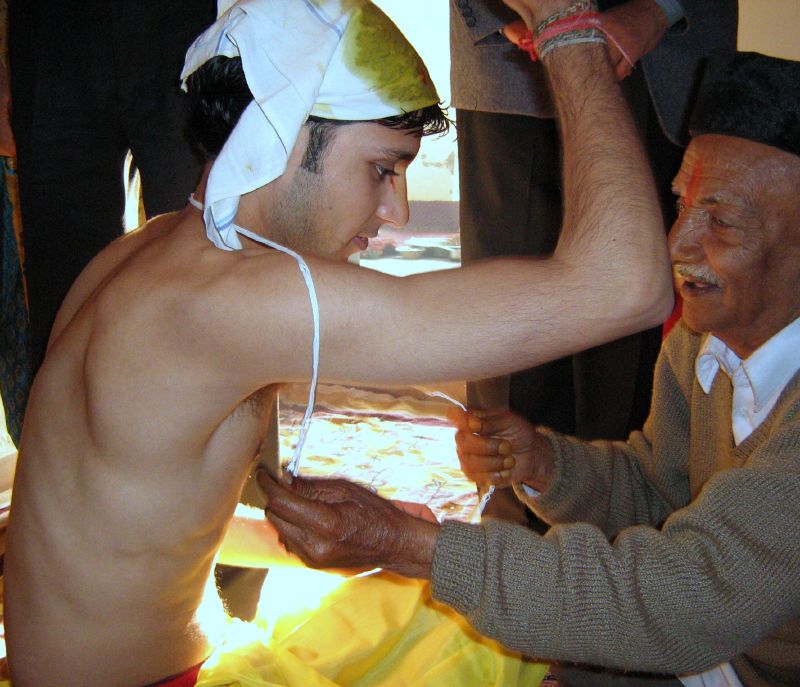 🇮🇳 India and 1 moreUpanayanaउपनयन (Sanskrit)
A Hindu rite of passage that begins a child's study and marks a second birthRite of passage
🇮🇳 India and 1 moreUpanayanaउपनयन (Sanskrit)
A Hindu rite of passage that begins a child's study and marks a second birthRite of passage
 🇮🇳 Gaya, India and 1 moreShraddhaश्राद्ध
Rituals of faith for the ancestors, kept yearly and through Pitru PakshaSpiritual
🇮🇳 Gaya, India and 1 moreShraddhaश्राद्ध
Rituals of faith for the ancestors, kept yearly and through Pitru PakshaSpiritual
 🇮🇳 Haridwar, India and 3 moreAntyestiअन्त्येष्टि
The traditional Hindu funeral ceremony and final rite of passageRite of passage
🇮🇳 Haridwar, India and 3 moreAntyestiअन्त्येष्टि
The traditional Hindu funeral ceremony and final rite of passageRite of passage
 🇮🇳 India and 2 moreHindu weddingVivaha (विवाह)
A traditional Hindu marriage ceremony involving sacred rituals and vows witnessed by fire.Rite of passage
🇮🇳 India and 2 moreHindu weddingVivaha (विवाह)
A traditional Hindu marriage ceremony involving sacred rituals and vows witnessed by fire.Rite of passage
 🇨🇳 China and 4 moreSky burialབྱ་གཏོར་ (bya gtor)
A Tibetan funeral in which the dead are laid out on a rock for vulturesRite of passage
🇨🇳 China and 4 moreSky burialབྱ་གཏོར་ (bya gtor)
A Tibetan funeral in which the dead are laid out on a rock for vulturesRite of passage
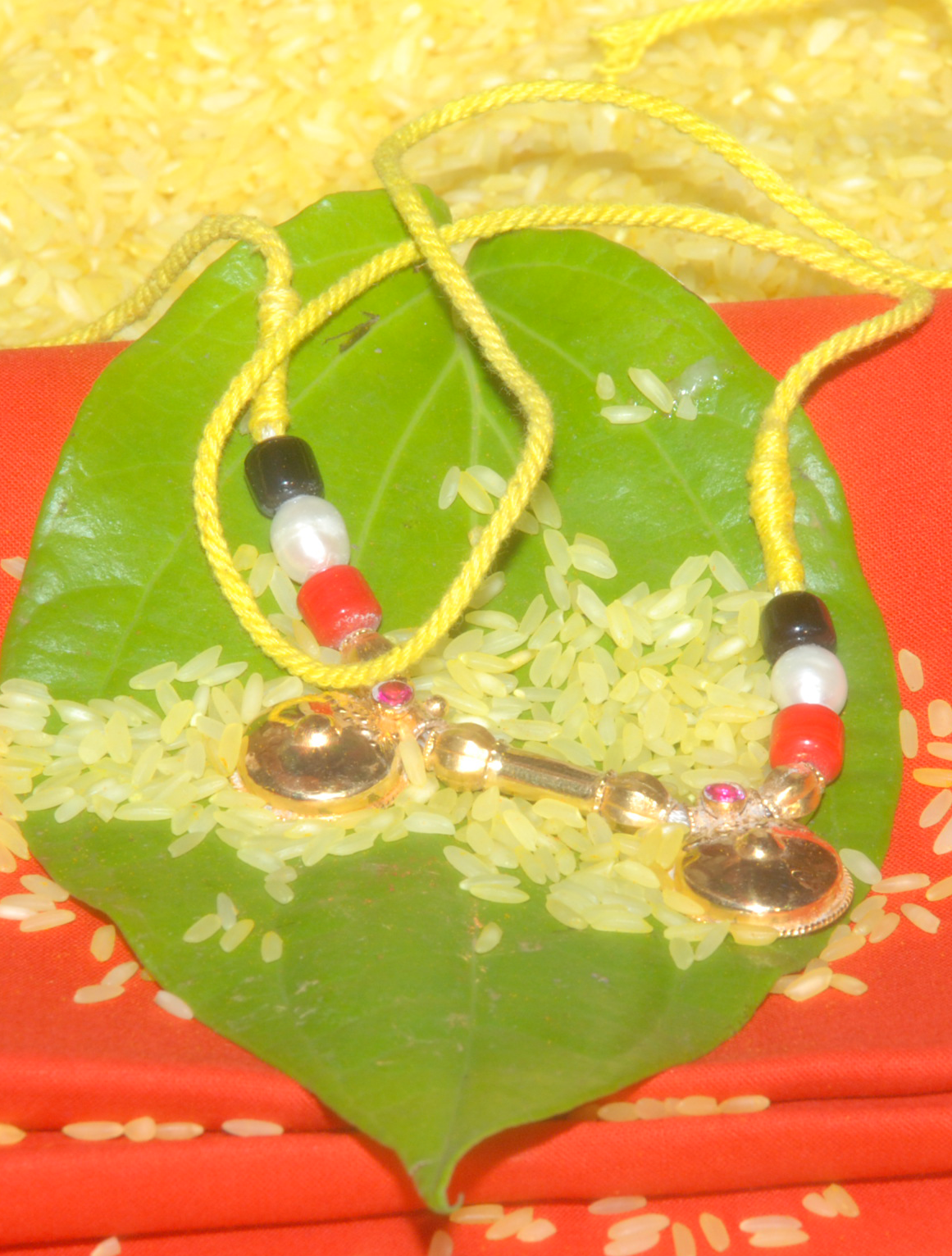 🇮🇳 India and 2 moreMangalasutraमङ्गलसूत्रम् (maṅgalasūtram)
A necklace tied by the groom at a wedding, worn through married lifeDress
🇮🇳 India and 2 moreMangalasutraमङ्गलसूत्रम् (maṅgalasūtram)
A necklace tied by the groom at a wedding, worn through married lifeDress
 🇮🇳 India and 1 moreYajnaयज्ञ
A Hindu ritual of offering items into a sacred fire to honor deities and ancestors.Spiritual
🇳🇵 NepalPatukaपटुका
A traditional Nepalese cloth sash worn for core support, carrying items and festivitiesDress
🇮🇳 India and 1 moreYajnaयज्ञ
A Hindu ritual of offering items into a sacred fire to honor deities and ancestors.Spiritual
🇳🇵 NepalPatukaपटुका
A traditional Nepalese cloth sash worn for core support, carrying items and festivitiesDress
 🇳🇵 Kathmandu, NepalTraditional Newar clothingनेवार समुदायमा भएको संस्कृति पहिरन
The customary handwoven dress and ceremonial garments of Nepal's Newar peopleDress
🇮🇳 Jammu, India and 1 moreChura
A set of bridal bangles worn across South Asia at weddings and in early marriageDress
🇳🇵 Kathmandu, NepalTraditional Newar clothingनेवार समुदायमा भएको संस्कृति पहिरन
The customary handwoven dress and ceremonial garments of Nepal's Newar peopleDress
🇮🇳 Jammu, India and 1 moreChura
A set of bridal bangles worn across South Asia at weddings and in early marriageDress
Photo credits on this page
The small pictures above come from Wikimedia Commons under free licences. Some are cropped to fit.
- Antyesti: Unknown author, Public domain, source
- Mangalasutra: Ackroydman, CC BY-SA 3.0, source
- Upanayana: vinodbahal, CC BY 2.0, source
- Shraddha: Billjones94, CC BY-SA 4.0, source
- Hindu wedding: Dinesh Cyanam, CC BY-SA 2.0, source
- Sky burial: FishOil at English Wikipedia, Public domain, source
- Yajna: Chainwit., CC BY-SA 4.0, source
- Traditional Newar clothing: Uray1130, CC BY-SA 4.0, source