🇵🇭 Traditions of the Philippines
75 traditions from the Philippines, best known first, across 34 cities and towns.
Filipino traditions blend ancient Austronesian roots with centuries of Spanish and American influence, creating a unique cultural identity. Life revolves around strong family ties, communal festivals, and a cuisine that mixes indigenous ingredients with foreign techniques.
The Philippines is an archipelago where geography shapes culture. Over 182 ethnic groups live across thousands of islands. Their shared identity emerged from history and trade. People mark time through fiestas and religious rites. The table features rice, sour broths, and roasted meats. Music, dance, and hospitality reflect a warm community spirit. This guide explores how these living traditions endure today.
Time and festivals
The year turns with Catholic feasts and harvest celebrations. Fiestas honor patron saints and bring whole barangays together. Communities share food and music in the streets. These events reinforce social bonds and local pride. Pre-colonial cycles also remain visible in agricultural rituals. Rice planting and harvesting still follow seasonal rhythms. People offer thanks for good yields and safe travels. The calendar blends Christian dates with older customs.
Faith and ritual
Most Filipinos practice Roman Catholicism, a legacy of Spanish rule. Churches serve as centers for prayer and community life. Processions and novenas mark important liturgical seasons. Indigenous groups maintain their own spiritual practices. Anito beliefs persist among some communities in the highlands. Moro peoples follow Islam with distinct regional customs. Rituals often combine prayer, song, and communal dining. Faith provides comfort and structure in daily life.
Family and life stages
Family remains the core of Filipino society. Extended relatives often live nearby or participate closely in decisions. Births are celebrated with naming ceremonies and gifts. Weddings involve large gatherings and elaborate feasts. Death brings the community together for mourning and remembrance. Respect for elders is shown through specific gestures and language. Children learn values by observing older generations. Kinship networks provide support during hard times.
The table and food
Rice sits at the center of every meal. Dishes vary by region but share common flavors. Sour broths like sinigang use tamarind or guava. Stews such as adobo use vinegar and soy sauce. Roasted pork appears at celebrations and special occasions. Noodles called pancit symbolize long life at birthdays. Spring rolls known as lumpia are popular snacks. Meals are often shared from common plates. Hospitality means offering food to any guest who arrives.
Music and arts
Traditional music uses gongs, flutes, and string instruments. Epic chants preserve history and mythology in oral form. Dance movements often mimic nature or daily tasks. Modern genres blend Western styles with local rhythms. Handicrafts include weaving, wood carving, and pottery. Designs reflect ancestral patterns and regional identities. Artists work in both traditional media and contemporary forms. Cultural expression strengthens community pride and continuity.
The facts in this overview come from the Wikipedia article "Culture of the Philippines", written by its contributors and used under the CC BY-SA 4.0 licence. EveryParampara rewrote the text in its own words, with AI assistance, and compares every page with the article to make sure no passage is copied. It may be reused under the same CC BY-SA 4.0 licence with a link back.
The table in the Philippines
Foods and drinks by the moment they belong to.
Cities, towns and villages of the Philippines
 🇮🇳 India and 5 moreNativity of Mary
A Christian feast day honouring the birth of Mary, the mother of JesusSpiritual · Lunch
🇮🇳 India and 5 moreNativity of Mary
A Christian feast day honouring the birth of Mary, the mother of JesusSpiritual · Lunch
 🇬🇷 Greece and 5 moreKnucklebones
An ancient hand game of tossing, catching, and scooping small bones or stonesGame
🇬🇷 Greece and 5 moreKnucklebones
An ancient hand game of tossing, catching, and scooping small bones or stonesGame
 🇵🇭 Philippines and 5 moreFirst Communion
A Christian rite of passage marking a person's initial reception of the Eucharist.Rite of passage
🇵🇭 Philippines and 5 moreFirst Communion
A Christian rite of passage marking a person's initial reception of the Eucharist.Rite of passage
 🇵🇱 Poland and 5 moreGrandparents' Day
A single-day holiday kept on different dates in many countries to honour grandparentsFestival
🇵🇱 Poland and 5 moreGrandparents' Day
A single-day holiday kept on different dates in many countries to honour grandparentsFestival
 🇰🇷 South Korea and 4 moreParents' Day어버이날 (Eobeoinal)
Days set aside in several countries to thank mothers and fathersFestival
🇰🇷 South Korea and 4 moreParents' Day어버이날 (Eobeoinal)
Days set aside in several countries to thank mothers and fathersFestival
 🇵🇭 Kawit, PhilippinesIndependence DayAraw ng Kasarinlán
The Philippines' national day, marked each 12 June with flags and paradesCeremony
🇵🇭 Kawit, PhilippinesIndependence DayAraw ng Kasarinlán
The Philippines' national day, marked each 12 June with flags and paradesCeremony
 🇪🇸 Spain and 4 moreDay of the Holy InnocentsDía de los Santos Inocentes
A 28 December day of pranks and fake news, kept in the Spanish-speaking worldFestival
🇪🇸 Spain and 4 moreDay of the Holy InnocentsDía de los Santos Inocentes
A 28 December day of pranks and fake news, kept in the Spanish-speaking worldFestival
 🇮🇳 India and 4 moreYouth Day
A commemorative holiday honoring young people and youth movements worldwideCeremony
🇮🇳 India and 4 moreYouth Day
A commemorative holiday honoring young people and youth movements worldwideCeremony
 🇮🇹 Rome, Italy and 7 moreSaint Joseph's Day
A 19 March feast honouring Jesus' earthly father, kept with altars and processionsSpiritual · Feasts and festival meals
🇮🇹 Rome, Italy and 7 moreSaint Joseph's Day
A 19 March feast honouring Jesus' earthly father, kept with altars and processionsSpiritual · Feasts and festival meals
 🇨🇦 Toronto, Canada and 5 moreNo Bra Day
An annual October observance promoting breast cancer awareness and bodily autonomySeasonal
🇨🇦 Toronto, Canada and 5 moreNo Bra Day
An annual October observance promoting breast cancer awareness and bodily autonomySeasonal
 🇮🇹 Italy and 5 morePatronal festivalFiesta patronal
A town's yearly feast for its patron saint, with processions, a fair and shared foodFestival
🇮🇹 Italy and 5 morePatronal festivalFiesta patronal
A town's yearly feast for its patron saint, with processions, a fair and shared foodFestival
 🇩🇪 Germany and 5 moreDelphic Games of the modern era
Global competitions and exhibitions across the arts, modelled on ancient Greek gamesPerformance
🇩🇪 Germany and 5 moreDelphic Games of the modern era
Global competitions and exhibitions across the arts, modelled on ancient Greek gamesPerformance
 🇵🇭 Bulacan, PhilippinesLuksong baka
A traditional Filipino jumping game where players leap over a kneeling partner without touching them.Game
🇵🇭 Bulacan, PhilippinesLuksong baka
A traditional Filipino jumping game where players leap over a kneeling partner without touching them.Game
 🇵🇭 PhilippinesBuklog
A thanksgiving ritual of the Subanen people in the Philippines, honoring spirits through offerings and dance.Spiritual
🇵🇭 PhilippinesBuklog
A thanksgiving ritual of the Subanen people in the Philippines, honoring spirits through offerings and dance.Spiritual
 🇨🇳 Quanzhou, China and 5 moreNanguan南管
An introspective chamber music tradition from southern Fujian and Taiwan.Performance
🇨🇳 Quanzhou, China and 5 moreNanguan南管
An introspective chamber music tradition from southern Fujian and Taiwan.Performance
 🇮🇹 Turin, Italy and 5 moreMary Help of ChristiansSancta Maria Auxilium Christianorum
A Christian feast and devotion honouring Mary as a protector, observed on 24 MaySpiritual
🇮🇹 Turin, Italy and 5 moreMary Help of ChristiansSancta Maria Auxilium Christianorum
A Christian feast and devotion honouring Mary as a protector, observed on 24 MaySpiritual
 🇵🇭 PhilippinesBinirayan Festival
An annual December cultural festival in Antique celebrating Panay's Malay settlementFestival
🇵🇭 PhilippinesBinirayan Festival
An annual December cultural festival in Antique celebrating Panay's Malay settlementFestival
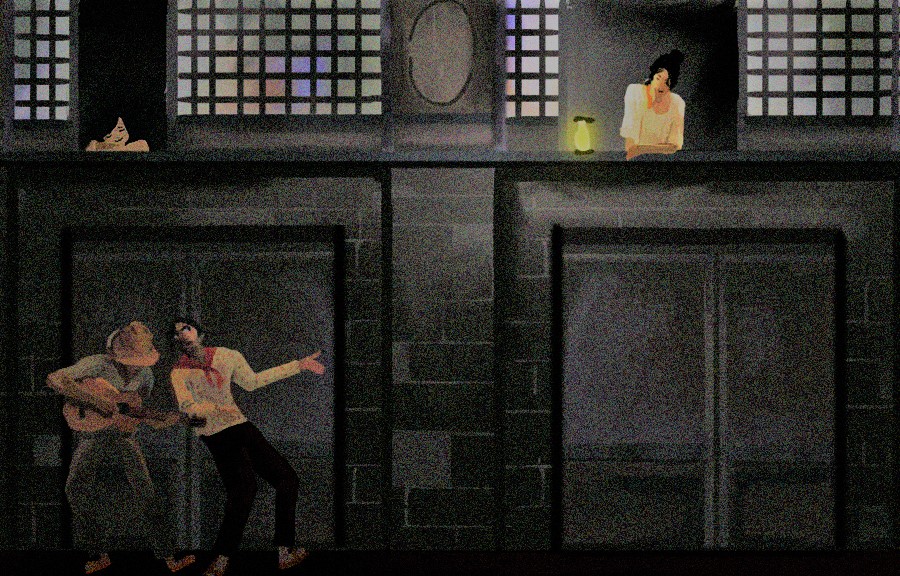 🇵🇭 PhilippinesHarana
A Filipino serenade where a suitor sings beneath his beloved's window at nightPerformance
🇵🇭 PhilippinesHarana
A Filipino serenade where a suitor sings beneath his beloved's window at nightPerformance
 🇵🇭 PhilippinesInabel weavingAbél-Ilóco
A handwoven cotton textile tradition of the Ilocano people in Northern Luzon, Philippines.Craft
🇵🇭 PhilippinesInabel weavingAbél-Ilóco
A handwoven cotton textile tradition of the Ilocano people in Northern Luzon, Philippines.Craft
 🇯🇵 Kyoto, Japan and 5 moreTeeth blackening
A custom of dyeing teeth black to mark adulthood and beauty in parts of Asia and Oceania.Rite of passage
🇯🇵 Kyoto, Japan and 5 moreTeeth blackening
A custom of dyeing teeth black to mark adulthood and beauty in parts of Asia and Oceania.Rite of passage
 🇮🇹 Italy and 2 moreFeast of Saint Thomas Aquinas
An annual Christian feast day honouring the medieval theologian Saint Thomas AquinasSpiritual
🇮🇹 Italy and 2 moreFeast of Saint Thomas Aquinas
An annual Christian feast day honouring the medieval theologian Saint Thomas AquinasSpiritual
 🇵🇭 Philippines and 1 moreMass of the Lord's Supper
An evening liturgy marking the start of the Easter Triduum and recalling Jesus' final meal with his followers.Spiritual
🇵🇭 Philippines and 1 moreMass of the Lord's Supper
An evening liturgy marking the start of the Easter Triduum and recalling Jesus' final meal with his followers.Spiritual
 🇵🇭 PhilippinesTapis
A hand-woven wrap skirt from the Philippines, fastened at the waist with a sashDress
🇵🇭 PhilippinesTapis
A hand-woven wrap skirt from the Philippines, fastened at the waist with a sashDress
 🇪🇸 Madrid, Spain and 4 moreFeast of Saint Isidore the LaborerFiestas de San Isidro Labrador
A May festival honoring the patron saint of farmers, marked by processions and harvest gratitude in Spain and former colFestival · Feasts and festival meals
🇪🇸 Madrid, Spain and 4 moreFeast of Saint Isidore the LaborerFiestas de San Isidro Labrador
A May festival honoring the patron saint of farmers, marked by processions and harvest gratitude in Spain and former colFestival · Feasts and festival meals
 🇵🇭 PhilippinesBali-og
Layered necklaces and fringed collars from the Visayas and MindanaoDress
🇵🇭 PhilippinesBali-og
Layered necklaces and fringed collars from the Visayas and MindanaoDress
 🇵🇭 PhilippinesPatadyong
A traditional Philippine wrap skirt and versatile woven cloth from the VisayasDress
🇵🇭 PhilippinesPatadyong
A traditional Philippine wrap skirt and versatile woven cloth from the VisayasDress
 🇪🇸 Valencia, Spain and 2 morePeineta
A curved decorative comb worn by women beneath a lace mantilla in the Hispanic worldDress
🇪🇸 Valencia, Spain and 2 morePeineta
A curved decorative comb worn by women beneath a lace mantilla in the Hispanic worldDress
Photo credits on this page
The small pictures above come from Wikimedia Commons under free licences. Some are cropped to fit.
- Buklog: Theglennpalacio, CC BY-SA 4.0, source
- Mary Help of Christians: Didier Descouens, CC BY-SA 4.0, source
- Mass of the Lord's Supper: Leonardo da Vinci, Public domain, source
- Tapis: Hiart, CC0, source
- Parents' Day: 草花写真館, CC BY-SA 3.0, source
- Grandparents' Day: Wendy Berry, CC BY 2.0, source
- Independence Day: Ramon FVelasquez, CC BY-SA 3.0, source
- Day of the Holy Innocents: Attributed to Pieter Brueghel the Younger, Public domain, source
- Patronal festival: Ranieljosecastaneda, CC BY-SA 4.0, source
- Saint Joseph's Day: Guido Reni, Public domain, source
- Binirayan Festival: Ranieljosecastaneda, CC BY-SA 4.0, source
- No Bra Day: Ralf Roletschek, GFDL, source
- Nativity of Mary: Giotto, Public domain, source
- Knucklebones: Jean-Baptiste-Siméon Chardin, Public domain, source
- First Communion: Fortepan adományozó URBÁN TAMÁS, CC BY-SA 3.0, source
- Youth Day: Andrey Butko, CC BY-SA 3.0, source
- Delphic Games of the modern era: Achilles Painter, Public domain, source
- Luksong baka: Free2barredo, CC BY-SA 4.0, source
- Harana: Markytour777, CC BY-SA 4.0, source
- Inabel weaving: Unknown author, CC BY-SA 4.0, source
- Teeth blackening: momo, CC BY 2.0, source
- Feast of Saint Thomas Aquinas: Unknown author, CC BY-SA 4.0, source
- Feast of Saint Isidore the Laborer: Ángel Lizcano Monedero, Public domain, source
- Bali-og: Patrick Poculan, CC BY 2.0, source
- Patadyong: Anonymous Unknown author, Public domain, source
- Peineta: Hiart, CC0, source
- Nanguan: Jnzl's Public Domain Photos, Public domain, source