🇨🇳 Traditions of China
144 traditions from China, best known first, across 60 cities and towns.
Chinese traditions rest on long continuity: a civilisation that has renewed itself while absorbing newcomers, and a landscape so varied that neighbouring regions keep different customs. Family, scholarship and the shared table anchor daily life, and food carries medicine, philosophy and regional pride in every meal.
China's customs are carried today by the Han, the largest ethnic group on earth, within a family of 56 recognised peoples, and they vary sharply from valley to valley. The old saying holds that practices shift within ten li and customs within a hundred li, a li being an old measure of distance. Confucian duty, Buddhist and Taoist worship, and a serious pleasure in food give daily life its shape.
One name, many peoples
The Han form about nine in ten of China's people. The state recognises 56 groups in all, and over the centuries many newcomers were absorbed into Han identity while others kept their own ways. Family names carry much of this weight: knowing which lineage a person belongs to still matters. A proverb warns that customs change within ten li and again within a hundred li, an old unit of distance. Each region keeps three ancestral tokens. Guangdong's are aged tangerine peel, old ginger and hay; Hangzhou's are tea leaves, bamboo shoot trunks and hickory nuts.
Faith and ritual
Most spiritual practice flows from three streams: Confucianism, Taoism and Buddhism, though their relative weight is still debated. Belief in rebirth ties this life to what comes after it, and tradition honours figures such as Guan Yin, a compassionate bodhisattva, the Jade Emperor and the Buddha. Social life, especially business, runs on guanxi, the principle that relationships stand above rules. Scholars describe the wider culture as self-renewing, disciplined, open to variety and quick to adapt when circumstances change.
Scholars and study
From late Zhou times, society was sorted into four callings: gentry, farmers, craftsmen and merchants. In theory nothing was passed down by birth except the throne itself. From the Sui dynasty onward, candidates studied the Confucian classics for imperial examinations, and top graduates, called jinshi, entered government as elite officials. Office thus depended on study rather than birth, though only males who could afford preparation could compete. Trades passed from a shifu, the master of a craft, to his apprentices, while writers such as Ban Zhao set out codes of virtue for women.
A regional table
Chinese cooking splits along lines of climate, class and creed. In the dry north, farmers grow wheat, millet and other grains, so people eat noodles, porridges and breads; rice rules the wet south. During the Qing dynasty, critics praised four great traditions, Chuan, Lu, Yue and Huaiyang, standing for the west, north, south and east. A 1980 newspaper article by the journalist Wang Shaoquan popularised a list of eight, running from Anhui and Fujian to Shandong and Zhejiang, though each province hides further styles within it.
Food as medicine
Eating and healing belong to one study. Cooks and healers judge dishes by colour, scent and taste, and also by their meaning, appearance and nourishment, an approach tied to traditional medicine and known as food therapy. Confucius set table rules that later writers still cite: rice properly white, meat finely cut, sauces matched, nothing eaten when badly cooked. To praise a dish is to weigh the knife work, the cooking time and the seasoning against the quality of the ingredients themselves.
Restaurants and street food
The first eating houses recognisable as modern restaurants opened in Song dynasty cities during the eleventh and twelfth centuries. Street food took root under the Tang in the seventh century, and Chinese migrant workers later carried the habit through much of Southeast Asia. Staples such as rice, noodles, tofu, soy sauce and tea, along with chopsticks and the wok, now travel the world, altered abroad to suit local tastes. Early cooks simmered their grains into warm noodle soups rather than baking bread, stored grain against famine and flood, and pickled meat with vinegar, salt and fermentation.
Continuity and change
China stands among the few ancient civilisations that never broke the thread of their own story, and scholars credit habits of self-renewal, self-discipline and openness to variety. After European power rose in the mid-nineteenth century, reformers argued over the inheritance: some wished to discard it entirely, others to blend Chinese and European strengths. The twentieth century became a long experiment in new social and political systems once dynastic rule collapsed, yet the older customs of family, study and the shared meal carried on.
The facts in this overview come from the Wikipedia article "Chinese culture", written by its contributors and used under the CC BY-SA 4.0 licence. EveryParampara rewrote the text in its own words, with AI assistance, and compares every page with the article to make sure no passage is copied. It may be reused under the same CC BY-SA 4.0 licence with a link back.
The table in China
Foods and drinks by the moment they belong to.
Cities, towns and villages of China
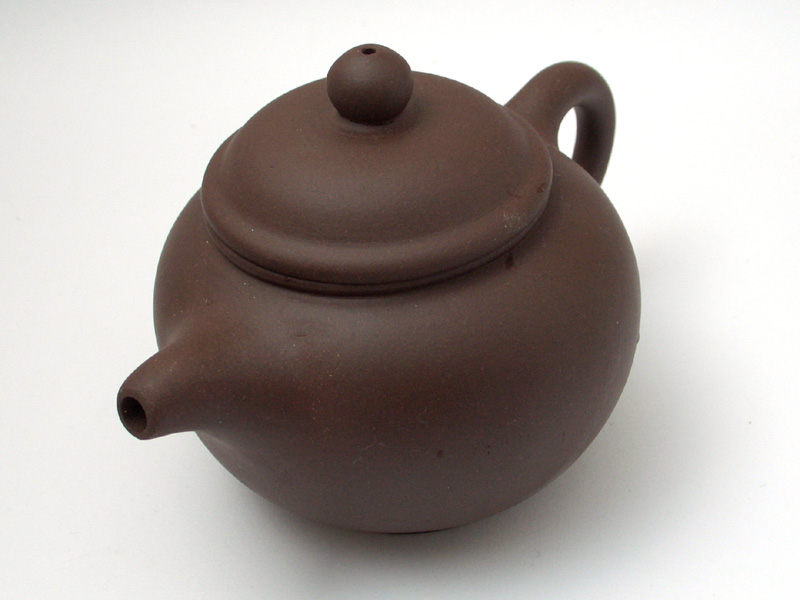 🇨🇳 Yixing, ChinaYixing clay teapot紫砂
Handcrafted Chinese purple clay teapots that season with every brewCraft · Tea, coffee and drinking ceremonies
🇨🇳 Yixing, ChinaYixing clay teapot紫砂
Handcrafted Chinese purple clay teapots that season with every brewCraft · Tea, coffee and drinking ceremonies
 🇨🇳 Chaozhou, China and 1 moreGongfu tea工夫茶
A skilled Chinese method of brewing tea in small teaware with precise heat and timingTable custom · Tea, coffee and drinking ceremonies
🇨🇳 ChinaGuanxi关系
A Chinese tradition of cultivating trusted networks and reciprocal obligationsEtiquette
🇨🇳 Chaozhou, China and 1 moreGongfu tea工夫茶
A skilled Chinese method of brewing tea in small teaware with precise heat and timingTable custom · Tea, coffee and drinking ceremonies
🇨🇳 ChinaGuanxi关系
A Chinese tradition of cultivating trusted networks and reciprocal obligationsEtiquette
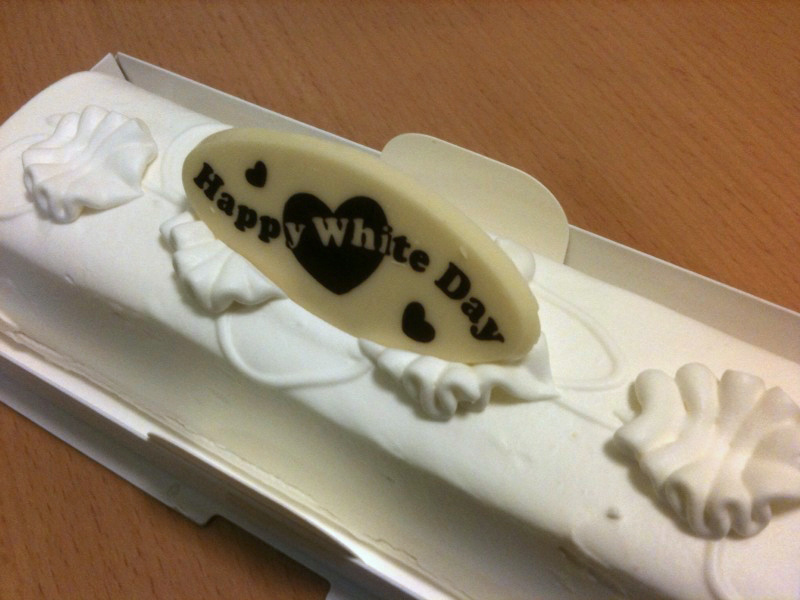 🇯🇵 Fukuoka, Japan and 4 moreWhite Dayホワイトデー
A day on 14 March when men give a return gift to the women who gave them chocolateFestival
🇯🇵 Fukuoka, Japan and 4 moreWhite Dayホワイトデー
A day on 14 March when men give a return gift to the women who gave them chocolateFestival
 🇨🇳 China and 5 moreTea culture
How tea is prepared, shared and served, from Chinese tea houses to Tibetan butter teaTable custom · Tea, coffee and drinking ceremonies
🇨🇳 China and 5 moreTea culture
How tea is prepared, shared and served, from Chinese tea houses to Tibetan butter teaTable custom · Tea, coffee and drinking ceremonies
 🇨🇳 Guangzhou, China and 1 moreDim sum點心 (traditional Chinese), 点心 (simplified Chinese)
Small dishes shared with tea, eaten as brunch in Cantonese teahouses and restaurantsTable custom · Breakfast
🇨🇳 Guangzhou, China and 1 moreDim sum點心 (traditional Chinese), 点心 (simplified Chinese)
Small dishes shared with tea, eaten as brunch in Cantonese teahouses and restaurantsTable custom · Breakfast
 🇮🇳 India and 4 moreProstration
Bowing the whole body to the ground, in prayer and as a sign of respectSpiritual
🇮🇳 India and 4 moreProstration
Bowing the whole body to the ground, in prayer and as a sign of respectSpiritual
 🇨🇳 Lhasa, China and 5 moreButter teaབོད་ཇ་
A salted tea churned with yak butter, served to guests across the HimalayaTable custom · Tea, coffee and drinking ceremonies
🇨🇳 Lhasa, China and 5 moreButter teaབོད་ཇ་
A salted tea churned with yak butter, served to guests across the HimalayaTable custom · Tea, coffee and drinking ceremonies
 🇨🇳 China and 6 moreRed envelope紅包 / 红包 (hóngbāo)
Money in a red packet, given at Lunar New Year, weddings and other big daysEtiquette
🇨🇳 China and 6 moreRed envelope紅包 / 红包 (hóngbāo)
Money in a red packet, given at Lunar New Year, weddings and other big daysEtiquette
 🇨🇳 China and 5 moreYum cha飲茶
A Cantonese breakfast of dim sum and tea, eaten slowly in large groupsTable custom · Breakfast
🇨🇳 China and 5 moreYum cha飲茶
A Cantonese breakfast of dim sum and tea, eaten slowly in large groupsTable custom · Breakfast
 🇨🇳 ChinaKowtow叩頭
A traditional Chinese prostration of deep respect by kneeling and bowing to the groundEtiquette
🇨🇳 ChinaKowtow叩頭
A traditional Chinese prostration of deep respect by kneeling and bowing to the groundEtiquette
 🇬🇧 United Kingdom and 5 moreBridesmaid
The companions and attendants who support a bride during a weddingRite of passage
🇬🇧 United Kingdom and 5 moreBridesmaid
The companions and attendants who support a bride during a weddingRite of passage
 🇷🇺 Russia and 1 moreBride-showсмотр невест
A court custom in which emperors and tsars chose a wife from young women brought before themCeremony
🇷🇺 Russia and 1 moreBride-showсмотр невест
A court custom in which emperors and tsars chose a wife from young women brought before themCeremony
Photo credits on this page
The small pictures above come from Wikimedia Commons under free licences. Some are cropped to fit.
- Tea culture: Georges Seguin ( Okki ), CC BY-SA 3.0, source
- Bridesmaid: Photographer not credited; relative or work for hire of relative., CC BY-SA 4.0, source
- Prostration: Meghan Breeze, CC BY-SA 4.0, source
- White Day: Flickr user mersy ( Masashi Yanagiya), CC BY-SA 2.0, source
- Gongfu tea: Kandukuru Nagarjun, CC BY 2.0, source
- Yixing clay teapot: Commonsenses, CC BY-SA 3.0, source
- Bride-show: Publisher: Χρωμολιθογραφείον Ε. Λοβέρδου & Γ. Γρύσπου (1893-ca. 1914), Public domain, source
- Butter tea: Yosomono, CC BY 2.0, source
- Dim sum: Kolumbusjogger, CC BY-SA 3.0, source
- Yum cha: Infomofo, CC BY-SA 2.0, source
- Red envelope: Oldie~commonswiki, Public domain, source
- Kowtow: Gary Todd, CC0, source