🇨🇳 Traditions of China
148 traditions from China, best known first, across 60 cities and towns.
Chinese traditions rest on long continuity: a civilisation that has renewed itself while absorbing newcomers, and a landscape so varied that neighbouring regions keep different customs. Family, scholarship and the shared table anchor daily life, and food carries medicine, philosophy and regional pride in every meal.
China's customs are carried today by the Han, the largest ethnic group on earth, within a family of 56 recognised peoples, and they vary sharply from valley to valley. The old saying holds that practices shift within ten li and customs within a hundred li, a li being an old measure of distance. Confucian duty, Buddhist and Taoist worship, and a serious pleasure in food give daily life its shape.
One name, many peoples
The Han form about nine in ten of China's people. The state recognises 56 groups in all, and over the centuries many newcomers were absorbed into Han identity while others kept their own ways. Family names carry much of this weight: knowing which lineage a person belongs to still matters. A proverb warns that customs change within ten li and again within a hundred li, an old unit of distance. Each region keeps three ancestral tokens. Guangdong's are aged tangerine peel, old ginger and hay; Hangzhou's are tea leaves, bamboo shoot trunks and hickory nuts.
Faith and ritual
Most spiritual practice flows from three streams: Confucianism, Taoism and Buddhism, though their relative weight is still debated. Belief in rebirth ties this life to what comes after it, and tradition honours figures such as Guan Yin, a compassionate bodhisattva, the Jade Emperor and the Buddha. Social life, especially business, runs on guanxi, the principle that relationships stand above rules. Scholars describe the wider culture as self-renewing, disciplined, open to variety and quick to adapt when circumstances change.
Scholars and study
From late Zhou times, society was sorted into four callings: gentry, farmers, craftsmen and merchants. In theory nothing was passed down by birth except the throne itself. From the Sui dynasty onward, candidates studied the Confucian classics for imperial examinations, and top graduates, called jinshi, entered government as elite officials. Office thus depended on study rather than birth, though only males who could afford preparation could compete. Trades passed from a shifu, the master of a craft, to his apprentices, while writers such as Ban Zhao set out codes of virtue for women.
A regional table
Chinese cooking splits along lines of climate, class and creed. In the dry north, farmers grow wheat, millet and other grains, so people eat noodles, porridges and breads; rice rules the wet south. During the Qing dynasty, critics praised four great traditions, Chuan, Lu, Yue and Huaiyang, standing for the west, north, south and east. A 1980 newspaper article by the journalist Wang Shaoquan popularised a list of eight, running from Anhui and Fujian to Shandong and Zhejiang, though each province hides further styles within it.
Food as medicine
Eating and healing belong to one study. Cooks and healers judge dishes by colour, scent and taste, and also by their meaning, appearance and nourishment, an approach tied to traditional medicine and known as food therapy. Confucius set table rules that later writers still cite: rice properly white, meat finely cut, sauces matched, nothing eaten when badly cooked. To praise a dish is to weigh the knife work, the cooking time and the seasoning against the quality of the ingredients themselves.
Restaurants and street food
The first eating houses recognisable as modern restaurants opened in Song dynasty cities during the eleventh and twelfth centuries. Street food took root under the Tang in the seventh century, and Chinese migrant workers later carried the habit through much of Southeast Asia. Staples such as rice, noodles, tofu, soy sauce and tea, along with chopsticks and the wok, now travel the world, altered abroad to suit local tastes. Early cooks simmered their grains into warm noodle soups rather than baking bread, stored grain against famine and flood, and pickled meat with vinegar, salt and fermentation.
Continuity and change
China stands among the few ancient civilisations that never broke the thread of their own story, and scholars credit habits of self-renewal, self-discipline and openness to variety. After European power rose in the mid-nineteenth century, reformers argued over the inheritance: some wished to discard it entirely, others to blend Chinese and European strengths. The twentieth century became a long experiment in new social and political systems once dynastic rule collapsed, yet the older customs of family, study and the shared meal carried on.
The facts in this overview come from the Wikipedia article "Chinese culture", written by its contributors and used under the CC BY-SA 4.0 licence. EveryParampara rewrote the text in its own words, with AI assistance, and compares every page with the article to make sure no passage is copied. It may be reused under the same CC BY-SA 4.0 licence with a link back.
The table in China
Foods and drinks by the moment they belong to.
Cities, towns and villages of China
 🇪🇸 Spain and 5 moreSiesta
A short afternoon rest or sleep taken after the midday mealHome · Lunch
🇪🇸 Spain and 5 moreSiesta
A short afternoon rest or sleep taken after the midday mealHome · Lunch
 🇪🇸 Spain and 5 moreArbor Day
An annual secular observance dedicated to planting and caring for trees around the worldCeremony
🇪🇸 Spain and 5 moreArbor Day
An annual secular observance dedicated to planting and caring for trees around the worldCeremony
 🇨🇳 China and 5 moreMid-Autumn Festival中秋節
An annual harvest festival celebrating family reunions, full moons and mooncakesFestival · Sweets given and shared
🇨🇳 China and 5 moreMid-Autumn Festival中秋節
An annual harvest festival celebrating family reunions, full moons and mooncakesFestival · Sweets given and shared
 🇨🇳 China and 5 moreQingming Festival清明节
A spring custom of sweeping family graves and honouring ancestors across East Asia.Spiritual
🇨🇳 China and 5 moreQingming Festival清明节
A spring custom of sweeping family graves and honouring ancestors across East Asia.Spiritual
 🇨🇳 Shanghai, China and 1 moreJiaozi餃子
Crescent Chinese dumplings filled with meat or vegetables, eaten for fortune and feastsTable custom · Breakfast
🇨🇳 Shanghai, China and 1 moreJiaozi餃子
Crescent Chinese dumplings filled with meat or vegetables, eaten for fortune and feastsTable custom · Breakfast
 🇨🇳 China and 5 moreGhost Festival中元節 / 中元节 (Zhōngyuán jié)
A full-moon night in the seventh lunar month for feeding ghosts and guiding souls homeSpiritual
🇨🇳 China and 5 moreGhost Festival中元節 / 中元节 (Zhōngyuán jié)
A full-moon night in the seventh lunar month for feeding ghosts and guiding souls homeSpiritual
 🇨🇳 China and 2 moreQixi Festival七夕
A Chinese night of romance, needlecraft wishes and stargazing for two mythic loversFestival
🇨🇳 China and 2 moreQixi Festival七夕
A Chinese night of romance, needlecraft wishes and stargazing for two mythic loversFestival
 🇨🇳 China and 5 moreDouble Ninth Festival重陽節
An autumn festival of mountain walks, chrysanthemum wine and ancestor remembranceSeasonal · Tea-time and snacking customs
🇨🇳 China and 5 moreDouble Ninth Festival重陽節
An autumn festival of mountain walks, chrysanthemum wine and ancestor remembranceSeasonal · Tea-time and snacking customs
 🇲🇳 Mongolia and 2 moreTsagaan SarЦагаан сар
The Mongolian Lunar New Year festival of peace, elders, white foods and renewalSeasonal · Feasts and festival meals
🇲🇳 Mongolia and 2 moreTsagaan SarЦагаан сар
The Mongolian Lunar New Year festival of peace, elders, white foods and renewalSeasonal · Feasts and festival meals
 🇨🇳 ChinaGolden Week黄金周
Seven- or eight-day national holiday periods in China for travel and family visitsSeasonal
🇨🇳 ChinaGolden Week黄金周
Seven- or eight-day national holiday periods in China for travel and family visitsSeasonal
 🇨🇳 China and 5 moreAncestor worship
Honouring dead relatives with offerings and prayers, kept in many cultures worldwideSpiritual
🇨🇳 China and 5 moreAncestor worship
Honouring dead relatives with offerings and prayers, kept in many cultures worldwideSpiritual
 🇮🇷 Iran and 5 moreWinter solstice
The shortest day and longest night of the year, marked with fire, feasting and poetrySeasonal
🇮🇷 Iran and 5 moreWinter solstice
The shortest day and longest night of the year, marked with fire, feasting and poetrySeasonal
 🇨🇳 Beijing, China and 1 moreLaba congee腊八粥
A ceremonial Chinese porridge of rice, beans and dried fruit, eaten at the Laba FestivalTable custom · Feasts and festival meals
🇨🇳 Beijing, China and 1 moreLaba congee腊八粥
A ceremonial Chinese porridge of rice, beans and dried fruit, eaten at the Laba FestivalTable custom · Feasts and festival meals
 🇯🇵 Japan and 3 moreBodhi Day成道会
A Buddhist observance marking the enlightenment of Gautama Buddha under the Bodhi TreeSpiritual
🇯🇵 Japan and 3 moreBodhi Day成道会
A Buddhist observance marking the enlightenment of Gautama Buddha under the Bodhi TreeSpiritual
 🇨🇳 Dali, ChinaThird Month Fair三月街
A mountain-foot bazaar, festival, and sports gathering among the Bai in YunnanFestival
🇨🇳 Dali, ChinaThird Month Fair三月街
A mountain-foot bazaar, festival, and sports gathering among the Bai in YunnanFestival
 🇨🇳 ChinaTorch Festival火把节
A summer fire holiday celebrated by Yi and neighbouring communities in southwest ChinaFestival · Feasts and festival meals
🇨🇳 ChinaTorch Festival火把节
A summer fire holiday celebrated by Yi and neighbouring communities in southwest ChinaFestival · Feasts and festival meals
 🇨🇳 Suzhou, China and 3 moreDongzhi冬至
A midwinter festival celebrating the return of light with family feasts and dumplingsSeasonal · Dinner
🇨🇳 Suzhou, China and 3 moreDongzhi冬至
A midwinter festival celebrating the return of light with family feasts and dumplingsSeasonal · Dinner
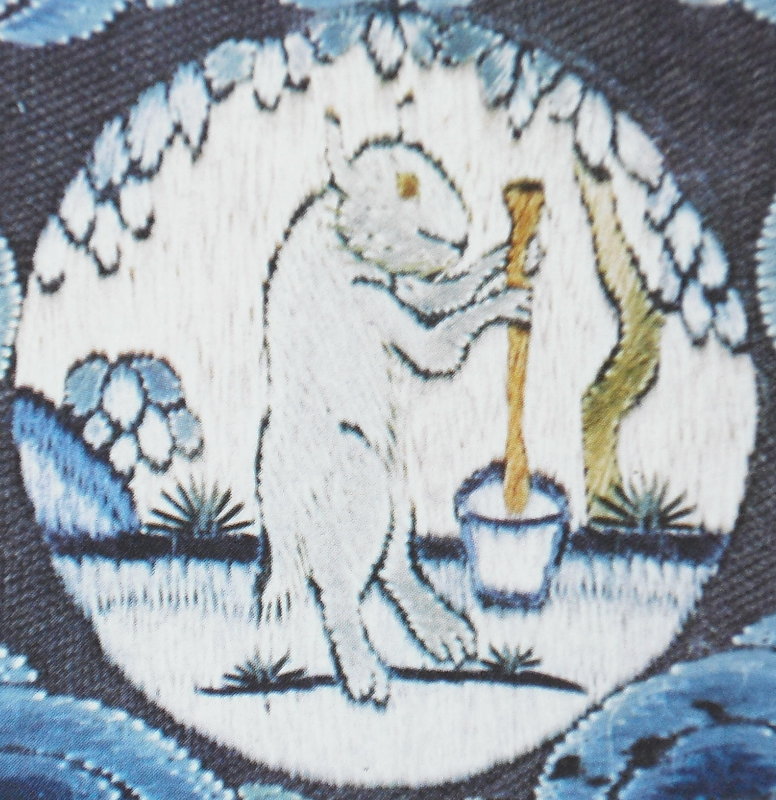 🇨🇳 China and 5 moreMoon rabbit月兔
A hare seen in the Moon's dark patches, pounding rice cakes or the elixir of lifeFolklore
🇨🇳 China and 5 moreMoon rabbit月兔
A hare seen in the Moon's dark patches, pounding rice cakes or the elixir of lifeFolklore
 🇨🇳 Hong Kong, China and 5 moreLunar New Year
New year festivals dated by the moon, kept from East Asia to the Middle EastFestival
🇨🇳 Hong Kong, China and 5 moreLunar New Year
New year festivals dated by the moon, kept from East Asia to the Middle EastFestival
 🇬🇧 United Kingdom and 5 moreHarvest festival
A thanks for the gathered crop, kept with church meals, songs and shared foodSeasonal · Feasts and festival meals
🇺🇦 Ukraine and 2 moreProgrammer's Day
A professional day for programmers, fixed to the 256th day of the yearCeremony
🇬🇧 United Kingdom and 5 moreHarvest festival
A thanks for the gathered crop, kept with church meals, songs and shared foodSeasonal · Feasts and festival meals
🇺🇦 Ukraine and 2 moreProgrammer's Day
A professional day for programmers, fixed to the 256th day of the yearCeremony
 🇨🇳 Nanjing, China and 4 moreSingles' Day光棍节
A day for people without a partner that grew into the world's biggest shopping eventFestival
🇨🇳 Nanjing, China and 4 moreSingles' Day光棍节
A day for people without a partner that grew into the world's biggest shopping eventFestival
 🇨🇳 Yulin, ChinaYulin Dog Meat Festival狗肉节
A ten-day June festival in Yulin, China, where dog meat is eaten with lycheesFestival · Feasts and festival meals
🇨🇳 Yulin, ChinaYulin Dog Meat Festival狗肉节
A ten-day June festival in Yulin, China, where dog meat is eaten with lycheesFestival · Feasts and festival meals
 🇹🇷 Van, Turkey and 5 moreChildren's Day
An international observance supporting youth welfare, education and children's rightsCeremony
🇹🇷 Van, Turkey and 5 moreChildren's Day
An international observance supporting youth welfare, education and children's rightsCeremony
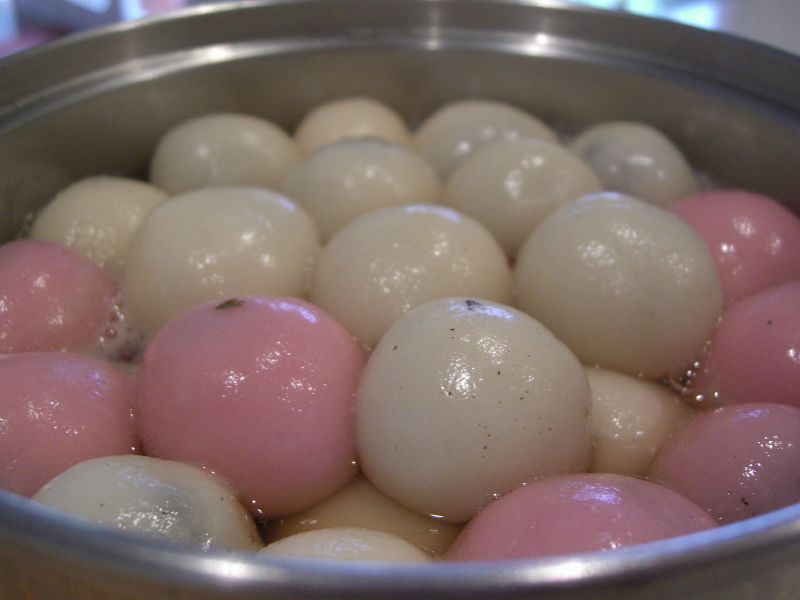 🇨🇳 Suzhou, China and 4 moreDongzhi Festival冬至
A winter solstice festival of family reunions, ancestor rites and sweet rice ballsSeasonal · Dinner
🇨🇳 Suzhou, China and 4 moreDongzhi Festival冬至
A winter solstice festival of family reunions, ancestor rites and sweet rice ballsSeasonal · Dinner
 🇹🇼 Taipei, Taiwan and 1 moreRetrocession Day臺灣光復節 / 台湾光复节 (Táiwān guāngfùjié)
A public holiday on 25 October marking the end of Japanese rule in Taiwan in 1945Ceremony
🇹🇼 Taipei, Taiwan and 1 moreRetrocession Day臺灣光復節 / 台湾光复节 (Táiwān guāngfùjié)
A public holiday on 25 October marking the end of Japanese rule in Taiwan in 1945Ceremony
 🇨🇳 China and 1 moreDajiao打醮
An annual Taoist ritual and festival seeking peace and safety for the communitySpiritual · Feasts and festival meals
🇨🇳 China and 1 moreDajiao打醮
An annual Taoist ritual and festival seeking peace and safety for the communitySpiritual · Feasts and festival meals
 🇮🇹 Turin, Italy and 5 moreMary Help of ChristiansSancta Maria Auxilium Christianorum
A Christian feast and devotion honouring Mary as a protector, observed on 24 MaySpiritual
🇨🇳 ChinaSymbolic stars神煞
Helpful and harmful influences read from the Chinese calendar's stems and branchesFolklore
🇨🇳 ChinaSanfutie三伏贴
A seasonal Chinese medicine practice applying herbal patches during peak summer heatSeasonal
🇨🇳 Tianjin, China and 1 moreBa-zha八蜡
An old Chinese harvest rite of eight offerings, later a guardian against locustsSpiritual
🇮🇹 Turin, Italy and 5 moreMary Help of ChristiansSancta Maria Auxilium Christianorum
A Christian feast and devotion honouring Mary as a protector, observed on 24 MaySpiritual
🇨🇳 ChinaSymbolic stars神煞
Helpful and harmful influences read from the Chinese calendar's stems and branchesFolklore
🇨🇳 ChinaSanfutie三伏贴
A seasonal Chinese medicine practice applying herbal patches during peak summer heatSeasonal
🇨🇳 Tianjin, China and 1 moreBa-zha八蜡
An old Chinese harvest rite of eight offerings, later a guardian against locustsSpiritual
Photo credits on this page
The small pictures above come from Wikimedia Commons under free licences. Some are cropped to fit.
- Dongzhi Festival: Alpha, CC BY-SA 2.0, source
- Mary Help of Christians: Didier Descouens, CC BY-SA 4.0, source
- Ghost Festival: Chong Fat, CC BY-SA 3.0, source
- Qingming Festival: Jacklee ., CC BY-SA 3.0, source
- Double Ninth Festival: Sgerbic, CC BY-SA 4.0, source
- Qixi Festival: shizhao ( talk )拍摄,画者不明, Public domain, source
- Tsagaan Sar: User:Chinneeb, CC BY-SA 3.0, source
- Jiaozi: Bioniclepluslotr, CC BY-SA 3.0, source
- Mid-Autumn Festival: Shizhao, CC BY-SA 2.5, source
- Golden Week: User:czhongwu, CC BY-SA 3.0, source
- Bodhi Day: Shirazibustan, CC BY-SA 4.0, source
- Third Month Fair: ZhaoScorpio, CC BY-SA 2.0, source
- Torch Festival: Zhangmoon618, CC BY-SA 3.0, source
- Dongzhi: N509FZ, CC BY-SA 4.0, source
- Siesta: Vincent van Gogh, Public domain, source
- Arbor Day: Jonathunder, CC BY-SA 3.0, source
- Laba congee: N509FZ, CC BY-SA 4.0, source
- Moon rabbit: An artist, Public domain, source
- Lunar New Year: Flying Pharmacist, CC BY-SA 3.0, source
- Ancestor worship: Lyn Gateley, CC BY 2.0, source
- Harvest festival: High Contrast, CC BY 3.0 de, source
- Winter solstice: Image by Przemyslaw " Blueshade " Idzkiewicz, CC BY-SA 2.0, source
- Singles' Day: Chrionexfleckeri1350, CC BY-SA 4.0, source
- Yulin Dog Meat Festival: Maria Ly, CC BY 2.0, source
- Retrocession Day: Unknown author, Public domain, source
- Children's Day: Schekinov Alexey Victorovich, CC BY-SA 3.0, source
- Dajiao: 29cm, CC BY-SA 2.0, source