🇯🇵 Traditions of Japan
141 traditions from Japan, best known first, across 59 cities and towns.
Japanese life rests on a blend of ancient island customs and steady foreign exchange. People mark time through seasonal meals centered on rice and fresh seafood, while household shrines and temple visits weave spiritual practice into daily routines. The most striking feature is how older forms adapt quietly alongside modern habits, keeping old rhythms alive in new settings.
To understand Japan is to watch layers settle over one another. Island communities once farmed rice and gathered forest offerings, then absorbed writing systems and religious teachings from the continent. Later centuries brought long isolation followed by rapid modernization. Today those strands sit side by side. Families tend quiet altars, share simple bowls of soup and grain, and navigate city streets where traditional crafts meet digital screens. Each day carries echoes of older seasons.
Faith and household rites
Spiritual life in Japan rests on two main paths. Many families keep small home altars that hold photographs and simple tokens, while others visit local temples or shrine grounds throughout the year. Statistics show a majority identify with Buddhist practices, and roughly a quarter participate in Shinto observances. A smaller number follow Christian, Muslim, or Jewish traditions, often within immigrant neighborhoods. State sponsored worship ended after the war, leaving room for personal choice. Communities still gather at neighborhood shrines during autumn months to honor ancestors and thank the land. These quiet visits connect people to older generations without demanding strict doctrine.
Seasonal meals and cooking
Meals revolve around steamed rice, clear broth, and dishes that highlight the current season. Cooks prepare pickled vegetables, egg rolls, and simmered fish or beef to accompany the grain. Raw slices of fresh catch appear frequently, along with lightly battered fried items and thick wheat noodles. Historically, Buddhist teachings kept meat off most plates for centuries. That changed during modernization when animal proteins entered public menus. Early preservation methods turned salted fish and rice into fermented delicacies before chefs developed quick hand pressed versions. Traditional cooking avoids heavy oils and strong spices, relying instead on subtle herbs like peppery leaves to lift the flavor of plain grains and clean broths.
Language and written forms
Communication relies on a single national tongue that uses a distinct rising and falling pitch pattern. Writers combine three separate systems on one page. Meaning-bearing symbols borrowed from China carry deep concepts, while two phonetic alphabets handle grammar particles and native words. One script emerged informally among women centuries ago, and the other served formal purposes before both became standard. Foreign terms enter the vocabulary regularly, sometimes reshaped to fit local pronunciation. Numbers appear in Arabic form or traditional characters depending on context. The written word acts as a bridge between ancient records and modern signage, adapting steadily without losing its layered structure.
Modern customs and habits
Society moved through long periods of separation before opening trade routes with distant nations. Leaders adopted foreign customs to build new institutions, which eventually sparked widespread social changes. Art and literature once served imperial goals until democratic reforms restored personal freedoms. Modern neighborhoods now host convenience stores and animated stories that reach audiences worldwide. Older crafts and seasonal rhythms persist alongside these new habits. People balance quiet domestic routines with participation in a highly connected global scene. The result is a steady flow where inherited practices adjust to contemporary needs rather than fading away.
The facts in this overview come from the Wikipedia article "Culture of Japan", written by its contributors and used under the CC BY-SA 4.0 licence. EveryParampara rewrote the text in its own words, with AI assistance, and compares every page with the article to make sure no passage is copied. It may be reused under the same CC BY-SA 4.0 licence with a link back.
The table in Japan
Foods and drinks by the moment they belong to.
Cities, towns and villages of Japan
 🇨🇳 China and 2 moreCuju蹴鞠
An ancient Chinese kicking game played without hands using a stuffed or air-filled ballGame
🇯🇵 JapanGolden Weekゴールデンウィーク (Gōruden Wīku)
A major Japanese holiday period from late April to early May featuring four public holidays and widespread travel.Festival
🇨🇳 China and 2 moreCuju蹴鞠
An ancient Chinese kicking game played without hands using a stuffed or air-filled ballGame
🇯🇵 JapanGolden Weekゴールデンウィーク (Gōruden Wīku)
A major Japanese holiday period from late April to early May featuring four public holidays and widespread travel.Festival
 🇯🇵 JapanComing of Age Day成人の日
A Japanese public holiday welcoming new adults with municipal rites and celebrationsRite of passage
🇯🇵 JapanComing of Age Day成人の日
A Japanese public holiday welcoming new adults with municipal rites and celebrationsRite of passage
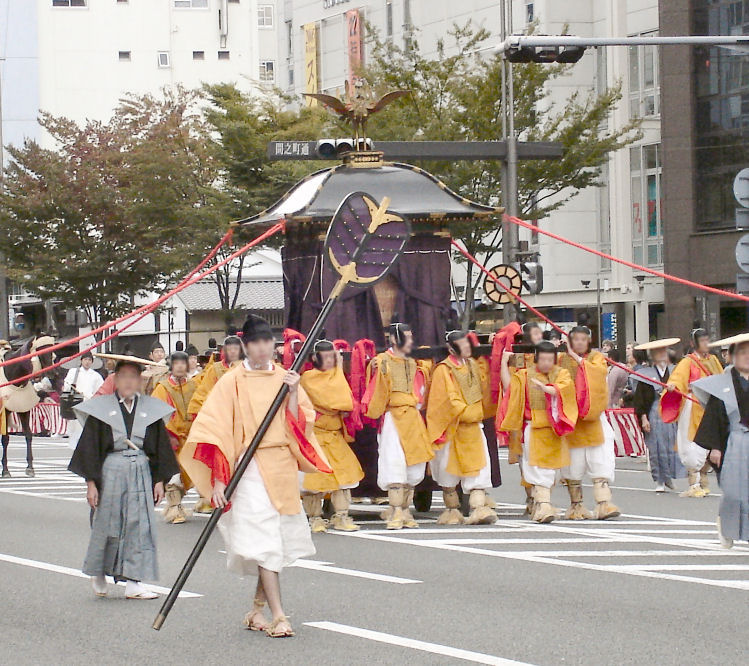 🇯🇵 Kyoto, JapanJidai Matsuri時代祭
An autumn costume procession celebrating Kyoto's imperial heritage and historyFestival
🇯🇵 Kyoto, JapanJidai Matsuri時代祭
An autumn costume procession celebrating Kyoto's imperial heritage and historyFestival
 🇯🇵 Tokyo, JapanDaijō-sai大嘗祭
The emperor's once-in-a-reign Shinto rite of thanks for the rice harvestSpiritual
🇯🇵 Tokyo, JapanDaijō-sai大嘗祭
The emperor's once-in-a-reign Shinto rite of thanks for the rice harvestSpiritual
 🇯🇵 Kyoto, JapanAoi Matsuri葵祭
A classical Kyoto festival with an imperial procession and ancient shrine ritualsFestival
🇯🇵 Kyoto, JapanAoi Matsuri葵祭
A classical Kyoto festival with an imperial procession and ancient shrine ritualsFestival
 🇨🇦 Canada and 5 moreBuy Nothing Day
An annual 24-hour pause on shopping to protest consumerism and overconsumptionCeremony
🇨🇦 Canada and 5 moreBuy Nothing Day
An annual 24-hour pause on shopping to protest consumerism and overconsumptionCeremony
 🇯🇵 Tokyo, JapanCulture Day文化の日 (Bunka no Hi)
Japan's 3 November holiday for the arts, learning and the Order of CultureFestival
🇯🇵 Tokyo, JapanCulture Day文化の日 (Bunka no Hi)
Japan's 3 November holiday for the arts, learning and the Order of CultureFestival
 🇯🇵 JapanMarine Day海の日
A Japanese summer holiday to thank the ocean and mark the country's ties to the seaCeremony
🇯🇵 JapanMarine Day海の日
A Japanese summer holiday to thank the ocean and mark the country's ties to the seaCeremony
 🇹🇷 Van, Turkey and 5 moreChildren's Day
An international observance supporting youth welfare, education and children's rightsCeremony
🇺🇸 United States and 1 moreInternational Masturbation Month
An annual May observance promoting sexual health, pleasure, and open dialogueSeasonal
🇹🇷 Van, Turkey and 5 moreChildren's Day
An international observance supporting youth welfare, education and children's rightsCeremony
🇺🇸 United States and 1 moreInternational Masturbation Month
An annual May observance promoting sexual health, pleasure, and open dialogueSeasonal
Photo credits on this page
The small pictures above come from Wikimedia Commons under free licences. Some are cropped to fit.
- Coming of Age Day: moguphotos, CC BY-SA 2.0, source
- Jidai Matsuri: PlusMinus, CC BY-SA 3.0, source
- Aoi Matsuri: Japanexperterna, CC BY-SA 3.0, source
- Cuju: BabelStone, CC BY-SA 3.0, source
- Daijō-sai: Abasaa, Public domain, source
- Culture Day: Shubert Ciencia, CC BY 2.0, source
- Marine Day: Manish Prabhune, CC BY 2.0, source
- Buy Nothing Day: Brave New Films, CC BY 2.0, source
- Children's Day: Schekinov Alexey Victorovich, CC BY-SA 3.0, source