🇨🇳 Traditions of China
144 traditions from China, best known first, across 60 cities and towns.
Chinese traditions rest on long continuity: a civilisation that has renewed itself while absorbing newcomers, and a landscape so varied that neighbouring regions keep different customs. Family, scholarship and the shared table anchor daily life, and food carries medicine, philosophy and regional pride in every meal.
China's customs are carried today by the Han, the largest ethnic group on earth, within a family of 56 recognised peoples, and they vary sharply from valley to valley. The old saying holds that practices shift within ten li and customs within a hundred li, a li being an old measure of distance. Confucian duty, Buddhist and Taoist worship, and a serious pleasure in food give daily life its shape.
One name, many peoples
The Han form about nine in ten of China's people. The state recognises 56 groups in all, and over the centuries many newcomers were absorbed into Han identity while others kept their own ways. Family names carry much of this weight: knowing which lineage a person belongs to still matters. A proverb warns that customs change within ten li and again within a hundred li, an old unit of distance. Each region keeps three ancestral tokens. Guangdong's are aged tangerine peel, old ginger and hay; Hangzhou's are tea leaves, bamboo shoot trunks and hickory nuts.
Faith and ritual
Most spiritual practice flows from three streams: Confucianism, Taoism and Buddhism, though their relative weight is still debated. Belief in rebirth ties this life to what comes after it, and tradition honours figures such as Guan Yin, a compassionate bodhisattva, the Jade Emperor and the Buddha. Social life, especially business, runs on guanxi, the principle that relationships stand above rules. Scholars describe the wider culture as self-renewing, disciplined, open to variety and quick to adapt when circumstances change.
Scholars and study
From late Zhou times, society was sorted into four callings: gentry, farmers, craftsmen and merchants. In theory nothing was passed down by birth except the throne itself. From the Sui dynasty onward, candidates studied the Confucian classics for imperial examinations, and top graduates, called jinshi, entered government as elite officials. Office thus depended on study rather than birth, though only males who could afford preparation could compete. Trades passed from a shifu, the master of a craft, to his apprentices, while writers such as Ban Zhao set out codes of virtue for women.
A regional table
Chinese cooking splits along lines of climate, class and creed. In the dry north, farmers grow wheat, millet and other grains, so people eat noodles, porridges and breads; rice rules the wet south. During the Qing dynasty, critics praised four great traditions, Chuan, Lu, Yue and Huaiyang, standing for the west, north, south and east. A 1980 newspaper article by the journalist Wang Shaoquan popularised a list of eight, running from Anhui and Fujian to Shandong and Zhejiang, though each province hides further styles within it.
Food as medicine
Eating and healing belong to one study. Cooks and healers judge dishes by colour, scent and taste, and also by their meaning, appearance and nourishment, an approach tied to traditional medicine and known as food therapy. Confucius set table rules that later writers still cite: rice properly white, meat finely cut, sauces matched, nothing eaten when badly cooked. To praise a dish is to weigh the knife work, the cooking time and the seasoning against the quality of the ingredients themselves.
Restaurants and street food
The first eating houses recognisable as modern restaurants opened in Song dynasty cities during the eleventh and twelfth centuries. Street food took root under the Tang in the seventh century, and Chinese migrant workers later carried the habit through much of Southeast Asia. Staples such as rice, noodles, tofu, soy sauce and tea, along with chopsticks and the wok, now travel the world, altered abroad to suit local tastes. Early cooks simmered their grains into warm noodle soups rather than baking bread, stored grain against famine and flood, and pickled meat with vinegar, salt and fermentation.
Continuity and change
China stands among the few ancient civilisations that never broke the thread of their own story, and scholars credit habits of self-renewal, self-discipline and openness to variety. After European power rose in the mid-nineteenth century, reformers argued over the inheritance: some wished to discard it entirely, others to blend Chinese and European strengths. The twentieth century became a long experiment in new social and political systems once dynastic rule collapsed, yet the older customs of family, study and the shared meal carried on.
The facts in this overview come from the Wikipedia article "Chinese culture", written by its contributors and used under the CC BY-SA 4.0 licence. EveryParampara rewrote the text in its own words, with AI assistance, and compares every page with the article to make sure no passage is copied. It may be reused under the same CC BY-SA 4.0 licence with a link back.
The table in China
Foods and drinks by the moment they belong to.
Cities, towns and villages of China
 🇨🇳 China and 5 moreChinese New Year's Evechúxī
A reunion day for ethnic Chinese families before the Lunar New Year, marked by feasts, rituals, and staying up late.Festival · Dinner
🇨🇳 Beijing, ChinaLaba Festival臘八節
A winter porridge festival marking the start of the Chinese New Year seasonFestival · Feasts and festival meals
🇨🇳 China and 5 moreChinese New Year's Evechúxī
A reunion day for ethnic Chinese families before the Lunar New Year, marked by feasts, rituals, and staying up late.Festival · Dinner
🇨🇳 Beijing, ChinaLaba Festival臘八節
A winter porridge festival marking the start of the Chinese New Year seasonFestival · Feasts and festival meals
 🇨🇳 Lhasa, China and 2 moreSho Dun Festivalཞོ་སྟོན། (Tibetan), 雪頓節 (Chinese)
A summer festival in Lhasa where a monks' retreat ends with yogurt and all-day operaFestival · Feasts and festival meals
🇨🇳 Lhasa, China and 2 moreSho Dun Festivalཞོ་སྟོན། (Tibetan), 雪頓節 (Chinese)
A summer festival in Lhasa where a monks' retreat ends with yogurt and all-day operaFestival · Feasts and festival meals
 🇬🇷 Olympia, Greece and 5 moreOlympic flame
A flame kindled in Greece, carried by torch to light the cauldron of each GamesCeremony
🇬🇷 Olympia, Greece and 5 moreOlympic flame
A flame kindled in Greece, carried by torch to light the cauldron of each GamesCeremony
 🇨🇳 Beijing, ChinaHanfu漢服
The dress of the Han Chinese, named for the Han dynasty and worn again todayDress
🇨🇳 Beijing, ChinaHanfu漢服
The dress of the Han Chinese, named for the Han dynasty and worn again todayDress
 🇨🇳 Lhasa, China and 5 moreButter teaབོད་ཇ་
A salted tea churned with yak butter, served to guests across the HimalayaTable custom · Tea, coffee and drinking ceremonies
🇨🇳 China and 1 moreReunion dinner團圓飯
A family gathering meal on lunar new year's eve, kept in China and VietnamTable custom · Dinner
🇨🇳 Lhasa, China and 5 moreButter teaབོད་ཇ་
A salted tea churned with yak butter, served to guests across the HimalayaTable custom · Tea, coffee and drinking ceremonies
🇨🇳 China and 1 moreReunion dinner團圓飯
A family gathering meal on lunar new year's eve, kept in China and VietnamTable custom · Dinner
 🇨🇳 Guangzhou, China and 1 moreDim sum點心 (traditional Chinese), 点心 (simplified Chinese)
Small dishes shared with tea, eaten as brunch in Cantonese teahouses and restaurantsTable custom · Breakfast
🇨🇳 Guangzhou, China and 1 moreDim sum點心 (traditional Chinese), 点心 (simplified Chinese)
Small dishes shared with tea, eaten as brunch in Cantonese teahouses and restaurantsTable custom · Breakfast
 🇨🇳 China and 4 moreSky burialབྱ་གཏོར་ (bya gtor)
A Tibetan funeral in which the dead are laid out on a rock for vulturesRite of passage
🇨🇳 China and 4 moreSky burialབྱ་གཏོར་ (bya gtor)
A Tibetan funeral in which the dead are laid out on a rock for vulturesRite of passage
 🇨🇳 China and 5 moreYum cha飲茶
A Cantonese breakfast of dim sum and tea, eaten slowly in large groupsTable custom · Breakfast
🇨🇳 China and 5 moreYum cha飲茶
A Cantonese breakfast of dim sum and tea, eaten slowly in large groupsTable custom · Breakfast
 🇨🇳 China and 6 moreRed envelope紅包 / 红包 (hóngbāo)
Money in a red packet, given at Lunar New Year, weddings and other big daysEtiquette
🇨🇳 China and 6 moreRed envelope紅包 / 红包 (hóngbāo)
Money in a red packet, given at Lunar New Year, weddings and other big daysEtiquette
 🇨🇳 China and 1 moreXiangqi象棋
A two-player game of armies and cannons, played on the points of a nine-by-ten boardGame
🇨🇳 China and 1 moreXiangqi象棋
A two-player game of armies and cannons, played on the points of a nine-by-ten boardGame
 🇮🇳 India and 4 moreProstration
Bowing the whole body to the ground, in prayer and as a sign of respectSpiritual
🇮🇳 India and 4 moreProstration
Bowing the whole body to the ground, in prayer and as a sign of respectSpiritual
 🇨🇳 Shanghai, China and 1 moreCheongsam旗袍 (qípáo), 長衫 (chángshān)
A fitted one-piece Chinese dress with a high collar and side slits, worn since the 1920sDress
🇨🇳 Shanghai, China and 1 moreCheongsam旗袍 (qípáo), 長衫 (chángshān)
A fitted one-piece Chinese dress with a high collar and side slits, worn since the 1920sDress
 🇨🇳 ChinaChinese paper cutting剪紙 / 剪纸 (jiǎnzhǐ)
Chinese cut paper pictures, pasted on windows and doors for luck at New YearCraft
🇨🇳 ChinaChinese paper cutting剪紙 / 剪纸 (jiǎnzhǐ)
Chinese cut paper pictures, pasted on windows and doors for luck at New YearCraft
 🇨🇳 Beijing, China and 1 moreLaba congee腊八粥
A ceremonial Chinese porridge of rice, beans and dried fruit, eaten at the Laba FestivalTable custom · Feasts and festival meals
🇨🇳 Beijing, China and 1 moreLaba congee腊八粥
A ceremonial Chinese porridge of rice, beans and dried fruit, eaten at the Laba FestivalTable custom · Feasts and festival meals
 🇮🇳 India and 2 moreFuneral
The ceremony a community holds when someone dies, from burial to cremationRite of passage
🇮🇳 India and 2 moreFuneral
The ceremony a community holds when someone dies, from burial to cremationRite of passage
 🇰🇷 South Korea and 2 moreHanbok한복
Korea's customary dress: a short jacket, a skirt or trousers, and a bow-tied ribbonDress
🇰🇷 South Korea and 2 moreHanbok한복
Korea's customary dress: a short jacket, a skirt or trousers, and a bow-tied ribbonDress
 🇺🇿 Tashkent, Uzbekistan and 1 moreDoppaدوپپا (Uyghur); doʻppi / дўппи / دوپا (Uzbek)
An embroidered cap, square or round, that Uyghurs and Uzbeks wear across Central AsiaDress
🇺🇿 Tashkent, Uzbekistan and 1 moreDoppaدوپپا (Uyghur); doʻppi / дўппи / دوپا (Uzbek)
An embroidered cap, square or round, that Uyghurs and Uzbeks wear across Central AsiaDress
 🇰🇷 Honam, South Korea and 2 morePansori판소리
A Korean art of sung storytelling, with one singer, one drummer and a listening crowdPerformance
🇰🇷 Honam, South Korea and 2 morePansori판소리
A Korean art of sung storytelling, with one singer, one drummer and a listening crowdPerformance
 🇨🇳 ChinaChinese funeral rituals
Traditional rites of mourning, vigils, offerings, and ancestor veneration across ChinaRite of passage
🇨🇳 ChinaChinese funeral rituals
Traditional rites of mourning, vigils, offerings, and ancestor veneration across ChinaRite of passage
 🇯🇵 Japan and 3 moreBodhi Day成道会
A Buddhist observance marking the enlightenment of Gautama Buddha under the Bodhi TreeSpiritual
🇯🇵 Japan and 3 moreBodhi Day成道会
A Buddhist observance marking the enlightenment of Gautama Buddha under the Bodhi TreeSpiritual
 🇨🇳 Dali, ChinaThird Month Fair三月街
A mountain-foot bazaar, festival, and sports gathering among the Bai in YunnanFestival
🇨🇳 Dali, ChinaThird Month Fair三月街
A mountain-foot bazaar, festival, and sports gathering among the Bai in YunnanFestival
 🇨🇳 ChinaTorch Festival火把节
A summer fire holiday celebrated by Yi and neighbouring communities in southwest ChinaFestival · Feasts and festival meals
🇨🇳 ChinaTorch Festival火把节
A summer fire holiday celebrated by Yi and neighbouring communities in southwest ChinaFestival · Feasts and festival meals
 🇮🇷 Iran and 5 moreDutarدوتار
A long-necked lute crafted from wood and played across Iran and Central AsiaPerformance
🇮🇷 Iran and 5 moreDutarدوتار
A long-necked lute crafted from wood and played across Iran and Central AsiaPerformance
 🇨🇳 Suzhou, China and 3 moreDongzhi冬至
A midwinter festival celebrating the return of light with family feasts and dumplingsSeasonal · Dinner
🇨🇳 Suzhou, China and 3 moreDongzhi冬至
A midwinter festival celebrating the return of light with family feasts and dumplingsSeasonal · Dinner
 🇨🇳 ChinaMuqamمۇقام
A Uyghur modal system of melody types, and the twelve long cycles built on itPerformance
🇨🇳 ChinaMuqamمۇقام
A Uyghur modal system of melody types, and the twelve long cycles built on itPerformance
 🇨🇳 Yining, China and 1 moreMeshrepمەشرەپ
A Uyghur gathering of music, poetry, dance and moral counsel at harvest and weddingsPerformance
🇨🇳 Yining, China and 1 moreMeshrepمەشرەپ
A Uyghur gathering of music, poetry, dance and moral counsel at harvest and weddingsPerformance
 🇨🇳 Shanghai, ChinaTangzhuang唐裝 (traditional), 唐装 (simplified)
A Chinese jacket with a Mandarin collar, worn for formal occasions and holidaysDress
🇨🇳 Shanghai, ChinaTangzhuang唐裝 (traditional), 唐装 (simplified)
A Chinese jacket with a Mandarin collar, worn for formal occasions and holidaysDress
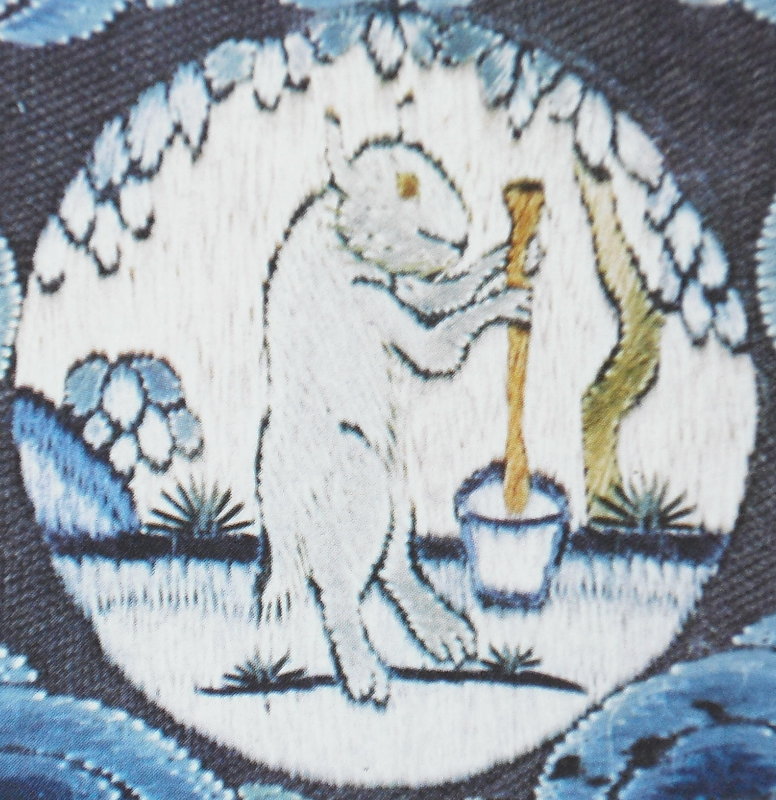 🇨🇳 China and 5 moreMoon rabbit月兔
A hare seen in the Moon's dark patches, pounding rice cakes or the elixir of lifeFolklore
🇨🇳 China and 5 moreMoon rabbit月兔
A hare seen in the Moon's dark patches, pounding rice cakes or the elixir of lifeFolklore
 🇨🇳 Chengdu, China and 1 moreSichuan opera川劇
A Chinese opera from Sichuan, known for split-second mask changes and a central clownPerformance
🇨🇳 Chengdu, China and 1 moreSichuan opera川劇
A Chinese opera from Sichuan, known for split-second mask changes and a central clownPerformance
 🇨🇳 China and 5 moreAncestor veneration
Honouring dead relatives with offerings, meals and prayers, kept in cultures worldwideSpiritual
🇨🇳 China and 5 moreAncestor veneration
Honouring dead relatives with offerings, meals and prayers, kept in cultures worldwideSpiritual
 🇨🇳 Hong Kong, China and 5 moreLunar New Year
New year festivals dated by the moon, kept from East Asia to the Middle EastFestival
🇨🇳 Hong Kong, China and 5 moreLunar New Year
New year festivals dated by the moon, kept from East Asia to the Middle EastFestival
 🇨🇳 Ningbo, China and 2 moreMahjong麻將
A tile game from China, played by two to four people at a tableGame
🇨🇳 Ningbo, China and 2 moreMahjong麻將
A tile game from China, played by two to four people at a tableGame
 🇨🇳 China and 5 moreJoss paper金紙 (jīnzhǐ)
Paper money burned for ancestors and gods, folded and offered in Chinese worshipSpiritual
🇨🇳 China and 5 moreJoss paper金紙 (jīnzhǐ)
Paper money burned for ancestors and gods, folded and offered in Chinese worshipSpiritual
 🇨🇳 China and 2 moreGo圍棋 (wéiqí), 囲碁 (igo), 바둑 (baduk)
Two players surround territory with black and white stones on a lined boardGame
🇨🇳 China and 2 moreGo圍棋 (wéiqí), 囲碁 (igo), 바둑 (baduk)
Two players surround territory with black and white stones on a lined boardGame
 🇨🇳 China and 5 moreAncestor worship
Honouring dead relatives with offerings and prayers, kept in many cultures worldwideSpiritual
🇨🇳 China and 5 moreAncestor worship
Honouring dead relatives with offerings and prayers, kept in many cultures worldwideSpiritual
 🇲🇳 Mongolia and 5 moreThroat singing
Several deep, guttural singing styles, each named and kept by its own peoplePerformance
🇲🇳 Mongolia and 5 moreThroat singing
Several deep, guttural singing styles, each named and kept by its own peoplePerformance
 🇨🇳 China and 3 moreCham danceའཆམ་
A masked monastery dance of Tibetan Buddhism, staged at festivals to teach and blessSpiritual
🇨🇳 China and 3 moreCham danceའཆམ་
A masked monastery dance of Tibetan Buddhism, staged at festivals to teach and blessSpiritual
 🇯🇵 Tokyo, Japan and 2 moreManeki-neko招き猫
A lucky cat figurine, paw raised, kept by shop doors and in homes across JapanFolklore
🇯🇵 Tokyo, Japan and 2 moreManeki-neko招き猫
A lucky cat figurine, paw raised, kept by shop doors and in homes across JapanFolklore
 🇬🇧 United Kingdom and 5 moreHarvest festival
A thanks for the gathered crop, kept with church meals, songs and shared foodSeasonal · Feasts and festival meals
🇬🇧 United Kingdom and 5 moreHarvest festival
A thanks for the gathered crop, kept with church meals, songs and shared foodSeasonal · Feasts and festival meals
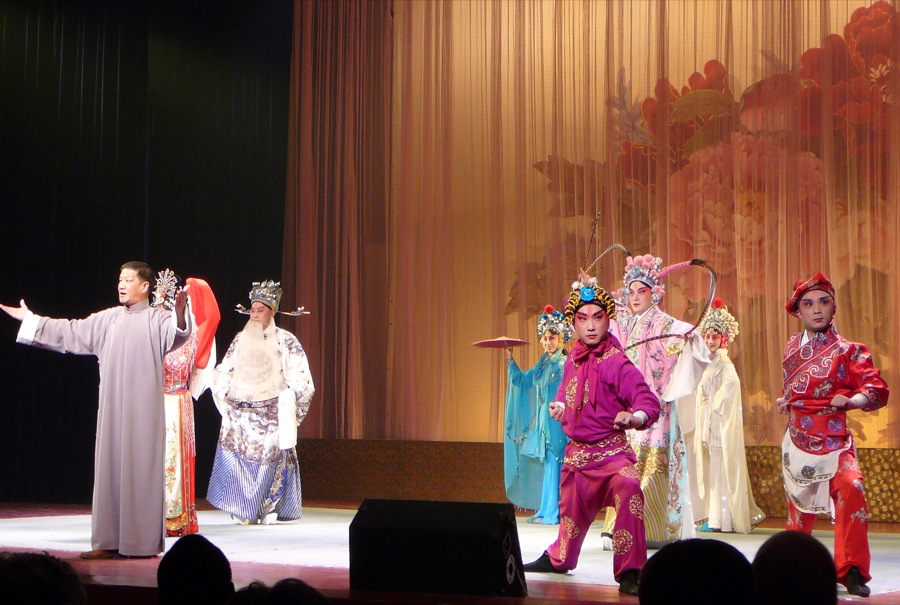 🇨🇳 Beijing, China and 1 morePeking opera京剧 / 京劇 (Jīngjù)
China's main opera form: song, dance and acrobatics tell the story on a bare stagePerformance
🇨🇳 Beijing, China and 1 morePeking opera京剧 / 京劇 (Jīngjù)
China's main opera form: song, dance and acrobatics tell the story on a bare stagePerformance
 🇨🇳 China and 2 moreCantonese opera粵劇
One of the major forms of Chinese opera, sung in Cantonese in southern ChinaPerformance
🇨🇳 China and 2 moreCantonese opera粵劇
One of the major forms of Chinese opera, sung in Cantonese in southern ChinaPerformance
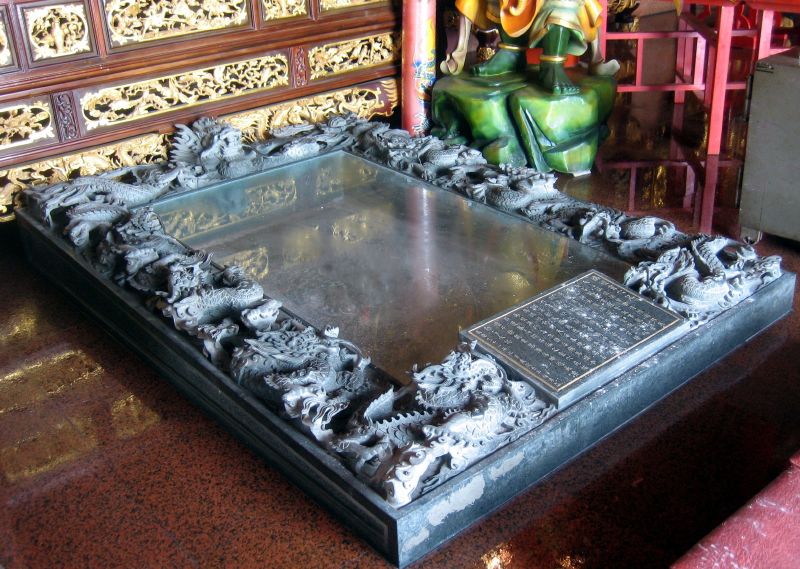 🇨🇳 Meizhou Island, China and 5 moreMazu媽祖
A sea goddess of the Chinese coast, asked for calm water and a safe returnSpiritual
🇨🇳 Meizhou Island, China and 5 moreMazu媽祖
A sea goddess of the Chinese coast, asked for calm water and a safe returnSpiritual
 🇮🇷 Iran and 5 moreWinter solstice
The shortest day and longest night of the year, marked with fire, feasting and poetrySeasonal
🇮🇷 Iran and 5 moreWinter solstice
The shortest day and longest night of the year, marked with fire, feasting and poetrySeasonal
 🇨🇳 ChinaTraditional Chinese marriage婚姻 (hūnyīn)
A wedding rite that joins two families, arranged by a go-between and sealed with giftsRite of passage
🇺🇦 Ukraine and 2 moreProgrammer's Day
A professional day for programmers, fixed to the 256th day of the yearCeremony
🇨🇳 ChinaTraditional Chinese marriage婚姻 (hūnyīn)
A wedding rite that joins two families, arranged by a go-between and sealed with giftsRite of passage
🇺🇦 Ukraine and 2 moreProgrammer's Day
A professional day for programmers, fixed to the 256th day of the yearCeremony
 🇰🇷 Seoul, South Korea and 2 moreHangul Day한글날
South Korea's public day for Hangul, the Korean alphabet, kept on 9 OctoberFestival
🇰🇷 Seoul, South Korea and 2 moreHangul Day한글날
South Korea's public day for Hangul, the Korean alphabet, kept on 9 OctoberFestival
Photo credits on this page
The small pictures above come from Wikimedia Commons under free licences. Some are cropped to fit.
- Prostration: Meghan Breeze, CC BY-SA 4.0, source
- Cheongsam: Jacklee ., CC BY-SA 4.0, source
- Doppa: Jasper Lee, CC BY-SA 4.0, source
- Antyesti: Unknown author, Public domain, source
- Chinese New Year's Eve: Mickey Đại Phát, CC BY-SA 4.0, source
- Chinese funeral rituals: Salzmann, E.v., CC BY-SA 3.0 de, source
- Bodhi Day: Shirazibustan, CC BY-SA 4.0, source
- Hanbok: DongyiKoguryo, CC BY-SA 4.0, source
- Third Month Fair: ZhaoScorpio, CC BY-SA 2.0, source
- Torch Festival: Zhangmoon618, CC BY-SA 3.0, source
- Dutar: Yuet Man Lee, CC BY-SA 4.0, source
- Dongzhi: N509FZ, CC BY-SA 4.0, source
- Hanfu: Anonymous Song Chinese artist after the original by Gu Hongzhong, Public domain, source
- Muqam: Liang Li, CC0, source
- Sho Dun Festival: No machine-readable author provided. John Hill assumed (based on copyr, CC BY 2.5, source
- Olympic flame: RuinDig/Yuki Uchida, CC BY 4.0, source
- Laba congee: N509FZ, CC BY-SA 4.0, source
- Meshrep: https://www.flickr.com/photos/travelingmipo/, CC BY-SA 2.0, source
- Pansori: Steve46814, CC BY-SA 3.0, source
- Tangzhuang: Gobierno de Chile, CC BY 2.0, source
- Chinese paper cutting: Lanneixi, CC BY-SA 4.0, source
- Moon rabbit: An artist, Public domain, source
- Butter tea: Yosomono, CC BY 2.0, source
- Xiangqi: Francesc Fort, CC BY-SA 4.0, source
- Dim sum: Kolumbusjogger, CC BY-SA 3.0, source
- Sky burial: FishOil at English Wikipedia, Public domain, source
- Sichuan opera: No machine-readable author provided. Dice~commonswiki assumed (based o, CC BY-SA 3.0, source
- Yum cha: Infomofo, CC BY-SA 2.0, source
- Red envelope: Oldie~commonswiki, Public domain, source
- Ancestor veneration: Thang Nguyen, CC BY-SA 2.0, source
- Lunar New Year: Flying Pharmacist, CC BY-SA 3.0, source
- Mahjong: yui*, CC BY-SA 2.0, source
- Joss paper: Vmenkov, CC BY-SA 3.0, source
- Go: Goban1, Public domain, source
- Ancestor worship: Lyn Gateley, CC BY 2.0, source
- Throat singing: Bill Loewy, CC BY-SA 3.0, source
- Cham dance: Arian Zwegers, CC BY 2.0, source
- Maneki-neko: Su--May, CC BY 2.0, source
- Harvest festival: High Contrast, CC BY 3.0 de, source
- Peking opera: Art Poskanzer, CC BY 2.0, source
- Cantonese opera: Roland Tanglao, CC BY 2.0, source
- Mazu: Prince Roy, CC BY-SA 3.0, source
- Winter solstice: Image by Przemyslaw " Blueshade " Idzkiewicz, CC BY-SA 2.0, source
- Traditional Chinese marriage: Unknown author, Public domain, source
- Hangul Day: Korea.net / Korean Culture and Information Service (Jeon Han), CC BY-SA 2.0, source